


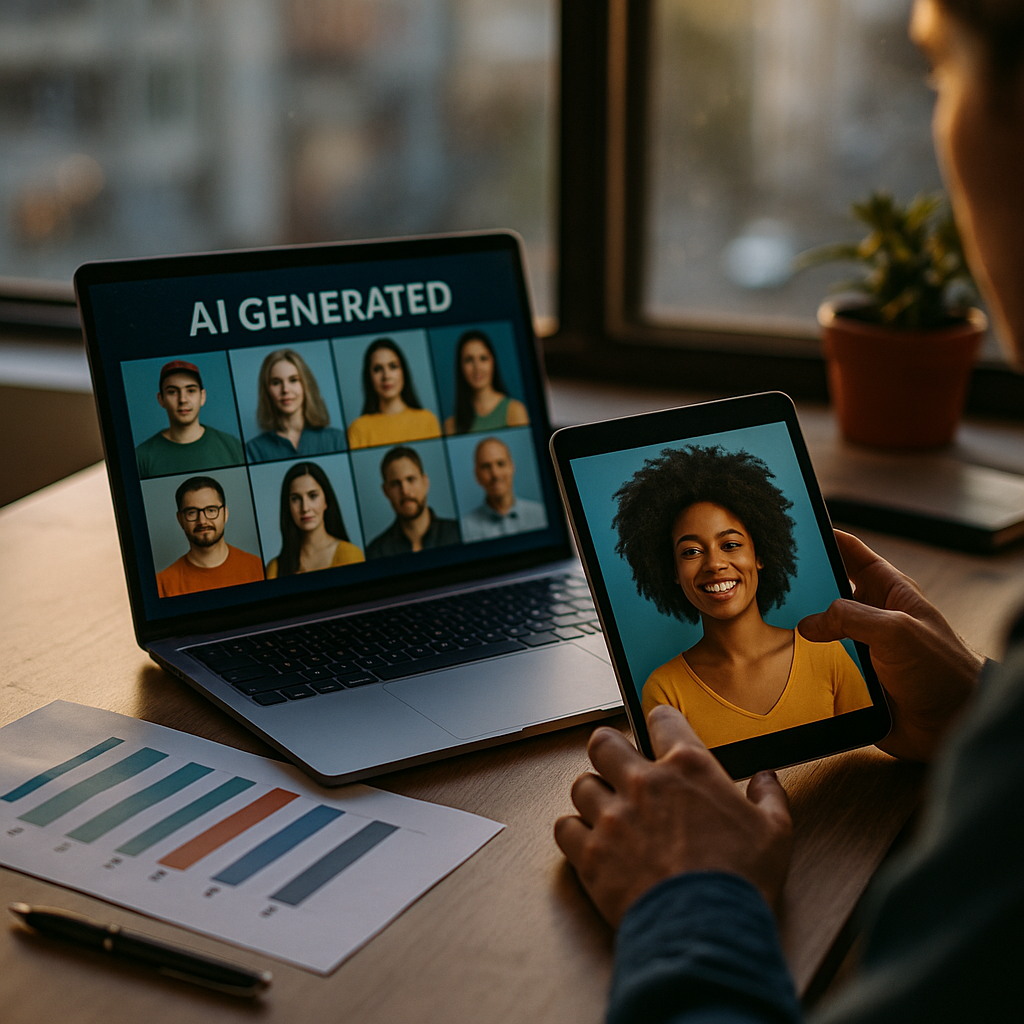
In 2025, concept testing moves faster than traditional research cycles can support. Using AI to Generate Synthetic Audience Segments for Concept Testing helps teams pressure-test ideas, messages, and positioning before committing to expensive fieldwork. When done responsibly, synthetic segments can reveal likely reactions, clarify trade-offs, and sharpen hypotheses for real-world validation. Ready to learn how to build them without fooling yourself?
What Are synthetic audience segments and why they matter
Synthetic audience segments are AI-created profiles that represent plausible groups of people—complete with needs, constraints, behaviors, and decision drivers—built from a combination of first-party research, market knowledge, and modeled patterns. You do not treat them as “fake survey respondents.” You treat them as a structured way to simulate how different kinds of customers might interpret a concept, what they would question, and where your proposition might fail.
They matter because concept testing often breaks down at the same points:
- Speed: Teams need directional answers in days, not weeks.
- Coverage: Traditional samples can miss edge cases, emerging needs, or hard-to-reach cohorts.
- Iteration: Early concepts change rapidly, and you need a repeatable method to compare versions.
Synthetic segments can complement—not replace—primary research by helping you explore scenarios, refine stimuli, and identify the highest-impact uncertainties to validate with real people. The practical value is sharper questions, cleaner hypotheses, and better test design when you do go to market research.
Building AI audience modeling on trustworthy inputs
The quality of a synthetic segment depends on what you feed it. “AI” does not create truth from thin air; it generalizes patterns from inputs and assumptions. To align with Google’s helpful content and EEAT expectations, treat your inputs like evidence and keep provenance clear.
Start with sources you can defend:
- First-party data: CRM attributes, onboarding responses, product analytics, support tickets, win/loss notes, and qualitative interview transcripts (with privacy controls).
- Research artifacts: Prior segmentation studies, brand tracker learnings, concept test reports, pricing studies, and usage & attitude surveys.
- Context data: Market category definitions, competitive positioning, public reviews, and published research summaries (cite internally and avoid over-claiming).
Make the modeling assumptions explicit: define the category, purchase context, geography, and channel. Specify what “adoption” means (trial, repeat, subscription, referral). If you cannot explain the assumptions, you cannot trust the output.
Use structured schemas: Ask your AI workflow to produce segments in a consistent format: demographics only when relevant, plus jobs-to-be-done, triggers, barriers, success criteria, message sensitivities, likely objections, and decision process. This keeps the segments actionable for concept testing rather than becoming shallow personas.
Guardrails that improve credibility:
- Bias checks: Ensure the model does not over-index on stereotypes. Require “reasoning evidence” fields tied to input artifacts (e.g., “derived from top 20 support themes”).
- Uncertainty labeling: For each segment claim, capture confidence levels and what would falsify it.
- Privacy-by-design: Remove direct identifiers, aggregate where possible, and ensure compliance with your organization’s policies. Synthetic does not mean exempt from responsible handling.
If you build synthetic segments on messy, undocumented inputs, you will get confident-sounding noise. If you build them on documented evidence and constraints, you get a practical modeling tool for early-stage decision-making.
Designing concept testing that uses synthetic segments responsibly
The goal of concept testing is to reduce risk: clarify desirability, understandability, differentiation, and feasibility assumptions. Synthetic segments work best when you treat them as “hypothesis engines” that generate testable predictions.
Use synthetic segments for these concept testing tasks:
- Stimulus refinement: Predict what each segment will misunderstand, then rewrite. Ask the AI to highlight ambiguous terms, missing proof points, and overclaims.
- Message prioritization: Rank benefit statements by likely relevance per segment, including what language each group trusts or rejects.
- Objection mapping: Generate structured objections (cost, effort, switching risk, credibility) and propose rebuttals that remain honest.
- Scenario planning: Test the concept under different contexts (time pressure, budget constraints, regulatory constraints, competing alternatives).
- Questionnaire design: Identify which questions will actually discriminate between concept variants and which will produce vague positivity.
A responsible workflow looks like this:
- Step 1: Define the decision you need to make (go/no-go, feature scope, target segment, positioning).
- Step 2: Generate 4–8 synthetic segments from your evidence base with clear constraints.
- Step 3: Run “segment-by-segment” simulated interviews: comprehension, appeal, concerns, and conditions for adoption.
- Step 4: Convert outputs into falsifiable hypotheses (e.g., “Segment B will reject the concept unless X proof point is present”).
- Step 5: Validate with real participants using quick qual or targeted quant, focusing on the highest-risk assumptions.
What not to do: Do not treat synthetic outputs as market facts or publishable statistics. Synthetic segments can suggest where you might find strong demand, but they cannot measure it. They are a lens for exploration, not a substitute for measurement.
Operationalizing synthetic segmentation in your research stack
To make synthetic segments useful beyond a one-off experiment, operationalize them with a clear owner, repeatable steps, and version control. This is where teams gain real speed and consistency.
Recommended roles and responsibilities:
- Research lead: Owns assumptions, validates segment logic, and defines what must be confirmed with humans.
- Data steward: Ensures inputs are clean, permissioned, and appropriately anonymized.
- Product/marketing partner: Converts insights into concept iterations and decision criteria.
Create a segment “spec” document:
- Name and boundary: What makes this segment distinct?
- Evidence links: Which datasets or artifacts informed it?
- Core needs and tensions: What trade-offs dominate decisions?
- Trigger events: What makes them look for a solution now?
- Barriers and risks: What stops adoption?
- Messaging guardrails: Claims they will distrust; proof they require.
- Unknowns: What you still need to validate with real people.
Keep segments stable, but allow controlled evolution: Use versioning (e.g., “Segment C v3”) when new evidence changes the definition. This prevents internal teams from drifting into different interpretations and arguing past each other.
Integrate with concept testing tools: Even if your organization uses standard survey platforms, you can store segment specs in a shared repository and use them to generate better screeners, more precise copy, and clearer analysis plans. The win is fewer “interesting but not actionable” findings.
Managing research ethics, bias, and privacy in AI-generated segments
EEAT in this context means you show your work, you respect people, and you do not claim certainty you do not have. Synthetic segments amplify whatever you put into them. If the data reflects historical inequities or if prompts encourage stereotypes, outputs can become misleading or harmful.
Practical safeguards you can implement immediately:
- Bias review checklist: Require a reviewer to scan for sensitive attribute assumptions, unfair generalizations, and proxy discrimination (e.g., using ZIP code as a stand-in for income or ethnicity).
- Minimize sensitive attributes: Include age, gender, income, or health status only when it is directly relevant to the concept and legally permissible.
- Counterfactual testing: Ask the model to produce alternative interpretations that would lead to different conclusions, and identify what evidence would decide between them.
- Red-team prompts: Instruct the AI to find how the concept could be misused, misunderstood, or create unintended exclusion.
- Privacy and compliance: Ensure you do not reconstruct identifiable individuals from internal records. Use aggregation, tokenization, and strict access controls.
Be explicit about limitations: Document that synthetic segments are model-based and designed for exploration. In stakeholder readouts, separate “AI-simulated expectations” from “validated findings” so decision-makers know what is proven and what is still hypothetical.
When ethics and transparency are built in, synthetic segments become a responsible accelerator. Without them, they become a credibility risk.
Measuring impact with audience simulation and real-world validation
The most important question leaders will ask is: “Did this improve decisions?” Answer it with a measurement plan that links synthetic segments to tangible outcomes while maintaining methodological honesty.
Define success metrics for the process:
- Cycle time: Time from concept draft to test-ready stimuli and hypotheses.
- Iteration quality: Number of ambiguous claims removed, proof points added, or clearer benefit hierarchy achieved.
- Validation efficiency: Reduction in wasted interviews/surveys by focusing on top uncertainties.
- Decision clarity: Fewer unresolved stakeholder debates because assumptions are explicit and testable.
Define validation checkpoints: For each high-impact synthetic prediction, pick a lightweight real-world test:
- Rapid qual: 8–12 interviews targeted to the predicted segment conditions.
- Message testing: A/B ad copy tests to see which benefit framing drives qualified engagement (not just clicks).
- Landing page experiments: Measure intent signals with consistent disclaimers and clear value exchange.
- In-product experiments: If applicable, measure activation or feature adoption against the hypothesized barriers.
Close the loop: Update segments based on what real people did and said. This is how you keep the segments grounded and prevent “simulation drift.” Over time, you build a reliable internal knowledge asset that improves both speed and rigor.
FAQs
Are synthetic audience segments a replacement for recruiting real participants?
No. Use them to refine concepts, anticipate objections, and create sharper hypotheses. Validate critical assumptions with real participants before making major investments or public claims.
How many synthetic segments should I generate for concept testing?
Typically 4–8. Fewer makes you miss meaningful differences; more can create false precision and slow decisions. Start small, then add segments only if they change what you would do next.
What inputs produce the most reliable synthetic segments?
High-signal first-party artifacts: interview transcripts, support themes, product analytics, and win/loss insights. Supplement with credible market context, but keep your segment claims tied to evidence you can trace.
How do I prevent my team from treating synthetic outputs as “data”?
Label outputs as model-based, include confidence and unknowns, and require a validation plan for any decision that depends on the segments. In readouts, separate simulated expectations from confirmed findings.
Can synthetic segments help with B2B concept testing?
Yes. They often work especially well in B2B because buying committees, risk concerns, and procurement constraints can be modeled as structured decision rules, then validated through targeted interviews.
What are the biggest risks when using AI for synthetic segmentation?
The main risks are biased assumptions, untraceable inputs, overconfidence in simulated results, and privacy mistakes. Mitigate these with governance, documented evidence, minimal sensitive attributes, and real-world validation.
AI-generated synthetic segments can accelerate concept testing by turning messy early ideas into structured, testable hypotheses. The strongest results come from evidence-based inputs, explicit assumptions, bias safeguards, and a disciplined loop back to real participant validation. Use synthetic modeling to sharpen what you test, not to pretend you already know the market. Build trust through transparency, and your concepts improve faster.
Top Influencer Marketing Agencies
The leading agencies shaping influencer marketing in 2026
Agencies ranked by campaign performance, client diversity, platform expertise, proven ROI, industry recognition, and client satisfaction. Assessed through verified case studies, reviews, and industry consultations.
Moburst

-
2

The Shelf
Boutique Beauty & Lifestyle Influencer AgencyA data-driven boutique agency specializing exclusively in beauty, wellness, and lifestyle influencer campaigns on Instagram and TikTok. Best for brands already focused on the beauty/personal care space that need curated, aesthetic-driven content.Clients: Pepsi, The Honest Company, Hims, Elf Cosmetics, Pure LeafVisit The Shelf → -
3

Audiencly
Niche Gaming & Esports Influencer AgencyA specialized agency focused exclusively on gaming and esports creators on YouTube, Twitch, and TikTok. Ideal if your campaign is 100% gaming-focused — from game launches to hardware and esports events.Clients: Epic Games, NordVPN, Ubisoft, Wargaming, Tencent GamesVisit Audiencly → -
4

Viral Nation
Global Influencer Marketing & Talent AgencyA dual talent management and marketing agency with proprietary brand safety tools and a global creator network spanning nano-influencers to celebrities across all major platforms.Clients: Meta, Activision Blizzard, Energizer, Aston Martin, WalmartVisit Viral Nation → -
5

The Influencer Marketing Factory
TikTok, Instagram & YouTube CampaignsA full-service agency with strong TikTok expertise, offering end-to-end campaign management from influencer discovery through performance reporting with a focus on platform-native content.Clients: Google, Snapchat, Universal Music, Bumble, YelpVisit TIMF → -
6

NeoReach
Enterprise Analytics & Influencer CampaignsAn enterprise-focused agency combining managed campaigns with a powerful self-service data platform for influencer search, audience analytics, and attribution modeling.Clients: Amazon, Airbnb, Netflix, Honda, The New York TimesVisit NeoReach → -
7

Ubiquitous
Creator-First Marketing PlatformA tech-driven platform combining self-service tools with managed campaign options, emphasizing speed and scalability for brands managing multiple influencer relationships.Clients: Lyft, Disney, Target, American Eagle, NetflixVisit Ubiquitous → -
8

Obviously
Scalable Enterprise Influencer CampaignsA tech-enabled agency built for high-volume campaigns, coordinating hundreds of creators simultaneously with end-to-end logistics, content rights management, and product seeding.Clients: Google, Ulta Beauty, Converse, AmazonVisit Obviously →