


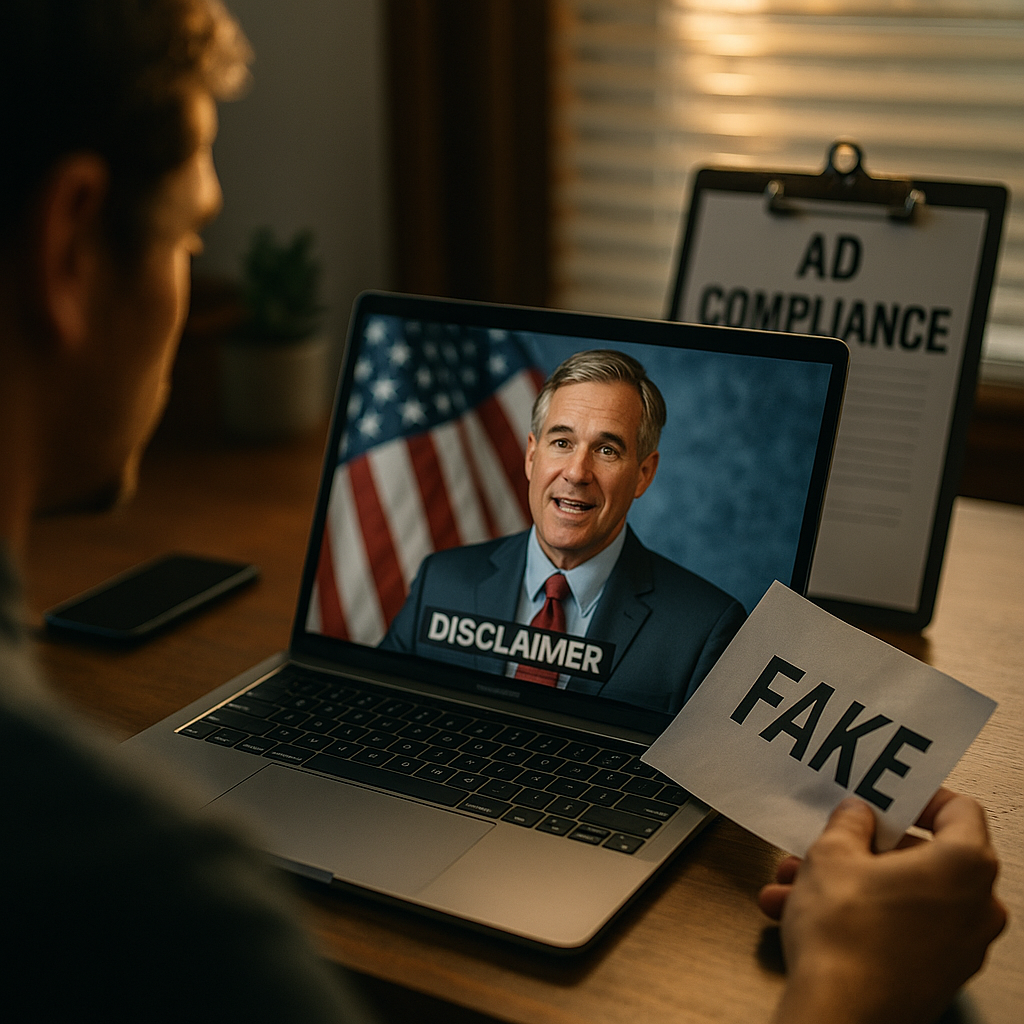
Compliance Rules for Deepfake Disclosure in Advocacy Ads are now central to credible campaigning in 2025, as synthetic audio, video, and images move from novelty to everyday persuasion tools. Advocacy organizations, agencies, and platforms face tighter scrutiny from regulators, watchdogs, and the public. Getting disclosure wrong risks takedowns, legal exposure, and reputational damage. Here’s how to build compliant, trustable deepfake practices before your next launch.
Deepfake disclosure requirements: what counts as “synthetic” in advocacy advertising
Start compliance by defining what you are disclosing. In advocacy advertising, “deepfake” is often used loosely, but most modern rules focus on materially deceptive synthetic media: content that could mislead a reasonable viewer about a real person’s words, actions, or presence.
In practical terms, assume disclosure is required when you use any of the following in an advocacy ad:
- AI-generated or AI-altered video that makes a person appear to say or do something they did not.
- Voice cloning or synthetic speech that imitates a real individual’s voice, cadence, or identity.
- Face swaps, digital puppetry, or body reenactment used to depict a real person.
- Composite media where AI fills in missing footage, invents scenes, or changes a key fact (for example, altering a crowd size, location, or event sequence).
Many advocacy teams ask a follow-up question: “What about cosmetic edits?” Routine post-production (color grading, noise reduction, minor cleanup, subtitles) typically does not trigger deepfake-style disclosure. The compliance tipping point is materiality: if the edit changes the audience’s understanding of who said what, did what, endorsed what, or appeared where, treat it as synthetic for disclosure purposes.
Also consider the format. Short vertical videos, memes, and “man-on-the-street” cuts are more likely to be believed quickly without scrutiny, so regulators and platforms tend to view them as higher risk. If the content is designed for rapid shareability, lean toward clearer, earlier disclosures.
A helpful internal standard is: If a viewer could reasonably think the depicted person actually performed the depicted act, you should disclose. This reduces edge-case debates and supports consistent enforcement across creative teams and vendors.
Political ad transparency laws: the regulatory landscape for advocacy ads in 2025
In 2025, advocacy advertisers operate under a layered system of rules: election-law concepts, consumer protection, platform policies, and a growing set of AI-specific requirements. Even when an advocacy ad is not a candidate ad, it can still trigger obligations if it is reasonably connected to public policy outcomes, ballot questions, or voter persuasion.
Key compliance realities to plan for:
- Jurisdiction varies. Requirements can differ by country, state, and even municipality. Your disclosure design should be modular so you can adjust language, placement, and timing by geography.
- “Advocacy” is not a safe harbor. Many rules apply to issue ads, not just candidate ads, especially when the message targets civic participation or legislative outcomes.
- Election periods increase scrutiny. Even if the law is technically constant, enforcement attention rises during sensitive windows. Build stricter internal gates during those periods.
Because the request is compliance-focused, treat two categories as separate workstreams:
- Legal compliance: statutory or regulatory disclosure triggers, recordkeeping, and penalties.
- Platform compliance: ad library requirements, labeling rules, restricted content standards, and AI-manipulation policies that can cause immediate rejection or account sanctions.
If you run multi-market campaigns, appoint a single accountable owner (often a compliance lead or legal ops manager) to maintain a jurisdictional matrix mapping where your ads run, what “synthetic” means there, what the precise disclosure must say, and how long you must retain documentation. This matrix should be updated before each major flight, not after a takedown.
One more follow-up most teams have: “Can we rely on a generic disclaimer everywhere?” Generic labels can help, but they may fail in markets that require specific phrasing, prominence, or timing. A safer approach is a core disclosure that always appears, plus local add-ons when required.
AI-generated content labeling: how to write, place, and time disclosures
Disclosure language and placement are where most advocacy advertisers stumble. A disclosure that is technically present but functionally invisible can still be treated as noncompliant by platforms and can undermine trust with audiences.
Use plain language. Avoid jargon like “synthetically generated audiovisual representation.” Use a short statement that answers what happened and what did not happen in the real world. Effective patterns include:
- “This video includes AI-generated scenes.”
- “Audio has been generated using AI; the speaker did not record these words.”
- “This is a dramatization using synthetic media.”
Be specific about the manipulated element. If only the voice is synthetic, say so. If the likeness is altered, name that. Overbroad disclosures (“Some elements are simulated”) can look evasive and may not satisfy stricter standards.
Prioritize “first contact” visibility. Disclosures work best when they appear before or at the moment the synthetic element could mislead. In practice:
- Video ads: show an on-screen disclosure at the beginning and keep it on long enough to be read at normal speed. Reinforce with an end-card if the ad is longer or complex.
- Audio/radio: include an audible disclosure near the start, in a normal speaking pace, and repeat near the end for longer placements.
- Social feeds: include a visible overlay in the creative itself, not only in the caption. Captions can be truncated or skipped.
Make it readable. For on-screen text, optimize for mobile: high-contrast, adequate size, and safe margins. Avoid placing disclosures behind UI elements (like platform buttons), and do not rely on tiny fine print.
Do not imply endorsement. If you depict a real person’s likeness in a synthetic way, your disclosure should avoid language that suggests they participated or approved. For example, “Depiction created with AI; person did not participate” is clearer than “AI recreation,” which some viewers interpret as authorized.
Account for accessibility. Use captions for audible disclosures, and consider screen-reader-friendly companion landing pages when the ad format allows. Accessibility is not only good practice; it also supports defensibility if a complaint claims the disclosure was not perceivable.
Finally, align disclosure with your call to action. If your ad asks people to donate, sign, or vote, the disclosure should appear before that conversion moment. Otherwise, critics can argue the ad was designed to obtain action before the audience learned the content was synthetic.
Platform policies for synthetic media: approvals, ad libraries, and enforcement risks
In 2025, many advocacy campaigns live or die by platform enforcement. Even when a campaign is legally compliant, platforms can reject creatives, limit reach, or suspend accounts if you violate their synthetic media policies or political/issue ad rules.
Plan for platform compliance like you plan for creative production:
- Pre-clear formats: Some platforms favor specific placements for labeled content (for example, requiring the disclosure in the video frame). Build templates for each platform’s specs.
- Ad authorization: Issue/political ad verification, identity checks, and disclaimers may be mandatory. Complete authorization early to avoid launch delays.
- Ad library records: Many platforms archive political/issue ads, including creative, spend ranges, and sponsor identity. Assume your disclosure will be inspected publicly.
Expect stricter treatment for realistic depictions of public figures. Synthetic content that appears to show a recognizable leader, candidate, or official making statements is commonly escalated for review. If your message relies on that depiction, allocate extra time for approvals and build fallback versions that avoid the likeness.
Maintain “policy-proof” evidence. Platforms often ask for documentation after a user report. Keep a ready packet that includes:
- Final ad files and all versions run
- Disclosure language and placement rationale
- Proof of authorization/rights (if you licensed a likeness or voice)
- Production notes showing what was generated vs. filmed
Operationalize appeals. Create an internal escalation route with clear owners, platform contacts (where available), and a standard appeal memo. The goal is to respond within hours, not days, because advocacy ads are time-sensitive and delays can nullify campaign impact.
A common follow-up: “Should we label even if not required?” Often yes, because platform policies may be broader than laws, and proactive transparency reduces the risk of user reports gaining traction. However, avoid vague labels that trigger confusion. A clear, truthful label tends to perform better than an overly cautious but unclear one.
Election integrity and deception standards: avoiding misleading content beyond the label
Disclosure alone will not save an ad that is deceptive in substance. Regulators, platforms, and civil society groups increasingly evaluate whether the overall message creates a false impression, even if you included a technical label.
To reduce risk, apply an “integrity review” that asks:
- Does the synthetic content depict a real event? If yes, can you substantiate that the event occurred as shown?
- Could the ad be interpreted as real footage? If yes, is your disclosure prominent enough to prevent that interpretation?
- Are you attributing quotes accurately? Synthetic voice should never be used to fabricate quotes from real people in a way that changes meaning or intent.
- Are you manipulating context? Even “real” clips can mislead when spliced. Adding AI-generated reaction shots or changing audio context can push an edit into deceptive territory.
Build safeguards that go beyond creative review:
- Substantiation files: Maintain citations, source footage, transcripts, and fact-check notes for all major claims.
- Separation of functions: Have someone independent of the creative team review for deception risk. This mirrors compliance controls used in regulated advertising.
- Human subject sensitivity: If the ad depicts private individuals, victims, or minors (even synthetically), reassess necessity and consent. The reputational downside can be severe, even where legal risk is unclear.
When your advocacy goal is urgent, it’s tempting to use synthetic media for emotional force. A more defensible approach is to use AI for illustrative elements (charts, maps, clearly stylized reenactments) rather than realistic depictions of identifiable people, unless you have explicit permission and a strong public-interest justification.
Remember that election integrity concerns also include timing. If a synthetic ad drops close to a civic decision point, complaints can escalate quickly and enforcement can be swift. Build a calendar that allows time for review, documentation, and platform back-and-forth.
Deepfake risk management program: controls, documentation, and vendor accountability
Organizations that handle deepfakes responsibly treat disclosure as one piece of a broader governance program. In 2025, a practical deepfake risk management program for advocacy ads includes policy, process, and evidence.
1) Create a written synthetic media policy. Keep it short, actionable, and tied to your campaign workflow. Define:
- What you consider synthetic or materially altered
- When disclosure is mandatory
- Prohibited uses (for example, impersonation of officials, fabricated endorsements)
- Approval roles and escalation paths
2) Implement a disclosure decision tree. This helps teams move fast without guessing. Include prompts like:
- Is a real person identifiable?
- Is their voice or likeness generated or altered?
- Could an average viewer be misled without a label?
- Is this running in a jurisdiction or on a platform with heightened rules?
3) Use provenance and version control. Store source assets, AI model/tool logs where available, and exports. If a complaint arises, you can show exactly how the asset was produced and where disclosure was placed. Keep records consistent with your legal and platform obligations.
4) Tighten vendor contracts. If agencies or freelancers generate synthetic media, require:
- Written confirmation of what elements are AI-generated
- Warranties that they did not violate rights of publicity or privacy
- Indemnities for unauthorized voice/likeness use (as appropriate to your risk tolerance)
- Delivery of layered project files to support audits
5) Train teams with realistic scenarios. Short training sessions with examples of “needs disclosure” vs. “doesn’t need disclosure” reduce costly errors. Include platform-specific pitfalls, such as disclosures that get covered by UI elements in vertical placements.
6) Monitor and respond. Watch comments, reports, and press mentions immediately after launch. If confusion appears, update creative, landing pages, and pinned explanations quickly. A proactive correction can prevent a spiral into broader enforcement.
The clear operational takeaway: treat synthetic media as a controlled activity, not an ad-hoc creative flourish. This approach improves compliance, speeds approvals, and protects trust when your message is under pressure.
FAQs: Compliance Rules for Deepfake Disclosure in Advocacy Ads
Do advocacy ads have to disclose AI use even if they are not election ads?
Often yes. Many requirements and platform rules focus on deception risk rather than candidate status. If synthetic media could mislead viewers about what a real person said or did, disclosure is a strong default and may be required depending on jurisdiction and platform.
Is a disclaimer in the caption enough?
Usually not. Captions can be truncated, skipped, or invisible in some placements. Put the disclosure inside the creative (on-screen text for video/image, audible disclosure for audio) so it is perceivable at first contact.
What wording is safest for a deepfake disclosure?
Use plain, specific language: “Audio generated with AI; the person did not record these words” or “Video includes AI-generated scenes.” Avoid vague phrases like “simulated” without explaining what is simulated.
Do we need consent to use a public figure’s likeness in synthetic media?
Consent and rights requirements vary by jurisdiction, and public-figure status does not automatically eliminate legal and platform risk. Even where consent is not strictly required, using a realistic synthetic likeness can trigger takedowns or claims of deception. Get legal review and consider alternatives.
Can we use synthetic media for reenactments if we label it?
Yes, but label it clearly as a dramatization and ensure the reenactment does not fabricate core facts. Disclosures should appear before the reenactment could mislead, and the ad should not imply real footage.
What documentation should we keep for compliance?
Keep source footage, scripts, transcripts, AI tool/workflow notes, approvals, final exports, and screenshots showing disclosure placement. Store platform authorization records and any rights/consent documentation tied to voices or likenesses.
Deepfake disclosure compliance in advocacy advertising is no longer optional in 2025; it is a baseline expectation that shapes approvals, reach, and credibility. Define what counts as synthetic, label it clearly where viewers will actually notice, and align with both legal rules and platform policies. Build documentation and vendor controls that stand up to scrutiny. The takeaway: transparency plus governance protects impact when campaigns matter most.