


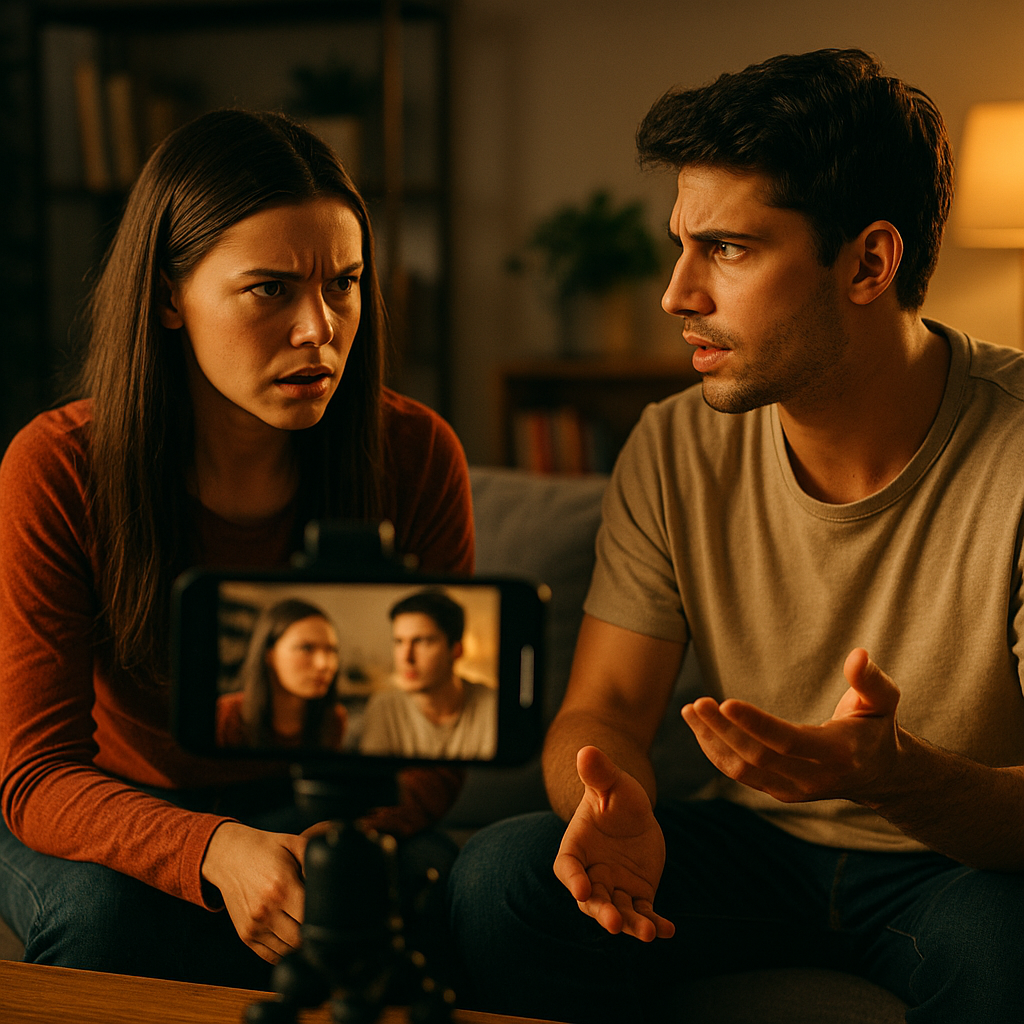
Videos with two creators bouncing dialogue off each other hold viewers 20 to 30 percent longer than single-creator talking-head content, according to internal benchmarking shared by several mid-size agencies running paid social for consumer brands. Why? Conversation creates a question the brain wants answered: what will the other person say next? Duo skit UGC exploits that tension deliberately, and if you’re not scripting for it, you’re leaving watch time on the table.
This format isn’t new. Sketch comedy has used two-hander setups for a century. What’s changed is that brands now have the data to prove dialogue-driven UGC outperforms monologue UGC on completion rate, and the tools (two creators, a shared brief, a tight script) to produce it at scale without a studio.
Why Two Voices Beat One on Watch Time
A single creator talking to camera has to do all the work: deliver the hook, hold attention, deliver the pitch, land the CTA. A duo splits that labor. One creator can play straight man, the other can play skeptic, hype man, or comic relief. The back-and-forth mimics the rhythm of a real conversation, which is inherently more watchable than a monologue because the viewer’s brain is tracking two inputs instead of one.
There’s also a structural advantage. Dialogue naturally creates micro-cliffhangers. Every line one creator delivers sets up the next person’s response, and that structure keeps viewers from swiping away mid-sentence the way they might during a long solo explainer. Platforms reward this: TikTok and Instagram both weight average watch time and replay rate heavily in distribution, and TikTok’s ad guidance consistently flags pacing and attention retention as top creative levers.
A scripted disagreement between two creators resolves on screen in fifteen seconds. The same information delivered by one person reads as a lecture, and lectures get skipped.
The Formats That Actually Work
Not every two-person video is a “duo skit.” The format only earns the name when there’s genuine tension or contrast between the two roles. The highest-performing setups we’ve seen brands brief include:
- Skeptic vs. believer: One creator doubts the product, the other proves them wrong on camera. Works especially well for demo-heavy categories like beauty tools or kitchen gadgets.
- Expert vs. novice: A knowledgeable creator explains something to a confused friend, which doubles as organic education without sounding like a lecture.
- Before vs. after roommate check-in: One creator reports back on results while the other reacts in real time, useful for supplements, skincare, or subscription services.
- Customer vs. employee: A shopper grills a staff member about a product or policy, which builds credibility fast when paired with genuine frontline talent. This overlaps with approaches covered in frontline employee content, where trust comes from proximity to the actual team.
Each of these works because the contrast is baked into the premise, not forced into the dialogue. If your two creators agree on everything, you don’t have a skit, you have two people reading the same script in turn, and that’s where watch time collapses.
Scripting the Hook: You Have Three Seconds, Not Thirty
Duo skits live or die on the first line of dialogue. The opening exchange needs to establish the premise and the tension simultaneously. A weak open (“Hey, so I tried this new serum”) wastes the format’s biggest advantage. A strong open drops the viewer into conflict already in motion: “You spent how much on this?” is a hook. “Let me tell you about my skincare routine” is not.
Write the hook as an argument, a bet, a dare, or a confession, something that implies stakes. The viewer should feel like they walked in mid-conversation, which creates curiosity about what came before and what happens next. That’s the same psychological lever used in POV narrative ads, just split across two speakers instead of one internal monologue.
Writing the Back-and-Forth Without Making It Sound Scripted
Here’s the trap most brands fall into: they write full sentences for both creators and the result sounds like a radio play, not a conversation. Real dialogue is messy. People interrupt, trail off, repeat words for emphasis. Script the beats, not the exact words, and let the creators punch up the phrasing in their own voice.
A practical approach: write the scene as a numbered beat sheet rather than a verbatim script.
- Beat 1: Creator A makes a claim or challenge.
- Beat 2: Creator B pushes back or expresses doubt.
- Beat 3: Proof moment (demo, reveal, result).
- Beat 4: Reaction and reversal (B admits A was right, or vice versa).
- Beat 5: CTA delivered as a shared line or a final exchange, not a solo pitch.
This structure keeps the brand message anchored while giving creators room to improvise tone, slang, and pacing. It also gives editors natural places to cut for pacing, since each beat is a discrete unit that can be trimmed or extended depending on platform.
Casting the Pair: Chemistry Over Follower Count
Brands often pick two creators based on combined reach, not combined chemistry, and that’s a mistake. Two creators with no rapport will deliver stilted dialogue no matter how good the script is. Look for creators who already have a real relationship (siblings, roommates, coworkers, longtime friends) or who’ve done duo content together before. The format depends on believable timing, and timing can’t be fully scripted.
If you’re pairing creators who’ve never met, build in a rehearsal call before the shoot day. Even fifteen minutes of casual conversation lets them find a rhythm, which shows up on camera as natural banter instead of awkward turn-taking.
Budget and Logistics: What This Actually Costs
Duo skit UGC typically costs more than single-creator content because you’re paying two talent fees, but the per-view economics often favor it once you factor in watch time and completion rate. A brand running whitelisted paid media against UGC assets cares about cost per thruplay or cost per completed view, and a format that holds attention longer tends to win that math even at a higher upfront production cost.
Plan for:
- Two usage-rights agreements, not one, with clear whitelisting terms for each creator.
- A shared call sheet so both creators arrive with aligned expectations on wardrobe, location, and tone.
- A slightly longer shoot window since duo content usually needs more takes to nail timing.
Compliance: Two Creators, One Disclosure Standard
Every creator in a sponsored duo video needs their own clear disclosure, not a shared one buried in a single caption. The FTC’s endorsement guidance applies per speaker, meaning if both creators are compensated or received free product, both need #ad or equivalent disclosure visible in the video itself, not just the post caption. This gets overlooked constantly in duo formats because brands assume one disclosure covers the scene.
Brands running this format at scale should build disclosure checks into their review process the same way they would for any paid UGC. If you need a refresher on how to script claims that clear legal review without killing the creative energy, the approach used in vox pop street interview scripts translates well here: build the disclosure into a natural beat rather than tacking it on as a disclaimer card.
A disclosure that feels bolted on breaks the illusion of authentic conversation faster than any bad line of dialogue ever could.
Measuring What Actually Matters
Average watch time and completion rate are the headline metrics, but don’t stop there. Track replay rate too, since duo skits with a strong punchline or reversal tend to get rewatched, which platforms interpret as a strong engagement signal. According to benchmarks referenced by Sprout Social and eMarketer, short-form video with higher replay rates consistently correlates with lower cost per result in paid distribution, which is the ROI case brand teams actually need to make to leadership.
If you’re testing multiple duo pairings or premises, run them as a structured batch rather than one-offs. This is the same logic behind persona-driven scripting at scale: one strong beat sheet, multiple creator pairs, enough variation to fight creative fatigue without starting from zero each time.
Where This Format Fits in a Broader Content Calendar
Duo skits work best as a recurring segment, not a one-off. Brands that treat it like a mini-series, same two creators, recurring premise, build audience anticipation the way vertical mini dramas do. The familiarity compounds: viewers start recognizing the duo’s dynamic, which lowers the cognitive load needed to re-engage with each new video and raises the odds they’ll stick around for the whole thing.
Pull data weekly, not monthly. Short-form trends shift fast, and a duo pairing that worked for three videos can fatigue by the fourth if the premise isn’t rotated.
Start your next brief by picking one tension (skeptic vs. believer, expert vs. novice) and writing a five-beat scene instead of a script. Cast for chemistry first, reach second, and disclose per creator, not per post. That’s the difference between a duo skit that gets watched to the end and one that gets scrolled past at second three.
FAQs
What is duo skit UGC?
Duo skit UGC is short-form branded content featuring two creators performing a scripted or semi-scripted scene, usually built around a tension like skepticism versus proof, to hold viewer attention longer than single-creator formats.
Why does duo content get higher watch time than solo UGC?
Dialogue creates anticipation because viewers want to know how the other person will respond, which keeps them watching longer than a monologue format where one creator delivers the entire message alone.
Do both creators in a duo skit need to disclose sponsorship?
Yes. FTC guidance requires each compensated or gifted creator to disclose individually and visibly within the video, not just in a shared caption, regardless of who delivers the primary pitch.
How much more does duo skit UGC cost compared to single-creator content?
Expect higher upfront costs since you’re paying two talent fees and usually need more shoot time for timing and chemistry, but the cost per completed view often improves due to stronger retention.
Should duo creators know each other before filming?
Existing rapport produces more natural timing and banter. If pairing creators who haven’t met, a short rehearsal call before the shoot day significantly improves on-camera chemistry.
Top Influencer Marketing Agencies
The leading agencies shaping influencer marketing in 2026
Agencies ranked by campaign performance, client diversity, platform expertise, proven ROI, industry recognition, and client satisfaction. Assessed through verified case studies, reviews, and industry consultations.
Moburst

-
2

The Shelf
Boutique Beauty & Lifestyle Influencer AgencyA data-driven boutique agency specializing exclusively in beauty, wellness, and lifestyle influencer campaigns on Instagram and TikTok. Best for brands already focused on the beauty/personal care space that need curated, aesthetic-driven content.Clients: Pepsi, The Honest Company, Hims, Elf Cosmetics, Pure LeafVisit The Shelf → -
3

Audiencly
Niche Gaming & Esports Influencer AgencyA specialized agency focused exclusively on gaming and esports creators on YouTube, Twitch, and TikTok. Ideal if your campaign is 100% gaming-focused — from game launches to hardware and esports events.Clients: Epic Games, NordVPN, Ubisoft, Wargaming, Tencent GamesVisit Audiencly → -
4

Viral Nation
Global Influencer Marketing & Talent AgencyA dual talent management and marketing agency with proprietary brand safety tools and a global creator network spanning nano-influencers to celebrities across all major platforms.Clients: Meta, Activision Blizzard, Energizer, Aston Martin, WalmartVisit Viral Nation → -
5

The Influencer Marketing Factory
TikTok, Instagram & YouTube CampaignsA full-service agency with strong TikTok expertise, offering end-to-end campaign management from influencer discovery through performance reporting with a focus on platform-native content.Clients: Google, Snapchat, Universal Music, Bumble, YelpVisit TIMF → -
6

NeoReach
Enterprise Analytics & Influencer CampaignsAn enterprise-focused agency combining managed campaigns with a powerful self-service data platform for influencer search, audience analytics, and attribution modeling.Clients: Amazon, Airbnb, Netflix, Honda, The New York TimesVisit NeoReach → -
7

Ubiquitous
Creator-First Marketing PlatformA tech-driven platform combining self-service tools with managed campaign options, emphasizing speed and scalability for brands managing multiple influencer relationships.Clients: Lyft, Disney, Target, American Eagle, NetflixVisit Ubiquitous → -
8

Obviously
Scalable Enterprise Influencer CampaignsA tech-enabled agency built for high-volume campaigns, coordinating hundreds of creators simultaneously with end-to-end logistics, content rights management, and product seeding.Clients: Google, Ulta Beauty, Converse, AmazonVisit Obviously →