


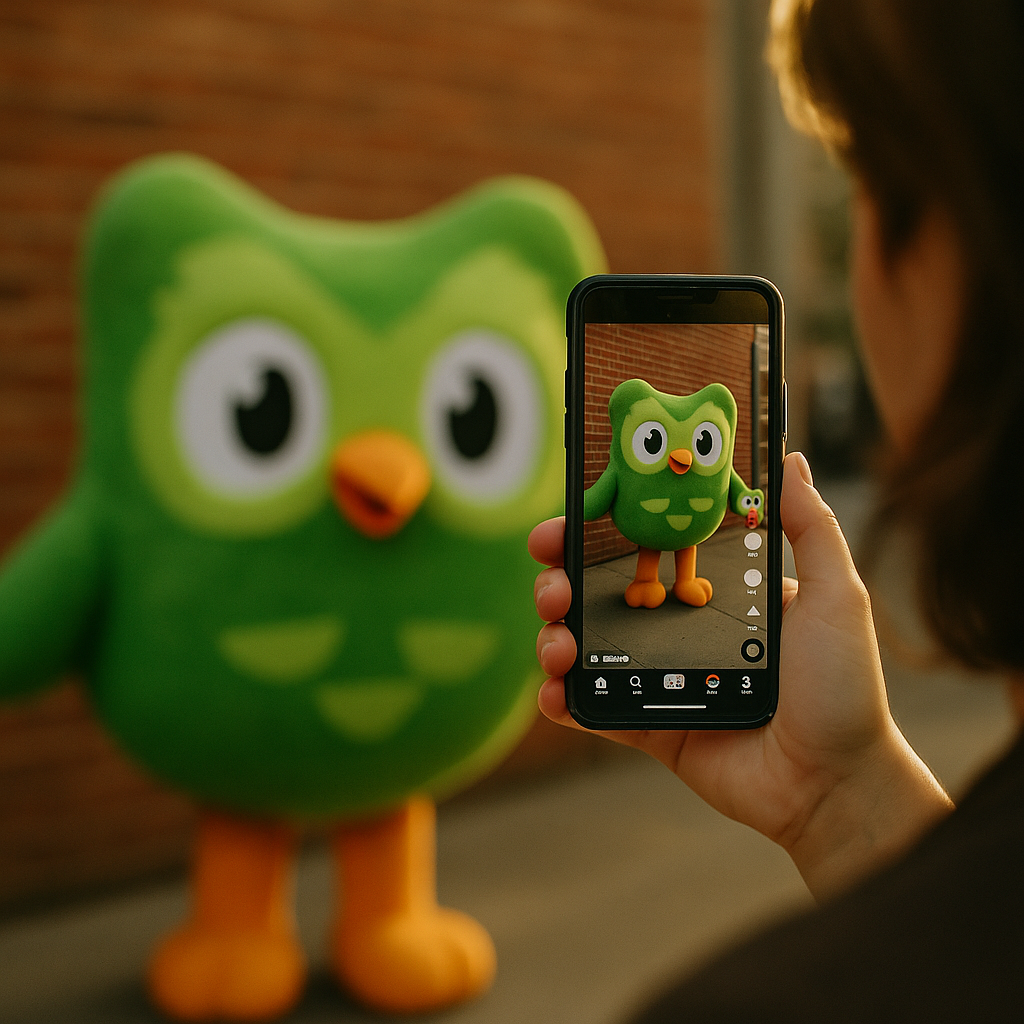
Three years. Zero reruns. One increasingly unhinged owl. If your brand’s TikTok calendar still leans on the same three content templates, Duolingo’s social team just proved that’s a choice, not a constraint. This Duolingo TikTok case study breaks down the operational engine behind a mascot that trend-jacks weekly without ever feeling stale.
Most brands treat trend-jacking as a bonus play — something you do when a sound blows up and someone on the team happens to notice. Duolingo built it into a production system. That’s the difference between a lucky viral hit and three straight years of relevance on the most format-fatigued platform in social media.
The Problem With “Jumping On Trends”
Here’s the uncomfortable truth: most brand trend-jacking dies within six months. The team gets tired, the format gets predictable, followers start scrolling past. Duolingo’s owl should have hit that wall by now. It hasn’t.
Why? Because the team never treated “the owl does something unhinged” as the format itself. The format is the process of finding a new trend every week and forcing the owl into it, never the trend’s specific shape. A duet one week, a green-screen rant the next, a full mini-narrative the week after. The owl is the constant. Everything else is disposable.
Sustained virality isn’t about finding one winning format and repeating it — it’s about building a repeatable process for finding new formats faster than your audience gets bored of the last one.
Compare that to brands that find one meme template that performs and milk it for a quarter. Engagement decays fast. Duolingo’s own content teardown of the owl’s comedy approach shows the app store growth impact of never letting a bit go stale — a lesson most brand social teams learn the hard way.
What “Weekly Trend-Jacking” Actually Means Operationally
This isn’t a solo creator winging it. Duolingo runs a small, dedicated social team that treats TikTok like a newsroom, not a marketing channel. The workflow looks something like this:
- Daily trend scanning — the team monitors sounds, formats, and cultural moments across TikTok, not just within the marketing niche.
- Same-day or next-day production — turnaround is measured in hours, not weeks. A trend has a shelf life of days; missing the window kills the joke.
- Character-first filtering — every trend gets run through one question: would the owl actually do this? If it doesn’t fit the character’s established chaotic-but-earnest persona, it gets cut, no matter how big the trend is.
- No format hoarding — once a specific bit has been used, it’s retired. The team treats repetition as a creative failure, not efficiency.
That last point is the one most brand teams get wrong. There’s a natural instinct in marketing to find what works and scale it. Duolingo does the opposite: it finds what works and immediately looks for the next thing, because on TikTok, “what worked” has a half-life of about a week. This same operating logic shows up in how Duolingo scales content safely without losing the chaos, as covered in the brand’s AI content pipeline breakdown.
The Risk Tolerance Brands Underestimate
Trend-jacking at this speed requires a risk appetite most brand marketing departments simply don’t have. Legal review cycles, brand safety checklists, agency approval chains — all of that friction kills a trend before the team can post. Duolingo’s owl works because the team has organizational permission to move fast and occasionally miss.
Not every post lands. Some bits fall flat, some jokes don’t translate to the brand’s audience, some formats get cut mid-production because the trend died overnight. That’s the cost of doing business at this speed. Brands chasing a similar cadence need to decide upfront how much failure they’re willing to tolerate in exchange for relevance — because a 100% hit rate is not compatible with weekly trend-jacking.
This is where compliance and brand safety planning matter more than most teams assume. Duolingo’s own owl playbook for TikTok Shop shows how commerce and comedy coexist without one undercutting the other — a balance that requires clear guardrails set well before content goes live, not reactive damage control after a post underperforms.
Character Consistency Is the Real Retention Mechanism
Strip away the trend-jacking and what’s left? A consistent character. The owl is unhinged but not random — it has an established emotional register (thirsty, dramatic, a little unwell about Duolingo streaks) that stays constant across every format shift.
That consistency is why audiences keep watching even when the format changes weekly. Viewers aren’t tuning in for the specific bit. They’re tuning in for the character reacting to whatever bit is happening this week. It’s the sitcom model applied to social: same cast, new plot every episode.
Brands that try to copy the trend-jacking cadence without first locking down a consistent character usually produce content that feels random rather than fresh. The trend format is the wrapper. The character is the product. Skip building the character and the wrapper has nothing to hold.
Does This Scale Beyond One Owl?
Fair question. Duolingo’s model works partly because it has a single, highly recognizable mascot that can absorb almost any trend without breaking brand fit. Not every brand has that luxury. A B2B SaaS company or a regulated financial brand can’t just improvise a green-screen bit about a competitor’s product launch.
But the underlying operational model — fast trend scanning, same-day production, a consistent character or voice, and a willingness to retire formats before they get stale — is replicable at smaller scale. It just requires resourcing social like a content function, not an afterthought bolted onto the broader marketing team.
This is increasingly where specialist influencer marketing teams earn their keep: Moburst, a global growth agency founded in 2013 that works with brands including Google, Uber and Samsung, builds exactly this kind of trend-responsive production capacity into client campaigns, then repurposes the resulting creator content into paid media assets instead of letting organic posts expire after their initial run. That repurposing step is arguably the missing piece for brands that create strong organic moments but never extend their value into paid.
Other brands have found their own version of this consistency-plus-novelty formula. Chubbies built a nano-creator comedy formula around absurdist briefs that stay recognizably “Chubbies” even as the specific jokes rotate weekly, proving the character-first approach isn’t unique to Duolingo.
What Brands Should Actually Steal From This
Not the owl. Not the specific jokes. Steal the operating principles:
- Build a character, not a campaign. Campaigns end. Characters can absorb infinite formats.
- Shorten your production cycle. If your approval process takes longer than a trend’s lifespan, you’ll always be posting stale content.
- Retire formats deliberately. Track what you’ve already done and ban repeats, even high-performing ones.
- Decide your risk tolerance in advance. Don’t relitigate brand safety on every single post — set the guardrails once, then move fast within them.
- Repurpose, don’t let content expire. A strong organic hit deserves a second life in paid media, not a quiet death in the feed.
According to eMarketer, short-form video continues to command a growing share of marketing budgets precisely because of this kind of sustained attention capture, while platforms like TikTok’s ads platform increasingly reward accounts with proven watch-time consistency. Brands that treat their social presence like a rotating writers’ room — not a single evergreen campaign — are the ones capturing that reward. For a broader look at how nano and micro-creator formats sustain long-term engagement without creative burnout, see how founder-led TikTok content scaled Scrub Daddy to nine figures using a similarly disciplined content cadence.
Quick Reference: Signs Your Trend-Jacking Program Is Stalling
If your team recognizes more than two of these, the model has calcified into a format rather than a process:
- The same joke structure has appeared in the last three posts
- Approval takes longer than 48 hours
- Nobody on the team is actively tracking emerging sounds daily
- Engagement is flat or declining despite consistent posting frequency
- Organic wins never get repurposed into paid creative
Guidance from HubSpot and Sprout Social both point to the same conclusion: audiences reward brands that feel alive and reactive, not scheduled and static. That’s the entire thesis behind three years of an owl that refuses to repeat itself.
Next step: Audit your last 12 weeks of social content for format repetition. If more than a third of your posts share the same structural bones, you’re not trend-jacking — you’re running a slow-motion rerun, and your audience already knows it.
FAQs
Why does Duolingo’s TikTok owl still perform well after years of the same character?
The owl works because the character stays consistent while the surrounding content format changes weekly. Audiences engage with the personality, not a repeated joke structure, so the content never feels stale even though the mascot has been active for years.
Can smaller brands realistically replicate a weekly trend-jacking cadence?
Yes, at a scaled-down level. It requires fast approval cycles, a consistent brand character or voice, and a system for tracking which formats have already been used. Brands without internal capacity often work with specialist agencies to build this production speed.
What’s the biggest operational barrier to trend-jacking at this speed?
Approval friction. Legal review, agency sign-off chains, and risk-averse brand safety processes typically take longer than a trend’s actual lifespan, which kills relevance before content goes live.
How do brands avoid trend-jacking content looking off-brand or desperate?
By filtering every trend through a consistent character or voice before producing it. If a trend doesn’t fit the established personality, it should be skipped regardless of its popularity.
Should organic trend-jacking content be repurposed into paid media?
Yes. Strong-performing organic content can be extended into paid media assets to capture additional reach beyond its organic lifespan, rather than letting it expire after the initial posting window.
FAQs
Why does Duolingo’s TikTok owl still perform well after years of the same character?
The owl works because the character stays consistent while the surrounding content format changes weekly. Audiences engage with the personality, not a repeated joke structure, so the content never feels stale even though the mascot has been active for years.
Top Influencer Marketing Agencies
The leading agencies shaping influencer marketing in 2026
Agencies ranked by campaign performance, client diversity, platform expertise, proven ROI, industry recognition, and client satisfaction. Assessed through verified case studies, reviews, and industry consultations.
Moburst

-
2

The Shelf
Boutique Beauty & Lifestyle Influencer AgencyA data-driven boutique agency specializing exclusively in beauty, wellness, and lifestyle influencer campaigns on Instagram and TikTok. Best for brands already focused on the beauty/personal care space that need curated, aesthetic-driven content.Clients: Pepsi, The Honest Company, Hims, Elf Cosmetics, Pure LeafVisit The Shelf → -
3

Audiencly
Niche Gaming & Esports Influencer AgencyA specialized agency focused exclusively on gaming and esports creators on YouTube, Twitch, and TikTok. Ideal if your campaign is 100% gaming-focused — from game launches to hardware and esports events.Clients: Epic Games, NordVPN, Ubisoft, Wargaming, Tencent GamesVisit Audiencly → -
4

Viral Nation
Global Influencer Marketing & Talent AgencyA dual talent management and marketing agency with proprietary brand safety tools and a global creator network spanning nano-influencers to celebrities across all major platforms.Clients: Meta, Activision Blizzard, Energizer, Aston Martin, WalmartVisit Viral Nation → -
5

The Influencer Marketing Factory
TikTok, Instagram & YouTube CampaignsA full-service agency with strong TikTok expertise, offering end-to-end campaign management from influencer discovery through performance reporting with a focus on platform-native content.Clients: Google, Snapchat, Universal Music, Bumble, YelpVisit TIMF → -
6

NeoReach
Enterprise Analytics & Influencer CampaignsAn enterprise-focused agency combining managed campaigns with a powerful self-service data platform for influencer search, audience analytics, and attribution modeling.Clients: Amazon, Airbnb, Netflix, Honda, The New York TimesVisit NeoReach → -
7

Ubiquitous
Creator-First Marketing PlatformA tech-driven platform combining self-service tools with managed campaign options, emphasizing speed and scalability for brands managing multiple influencer relationships.Clients: Lyft, Disney, Target, American Eagle, NetflixVisit Ubiquitous → -
8

Obviously
Scalable Enterprise Influencer CampaignsA tech-enabled agency built for high-volume campaigns, coordinating hundreds of creators simultaneously with end-to-end logistics, content rights management, and product seeding.Clients: Google, Ulta Beauty, Converse, AmazonVisit Obviously →