


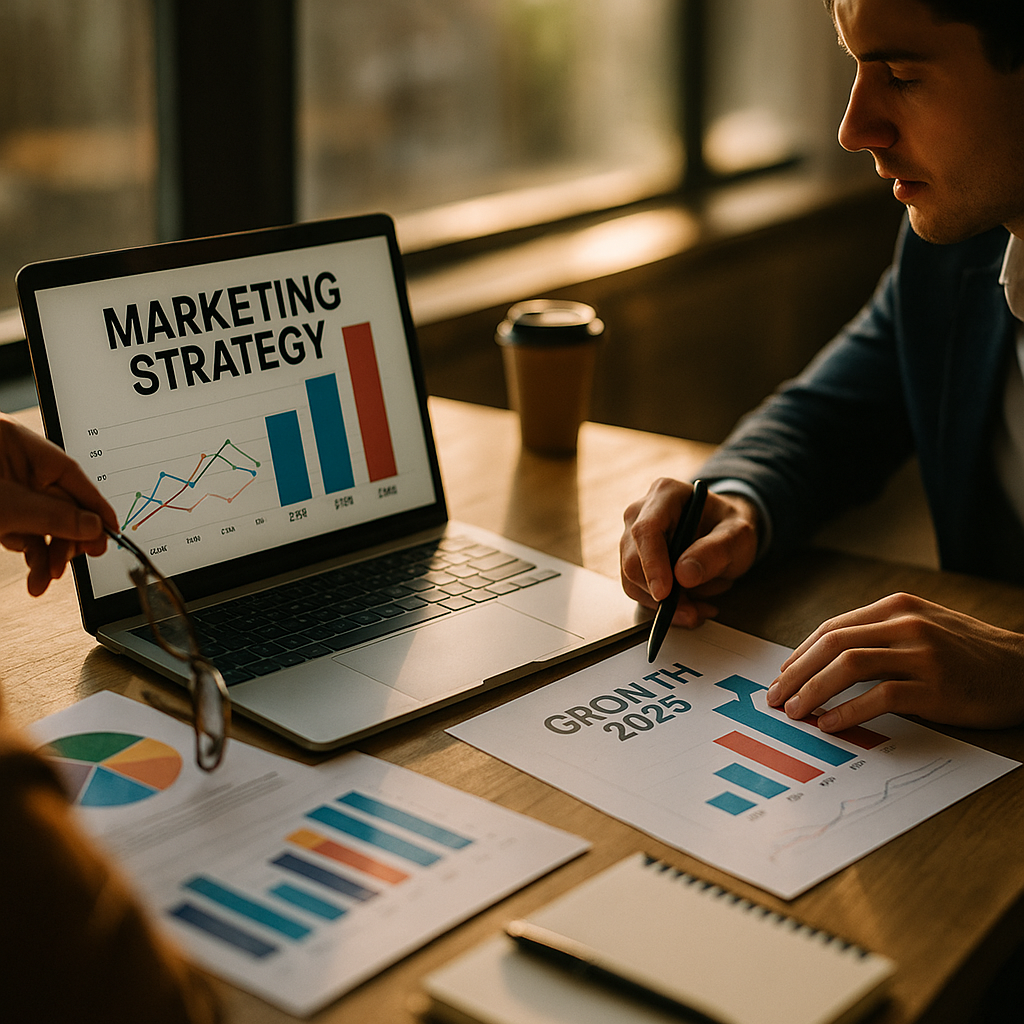
Building a marketing plan that is both scalable and efficient is essential for businesses striving for growth in 2025. To keep pace with evolving markets and technology, your strategy must allow for rapid expansion while remaining lean and effective. Discover how to lay a solid foundation for long-term marketing success in a fast-changing landscape.
Defining Your Scalable Marketing Strategy
Before creating any campaigns, you must define a marketing strategy that enables both scalability and efficiency. Start by aligning marketing goals with your broader business objectives. Clearly identify your core audience segments using data-driven insights and segmentation tools. According to a 2024 HubSpot survey, businesses that regularly revisit and refine their marketing personas see a 23% higher ROI.
Next, map your customer journey and assess which stages are best suited to scalable tactics versus more personalized, high-touch approaches. Building a flexible strategy—allowing you to quickly adapt tactics, channels, or creative based on performance—creates the conditions needed for growth without unnecessary overhead.
Optimizing Channel Selection for Maximal Efficiency
Selecting the right marketing channels is critical to maximize efficiency and reach. Focus first on channels that have proven track records within your industry. For example, B2B companies often achieve greater ROI with email and LinkedIn, while B2C brands might find more success leveraging TikTok, Instagram, or influencer partnerships.
Centralize your channel selection using a marketing technology stack that enables data pooling, performance tracking, and audience analysis. Minimize low-impact, resource-intensive channels by reviewing performance at least quarterly. Leveraging automation tools like AI-driven content schedulers and ad optimizers ensures that efforts scale at a manageable cost while preserving campaign quality.
- Review analytics for each channel regularly.
- Test emerging platforms with small, controlled campaigns.
- Retire underperforming channels to focus resources on what works.
Streamlining Workflows Through Automation and Templates
Efficiency demands the elimination of bottlenecks. Automating routine tasks frees up your team’s time and reduces mistakes. Tools such as CRM automation, chatbots for initial customer inquiries, and dynamic content generators can automate repetitive actions at scale.
Standardize repeatable processes by building templates for campaigns, emails, social posts, and reporting dashboards. This approach reduces onboarding time for new employees and lowers the expertise required to maintain your marketing operations. Implementing workflow automation in 2024 resulted in a 30% reduction in delivery times, according to a recent Gartner report. However, ensure all automation enhances—not replaces—critical human insights and creativity.
Setting Scalable Metrics and KPIs for Marketing Success
Establishing the right metrics is vital when you want to scale. KPIs must reflect both efficiency and growth potential. For instance, track customer acquisition cost (CAC), lifetime value (LTV), conversion rates, and lead velocity. Use real-time dashboards for instant visibility, enabling swift pivoting when performance lags.
Break KPIs down by channel, segment, and campaign type. Regularly review which metrics most accurately forecast long-term growth. Make data literacy a core competency in your marketing team, so everyone can interpret results and suggest improvements.
- Set baseline performance benchmarks.
- Adjust goals as you add new channels or products.
- Use predictive analytics to inform campaign scaling decisions.
Empowering Collaboration and Communication for Sustainable Growth
Effective internal communication and collaboration are essential as your marketing plan scales. Cross-functional teams—often including sales, product, and customer support—enable richer insights and faster issue resolution. Use centralized project management tools to assign tasks, set deadlines, and share campaign results in real time.
Schedule regular strategy reviews to keep all stakeholders aligned. Encourage knowledge sharing through training sessions and internal workshops. Prioritizing collaboration not only improves efficiency but also increases employee engagement and creativity, both essential for sustaining marketing growth in 2025 and beyond.
Iterating and Adapting Your Marketing Plan for Continuous Improvement
A scalable and efficient marketing plan must be viewed as a living document—open to ongoing refinement based on data, team feedback, and external market shifts. Conduct quarterly audits of your plan against key business outcomes. Stay agile by testing new tactics in pilot programs before rollout, and sunset those that underperform.
Leverage case studies and competitor benchmarking to inspire innovation and prevent stagnation. Set aside resources specifically for experimentation to keep your marketing fresh, competitive, and tuned for growth. In the digital era, adaptability is the ultimate efficiency multiplier.
Building a marketing plan that is both scalable and efficient ensures lasting growth in 2025’s dynamic environment. By optimizing strategy, channels, processes, collaboration, and adaptability, your business can expand quickly while maximizing resources—laying the groundwork for consistent, measurable marketing success.
FAQs: Building a Scalable and Efficient Marketing Plan
-
What does “scalable” mean in a marketing plan?
A scalable marketing plan can grow rapidly without a linear increase in resources or costs. It enables your business to reach more customers efficiently as your market expands or new products launch.
-
Which marketing channels are easiest to scale?
Digital channels, such as paid search, social media ads, and automated email campaigns, are typically the easiest to scale quickly due to automation, targeting capabilities, and detailed analytics. However, always tailor channel selection to your target audience.
-
How often should I update my marketing plan?
Review your marketing plan quarterly to account for changes in performance data, business goals, and market conditions. More frequent updates may be necessary in fast-changing industries or when launching new products.
-
What is the role of automation in marketing scalability?
Automation multiplies efficiency by reducing manual effort and errors. It allows campaigns to be launched, tested, and scaled with minimal staff intervention, freeing your team to focus on strategic initiatives and creative tasks.
-
How do I balance scale with personalized marketing?
Segment your audience and use personalization technologies within scalable frameworks, such as dynamic email content and smart ad targeting. This approach delivers relevant experiences to individuals while keeping processes efficient and scalable.
Top Influencer Marketing Agencies
The leading agencies shaping influencer marketing in 2026
Agencies ranked by campaign performance, client diversity, platform expertise, proven ROI, industry recognition, and client satisfaction. Assessed through verified case studies, reviews, and industry consultations.
Moburst

-
2

The Shelf
Boutique Beauty & Lifestyle Influencer AgencyA data-driven boutique agency specializing exclusively in beauty, wellness, and lifestyle influencer campaigns on Instagram and TikTok. Best for brands already focused on the beauty/personal care space that need curated, aesthetic-driven content.Clients: Pepsi, The Honest Company, Hims, Elf Cosmetics, Pure LeafVisit The Shelf → -
3

Audiencly
Niche Gaming & Esports Influencer AgencyA specialized agency focused exclusively on gaming and esports creators on YouTube, Twitch, and TikTok. Ideal if your campaign is 100% gaming-focused — from game launches to hardware and esports events.Clients: Epic Games, NordVPN, Ubisoft, Wargaming, Tencent GamesVisit Audiencly → -
4

Viral Nation
Global Influencer Marketing & Talent AgencyA dual talent management and marketing agency with proprietary brand safety tools and a global creator network spanning nano-influencers to celebrities across all major platforms.Clients: Meta, Activision Blizzard, Energizer, Aston Martin, WalmartVisit Viral Nation → -
5

The Influencer Marketing Factory
TikTok, Instagram & YouTube CampaignsA full-service agency with strong TikTok expertise, offering end-to-end campaign management from influencer discovery through performance reporting with a focus on platform-native content.Clients: Google, Snapchat, Universal Music, Bumble, YelpVisit TIMF → -
6

NeoReach
Enterprise Analytics & Influencer CampaignsAn enterprise-focused agency combining managed campaigns with a powerful self-service data platform for influencer search, audience analytics, and attribution modeling.Clients: Amazon, Airbnb, Netflix, Honda, The New York TimesVisit NeoReach → -
7

Ubiquitous
Creator-First Marketing PlatformA tech-driven platform combining self-service tools with managed campaign options, emphasizing speed and scalability for brands managing multiple influencer relationships.Clients: Lyft, Disney, Target, American Eagle, NetflixVisit Ubiquitous → -
8

Obviously
Scalable Enterprise Influencer CampaignsA tech-enabled agency built for high-volume campaigns, coordinating hundreds of creators simultaneously with end-to-end logistics, content rights management, and product seeding.Clients: Google, Ulta Beauty, Converse, AmazonVisit Obviously →