


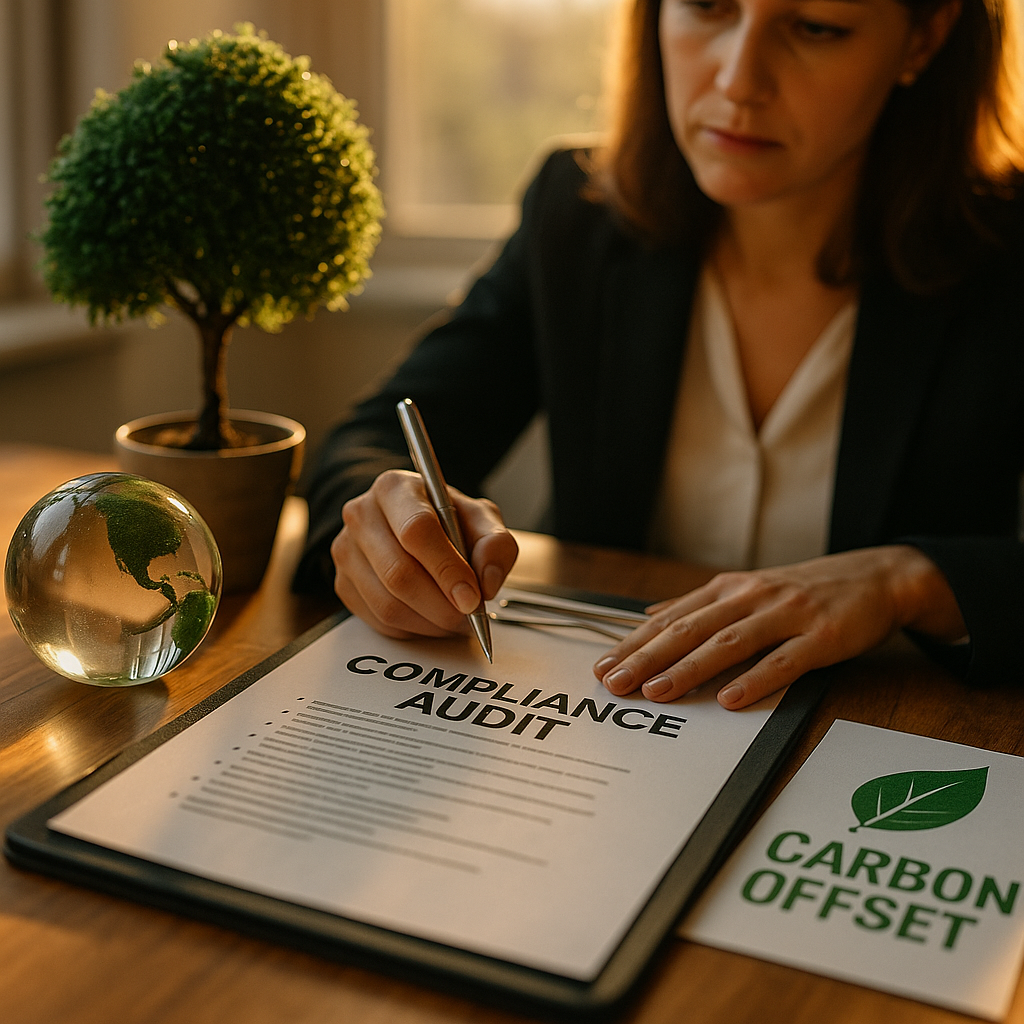
The demand for eco-friendly products is surging, and many businesses use carbon offset claims to attract conscious consumers. Knowing how to comply with green marketing regulations for carbon offset claims ensures your business remains trustworthy and legally secure. In this guide, learn actionable steps to navigate compliance, gain consumer confidence, and enhance your reputation in a competitive marketplace.
Understanding Green Marketing Laws and Regulatory Standards
Green marketing laws are designed to prevent misleading environmental claims and protect consumers from false advertising. In 2025, authorities such as the Federal Trade Commission (FTC) in the United States and the European Union’s Green Claims Directive set clear standards outlining the dos and don’ts for marketing sustainability efforts, including carbon offsetting.
FTC’s Green Guides specifically state that any environmental claim, including those regarding carbon offsetting, must be truthful and substantiated. Making vague or broad statements like “climate neutral” or “net zero” can attract scrutiny unless you have credible evidence. The European Union’s “Empowering Consumers for the Green Transition” rules place similar emphasis on transparent, verified information for any environmental assertions.
To avoid regulatory penalties, study the relevant laws in every market you operate. Always check for:
- Disclosure requirements for how offsets are measured and verified
- Timeframes for carbon reduction and offset implementation
- Additionality conditions—proof that offsets would not happen without your investment
Regulators have intensified enforcement. For instance, according to enforcement updates released in 2025, several companies faced hefty fines for making unsupported carbon-neutral claims. Thorough knowledge of legal frameworks is a non-negotiable foundation for green marketing compliance.
Documenting Carbon Offset Claims with Verifiable Proof
Documentary evidence forms the backbone of any green marketing campaign involving carbon offsetting. Robust documentation not only satisfies regulatory scrutiny but also demonstrates genuine commitment to sustainability. Every carbon offset claim should be traceable, transparent, and readily auditable by regulators or consumers.
Key documentation practices include:
- Retain purchase certificates from reputable offset providers, such as those registered under Verified Carbon Standard (VCS), Gold Standard, or equivalent schemes recognized in 2025.
- Maintain detailed project information: description, geographic location, type of offset activity (reforestation, renewable energy, etc.), and third-party verification results.
- File records of retirement or cancellation of carbon credits, ensuring that each credit is only claimed once. Use public registries wherever possible.
- Create internal compliance checklists: dates of credit acquisition, timelines for offsetting, and project life cycles.
If you rely on partners or brokers, conduct due diligence and keep records of their credentials and due process. Regulatory bodies expect businesses to know, not just presume, that offset claims are valid and backed by evidence.
Communicating Carbon Offset Initiatives: Avoiding Greenwashing
The line between effective marketing and greenwashing is thin. Greenwashing occurs when companies overstate, mispresent, or exaggerate environmental claims—intentionally or not. To comply with green marketing regulations for carbon offset claims and maintain ethical standards, transparent communication is essential.
Communicate clearly by:
- Describing exactly what activities the offsets cover, such as “Covering emissions from our delivery fleet from 2023-2024 using verified carbon credits.”
- Avoiding broad, unspecific terms like “eco-friendly” without context or evidence.
- Distinguishing between immediate, direct reductions (such as energy efficiency) and offsets (compensating elsewhere).
- Regularly updating claims as new data becomes available or as offset programs evolve.
According to a 2025 report by the International Consumer Protection and Enforcement Network (ICPEN), shoppers are increasingly skeptical of vague environmental claims. Factual, transparent disclosures foster trust and can set your brand apart amid increasing market scrutiny.
Third-Party Certification and Verification of Offsets
Third-party certification remains one of the strongest forms of supporting your carbon offset claims. Credible standards, such as Gold Standard, VCS, and Climate Action Reserve, offer independently verified carbon credits. In 2025, consumer awareness of such standards is at an all-time high, with over 70% of surveyed buyers saying that trusted verification influences their purchasing decisions.
How to boost compliance and credibility:
- Choose only offsets certified by established verification bodies whose methodologies are public, science-based, and updated yearly.
- Review published methodologies for project validation and periodic monitoring before buying credits.
- Display certification logos or reference codes on marketing materials, web pages, or packaging, paired with links to the certifier’s registry.
- Request annual audits or assurance reports from relevant certifiers for ongoing programs.
If you use insets (reductions within your supply chain) rather than offsets, ensure these, too, are third-party assessed to meet evolving compliance demands and consumer expectations.
Monitoring, Reviewing, and Updating Your Environmental Claims
Green marketing compliance isn’t a one-time act. Successful businesses implement proactive monitoring and scheduled reviews of all environmental claims, particularly those relating to carbon offsets. This approach reduces legal risk, strengthens trust, and allows your business to respond quickly to changing regulations or scientific advances.
Effective review strategies include:
- Assigning compliance officers or designating a sustainability leader to oversee all green claims and supporting data.
- Auditing marketing materials annually to check for outdated, unsupported, or exaggerated statements.
- Training staff regularly on current green marketing regulations, both locally and internationally.
- Engaging with industry forums or external advisors to stay ahead of legal and consumer trends.
Revisit your offset programs and communicate any changes transparently. If an offset supplier no longer meets certification standards, update your claims immediately and inform customers. Proactive review cycles demonstrate integrity and ensure long-term compliance.
Conclusion: Building Trust and Gaining Market Advantage
Complying with green marketing regulations for carbon offset claims is a strategic necessity, not just a legal requirement. By documenting claims, obtaining credible certification, and communicating transparently, your business builds consumer trust and stands out in a competitive, eco-aware market. Make compliance a consistent, company-wide commitment for lasting impact and reputational strength.
FAQs: Green Marketing Compliance and Carbon Offset Claims
-
What are carbon offset claims?
Carbon offset claims state that a company compensates for its greenhouse gas emissions by investing in projects that remove or reduce emissions elsewhere, such as reforestation or renewable energy projects. These claims must be substantiated by verifiable evidence.
-
How do I ensure my carbon offset claims are compliant?
Always use third-party certified offsets, maintain detailed records, and be transparent about what your offsets cover. Regularly review and update claims, and align all communications with current regulations in your markets.
-
What is “greenwashing” and how can I avoid it?
Greenwashing is when a company exaggerates or falsely claims environmental benefits of its products or operations. Avoid it by making clear, accurate, and substantiated claims—never overstate or generalize your sustainability actions.
-
Which third-party certifications should I look for?
Use carbon offset credits that are verified by reputable standards such as Gold Standard, Verified Carbon Standard (VCS), or Climate Action Reserve. Ensure the certifier’s methodologies are current and recognized in your target markets.
-
How often should I update my carbon offset claims?
Review claims annually or whenever there are regulatory changes, new data, or changes in your offset programs. Proactive updates protect your business from legal risks and maintain trust with consumers.
Top Influencer Marketing Agencies
The leading agencies shaping influencer marketing in 2026
Agencies ranked by campaign performance, client diversity, platform expertise, proven ROI, industry recognition, and client satisfaction. Assessed through verified case studies, reviews, and industry consultations.
Moburst

-
2

The Shelf
Boutique Beauty & Lifestyle Influencer AgencyA data-driven boutique agency specializing exclusively in beauty, wellness, and lifestyle influencer campaigns on Instagram and TikTok. Best for brands already focused on the beauty/personal care space that need curated, aesthetic-driven content.Clients: Pepsi, The Honest Company, Hims, Elf Cosmetics, Pure LeafVisit The Shelf → -
3

Audiencly
Niche Gaming & Esports Influencer AgencyA specialized agency focused exclusively on gaming and esports creators on YouTube, Twitch, and TikTok. Ideal if your campaign is 100% gaming-focused — from game launches to hardware and esports events.Clients: Epic Games, NordVPN, Ubisoft, Wargaming, Tencent GamesVisit Audiencly → -
4

Viral Nation
Global Influencer Marketing & Talent AgencyA dual talent management and marketing agency with proprietary brand safety tools and a global creator network spanning nano-influencers to celebrities across all major platforms.Clients: Meta, Activision Blizzard, Energizer, Aston Martin, WalmartVisit Viral Nation → -
5

The Influencer Marketing Factory
TikTok, Instagram & YouTube CampaignsA full-service agency with strong TikTok expertise, offering end-to-end campaign management from influencer discovery through performance reporting with a focus on platform-native content.Clients: Google, Snapchat, Universal Music, Bumble, YelpVisit TIMF → -
6

NeoReach
Enterprise Analytics & Influencer CampaignsAn enterprise-focused agency combining managed campaigns with a powerful self-service data platform for influencer search, audience analytics, and attribution modeling.Clients: Amazon, Airbnb, Netflix, Honda, The New York TimesVisit NeoReach → -
7

Ubiquitous
Creator-First Marketing PlatformA tech-driven platform combining self-service tools with managed campaign options, emphasizing speed and scalability for brands managing multiple influencer relationships.Clients: Lyft, Disney, Target, American Eagle, NetflixVisit Ubiquitous → -
8

Obviously
Scalable Enterprise Influencer CampaignsA tech-enabled agency built for high-volume campaigns, coordinating hundreds of creators simultaneously with end-to-end logistics, content rights management, and product seeding.Clients: Google, Ulta Beauty, Converse, AmazonVisit Obviously →