


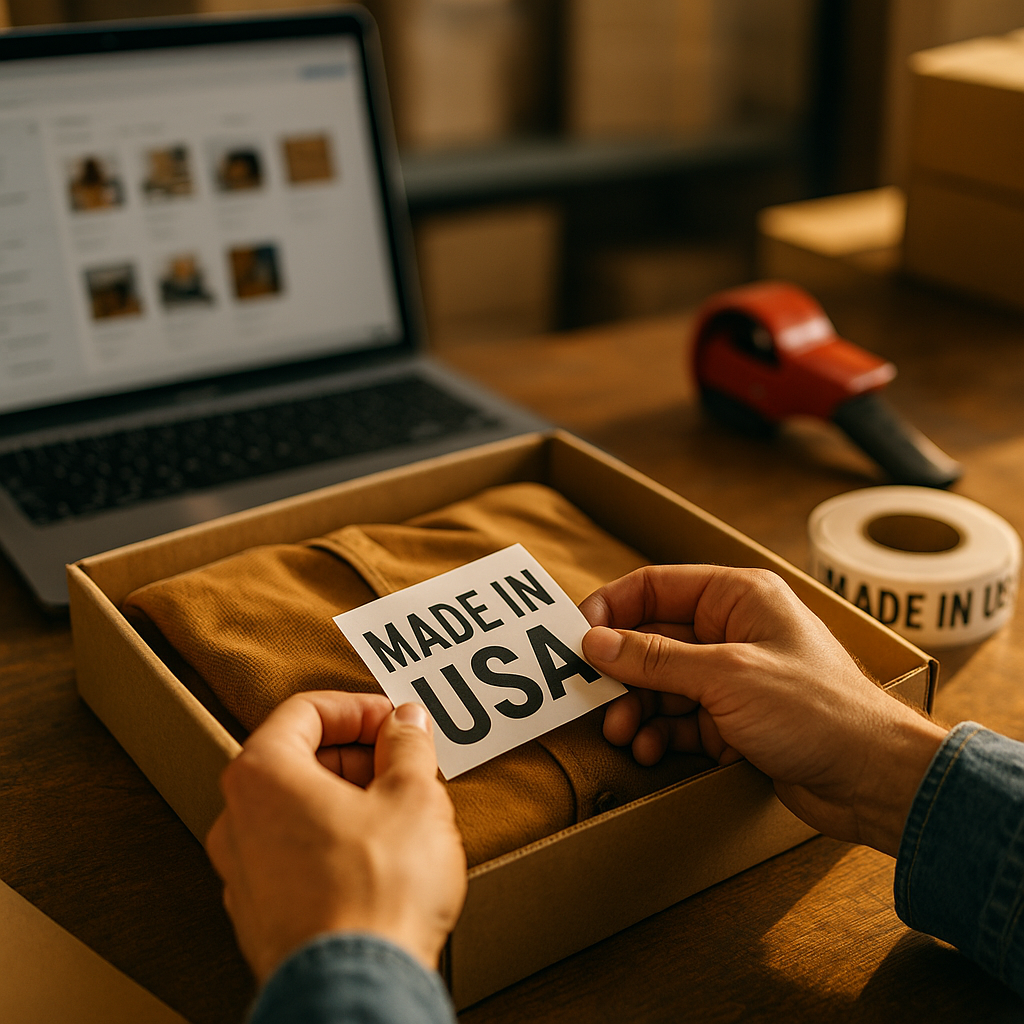
Complying with “Made in” labeling regulations is vital for e-commerce sellers in 2025. The primary keyword “Made in labeling compliance” ensures your products meet legal requirements and foster consumer trust. As standards grow stricter worldwide, understanding proper labeling can be the factor that elevates your brand—or exposes it to costly penalties. Are you labeling your products correctly?
What Is “Made in” Labeling Compliance?
Understanding what constitutes “Made in” labeling compliance is the critical first step for any online seller. These regulations determine how you must disclose product origins to buyers, with the aim of protecting consumers and promoting transparency. While many sellers believe a simple country designation suffices, official guidelines—especially in key markets like the United States, European Union, Canada, and Australia—are more nuanced.
In essence, “Made in” claims should accurately and verifiably reflect the actual manufacturing location and process of the product. Any false or misleading country-of-origin label exposes your business to severe penalties and reputational damage. Since e-commerce sellers routinely source from global vendors, it’s crucial to understand that each jurisdiction sets its own thresholds for what constitutes “substantial transformation” or adequate manufacturing to merit a “Made in [Country]” claim.
Why “Made in” Labeling Laws Matter for Online Sellers
Global regulatory agencies have intensified enforcement of country-of-origin rules in 2025 due to increasing cross-border e-commerce. Compliance isn’t optional: regulators such as the U.S. Federal Trade Commission, the EU’s Market Surveillance Authorities, and Australia’s ACCC are imposing higher fines and bolstering online monitoring to catch non-compliant sellers. Failing to meet “Made in” labeling laws may result in:
- Product removal from marketplaces (Amazon, eBay, Shopify, etc.)
- Monetary penalties that can exceed $40,000 per violation in the United States
- Loss of import/export privileges for repeat offenders
- Negative publicity and irreparable brand damage
Moreover, informed shoppers are increasingly scrutinizing product origins due to sustainability and ethical production concerns. Accurate labeling can actually boost conversion rates and foster long-term customer loyalty.
Key Elements of “Made in” Labeling Requirements
Staying compliant means understanding what regulators expect on your labels. The main elements typically include:
- Country of Origin Statement: The prominent phrase, usually “Made in [Country]” or “Product of [Country]”.
- Placement and Font Size: Labels must be easily visible and legible on product packaging, tags, or in digital listings when sold online.
- Substantial Transformation Standard: Many jurisdictions, including the U.S., require most manufacturing steps to occur in the claimed country—not just minimal assembly or packaging.
- Supporting Documentation: Sellers must be able to substantiate claims with invoices, manufacturer certifications, bills of materials, and shipping records if queried by authorities.
Misleading phrases such as “Designed in” or “Assembled in” must never be conflated with true “Made in” claims, unless you also clarify the true scope of manufacturing.
Securing Accurate “Made in” Labeling for International E-commerce
Sourcing components or finished goods from multiple countries is standard in today’s globalized supply chains. E-commerce sellers should adopt a systematic approach to ensure every product is correctly labeled:
- Map Your Supply Chain: Understand where each product and component originates and how much transformation occurs in each location.
- Consult Legal Experts: Regulatory standards often change. Reach out to trade compliance specialists or attorneys familiar with labeling laws in your key markets before launching or updating products.
- Request Documentation from Suppliers: Always keep updated manufacturer declarations and certificates to verify origin claims upon request.
- Train Your Team: Ensure product managers and listing coordinators know labeling rules and how to apply them accurately both physically and in online product descriptions.
- Regularly Audit Listings: Conduct quarterly reviews of your SKUs to verify ongoing compliance and update any outdated or ambiguous origin claims.
Marketplaces like Amazon and eBay have in 2025 begun suspending seller accounts for inaccurate labeling—don’t assume your risk is low simply because you’re selling online.
Common Pitfalls and How to Avoid Them
The most frequent “Made in” labeling compliance errors among e-commerce sellers arise from misunderstanding “substantial transformation” or failing to update origin claims as supply chains evolve. Additional pitfalls include:
- Relying on supplier country as default: Just because a product is shipped from China doesn’t mean it was made there. Understand if significant work was done elsewhere.
- Neglecting to relabel after design changes: Tweaks to the manufacturing process or vendors may shift the qualifying country of origin.
- Making overbroad claims: Claims like “Made in USA” are only allowed if all—or virtually all—significant parts, processing, and labor originated domestically.
- Omitting digital labeling: For products distributed online, labeling in product listings is just as crucial as physical packaging in the eyes of many regulators.
- Confusing “Assembled in” with “Made in”: Use phrases like “Assembled in [Country] with global components” when appropriate, but never interchange these terms.
To avoid these risks, build compliance checks into your product launch workflow and assign accountability for ongoing accuracy.
Best Practices for Earning Consumer Trust with Transparent Labeling
While compliance is mandatory, transparent “Made in” labeling can also boost your brand reputation. In 2025, consumers continue to reward transparency and authenticity. Follow these best practices:
- Be explicit: Use clear, honest language. If your product contains imported components, phrase labels accurately—e.g., “Made in USA with imported materials”.
- Include documentation: If feasible, provide customers access to more information—such as a traceability statement or a quick FAQ about product origin and sourcing.
- Update proactively: If your supply chain shifts, immediately revise all digital and physical labels before accepting new orders.
- Educate buyers: Add a short explanation of your labeling policy in your online store FAQ or About Us page—transparency builds credibility.
- Monitor market trends: New consumer concerns, such as carbon footprint or ethical sourcing, intersect with origin claims. Be prepared to update your labeling as consumer expectations evolve.
Effective country-of-origin labeling isn’t just about avoiding penalties; it’s a chance to demonstrate your integrity and meet rising consumer expectations.
Conclusion: Position Your Brand for Success with Accurate “Made in” Labels
Understanding and following “Made in” labeling compliance gives your e-commerce business a decisive edge in 2025. By ensuring your labels are honest, thorough, and regularly updated, you stay ahead of regulators and win customer trust. Make accurate product origin labeling central to your quality control—your bottom line, and your brand, depend on it.
FAQs on “Made in” Labeling Compliance
-
Do U.S.-based e-commerce sellers need to follow “Made in” labeling rules if they only sell online?
Yes. U.S. law applies to both physical and online sales. The FTC requires that “Made in USA” claims be truthful and substantiated, even if your product never appears in a brick-and-mortar store. -
What documents should I keep to prove my product’s country of origin?
Maintain invoices, certificates of origin, manufacturer affidavits, bills of materials, and relevant shipping documents. These are crucial if authorities audit your business or if a consumer challenges your claim. -
How often should I review and update “Made in” claims on my product listings?
Review at least once per quarter, and immediately after any change in supplier, factory, or product design. Marketplace rules often require immediate updates to stay compliant. -
Can I use “Assembled in” or “Designed in” labels instead?
Only if accurate and not misleading. “Assembled in” or “Designed in” may supplement but not replace a true “Made in” claim when the majority of manufacturing happens elsewhere. Always clarify the extent of work done in each country. -
What are the penalties for incorrect “Made in” labeling in 2025?
Penalties can include product removal from online marketplaces, fines up to $40,000 per violation in the United States, loss of selling privileges, and legal action. Repeated violations can cause long-term brand damage.
Top Influencer Marketing Agencies
The leading agencies shaping influencer marketing in 2026
Agencies ranked by campaign performance, client diversity, platform expertise, proven ROI, industry recognition, and client satisfaction. Assessed through verified case studies, reviews, and industry consultations.
Moburst

-
2

The Shelf
Boutique Beauty & Lifestyle Influencer AgencyA data-driven boutique agency specializing exclusively in beauty, wellness, and lifestyle influencer campaigns on Instagram and TikTok. Best for brands already focused on the beauty/personal care space that need curated, aesthetic-driven content.Clients: Pepsi, The Honest Company, Hims, Elf Cosmetics, Pure LeafVisit The Shelf → -
3

Audiencly
Niche Gaming & Esports Influencer AgencyA specialized agency focused exclusively on gaming and esports creators on YouTube, Twitch, and TikTok. Ideal if your campaign is 100% gaming-focused — from game launches to hardware and esports events.Clients: Epic Games, NordVPN, Ubisoft, Wargaming, Tencent GamesVisit Audiencly → -
4

Viral Nation
Global Influencer Marketing & Talent AgencyA dual talent management and marketing agency with proprietary brand safety tools and a global creator network spanning nano-influencers to celebrities across all major platforms.Clients: Meta, Activision Blizzard, Energizer, Aston Martin, WalmartVisit Viral Nation → -
5

The Influencer Marketing Factory
TikTok, Instagram & YouTube CampaignsA full-service agency with strong TikTok expertise, offering end-to-end campaign management from influencer discovery through performance reporting with a focus on platform-native content.Clients: Google, Snapchat, Universal Music, Bumble, YelpVisit TIMF → -
6

NeoReach
Enterprise Analytics & Influencer CampaignsAn enterprise-focused agency combining managed campaigns with a powerful self-service data platform for influencer search, audience analytics, and attribution modeling.Clients: Amazon, Airbnb, Netflix, Honda, The New York TimesVisit NeoReach → -
7

Ubiquitous
Creator-First Marketing PlatformA tech-driven platform combining self-service tools with managed campaign options, emphasizing speed and scalability for brands managing multiple influencer relationships.Clients: Lyft, Disney, Target, American Eagle, NetflixVisit Ubiquitous → -
8

Obviously
Scalable Enterprise Influencer CampaignsA tech-enabled agency built for high-volume campaigns, coordinating hundreds of creators simultaneously with end-to-end logistics, content rights management, and product seeding.Clients: Google, Ulta Beauty, Converse, AmazonVisit Obviously →