


Most Brands Are Still Writing One-Off Briefs for Serialized Formats
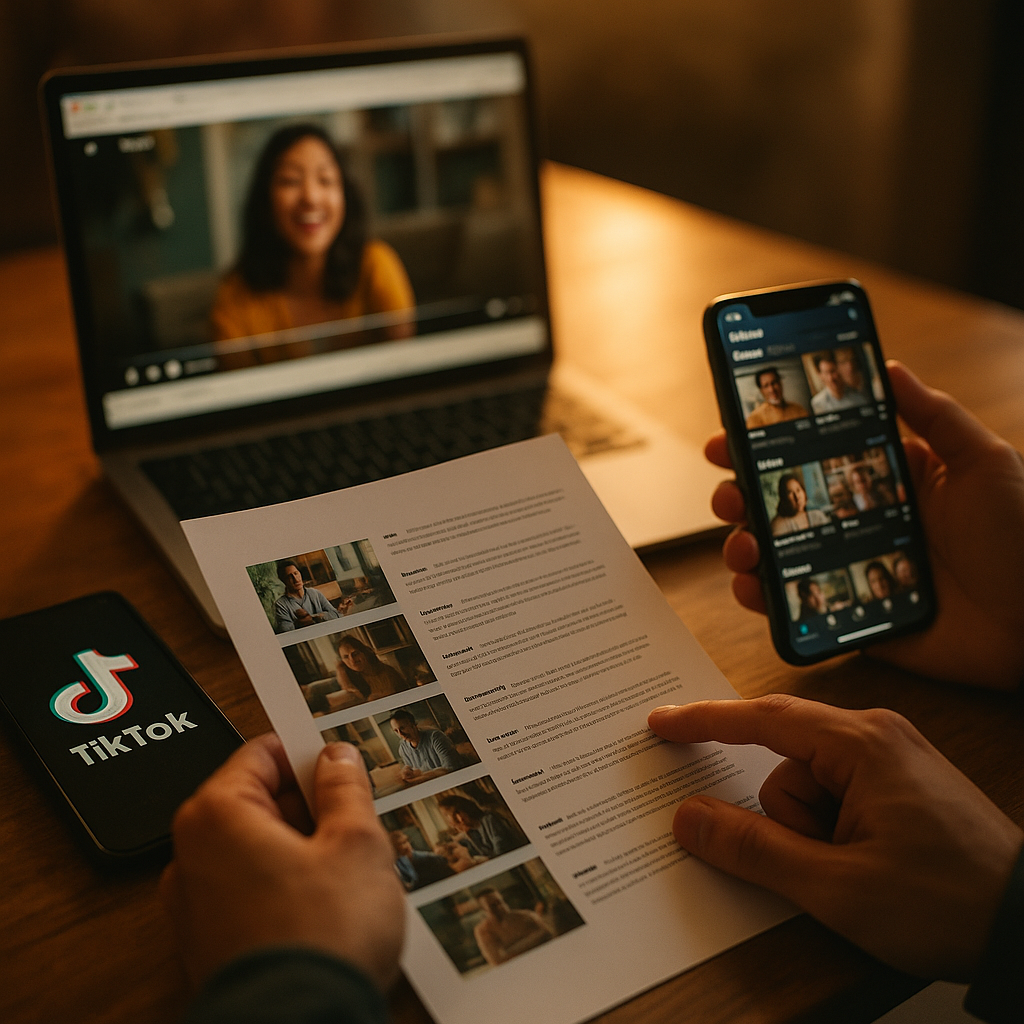
Sixty-two percent of branded TikTok series never make it past episode three. Not because the creator failed. Because the brief did. If your team is still handing creators a single-page content spec for a format that demands episodic logic, narrative arcs, and audience retention strategy, you are producing social posts, not brand television. The creator-driven narrative brief fixes that.
Why Short-Form TV-Adjacent Formats Demand a Different Brief Architecture
TikTok Series, Meta Series Hubs, and YouTube Shorts shelves are not playlists. They are serialized content destinations where audiences return with expectation. That single word matters enormously: expectation. Broadcast television trained audiences to anticipate a recurring character, a continuing storyline, a consistent tone. Short-form TV-adjacent formats are now triggering the same cognitive contract, at 90 seconds per episode.
Brands that understand this shift are treating their creator partnerships the way a cable network treats a showrunner relationship. The brand is the network. The creator is the showrunner. The brief is the writers’ room bible. Every other analogy undersells the operational and creative investment this format demands.
For practical frameworks on briefing creators on episodic TikTok series, the fundamentals of arc-based storytelling and episode-level direction deserve their own documentation layer, separate from your standard one-off post brief.
The Four Layers of a Creator-Driven Narrative Brief
A production brief for serialized short-form content operates on four distinct layers. Conflate them in a single document and you create confusion. Separate them and you give the creator clear authority at each level.
Layer 1: Series Bible. This is the brand’s non-negotiable document. It defines the premise, the recurring characters or personas, the tonal guardrails, the compliance requirements per the FTC’s endorsement guidelines, and the brand integration rules for every episode. It does not script individual episodes. It governs the universe.
Layer 2: Season Arc Brief. Before a single episode is shot, the brand and creator should align on where the season begins and ends. What is the narrative tension in episode one? What question does the season finale answer? Glossier’s TikTok micro-series approach and Duolingo’s character-driven recurring formats both demonstrate that episodic consistency is planned, not improvised. This layer is where cliffhangers, recurring motifs, and product integration milestones are mapped across episodes. For deeper mechanics on this, the work around TikTok series briefs, cliffhangers, and commerce is directly applicable to Meta formats as well.
Layer 3: Episode-Level Production Direction. This is where most brand briefs currently live, and where most stop. An episode-level brief should specify the hook premise, the narrative beat the episode carries forward, any product integration timing, the call-to-action structure, and the episode’s role in the overall arc (setup, escalation, resolution). It should never fully script the creator’s delivery. That is what destroys authenticity and kills watch time.
Layer 4: Format Adaptation Notes. The same episode often needs to live across TikTok, Reels, and a Meta Series Hub simultaneously. Aspect ratio, caption behavior, and algorithmic context differ. Briefing creators once and adapting across platforms requires explicit format notes embedded in the episode brief, not left to post-production guesswork.
A creator-driven narrative brief is not a looser version of a production script. It is a tighter version of a showrunner’s episode outline, with brand constraints written in, not bolted on after the fact.
What “TV-Adjacent” Actually Means for Brand Compliance and Legal
Serialized formats introduce a compliance complexity that one-off posts do not. When a creator appears across eight episodes with a recurring brand integration, the FTC’s ongoing relationship disclosure requirements become more complex to manage. The disclosure must be present and clear in each episode, not just the first. Viewers who encounter episode five through organic discovery have no memory of your episode one disclosure.
Your series bible must include a disclosure protocol section. This is non-negotiable. Build the disclosure language into the episode brief template so the creator does not have to remember it independently. FTC guidance on endorsements covers recurring relationships explicitly, and your legal team should be reviewing series contracts differently from single-post agreements.
Beyond disclosure, serialized content creates brand safety exposure across a longer timeline. Episode three may be perfectly on-brand while episode six, shot three weeks later, veers off-tone. Building episodic review checkpoints into your production calendar is an operational requirement, not a creative preference.
Retention Mechanics Are Your Production KPIs
Television is measured on audience retention. Your TikTok series should be too.
TikTok’s native analytics surface average watch percentage, re-watches, and series completion rates for creators using the Series feature. TikTok for Business provides campaign-level data that, when combined with creator-side Series analytics, gives brand teams a clearer picture of episode-level performance than a single video’s view count ever could.
The brief should specify target retention metrics by episode. Not as punishment thresholds, but as creative direction. If the brand’s goal is 65% average watch completion on a 90-second episode, the creator needs to know that when writing the hook and pacing the brand integration. Front-loading the product at second five is a one-off social habit. In a serialized format, it signals to returning viewers that they are being sold to, not entertained. That erodes the episodic trust you spent three episodes building.
For teams scaling variant testing across episodes, AI-driven hook and pacing testing can accelerate learning cycles significantly, especially when comparing hook variants across early-season episodes where audience patterns are still forming.
Meta Series Hubs: The Underused Brand Television Infrastructure
Meta’s Series Hubs on Facebook and Instagram Reels are arguably the most underused serialized brand content infrastructure in social media right now. Brands can create a named series, organize episodes sequentially, and give audiences a destination to binge, subscribe to, and share. Meta for Business supports Series Hub creation directly through Creator Studio and Business Suite, yet most brand teams are not using this feature in their content strategy at all.
The production brief for a Meta Series Hub needs to account for two distinct viewer journeys: the linear viewer who follows episode-by-episode, and the discovery viewer who lands on episode four with no prior context. Your episode brief template should require each episode to work as a standalone entry point while still rewarding viewers who have seen previous episodes. That is the same challenge network television solved with the “previously on” segment. In short-form, you solve it through contextual hooks and recurring visual cues, not recap narration.
The brands winning on Meta Series Hubs are thinking like streaming executives: they are programming destinations, not publishing posts.
Building the Brief Template: What to Include, What to Cut
A practical creator-driven narrative brief for a short-form TV-adjacent format should contain the following elements, and nothing more that would constrain the creator’s performance.
- Series premise statement: One sentence. What is this show about?
- Episode number and arc position: Where does this episode sit in the season structure?
- Narrative goal for this episode: What must the audience feel, learn, or wonder by the end?
- Brand integration timing and format: When the product appears, how it appears, and what the creator may and may not claim.
- Hook brief: The emotional or curiosity premise for the opening three seconds. Not a script. A premise.
- Cliffhanger or bridge: How does this episode create pull-through to the next?
- Disclosure requirement: Exact language and placement, non-negotiable.
- Format adaptation notes: Aspect ratio, caption behavior, platform-specific CTA.
- Retention target: The watch completion percentage the episode is designed to hit.
What you cut: full scripts, mandatory phrase lists, excessive visual direction that belongs in a post-production note rather than a production brief. The goal is to give the creator enough structure to build on and enough freedom to perform authentically. For brands developing entertainment-first approaches, the principles behind entertainment-first creator briefs apply directly to serialized production direction.
Start with your series bible. Build episode one’s brief from it. Evaluate retention data after two episodes before finalizing the arc brief for the remainder of the season. Adapt the template based on what the creator’s audience is actually watching.
Frequently Asked Questions
What is a creator-driven narrative brief for short-form TV-adjacent formats?
A creator-driven narrative brief is a structured production direction document designed for serialized short-form content formats like TikTok Series and Meta Series Hubs. Unlike a standard one-off post brief, it operates across four layers: a series bible, a season arc brief, episode-level production direction, and format adaptation notes. It gives creators the narrative framework and brand guardrails to produce episodic content while preserving their authentic voice and performance style.
How is a TikTok Series brief different from a regular influencer brief?
A standard influencer brief is designed for a single piece of content with a defined deliverable. A TikTok Series brief is a production document that governs multiple episodes, each with a defined role in a larger narrative arc. It includes arc positioning, cliffhanger direction, episodic retention targets, and cross-episode brand integration logic, none of which are relevant to one-off post briefs.
How do FTC disclosure requirements apply to serialized branded content?
The FTC requires that material connections between brands and creators be disclosed clearly in every piece of content, including every episode of a serialized series. A viewer who discovers episode five has no memory of disclosures made in earlier episodes. Your series brief must include mandatory disclosure language and placement requirements for each episode individually, and your legal team should review series contracts as ongoing relationship agreements rather than single-post deliverable agreements.
What retention metrics should brands target for short-form serialized episodes?
While benchmarks vary by category and creator audience, brand teams running TikTok Series campaigns should aim for at least 60 to 70 percent average watch completion on episodes under two minutes. Meta Series Hub episodes benefit from similar targets. These figures should be written into the episode brief as creative direction, informing the creator’s pacing and hook structure rather than being applied only as post-launch evaluation criteria.
Can the same creator brief work across TikTok and Meta Series Hubs simultaneously?
The core narrative direction can be shared, but format adaptation notes must be platform-specific. TikTok’s algorithmic discovery context, aspect ratio, and caption behavior differ from Instagram Reels and Facebook Series Hubs. A well-constructed brief includes a shared episode narrative layer and separate format adaptation sections for each platform destination, ensuring the creator produces appropriately tailored versions without requiring a separate briefing process for each platform.
Top Influencer Marketing Agencies
The leading agencies shaping influencer marketing in 2026
Agencies ranked by campaign performance, client diversity, platform expertise, proven ROI, industry recognition, and client satisfaction. Assessed through verified case studies, reviews, and industry consultations.
Moburst

-
2

The Shelf
Boutique Beauty & Lifestyle Influencer AgencyA data-driven boutique agency specializing exclusively in beauty, wellness, and lifestyle influencer campaigns on Instagram and TikTok. Best for brands already focused on the beauty/personal care space that need curated, aesthetic-driven content.Clients: Pepsi, The Honest Company, Hims, Elf Cosmetics, Pure LeafVisit The Shelf → -
3

Audiencly
Niche Gaming & Esports Influencer AgencyA specialized agency focused exclusively on gaming and esports creators on YouTube, Twitch, and TikTok. Ideal if your campaign is 100% gaming-focused — from game launches to hardware and esports events.Clients: Epic Games, NordVPN, Ubisoft, Wargaming, Tencent GamesVisit Audiencly → -
4

Viral Nation
Global Influencer Marketing & Talent AgencyA dual talent management and marketing agency with proprietary brand safety tools and a global creator network spanning nano-influencers to celebrities across all major platforms.Clients: Meta, Activision Blizzard, Energizer, Aston Martin, WalmartVisit Viral Nation → -
5

The Influencer Marketing Factory
TikTok, Instagram & YouTube CampaignsA full-service agency with strong TikTok expertise, offering end-to-end campaign management from influencer discovery through performance reporting with a focus on platform-native content.Clients: Google, Snapchat, Universal Music, Bumble, YelpVisit TIMF → -
6

NeoReach
Enterprise Analytics & Influencer CampaignsAn enterprise-focused agency combining managed campaigns with a powerful self-service data platform for influencer search, audience analytics, and attribution modeling.Clients: Amazon, Airbnb, Netflix, Honda, The New York TimesVisit NeoReach → -
7

Ubiquitous
Creator-First Marketing PlatformA tech-driven platform combining self-service tools with managed campaign options, emphasizing speed and scalability for brands managing multiple influencer relationships.Clients: Lyft, Disney, Target, American Eagle, NetflixVisit Ubiquitous → -
8

Obviously
Scalable Enterprise Influencer CampaignsA tech-enabled agency built for high-volume campaigns, coordinating hundreds of creators simultaneously with end-to-end logistics, content rights management, and product seeding.Clients: Google, Ulta Beauty, Converse, AmazonVisit Obviously →