


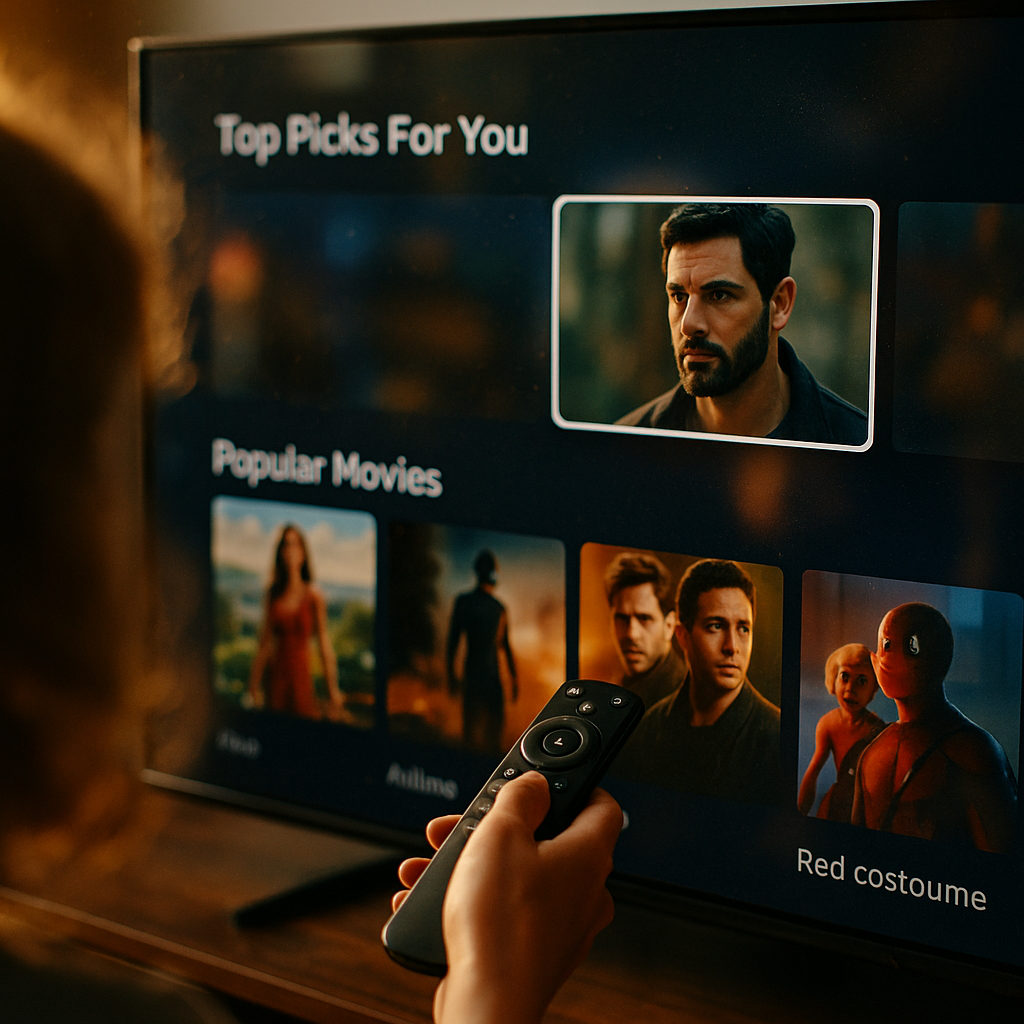
Roku, Tubi, and Samsung TV Plus now push more creator-adjacent content to viewers than most cable lineups ever aired. Nearly 80% of Tubi’s watch time comes from algorithmic recommendations rather than search, according to the company’s own advertiser materials. If your influencer content strategy still treats FAST (free ad-supported streaming TV) as an afterthought, you’re missing where attention is actually accumulating. The FAST platform recommendation engine has quietly become one of the most powerful distribution levers in the creator economy, and most brand teams haven’t updated their playbooks to reflect it.
The Distribution Layer Nobody Budgeted For
For years, creator content distribution meant three things: the platform’s native algorithm, paid boosting, and cross-posting. FAST platforms changed the math. Roku Channel, Tubi, Pluto TV, and Samsung TV Plus now aggregate creator-produced and creator-adjacent programming into channel guides and recommendation rails that function almost identically to TikTok’s For You feed, just on a bigger screen.
That matters because these platforms sit at the intersection of linear TV habits and social-native content consumption. Viewers land expecting a lean-back experience, but the content populating their queues increasingly comes from the same creator economy pipeline that fuels YouTube and TikTok. Multi-Channel Networks are already licensing creator libraries directly to FAST services, and several DTC brands have quietly launched branded FAST channels stocked entirely with influencer-produced series.
The recommendation engine decides who gets seen. Not the creator’s follower count. Not the brand’s media spend. The algorithm.
FAST platforms now function as a second discovery layer for creator content, one where distribution depends on watch-time signals and metadata quality rather than social proof or follower count.
How These Recommendation Engines Actually Work
FAST recommendation systems borrow heavily from streaming and OTT logic, not social media logic. That distinction matters enormously for anyone planning creator content for this channel.
- Completion rate over engagement rate: Likes and comments don’t exist in most FAST environments. The engines optimize almost entirely for watch-through and session continuation.
- Metadata dependency: Titles, descriptions, genre tags, and content categorization drive discoverability far more than they do on TikTok or Instagram. Poor metadata means invisibility, regardless of production quality.
- Channel-level trust signals: Recommendation weight accrues to the channel, not just the individual video. A creator’s FAST channel needs consistent output to build algorithmic trust, similar to how YouTube rewards upload cadence.
- Ad pod placement logic: Because FAST is ad-supported, the engine also factors in ad completion and viewability, meaning content that gets skipped mid-ad-break gets deprioritized in future recommendation cycles.
This is a fundamentally different optimization target than what most creator teams are built to measure. If your influencer program reports on likes, shares, and comment sentiment, none of that translates cleanly to FAST performance. You need watch-time analytics, and most brands don’t have them yet.
Why Brands Should Care: Scale Without the CPM Inflation
Paid social CPMs have crept upward across nearly every major platform. Meanwhile, FAST ad inventory remains comparatively cheap, and connected TV ad spend keeps climbing as viewers migrate away from linear cable. eMarketer’s connected TV forecasts show CTV ad spend continuing double-digit growth, with FAST platforms capturing a disproportionate share of that increase because of lower barriers to entry for advertisers.
Here’s the practical opportunity: a brand-sponsored creator series distributed through a FAST channel gets recommendation-engine amplification that a paid social boost can’t replicate at the same price point. You’re not fighting an auction against every other advertiser in real time. You’re competing on watch-time performance and metadata quality, which is a more controllable, more durable variable.
This isn’t a call to abandon TikTok Shop or Instagram Reels. It’s a call to treat FAST as a distinct distribution channel with its own optimization rules, the same way TikTok’s watch-time algorithm already forced brands to rethink creator briefs for short-form.
The Measurement Gap Is Wider Than You Think
Most influencer marketing platforms still report social-native metrics: engagement rate, reach, impressions, follower growth. None of that maps directly onto FAST performance data, which lives in viewership dashboards controlled by the platforms themselves and rarely gets exposed through standard MMM or attribution tooling.
That creates a real measurement blind spot. Brands running creator content across FAST channels often can’t tie viewership back to lower-funnel outcomes without manual reconciliation between the FAST platform’s ad server and their own attribution stack.
This is the same structural problem that’s been plaguing creator measurement across the industry: spend is scaling faster than the tooling built to justify it. Add FAST distribution into the mix and the attribution puzzle gets one more disconnected data source.
The fix isn’t complicated in concept, just underinvested in practice. Brands need identity resolution that can stitch CTV viewership to household-level or device-level purchase data. Some of this already exists through identity resolution infrastructure that enterprise marketers are consolidating around, but FAST-specific integration remains patchy across most MarTech stacks.
Brands that can’t connect FAST viewership data to purchase behavior are essentially buying reach on faith. That’s a risky position to defend in a budget review.
What This Means for Creator Briefs and Content Formats
Short-form, punchy, hook-in-three-seconds content dominates TikTok and Reels strategy. FAST platforms reward something closer to episodic structure: 8 to 22 minute formats that mimic traditional TV pacing while retaining creator-native personality and production style.
This isn’t a huge lift for creators who already produce YouTube long-form content. It is a meaningful lift for creators whose entire portfolio lives in 30-second verticals. Brand teams need to segment their creator rosters accordingly. Not every influencer partner is a fit for FAST distribution, and forcing a short-form-native creator into episodic formats usually produces mediocre content that underperforms on completion-rate metrics, the exact signal the algorithm weighs most heavily.
Practical brief adjustments worth making:
- Request episodic or serialized concepts instead of one-off videos when FAST distribution is part of the plan.
- Mandate strong metadata deliverables (titles, tags, descriptions) as part of the creator contract, not an afterthought handled by an intern.
- Build in a minimum content cadence, since channel-level trust compounds over consistent uploads rather than one-off hits.
- Set completion-rate benchmarks in the brief itself, not just view counts.
None of this is radically different from how brands already approach tiered influencer models, where different creator tiers get matched to different content roles. FAST just adds another tier-matching variable to the equation.
Compliance and Disclosure Don’t Disappear on the Big Screen
It’s tempting to assume FCC-style broadcast rules replace FTC influencer disclosure requirements once content moves to a TV interface. They don’t. The FTC’s endorsement guidelines still apply regardless of screen size or distribution mechanism. If a creator is paid or incentivized to produce content for a branded FAST channel, disclosure obligations travel with the content, not the platform.
Brands need to confirm that creator disclosures are baked into the video itself (on-screen text, verbal mention) rather than relying on a caption or description field, since many FAST interfaces don’t surface metadata the way social platforms do. A disclosure buried in a description box that never renders on a TV screen isn’t compliant. It’s a liability waiting for a regulator to notice.
Where This Is Headed
Expect FAST platforms to keep investing in recommendation sophistication, borrowing more directly from social-native personalization models as competition for ad dollars intensifies. Samsung and Roku have both signaled increased investment in AI-driven content matching, and that trajectory tracks with the broader shift toward agentic marketing systems now shaping how content gets matched to audiences across channels.
For brands, the near-term move is straightforward: audit your creator content library for FAST-suitable long-form assets, pressure-test your measurement stack for CTV/FAST data ingestion, and start briefing at least one creator partner on episodic formats built for this environment. Waiting for the channel to mature before testing it just means competitors lock in the channel-level trust signals first.
Frequently Asked Questions
FAQs
What is a FAST platform in the context of creator content distribution?
A FAST (free ad-supported streaming TV) platform is a streaming service, such as Tubi, Roku Channel, Pluto TV, or Samsung TV Plus, that delivers ad-supported video content for free. These platforms increasingly host creator-produced and creator-licensed content alongside traditional TV programming.
How is the FAST platform recommendation engine different from social media algorithms?
FAST recommendation engines prioritize watch-time completion, metadata quality, and ad viewability rather than likes, comments, or shares. They function more like streaming service algorithms (similar to Netflix or Hulu) than social discovery feeds.
Do brands need different creator content formats for FAST distribution?
Yes. FAST platforms tend to reward episodic, longer-form content (roughly 8 to 22 minutes) with strong metadata, which differs significantly from short-form vertical video optimized for TikTok or Instagram Reels.
Does FTC influencer disclosure apply to FAST platform content?
Yes. FTC endorsement guidelines apply regardless of the distribution platform. Disclosures need to be visible within the video itself, since FAST interfaces often don’t surface metadata fields the way social platforms do.
How can brands measure ROI on FAST channel creator content?
Brands need identity resolution and attribution tools capable of connecting CTV viewership data to purchase behavior, since standard social media engagement metrics don’t translate to FAST platform performance reporting.
Top Influencer Marketing Agencies
The leading agencies shaping influencer marketing in 2026
Agencies ranked by campaign performance, client diversity, platform expertise, proven ROI, industry recognition, and client satisfaction. Assessed through verified case studies, reviews, and industry consultations.
Moburst

-
2

The Shelf
Boutique Beauty & Lifestyle Influencer AgencyA data-driven boutique agency specializing exclusively in beauty, wellness, and lifestyle influencer campaigns on Instagram and TikTok. Best for brands already focused on the beauty/personal care space that need curated, aesthetic-driven content.Clients: Pepsi, The Honest Company, Hims, Elf Cosmetics, Pure LeafVisit The Shelf → -
3

Audiencly
Niche Gaming & Esports Influencer AgencyA specialized agency focused exclusively on gaming and esports creators on YouTube, Twitch, and TikTok. Ideal if your campaign is 100% gaming-focused — from game launches to hardware and esports events.Clients: Epic Games, NordVPN, Ubisoft, Wargaming, Tencent GamesVisit Audiencly → -
4

Viral Nation
Global Influencer Marketing & Talent AgencyA dual talent management and marketing agency with proprietary brand safety tools and a global creator network spanning nano-influencers to celebrities across all major platforms.Clients: Meta, Activision Blizzard, Energizer, Aston Martin, WalmartVisit Viral Nation → -
5

The Influencer Marketing Factory
TikTok, Instagram & YouTube CampaignsA full-service agency with strong TikTok expertise, offering end-to-end campaign management from influencer discovery through performance reporting with a focus on platform-native content.Clients: Google, Snapchat, Universal Music, Bumble, YelpVisit TIMF → -
6

NeoReach
Enterprise Analytics & Influencer CampaignsAn enterprise-focused agency combining managed campaigns with a powerful self-service data platform for influencer search, audience analytics, and attribution modeling.Clients: Amazon, Airbnb, Netflix, Honda, The New York TimesVisit NeoReach → -
7

Ubiquitous
Creator-First Marketing PlatformA tech-driven platform combining self-service tools with managed campaign options, emphasizing speed and scalability for brands managing multiple influencer relationships.Clients: Lyft, Disney, Target, American Eagle, NetflixVisit Ubiquitous → -
8

Obviously
Scalable Enterprise Influencer CampaignsA tech-enabled agency built for high-volume campaigns, coordinating hundreds of creators simultaneously with end-to-end logistics, content rights management, and product seeding.Clients: Google, Ulta Beauty, Converse, AmazonVisit Obviously →