


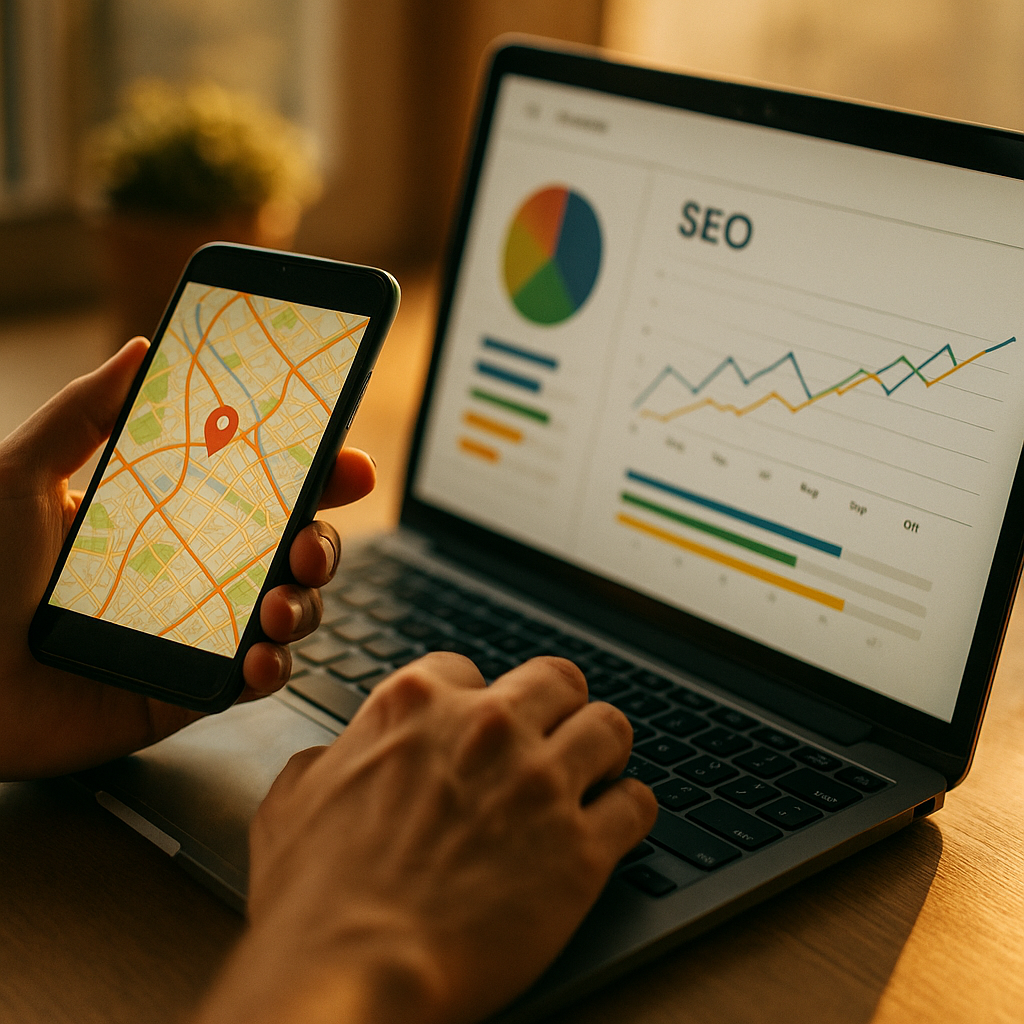
Chinese GEO platforms are already tracking brand citations across five AI engines while most Western marketing teams still can’t answer a simple question: does ChatGPT even know our product exists? FlinkAI’s dual engine model is forcing that comparison into the open, and it’s an uncomfortable one for brands still treating generative engine optimization as a side project.
What Is FlinkAI’s Dual Engine Model, Anyway?
FlinkAI runs two parallel systems instead of one. The first engine tracks traditional search visibility, the keyword rankings, backlink signals, and SERP features that SEO teams have optimized for over a decade. The second engine monitors generative engine citations: how often and how accurately a brand gets mentioned inside ChatGPT, Baidu’s ERNIE Bot, Doubao, and other large language model outputs.
That sounds obvious in hindsight. Why wouldn’t a GEO tool track both search and AI citations? But most Western tools still bolt AI monitoring onto an existing SEO product as an afterthought, a dashboard widget rather than a core architecture. FlinkAI built citation tracking as a first-class engine from day one, which is a structural difference, not a feature difference.
The real innovation isn’t that FlinkAI tracks AI citations. It’s that the platform treats search rankings and AI citations as two inputs feeding the same optimization loop, rather than two separate reports nobody cross-references.
Why Chinese GEO Tools Got Here First
China’s search ecosystem never had a single dominant player the way Google dominates the West. Baidu, Sogou, WeChat search, and a growing stack of AI assistants have coexisted for years, forcing tool builders to design for fragmentation from the start. When generative AI assistants entered the mix, Chinese GEO platforms simply extended an architecture that already assumed multiple discovery surfaces.
Western SEO tooling, by contrast, spent two decades optimizing for one search engine’s algorithm. That specialization was a strength when Google owned 90%+ of search share. It’s now a liability, because the assumption baked into most Western platforms, that ranking well on Google covers your visibility, no longer holds when consumers ask ChatGPT or Perplexity for recommendations instead of typing a query into a search bar.
eMarketer’s research on AI-assisted search behavior has repeatedly flagged that a growing share of product discovery queries now happen inside conversational AI interfaces rather than traditional search. Brands optimizing only for the old channel are, quite literally, invisible in the new one.
The Compliance Gap Western Brands Keep Ignoring
Here’s where the dual engine approach gets interesting from a risk standpoint. If your GEO tool only tracks AI citations, you get a number: “mentioned in 12% of relevant AI responses.” Useful, but incomplete. If it also tracks the search engine that feeds many of those AI training and retrieval pipelines, you can trace why a citation happened, or didn’t.
That traceability matters for compliance teams, not just marketers. Brands increasingly need to explain how an AI system arrived at a claim about their product, especially in regulated categories like finance, health, and consumer safety. A dual engine model gives you an audit trail. A single engine model gives you a snapshot.
This is the same logic driving demand for governance layers elsewhere in the creator and content stack. We’ve covered how AI content governance tools are becoming procurement requirements rather than nice-to-haves, and GEO platforms are heading the same direction. Expect RFPs to start asking vendors for citation provenance, not just citation counts.
Three Lessons Western Marketing Teams Should Steal
- Stop separating SEO and GEO budgets. If your search team and your AI visibility team report into different leaders with different KPIs, you’re replicating the single-engine problem organizationally, even if your tool is technically dual engine. FlinkAI’s architecture works because the data feeds one strategy, not two.
- Demand citation attribution, not just citation frequency. Knowing you’re mentioned isn’t enough. You need to know which content, which backlinks, and which structured data triggered that mention. Tools compared in our GEO citation tool comparison vary wildly on this point, and it’s the difference between a report you can act on and one you just forward to leadership.
- Treat fragmentation as the default, not the exception. Chinese GEO tools were built for a world with five discovery surfaces. Western brands are entering that same world now, with ChatGPT, Gemini, Perplexity, Copilot, and traditional search all mattering simultaneously. Build your measurement stack for fragmentation now, rather than retrofitting it in eighteen months.
Where the Comparison Breaks Down
It would be lazy to suggest Western brands simply copy FlinkAI’s playbook wholesale. Regulatory environments differ. Data residency rules differ. The FTC’s expectations around disclosure and the ICO’s stance on data processing don’t map cleanly onto how Chinese platforms operate, and any brand adopting a dual engine tool needs to vet it against FTC guidance and, for UK and EU operations, ICO data protection requirements before rollout.
There’s also a scale question. Chinese GEO platforms have been trained on citation data across a search ecosystem with over a billion users generating queries daily. Western equivalents, including tools profiled in our AEO suite coverage, are still building out that depth of citation history. Don’t assume parity in data maturity just because the architecture looks similar on a sales deck.
None of this means Western brands should wait for a domestic equivalent to mature before acting. The architecture lesson stands regardless of which vendor you choose: unify your search and AI citation tracking now, or accept that you’re measuring half the funnel. Brands already testing this approach are seeing it show up in benchmarking work like our ChatGPT citation lift analysis, where the tools with integrated tracking consistently outperform bolted-on AI add-ons.
If your GEO reporting still lives in a separate tab from your SEO dashboard, you’re not measuring visibility. You’re measuring half of it and hoping the other half doesn’t matter yet.
What This Means for Budget Conversations
CMOs are going to ask the obvious question this quarter: do we need a new tool, or can our existing stack handle this? The honest answer depends on whether your current SEO platform was architected for citation tracking or whether it’s a plugin retrofit. Semrush’s AI visibility suite is one example of a Western platform trying to close that gap from the SEO side inward, and it’s worth evaluating against FlinkAI’s approach before committing budget either way.
Firmographic and citation data also matters more than most teams realize when it comes to B2B visibility specifically. Platforms like the one covered in our commercial graph and AI citations piece show how structured business data feeds directly into whether an AI assistant recommends you accurately or gets your company details wrong entirely. Get the underlying data model right, and both engines benefit.
According to HubSpot’s marketing benchmarking research, brands that treat search and content strategy as unified functions consistently report stronger organic acquisition numbers than those running siloed teams. GEO is simply extending that same organizational logic to a new discovery channel, and Sprout Social’s research on AI-driven discovery backs the same trend from the social listening side.
Frequently Asked Questions
What makes FlinkAI’s dual engine model different from standard GEO tools?
It tracks traditional search rankings and AI citation performance as one integrated system rather than treating AI monitoring as a bolted-on feature, giving brands attribution data that connects the two.
Should Western brands switch to Chinese GEO platforms directly?
Not necessarily. Regulatory, data residency, and compliance requirements in the US, UK, and EU differ significantly, so any adoption needs legal and privacy review before deployment, particularly around FTC and ICO expectations.
How is GEO different from traditional SEO?
SEO optimizes for ranking positions on search engine results pages. GEO optimizes for how and whether a brand gets cited or recommended inside generative AI responses, which relies on different signals like structured data, citation-worthy content, and source credibility.
What should marketing teams look for when evaluating a GEO tool?
Prioritize tools that show citation attribution (which content or data triggered a mention), track multiple AI engines simultaneously, and integrate with existing SEO reporting rather than operating as a standalone dashboard.
Is GEO measurement mature enough to justify dedicated budget?
Adoption is accelerating quickly as AI-assisted search grows, and brands waiting for perfect measurement standards risk losing visibility ground to competitors already tracking and optimizing citations today.
Visible FAQ Section
What makes FlinkAI’s dual engine model different from standard GEO tools?
It tracks traditional search rankings and AI citation performance as one integrated system rather than treating AI monitoring as a bolted-on feature, giving brands attribution data that connects the two.
Should Western brands switch to Chinese GEO platforms directly?
Not necessarily. Regulatory, data residency, and compliance requirements in the US, UK, and EU differ significantly, so any adoption needs legal and privacy review before deployment, particularly around FTC and ICO expectations.
How is GEO different from traditional SEO?
SEO optimizes for ranking positions on search engine results pages. GEO optimizes for how and whether a brand gets cited or recommended inside generative AI responses, which relies on different signals like structured data, citation-worthy content, and source credibility.
What should marketing teams look for when evaluating a GEO tool?
Prioritize tools that show citation attribution (which content or data triggered a mention), track multiple AI engines simultaneously, and integrate with existing SEO reporting rather than operating as a standalone dashboard.
Is GEO measurement mature enough to justify dedicated budget?
Adoption is accelerating quickly as AI-assisted search grows, and brands waiting for perfect measurement standards risk losing visibility ground to competitors already tracking and optimizing citations today.
The takeaway for brand teams is simple: audit whether your current GEO vendor was built to unify search and AI citation data or just reports both separately, then push your next tool review to treat that architecture question as a dealbreaker, not a nice-to-have.
Top Influencer Marketing Agencies
The leading agencies shaping influencer marketing in 2026
Agencies ranked by campaign performance, client diversity, platform expertise, proven ROI, industry recognition, and client satisfaction. Assessed through verified case studies, reviews, and industry consultations.
Moburst

-
2

The Shelf
Boutique Beauty & Lifestyle Influencer AgencyA data-driven boutique agency specializing exclusively in beauty, wellness, and lifestyle influencer campaigns on Instagram and TikTok. Best for brands already focused on the beauty/personal care space that need curated, aesthetic-driven content.Clients: Pepsi, The Honest Company, Hims, Elf Cosmetics, Pure LeafVisit The Shelf → -
3

Audiencly
Niche Gaming & Esports Influencer AgencyA specialized agency focused exclusively on gaming and esports creators on YouTube, Twitch, and TikTok. Ideal if your campaign is 100% gaming-focused — from game launches to hardware and esports events.Clients: Epic Games, NordVPN, Ubisoft, Wargaming, Tencent GamesVisit Audiencly → -
4

Viral Nation
Global Influencer Marketing & Talent AgencyA dual talent management and marketing agency with proprietary brand safety tools and a global creator network spanning nano-influencers to celebrities across all major platforms.Clients: Meta, Activision Blizzard, Energizer, Aston Martin, WalmartVisit Viral Nation → -
5

The Influencer Marketing Factory
TikTok, Instagram & YouTube CampaignsA full-service agency with strong TikTok expertise, offering end-to-end campaign management from influencer discovery through performance reporting with a focus on platform-native content.Clients: Google, Snapchat, Universal Music, Bumble, YelpVisit TIMF → -
6

NeoReach
Enterprise Analytics & Influencer CampaignsAn enterprise-focused agency combining managed campaigns with a powerful self-service data platform for influencer search, audience analytics, and attribution modeling.Clients: Amazon, Airbnb, Netflix, Honda, The New York TimesVisit NeoReach → -
7

Ubiquitous
Creator-First Marketing PlatformA tech-driven platform combining self-service tools with managed campaign options, emphasizing speed and scalability for brands managing multiple influencer relationships.Clients: Lyft, Disney, Target, American Eagle, NetflixVisit Ubiquitous → -
8

Obviously
Scalable Enterprise Influencer CampaignsA tech-enabled agency built for high-volume campaigns, coordinating hundreds of creators simultaneously with end-to-end logistics, content rights management, and product seeding.Clients: Google, Ulta Beauty, Converse, AmazonVisit Obviously →