


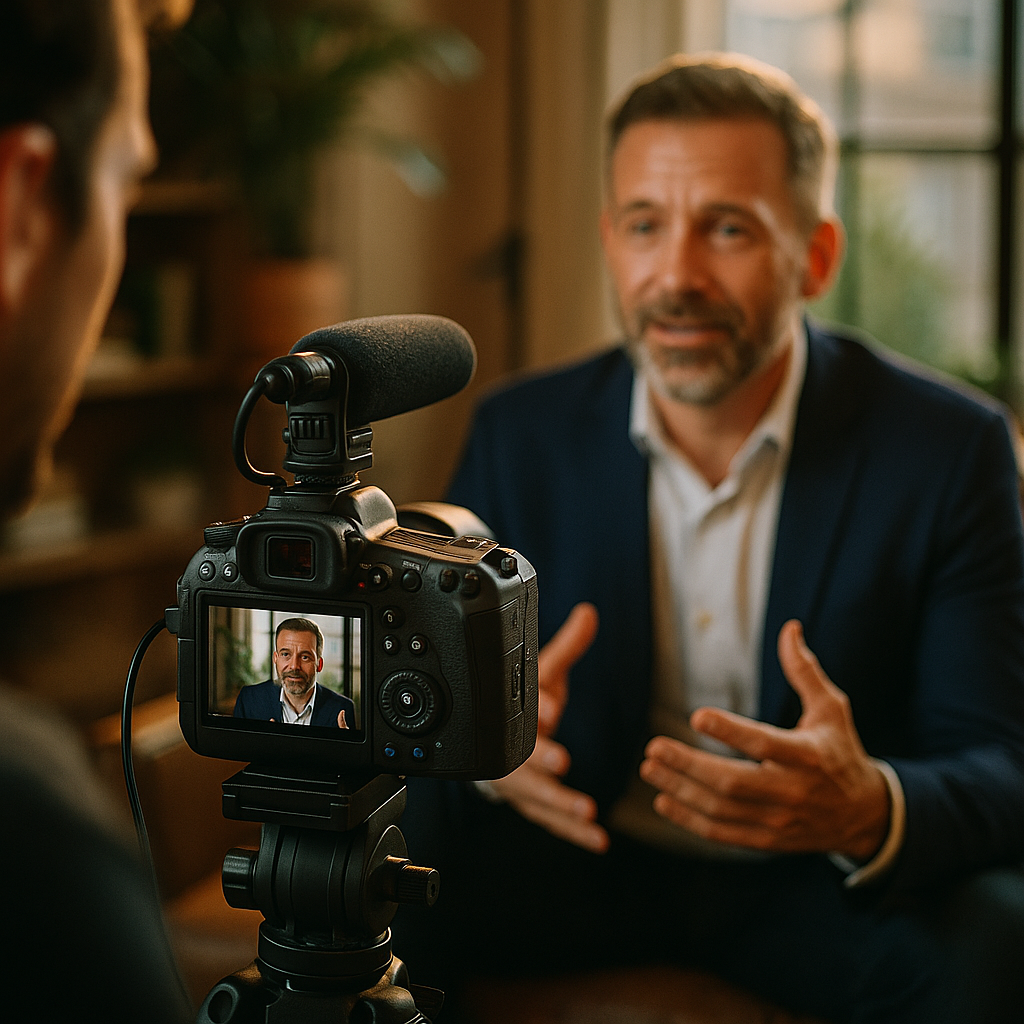
Only 4% of consumers say they fully trust brand advertising, yet founder-led videos routinely outperform polished brand content by two to three times on watch-through rate. That gap is the entire business case for the founder story video format. But most brands botch it: they either let the founder ramble for six minutes or hand them a script so corporate it kills the one thing that made the format work in the first place.
This guide is a working creative brief structure for turning a founder’s personal narrative into a short-form product demo that actually converts, not just charms.
Why Founder Story Videos Outperform Standard Demos
A product demo answers “what does this do.” A founder story answers “why should I care, and can I trust the person who made it.” Viewers are pattern-matching for sincerity within the first three seconds. A founder stumbling slightly over their words, standing in an actual workshop or kitchen, reads as more credible than a studio-lit spokesperson reciting benefits. That imperfection is not a bug you fix in editing. It is the asset.
The format also solves a real operational problem: attribution fatigue. Paid creative burns out fast when it looks like every other ad in the feed. A founder’s face and voice are inherently non-fungible. Competitors can copy your product claims. They cannot copy your founder’s actual reason for starting the company.
Founder story videos work because they compress two conversion levers into one asset: emotional trust-building and functional proof. Most brands only brief for one.
The Structural Problem: Narrative and Demo Pull in Different Directions
Here is the tension every creative brief needs to resolve upfront. Narrative wants time, breathing room, a slow build. Demo wants speed, clarity, a fast payoff. Short-form video, whether it lands on TikTok, Reels, or YouTube Shorts, punishes anything that doesn’t earn its seconds. You cannot let the founder’s origin story eat the first twenty seconds and then rush the product proof at the end. That’s the single most common failure mode we see in founder-led briefs.
The fix is structural, not stylistic. Treat the founder story as the hook and credibility layer, and treat the demo as the payoff. They need to interlock, not sit in sequence like two separate videos stapled together.
A Four-Beat Brief Structure That Actually Works
- Beat one (0-3 seconds): A specific, personal claim, not a generic origin line. “I got fired for saying our old formula was garbage” beats “I started this company because I was passionate about skincare.”
- Beat two (3-10 seconds): The problem, framed through the founder’s own frustration, not market research language. This is where the personal stakes get established.
- Beat three (10-25 seconds): The product demonstration, filmed as if the founder is showing a friend, not presenting to a camera crew. Hands-on, unscripted-feeling, but hitting the two or three product claims legal actually needs proven on screen.
- Beat four (25-30 seconds): A single, specific outcome claim plus a soft, founder-voiced call to action. Not “shop now.” Something closer to “I use this every day, and I think you will too.”
This mirrors the hook-first thinking we’ve covered in hook-structure briefs, but founder content has one advantage synthetic hooks don’t: built-in credibility that doesn’t need a pattern interrupt to earn attention.
Writing the Brief Without Killing the Authenticity
Founders are not professional talent, and treating them like actors is the fastest way to ruin the format. A brief for a founder story video should function more like a conversation guide than a script. Give them bullet points, not lines. Tell them the beat they need to hit and the timing window, and let them find their own words inside it.
Practical brief components that hold up in production:
- Emotional anchor: One sentence describing the real moment that sparked the product. Get this from an actual interview, not a marketing deck.
- Non-negotiable claims: The two or three product statements that must appear on screen for legal and compliance sign-off, written in plain language the founder can say naturally, not lifted from packaging copy.
- B-roll shot list: Hands using the product, close-ups of texture or function, the environment where the founder actually works. This becomes the connective tissue in editing.
- Tone guardrails: What to avoid (jargon, hard sell language, competitor comparisons) rather than a rigid script, so the founder still sounds like themselves.
- Multiple takes on the close: Founders often nail the emotional opening but fumble the call to action. Shoot five to eight variations of the closing line and pick in post.
This is the same discipline behind founder-led product demo briefs, but the story video format pushes further into narrative territory, which means the compliance review step matters even more.
Compliance Doesn’t Disappear Just Because the Founder Is Speaking
There’s a dangerous assumption floating around marketing teams: that founder-voiced content gets a free pass on regulatory scrutiny because it “isn’t really an ad.” It is. The FTC’s endorsement guidelines apply regardless of who is on camera, and a founder making unsubstantiated efficacy or results claims creates the same liability as an influencer would.
The difference is that founders often improvise more than briefed creators, which means legal review needs to happen on the raw footage, not just the shot list. Build review checkpoints into the production timeline the same way you would for short-form sales briefs that need fast legal turnaround. If the founder ad-libs a claim about results, timeframes, or comparisons, that clip needs a flag before it ever reaches the edit bay.
Where the Format Fits in the Funnel
Founder story videos are not top-of-funnel awareness plays exclusively, and they’re not bottom-funnel conversion tools exclusively either. They tend to work best as a mid-funnel trust bridge, the content that gets shown to someone who has already seen the product but hasn’t decided yet. That distinction matters for media buying and creative testing.
If you’re running these as paid social, pair them with the funnel-stage thinking laid out in dedicated long-form versus integrated placement decisions. A thirty-second founder cutdown might run as a retargeting asset while a longer, unedited version lives on YouTube for the research-stage viewer who wants the full story before buying.
Distribution efficiency matters here too. A single founder interview shoot can produce a 15-second hook, a 30-second demo cut, and a 90-second long-form piece if you plan the shot list correctly upfront, similar to the logic in cross-format asset briefs built for multiple platforms. Don’t make the founder sit for three separate shoots. That’s an operational failure, not a creative one.
What Usually Goes Wrong in Production
A few recurring failure patterns worth briefing against directly:
- Over-rehearsal. A founder who has memorized a script sounds like a founder who has memorized a script. Viewers can tell. Aim for familiarity with beats, not word-for-word delivery.
- Demo buried too late. If the product doesn’t appear on screen until the fifteen-second mark, you’ve lost half your audience on platforms where median watch time is measured in single-digit seconds.
- No usage rights plan. Founder content gets requested for sales decks, investor materials, and paid social simultaneously. Lock usage rights and format specs before the shoot, the way you would for any usage-rights-ready video brief.
- Treating one founder video as evergreen forever. Founder content ages. Test refreshes quarterly, since the same clip run for a year starts to feel stale even if the message hasn’t changed.
According to HubSpot’s marketing research, video content with a recognizable human presence consistently drives higher engagement than product-only footage, which tracks with what most performance marketers already see in their own dashboards. The data supports the format. The execution is where most teams lose the advantage.
Next Step
Draft the four-beat brief above, run it past legal before the shoot rather than after, and film the closing line in at least five variations so editing has options. Founders are your least renewable creative asset. Brief them like it.
FAQs
How long should a founder story video be for short-form platforms?
Most performing cuts land between 20 and 45 seconds for TikTok and Reels, with a longer 90-second to 3-minute version reserved for YouTube or website use. The short cut should still contain the demo beat, not just the origin story.
Should founders memorize a script or speak freely?
Freely, within structured beats. Give founders the required claims and timing windows, not exact lines. Word-for-word delivery tends to read as inauthentic and undermines the trust the format is built to create.
Does founder-voiced content still need FTC disclosure?
If the founder has a financial stake in the product, which they do by definition, the video is still commercial speech subject to standard advertising truthfulness rules. Any specific claims about results or performance need substantiation regardless of who delivers them.
Can founder story videos be repurposed across the funnel?
Yes, and they should be. A single shoot can yield a top-funnel hook, a mid-funnel demo cutdown, and a longer trust-building piece for retargeting or landing pages, provided the shot list is planned for multiple outputs from the start.
What’s the biggest mistake brands make briefing this format?
Treating it purely as a narrative piece and forgetting the product demo entirely, or the reverse: scripting it so tightly that it loses the founder’s natural voice. The format needs both elements working together, not one at the expense of the other.
Top Influencer Marketing Agencies
The leading agencies shaping influencer marketing in 2026
Agencies ranked by campaign performance, client diversity, platform expertise, proven ROI, industry recognition, and client satisfaction. Assessed through verified case studies, reviews, and industry consultations.
Moburst

-
2

The Shelf
Boutique Beauty & Lifestyle Influencer AgencyA data-driven boutique agency specializing exclusively in beauty, wellness, and lifestyle influencer campaigns on Instagram and TikTok. Best for brands already focused on the beauty/personal care space that need curated, aesthetic-driven content.Clients: Pepsi, The Honest Company, Hims, Elf Cosmetics, Pure LeafVisit The Shelf → -
3

Audiencly
Niche Gaming & Esports Influencer AgencyA specialized agency focused exclusively on gaming and esports creators on YouTube, Twitch, and TikTok. Ideal if your campaign is 100% gaming-focused — from game launches to hardware and esports events.Clients: Epic Games, NordVPN, Ubisoft, Wargaming, Tencent GamesVisit Audiencly → -
4

Viral Nation
Global Influencer Marketing & Talent AgencyA dual talent management and marketing agency with proprietary brand safety tools and a global creator network spanning nano-influencers to celebrities across all major platforms.Clients: Meta, Activision Blizzard, Energizer, Aston Martin, WalmartVisit Viral Nation → -
5

The Influencer Marketing Factory
TikTok, Instagram & YouTube CampaignsA full-service agency with strong TikTok expertise, offering end-to-end campaign management from influencer discovery through performance reporting with a focus on platform-native content.Clients: Google, Snapchat, Universal Music, Bumble, YelpVisit TIMF → -
6

NeoReach
Enterprise Analytics & Influencer CampaignsAn enterprise-focused agency combining managed campaigns with a powerful self-service data platform for influencer search, audience analytics, and attribution modeling.Clients: Amazon, Airbnb, Netflix, Honda, The New York TimesVisit NeoReach → -
7

Ubiquitous
Creator-First Marketing PlatformA tech-driven platform combining self-service tools with managed campaign options, emphasizing speed and scalability for brands managing multiple influencer relationships.Clients: Lyft, Disney, Target, American Eagle, NetflixVisit Ubiquitous → -
8

Obviously
Scalable Enterprise Influencer CampaignsA tech-enabled agency built for high-volume campaigns, coordinating hundreds of creators simultaneously with end-to-end logistics, content rights management, and product seeding.Clients: Google, Ulta Beauty, Converse, AmazonVisit Obviously →