


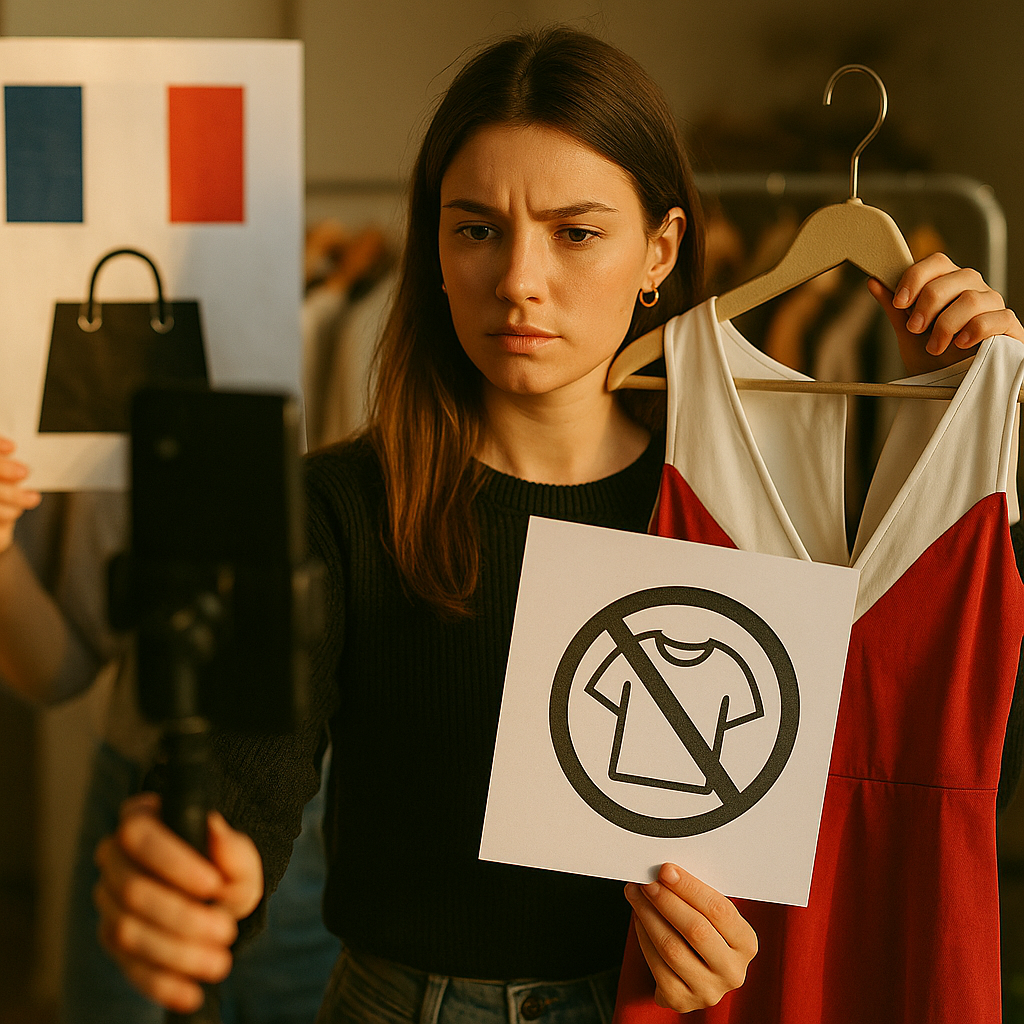
France just made social commerce significantly more expensive to get wrong. Under the Anti-Fast Fashion Law, brands selling apparel through creator affiliate links, TikTok Shop, or Instagram checkout into French consumers now face penalties, advertising bans, and mandatory environmental labeling that most compliance teams haven’t caught up to yet.
What the French Law Actually Requires (And What Most Brands Are Missing)
France’s loi visant à réduire l’impact environnemental de l’industrie textile, passed in 2023 and entering enforcement phases now, targets ultra-fast fashion specifically. The law defines ultra-fast fashion by volume thresholds: brands offering more than 1,000 new references per year or releasing more than 100 new references per week fall under its scope. Shein and Temu are the obvious targets, but the law’s language is broad enough to catch mid-market brands with aggressive product drops.
What does that mean for creator commerce? Three things: mandatory environmental penalties displayed in advertising, restrictions on promotional incentives, and potential advertising bans for non-compliant brands. If a French creator promotes a qualifying product through an affiliate link, the brand is liable for the disclosure gap, not just the creator. That’s the part compliance teams are underestimating.
Under France’s anti-fast fashion framework, the compliance burden for environmental disclosures in creator-driven promotions sits with the brand, not the influencer. Missing this detail is how legal exposure compounds quietly.
How Creator Affiliate Structures Create Layered Liability
Traditional affiliate programs were built for a simpler world: a link, a cookie, a commission. The French framework breaks that model for apparel brands because it requires environmental disclosures to appear in the promotional content, not just on the product page. A creator posting a TikTok haul with an affiliate link to a qualifying brand must include a government-mandated environmental penalty message. The law sets out tiered messaging, starting at €0.50 per item for the lowest-impact tier and scaling upward, displayed prominently in the ad creative itself.
Most affiliate agreements between brands and creators don’t currently specify who is responsible for sourcing that disclosure language, formatting it correctly, or verifying it’s displayed at the right size and position. That’s a contract gap. If you’re managing creator programs with CPA-based structures, your briefing documents, creative guidelines, and affiliate terms all need updating. The cross-border creator compliance checklist framework is a useful starting point for auditing where those gaps live across different market activations.
There’s also a downstream agency problem. If you’re running creator commerce through a talent management platform or creator studio, and that studio is producing content for French audiences, the contractual chain needs to clearly assign compliance obligations. Vague “creator is responsible for local law compliance” clauses won’t hold when the brand’s logo is front and center on non-compliant content. Revisiting creator studio contract structures is not optional here.
Environmental Claims: The Greenwashing Trap Inside the Compliance Gap
Here’s the double risk most brands miss. While scrambling to add mandatory penalty disclosures, some brands are simultaneously running creator content that makes positive environmental claims: “sustainable,” “eco-conscious,” “responsible fashion.” France’s law, read alongside the EU Green Claims Directive that’s also advancing, creates a scenario where a brand could be simultaneously displaying the required environmental penalty notice and running creator content with greenwashing language. Regulators will not find that amusing.
The practical fix is a content audit protocol tied to market targeting. Any creator content activated via geo-targeting, affiliate links with French traffic, or TikTok Shop inventory routed through French warehousing needs to pass through a two-gate review: does it include required penalty disclosures, and does it strip unsupported environmental claims? These two gates need to run in parallel, not sequentially.
For brands operating across TikTok Shop and Instagram’s social commerce infrastructure, the disclosure requirements for social commerce are already complex at baseline. The French layer adds material obligation on top of platform-level disclosure rules, meaning brands need market-specific content variants rather than a single global creative asset.
Restructuring Your Documentation Stack
Let’s get operational. Here’s what a compliance-ready documentation stack looks like for brands running creator affiliate or social commerce programs into France:
- Product classification matrix: A live document mapping every SKU against the French law’s volume thresholds. If you have 800 references today but plan a seasonal drop, you need a trigger protocol for when the law applies.
- Creator brief addendum (French market): A standardized legal addendum to all creator briefs specifying exact penalty disclosure language, required size, placement rules, and the creator’s obligation to use brand-supplied compliance assets rather than paraphrasing.
- Affiliate network notification: Written notice to affiliate network partners (Impact, Partnerize, Awin, etc.) that French-traffic links for qualifying products require compliant landing page disclosures, with documented confirmation of implementation.
- Environmental claim clearance log: A timestamped record for each piece of creator content confirming that positive environmental claims have been reviewed against current substantiation standards.
- Geo-targeting governance protocol: Clear internal policy defining who approves creator content for French market activation and what checklist must be completed before that activation.
Documentation isn’t bureaucracy here. It’s your defense record if enforcement occurs. The creator program risk audit framework covers how to structure these records in a way that’s actually auditable rather than theoretically complete.
Platform Mechanics Don’t Absolve Brand Liability
Some legal teams are arguing that because TikTok or Meta controls the ad delivery infrastructure in France, platform compliance sits with the platform. That’s a defensible position for some DSA-related obligations, but it does not extend to product-level environmental disclosures. The French law targets the economic operator placing products on the market. If your brand is the merchant of record for French transactions, you own the obligation.
This matters enormously for brands using TikTok Shop’s fulfilled-by-platform model or Meta’s collaborative ads format with French retail partners. The intermediary structure doesn’t create liability distance; it creates liability confusion, which is almost worse because it slows down remediation. On the evolving EU regulatory posture toward Meta’s commerce infrastructure, brands should not assume platform-level compliance covers product-specific legal obligations.
The French anti-fast fashion law places the compliance burden on the economic operator, not the platform. Brands using TikTok Shop or Meta’s social commerce tools for French market sales cannot delegate that obligation upstream.
Creator Seeding, Product Gifting, and the Duty Layer
There’s a related operational headache that compounds the disclosure problem: the EU’s customs duty changes affecting creator seeding programs have already disrupted how brands send product to European creators. For French creators specifically, brands now have to consider whether the gifted product itself falls under the anti-fast fashion classification, whether the organic content produced from that seeding constitutes advertising under French law (triggering disclosure requirements), and whether the seeding volume signals a commercial relationship that requires formal disclosure under the FTC disclosure standards for US-side affiliate tracking running in parallel.
Most brands are not running these three compliance tracks in an integrated workflow. They should be.
What Enforcement Actually Looks Like
France’s enforcement mechanism for this law runs through the Ministry of Economy and DGCCRF (Direction Générale de la Concurrence, de la Consommation et de la Répression des Fraudes), the same body that handles consumer protection enforcement. They have precedent for moving against non-French brands operating in the French market, as seen with prior actions against Shein and other cross-border retailers. The enforcement pathway includes administrative fines, mandatory compliance orders, and advertising bans. An advertising ban affecting your creator affiliate program in France would surface as a platform-level block, not just a letter from a regulator.
Brands should also monitor the EU Parliament’s progression on the broader Ecodesign for Sustainable Products Regulation, which will harmonize some of these requirements at the EU level. France is ahead of the curve, but the curve is moving toward every EU market adopting similar frameworks. Build for France now; you’re building the template for the whole bloc.
For brands already navigating youth safety and content rules across EU markets, the compliance infrastructure you’ve built for EU and UK cross-border compliance can serve as the structural model. Environmental disclosure requirements slot into the same market-segmented governance framework.
Start with a SKU-level audit against France’s 1,000-reference threshold this quarter. If you’re over the line or approaching it, your creator briefs, affiliate agreements, and social commerce content workflows all need French-market addenda before the next campaign activates.
Frequently Asked Questions
Which brands are covered by France’s anti-fast fashion law?
The law targets brands offering more than 1,000 new product references per year or releasing more than 100 new references per week. It applies regardless of where the brand is headquartered, as long as products are sold to French consumers. Cross-border ecommerce brands, including those operating through creator affiliate channels, are in scope if they meet the volume thresholds and sell into France.
Do creators themselves face penalties for non-compliant content?
The primary liability under the French law sits with the brand as the economic operator. However, creator agreements that don’t explicitly require compliant disclosures create risk for both parties. Brands should update affiliate terms and creator briefs to mandate use of brand-supplied, legally reviewed disclosure language rather than leaving creators to self-interpret the requirement.
What exactly must the environmental disclosure say, and where does it appear in creator content?
The law requires a tiered environmental penalty message scaled to the product’s environmental impact, displayed prominently in promotional content. The French government’s implementing decrees specify formatting, minimum size, and placement. Brands should obtain the current official disclosure language directly from DGCCRF guidance rather than paraphrasing, as the specific wording has legal standing.
Does this apply to organic creator content, or only paid promotions?
The law’s advertising provisions apply to commercial communications, which under French consumer law includes paid promotions, affiliate-linked content, and product gifting arrangements where the creator produces promotional content. Pure organic, unpaid posts from a consumer who happened to buy the product are not in scope. The line between gifting and organic becomes legally significant here.
How should brands handle existing creator affiliate agreements for French traffic?
Brands should issue written addenda to existing affiliate agreements before the next campaign activation, specifying the French market compliance requirements, providing approved disclosure assets, and requiring creator confirmation of implementation. Affiliate network operators should also receive written notice and technical confirmation that landing pages and checkout flows meet disclosure standards for French-traffic sessions.
Top Influencer Marketing Agencies
The leading agencies shaping influencer marketing in 2026
Agencies ranked by campaign performance, client diversity, platform expertise, proven ROI, industry recognition, and client satisfaction. Assessed through verified case studies, reviews, and industry consultations.
Moburst

-
2

The Shelf
Boutique Beauty & Lifestyle Influencer AgencyA data-driven boutique agency specializing exclusively in beauty, wellness, and lifestyle influencer campaigns on Instagram and TikTok. Best for brands already focused on the beauty/personal care space that need curated, aesthetic-driven content.Clients: Pepsi, The Honest Company, Hims, Elf Cosmetics, Pure LeafVisit The Shelf → -
3

Audiencly
Niche Gaming & Esports Influencer AgencyA specialized agency focused exclusively on gaming and esports creators on YouTube, Twitch, and TikTok. Ideal if your campaign is 100% gaming-focused — from game launches to hardware and esports events.Clients: Epic Games, NordVPN, Ubisoft, Wargaming, Tencent GamesVisit Audiencly → -
4

Viral Nation
Global Influencer Marketing & Talent AgencyA dual talent management and marketing agency with proprietary brand safety tools and a global creator network spanning nano-influencers to celebrities across all major platforms.Clients: Meta, Activision Blizzard, Energizer, Aston Martin, WalmartVisit Viral Nation → -
5

The Influencer Marketing Factory
TikTok, Instagram & YouTube CampaignsA full-service agency with strong TikTok expertise, offering end-to-end campaign management from influencer discovery through performance reporting with a focus on platform-native content.Clients: Google, Snapchat, Universal Music, Bumble, YelpVisit TIMF → -
6

NeoReach
Enterprise Analytics & Influencer CampaignsAn enterprise-focused agency combining managed campaigns with a powerful self-service data platform for influencer search, audience analytics, and attribution modeling.Clients: Amazon, Airbnb, Netflix, Honda, The New York TimesVisit NeoReach → -
7

Ubiquitous
Creator-First Marketing PlatformA tech-driven platform combining self-service tools with managed campaign options, emphasizing speed and scalability for brands managing multiple influencer relationships.Clients: Lyft, Disney, Target, American Eagle, NetflixVisit Ubiquitous → -
8

Obviously
Scalable Enterprise Influencer CampaignsA tech-enabled agency built for high-volume campaigns, coordinating hundreds of creators simultaneously with end-to-end logistics, content rights management, and product seeding.Clients: Google, Ulta Beauty, Converse, AmazonVisit Obviously →