


One Regulatory Wave Just Became Two
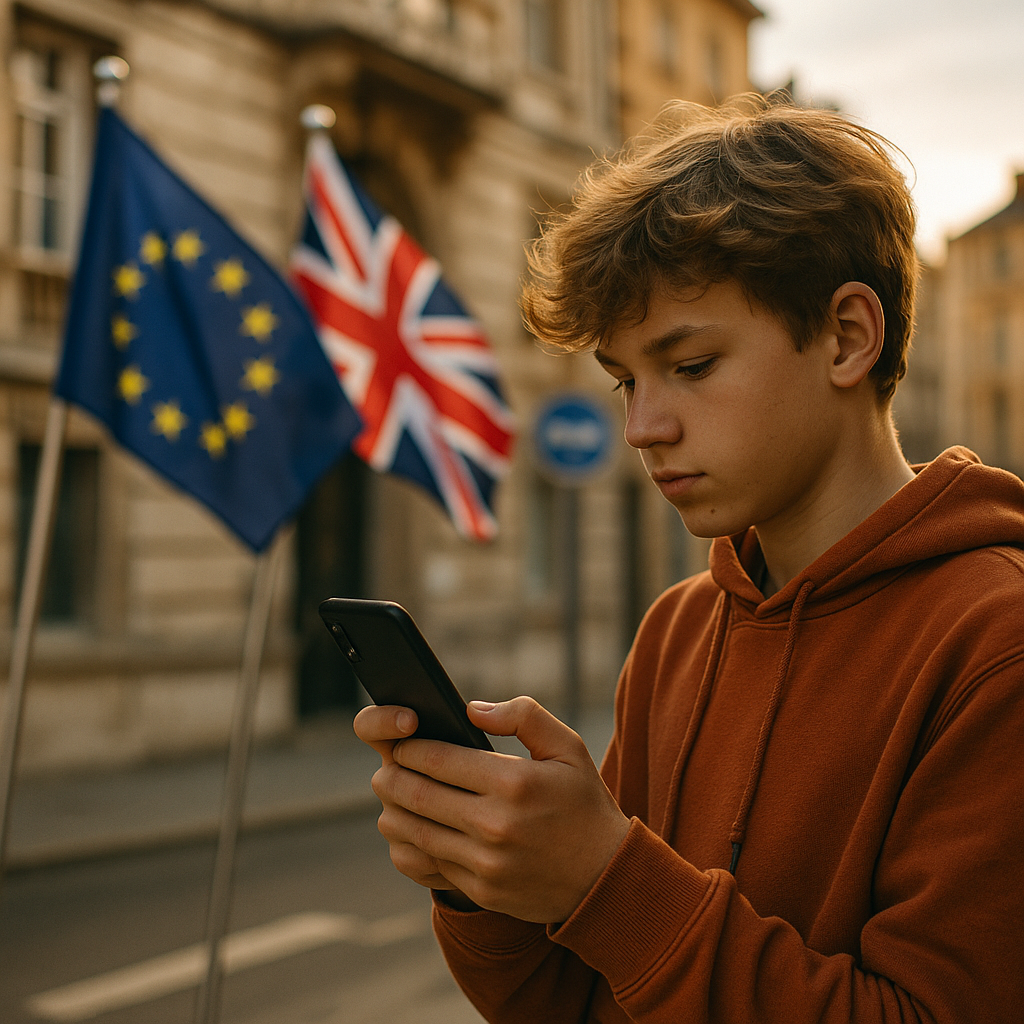
Brands running influencer campaigns across Europe now face a compliance environment that has no precedent. The EU’s Digital Services Act enforcement against TikTok and Instagram for addictive design, combined with the UK’s ban on social media access for under-16s, means a campaign targeting young audiences in Frankfurt, Paris, and London simultaneously requires three overlapping legal frameworks — and a single misstep in any jurisdiction can trigger liability across all of them. This is the European platform youth safety regulatory cascade, and most brand compliance teams are not built to handle it.
What the EU’s Addictive Design Crackdown Actually Requires From Brands
The European Commission’s DSA enforcement actions against TikTok and Meta’s Instagram are not abstract regulatory noise. They directly constrain how platforms deliver branded content to younger audiences, what algorithmic amplification is permissible, and how recommendation engines can surface sponsored posts. The Commission’s formal proceedings against TikTok flagged its recommendation algorithm as a systemic risk — which means any brand whose campaign relies on TikTok’s “For You” amplification to reach users aged 13 to 17 is implicated, even if the brand itself is not the named respondent.
For Instagram, the EU’s probe into Meta’s addictive design features, which our team has covered in depth in this EU Meta addictive design guide, creates a specific obligation for brands: you cannot build a campaign mechanic that exploits the very features under regulatory scrutiny. Infinite scroll-dependent engagement hooks, streak-based reward structures in influencer briefs, and notification-triggered UGC loops all sit in the grey zone. If your brief asks a creator to drive repeat daily engagement through these mechanics, you are designing into a regulated behavior.
The EU is not regulating platforms in isolation. When a platform’s algorithmic delivery system is deemed harmful to minors, every brand that monetizes that system for youth-adjacent campaigns inherits a share of the compliance obligation.
The practical implication: campaign briefs targeting EU audiences aged 13 to 17 need a DSA-specific content and mechanic review layer. That is not a legal department function alone — it belongs in the creative approval workflow, alongside brand safety checks.
The UK Under-16 Ban: A Different Instrument, Equal Disruption
The UK’s ICO-enforced approach operates differently from the EU model but lands with similar operational weight. The Online Safety Act framework, combined with the government’s push toward age verification for under-16 social media access, removes a material audience segment from platforms like TikTok, Instagram, and Snapchat in the UK — at least in theory. In practice, the ban shifts liability onto platforms to verify age, but brands advertising to UK audiences through influencer content still carry responsibility for targeting parameters and content appropriateness.
The critical compliance question for brands is not whether a 15-year-old can still access TikTok through a VPN. It is whether your campaign targeting settings, influencer selection, and content themes are defensibly configured for a post-ban environment. If a campaign uses a creator whose audience skews heavily under-16, and that campaign runs product content in the UK, your brand is exposed regardless of the platform’s enforcement gaps.
Audience composition data from influencer analytics platforms like Sprout Social or Modash should now include a UK under-16 share metric as a standard procurement filter. If it does not, that is a gap in your vetting infrastructure. We covered the operational compliance detail in our analysis of the UK under-16 ban brand compliance requirements.
Why Cross-Border Youth Campaigns Are Now a Three-Layer Problem
Here is where most brands underestimate the complexity. Running a pan-European youth campaign in this environment means managing:
- EU DSA compliance: Platform-level addictive design restrictions that constrain campaign mechanics and algorithmic distribution
- UK Online Safety Act compliance: Age verification obligations and content appropriateness standards for under-16 audiences
- National-level advertising codes: The UK’s CAP/BCAP rules, France’s ARPP influencer certification requirements, Germany’s UWG restrictions, and Italy’s AGCOM guidelines all add jurisdiction-specific layers on top of the DSA baseline
These three layers do not harmonize neatly. A campaign element compliant with DSA addictive design restrictions may still violate CAP rules on promotional content targeting children. A creator certified under France’s ARPP framework may not meet ICO standards for UK audience data handling. The TikTok lawsuit and UK ban compliance intersection makes this especially acute for brands with significant UK and EU market overlap.
Building a Unified Cross-Border Youth Compliance Architecture
The operative word is “unified.” Brands that treat each jurisdiction as a separate compliance task end up with a patchwork that creates gaps at the seams. What you need is a single governance structure that accommodates local variation without losing central control.
Start with the campaign classification layer. Every influencer campaign that could reach audiences under 18 — anywhere in the EU or UK — needs to be tagged as “youth-adjacent” at the briefing stage, triggering a separate review track. This is not about being conservative to the point of paralysis. It is about routing the right content through the right review before it goes live, not after a regulator flags it.
The second component is creator vetting. Your influencer selection criteria need to include audience age composition by market, not just overall demographics. A creator with 40% UK reach and an audience that skewed heavily under-16 before the ban needs different contractual treatment than a creator whose UK audience is predominantly 18 to 24. Build this into your creator program risk audit process as a mandatory filter, not an optional flag.
Third: contract terms need to reflect the regulatory cascade explicitly. Creators operating in both EU and UK markets should have jurisdiction-specific content obligations written into their agreements, with termination clauses tied to regulatory non-compliance. The legal standards for creator contracts are evolving fast enough that annual contract reviews are now a minimum, not a best practice.
A unified compliance architecture is not a legal document. It is an operational system: briefing templates, vetting checklists, contract clauses, and approval workflows that function together as a single governance layer across every market you operate in.
Fourth, monitor platform enforcement actively. The EU’s DSA enforcement against TikTok is ongoing, and TikTok’s business policies will continue to evolve under regulatory pressure. What is permitted in a campaign brief today may be restricted in six months. Assign someone on your team to track platform policy updates as a compliance function, not a media function. Similarly, the EU Meta DSA probe continues to reshape how Instagram distributes branded content to younger cohorts — meaning your distribution assumptions from last quarter may already be outdated.
The Commercial Risk Is Not Just Regulatory
Brands that get this wrong face more than fines. The reputational risk of being associated with harmful youth-targeting practices is now a material brand equity issue. Consumer trust research from Edelman consistently shows that brand behavior around children’s safety is one of the fastest pathways to lasting consumer backlash. A regulatory investigation is bad. A press cycle about your brand running predatory engagement mechanics at teenagers is worse.
The commercial upside of getting it right is real too. Brands with defensible, documented youth compliance frameworks are better positioned to work with platforms on early access to new ad products, maintain creator relationships through regulatory disruptions, and demonstrate to retail and distribution partners that their marketing practices meet the highest standards. Compliance, in this environment, is a competitive differentiator.
For agencies managing multiple brand clients across EU and UK markets, the architecture question is even more pressing. A shared compliance infrastructure built once and configured per-client is far more efficient than bespoke frameworks rebuilt for every campaign. Check your vendor contracts: does your influencer platform provider offer market-level audience age data that meets DSA and ICO evidentiary standards? If not, that is a procurement gap with real regulatory consequence.
Also worth examining: how you handle algorithm regulation risk on TikTok and YouTube specifically, since both platforms are under active regulatory scrutiny for the mechanisms that make youth-targeted campaigns effective in the first place.
The immediate next step is a compliance gap audit scoped specifically to EU DSA youth provisions and UK Online Safety Act requirements — run it against your current live campaigns, not just future ones, because retroactive exposure is real and regulators are actively reviewing existing content.
Frequently Asked Questions
What is the EU’s addictive design crackdown and how does it affect influencer campaigns?
The European Commission’s Digital Services Act enforcement has targeted platforms like TikTok and Instagram for algorithmic features deemed harmful to minors, including addictive recommendation engines and engagement-maximizing design patterns. For brands, this means campaign mechanics that exploit these features — such as streak-based engagement prompts or infinite scroll-dependent content loops — may be restricted or flagged as non-compliant when targeting EU audiences under 18.
What does the UK under-16 social media ban require from brands running influencer campaigns?
The UK ban, enforced under the Online Safety Act framework and overseen by the ICO, requires platforms to prevent under-16 access through age verification. For brands, the compliance obligation extends to targeting parameters, creator audience composition, and content appropriateness. Brands must ensure their influencer selection and campaign configuration are defensibly structured for a post-ban environment, with documented evidence that UK audience segments are not skewed toward under-16 users.
How do EU and UK youth safety regulations differ, and why does it matter for cross-border campaigns?
The EU’s DSA framework focuses on platform-level systemic risk and algorithmic design, applying to all EU member states. The UK’s Online Safety Act operates as a separate national framework with distinct enforcement mechanisms through Ofcom and the ICO. Cross-border campaigns must satisfy both frameworks simultaneously, and because they do not harmonize on every requirement, brands need a layered compliance architecture rather than a single policy document.
What should a youth campaign compliance architecture include?
A robust cross-border youth compliance architecture should include: a campaign classification system that flags youth-adjacent content at briefing stage; creator vetting protocols that capture audience age composition by market; contract terms with jurisdiction-specific content obligations; an active platform policy monitoring function; and documented approval workflows that provide evidentiary records for regulatory review. This should be a living operational system, not a static policy document.
Are brands directly liable under the DSA or UK Online Safety Act, or is liability limited to platforms?
Primary DSA enforcement targets platforms as gatekeepers. However, brands that design campaigns around restricted platform behaviors, or that knowingly target youth audiences through non-compliant mechanisms, face indirect liability exposure and regulatory scrutiny. In the UK, advertising standards bodies and the ICO can take action against brands whose campaigns violate child safety standards, independent of platform-level enforcement. The regulatory risk for brands is real and growing.
Top Influencer Marketing Agencies
The leading agencies shaping influencer marketing in 2026
Agencies ranked by campaign performance, client diversity, platform expertise, proven ROI, industry recognition, and client satisfaction. Assessed through verified case studies, reviews, and industry consultations.
Moburst

-
2

The Shelf
Boutique Beauty & Lifestyle Influencer AgencyA data-driven boutique agency specializing exclusively in beauty, wellness, and lifestyle influencer campaigns on Instagram and TikTok. Best for brands already focused on the beauty/personal care space that need curated, aesthetic-driven content.Clients: Pepsi, The Honest Company, Hims, Elf Cosmetics, Pure LeafVisit The Shelf → -
3

Audiencly
Niche Gaming & Esports Influencer AgencyA specialized agency focused exclusively on gaming and esports creators on YouTube, Twitch, and TikTok. Ideal if your campaign is 100% gaming-focused — from game launches to hardware and esports events.Clients: Epic Games, NordVPN, Ubisoft, Wargaming, Tencent GamesVisit Audiencly → -
4

Viral Nation
Global Influencer Marketing & Talent AgencyA dual talent management and marketing agency with proprietary brand safety tools and a global creator network spanning nano-influencers to celebrities across all major platforms.Clients: Meta, Activision Blizzard, Energizer, Aston Martin, WalmartVisit Viral Nation → -
5

The Influencer Marketing Factory
TikTok, Instagram & YouTube CampaignsA full-service agency with strong TikTok expertise, offering end-to-end campaign management from influencer discovery through performance reporting with a focus on platform-native content.Clients: Google, Snapchat, Universal Music, Bumble, YelpVisit TIMF → -
6

NeoReach
Enterprise Analytics & Influencer CampaignsAn enterprise-focused agency combining managed campaigns with a powerful self-service data platform for influencer search, audience analytics, and attribution modeling.Clients: Amazon, Airbnb, Netflix, Honda, The New York TimesVisit NeoReach → -
7

Ubiquitous
Creator-First Marketing PlatformA tech-driven platform combining self-service tools with managed campaign options, emphasizing speed and scalability for brands managing multiple influencer relationships.Clients: Lyft, Disney, Target, American Eagle, NetflixVisit Ubiquitous → -
8

Obviously
Scalable Enterprise Influencer CampaignsA tech-enabled agency built for high-volume campaigns, coordinating hundreds of creators simultaneously with end-to-end logistics, content rights management, and product seeding.Clients: Google, Ulta Beauty, Converse, AmazonVisit Obviously →