


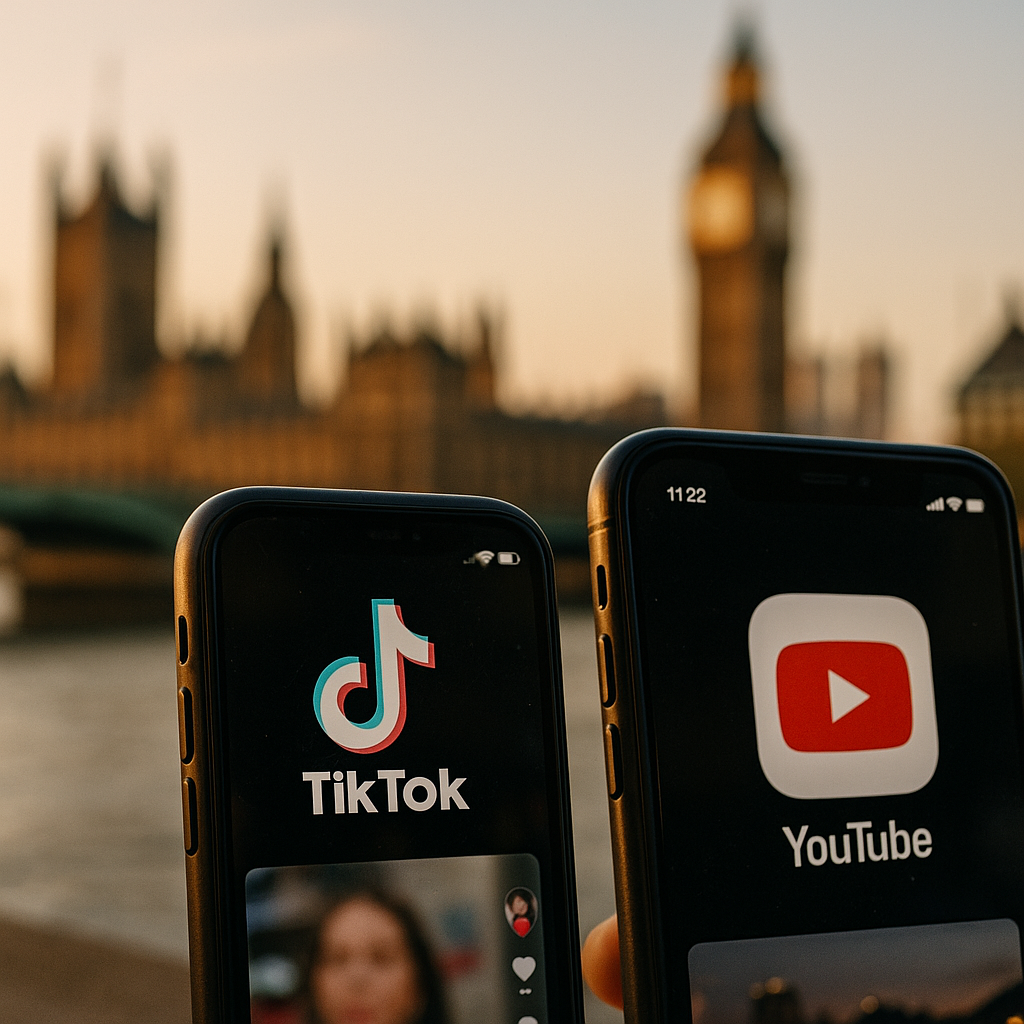
If your influencer strategy still treats organic reach on TikTok, YouTube, or Meta as a predictable line item, a proposed UK regulatory intervention should force a hard rethink. UK platform algorithm regulation for trusted news is moving from policy discussion to enforcement-track legislation, and the downstream effects on branded content visibility are significant enough to warrant immediate attention from anyone managing platform investment decisions.
What the Regulation Actually Proposes
Under proposals currently advancing through the UK’s regulatory framework, Ofcom would gain authority to mandate that platforms like TikTok, YouTube, and Facebook algorithmically surface public-service content from accredited broadcasters and news publishers. The stated goal is democratic: counter misinformation, support trusted journalism, restore some institutional authority to information flows. The mechanism, however, is algorithmically structural.
In plain terms: the platforms would be required to deprioritize other content categories to make room. The algorithm is not an infinite shelf. Promoting one content type means suppressing or repositioning others. Branded content, creator-led commercial posts, and entertainment formats sit directly in the category that gets squeezed.
This is not speculative. The Ofcom regulatory roadmap under the Online Safety Act framework already establishes precedent for platform behavior mandates. Trusted news surfacing is the logical extension. And given that the UK government has consistently pushed platforms toward greater editorial accountability, the direction of travel is clear.
Why Brands Should Care More Than Publishers
Publishers have been tracking this closely. Most brand strategy teams have not. That’s a gap worth closing fast.
The core risk for brand marketers is that organic reach assumptions built into influencer program planning will become unreliable in the UK market. If algorithm real estate is partially reallocated to public-service content by regulatory mandate, the organic amplification that creator content currently receives, especially on TikTok and YouTube where discovery algorithms drive significant non-follower reach, will contract.
A regulatory algorithm shift doesn’t show up as a platform policy change. It shows up as a quiet decline in impressions, a dip in discovery reach, and a spike in CPMs as brands compete for a smaller slice of commercially available attention. By the time the data makes it into a quarterly report, the damage to organic-dependent programs is already done.
Consider how most mid-to-large brand influencer programs are structured. A portion of budget goes to paid amplification. The rest relies on organic distribution from creator content, counting on the algorithm to extend reach beyond the creator’s immediate audience. That organic multiplier is the variable most at risk under mandatory news-surfacing requirements.
Platform-Specific Exposure Is Not Equal
TikTok carries the highest structural risk here. Its discovery engine, the For You Page, is the most algorithm-dependent of the three platforms. Users who follow zero news accounts regularly receive viral content because TikTok’s system prioritizes engagement signals above follow graphs. A mandate to insert public-service content into that flow materially alters what commercially-adjacent content survives to scale. For context on how TikTok’s own content governance is evolving, the TikTok creator approval workflow is already tightening in ways that compound this exposure.
YouTube’s situation is more nuanced. Its algorithm already surfaces news content through dedicated shelves and the YouTube News hub. Mandating more of it doesn’t necessarily crater entertainment or branded content discovery in the same blunt way. But it does create pressure on mid-funnel content, the explainer videos, product reviews, and long-form creator content where brands invest heavily. Brands tracking YouTube’s AI content policies will recognize this as one more variable stacking against pure organic dependency.
Facebook’s organic reach for branded content is already severely degraded. Meta’s algorithm pivot toward Reels and AI-recommended content has been ongoing. Trusted news mandates would layer additional constraints onto an already compressed organic environment. The marginal impact on brand content is real but smaller in absolute terms because the baseline was already so low.
Rethinking Platform Investment Risk Models
This is where the operational conversation needs to shift. Platform investment risk in influencer marketing has traditionally been modeled around audience demographics, creator fit, content safety, and CPM benchmarks. Regulatory algorithm risk hasn’t been a standard line item. It should be now.
A working framework for UK market influencer investment should incorporate three new considerations:
- Organic reach haircut modeling: Build explicit scenarios where TikTok and YouTube organic amplification decreases by 15-30% in the UK market due to algorithm reallocation. Model what that does to your cost-per-engagement and whether the program still hits KPIs without increasing paid support.
- Paid-to-organic ratio adjustment: If organic reach is compressing by regulatory design, programs built on 70/30 organic-to-paid splits will need rebalancing. Budget flexibility to shift toward performance-based creator contracts becomes more valuable as organic volatility increases.
- Platform diversification scoring: A platform that operates under UK regulatory jurisdiction carries structural algorithm risk that a platform with a smaller UK user base or different regulatory exposure does not. UK-specific campaigns should weight this as a risk factor in platform selection.
None of this means abandoning TikTok or YouTube for UK campaigns. Both still offer reach that no other channel replicates. It means pricing the regulatory risk correctly into your planning assumptions rather than treating organic reach as a stable input.
Compliance Knock-On Effects for Creator Briefs
There’s a secondary layer here that most brand teams haven’t fully connected yet: if platforms are mandated to surface content from specific accredited sources, they will likely introduce content classification signals to identify what qualifies. That classification infrastructure, once built, can also be used to identify content that competes with or contextually conflicts with public-service content.
Creator briefs written for UK distribution should account for content signals that might inadvertently position branded content in opposition to news or public information. This isn’t about brand safety in the traditional sense. It’s about algorithmic adjacency. A creator post that’s formatted to look like news commentary, or that uses trending audio tied to news cycles, could behave very differently under a mandate-adjusted algorithm than under the current system. The standards around creator brief compliance are already evolving to cover disclosure and commerce, and algorithmic positioning will be the next frontier.
Separately, UK-specific compliance for branded content is already layered. Brands running creator programs in the UK are navigating ASA guidelines, ICO data requirements, and the implications of recent legislative moves. The under-16 social media restrictions, covered in detail in the UK under-16 brand compliance guide, are one example of how fast the UK regulatory stack is building. Algorithm mandates are the next layer, not an isolated event.
Brands that treat UK regulatory risk as a legal department problem rather than a media planning problem will consistently be caught flat-footed. Algorithm regulation is media planning risk. Own it accordingly.
What This Means for Budget Allocation Right Now
The regulation isn’t fully enacted yet. But waiting for full enactment before adjusting planning assumptions is exactly the wrong response. Regulatory algorithm changes don’t have clean launch dates. They phase in, they’re negotiated platform by platform, and their effects on commercial content distribution are often visible in data before they’re announced in policy documents.
The practical action for brand and agency teams managing UK influencer investment: run a platform risk audit against your current UK creator roster and program structure. Identify where organic amplification dependency is highest, specifically on TikTok for discovery-led campaigns. Model the paid support required to maintain current KPI performance if organic reach contracts by 20%. And consider whether current UK social media ad spend projections in your planning account for regulatory-driven CPM inflation as organic real estate shrinks.
This is also a moment to stress-test creator contracts for flexibility. Fixed-rate deals that assume organic performance without paid backup are exposure. Performance-based structures with hybrid tiers offer more resilience when the distribution environment shifts unpredictably. Review your existing agreements through that lens before the next UK campaign cycle.
The immediate next step: Pull your last three UK-market influencer campaigns, identify the ratio of organic-to-paid reach in performance reporting, and use that as the baseline for a regulatory risk scenario. If your programs can’t hit KPI without the organic multiplier, you have a dependency problem that UK algorithm regulation is about to make visible.
Frequently Asked Questions
What is the UK platform algorithm regulation for trusted news?
The UK government and Ofcom are advancing proposals that would require major social platforms, including TikTok, YouTube, and Facebook, to algorithmically surface content from accredited public-service broadcasters and trusted news publishers. The goal is to counter misinformation and support institutional journalism, but the mechanism requires platforms to structurally adjust their recommendation algorithms, which affects all other content categories competing for the same feed real estate.
How would this regulation affect branded content and influencer campaigns?
If platforms must allocate algorithm priority to public-service news content, the organic discovery reach available to branded and creator content contracts. Campaigns that rely on algorithm-driven amplification beyond a creator’s direct follower base, particularly on TikTok’s For You Page, would see meaningful organic reach reduction in the UK market. Brands would likely need to increase paid support to maintain equivalent reach and engagement KPIs.
Which platforms carry the highest regulatory algorithm risk for brands?
TikTok carries the highest structural risk because its discovery model is the most dependent on algorithmic recommendation rather than follow-graph relationships. YouTube carries moderate risk, particularly for mid-funnel creator content. Facebook’s organic branded content reach is already severely compressed, so the marginal impact is smaller, but the trend direction is negative across all three platforms.
Should brands adjust their UK influencer budgets now, before the regulation is finalized?
Yes. Regulatory algorithm changes phase in gradually and their effects often appear in campaign performance data before official policy announcements. Brands should model organic reach contraction scenarios now, identify paid support gaps, and review whether current creator contracts have enough flexibility to absorb distribution volatility. Waiting for full enactment means reacting to a problem that was visible months earlier.
Does this regulation apply to global brand campaigns or only UK-targeted activity?
The regulation applies to platform algorithm behavior within the UK jurisdiction. Global campaigns that include UK audiences would be affected in the UK portion of their reach. Campaigns geo-targeted specifically to the UK carry the full exposure. Brands running pan-European or global programs should segment UK performance expectations separately and apply adjusted organic reach assumptions for that market.
Top Influencer Marketing Agencies
The leading agencies shaping influencer marketing in 2026
Agencies ranked by campaign performance, client diversity, platform expertise, proven ROI, industry recognition, and client satisfaction. Assessed through verified case studies, reviews, and industry consultations.
Moburst

-
2

The Shelf
Boutique Beauty & Lifestyle Influencer AgencyA data-driven boutique agency specializing exclusively in beauty, wellness, and lifestyle influencer campaigns on Instagram and TikTok. Best for brands already focused on the beauty/personal care space that need curated, aesthetic-driven content.Clients: Pepsi, The Honest Company, Hims, Elf Cosmetics, Pure LeafVisit The Shelf → -
3

Audiencly
Niche Gaming & Esports Influencer AgencyA specialized agency focused exclusively on gaming and esports creators on YouTube, Twitch, and TikTok. Ideal if your campaign is 100% gaming-focused — from game launches to hardware and esports events.Clients: Epic Games, NordVPN, Ubisoft, Wargaming, Tencent GamesVisit Audiencly → -
4

Viral Nation
Global Influencer Marketing & Talent AgencyA dual talent management and marketing agency with proprietary brand safety tools and a global creator network spanning nano-influencers to celebrities across all major platforms.Clients: Meta, Activision Blizzard, Energizer, Aston Martin, WalmartVisit Viral Nation → -
5

The Influencer Marketing Factory
TikTok, Instagram & YouTube CampaignsA full-service agency with strong TikTok expertise, offering end-to-end campaign management from influencer discovery through performance reporting with a focus on platform-native content.Clients: Google, Snapchat, Universal Music, Bumble, YelpVisit TIMF → -
6

NeoReach
Enterprise Analytics & Influencer CampaignsAn enterprise-focused agency combining managed campaigns with a powerful self-service data platform for influencer search, audience analytics, and attribution modeling.Clients: Amazon, Airbnb, Netflix, Honda, The New York TimesVisit NeoReach → -
7

Ubiquitous
Creator-First Marketing PlatformA tech-driven platform combining self-service tools with managed campaign options, emphasizing speed and scalability for brands managing multiple influencer relationships.Clients: Lyft, Disney, Target, American Eagle, NetflixVisit Ubiquitous → -
8

Obviously
Scalable Enterprise Influencer CampaignsA tech-enabled agency built for high-volume campaigns, coordinating hundreds of creators simultaneously with end-to-end logistics, content rights management, and product seeding.Clients: Google, Ulta Beauty, Converse, AmazonVisit Obviously →