


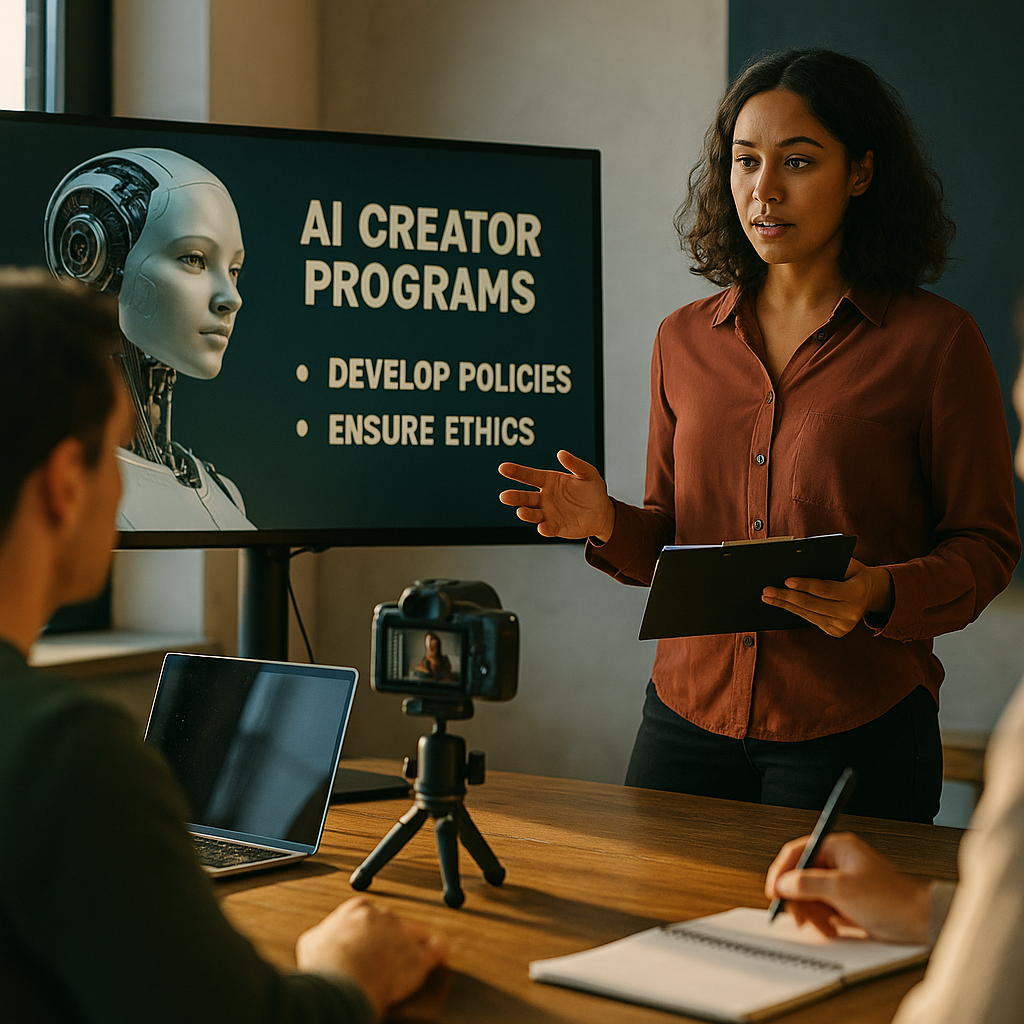
When PMG ran an AI hackathon at Cannes Lions, inviting talent to compete on live marketing briefs, the move wasn’t just a recruiting stunt. It was a signal. Agency investment in AI-native talent for AI-augmented creator programs is accelerating fast enough that brands relying entirely on agency execution are already behind on governance.
What PMG’s Hackathon Actually Revealed
PMG structured the event around real client problems: audience segmentation, content variation at scale, performance forecasting. Competitors weren’t just writing prompts. They were chaining AI tools, interpreting outputs, and making judgment calls about what the machine got wrong. The agency was, in effect, auditing what AI-literate marketing talent actually looks like in practice.
That’s a useful frame for brand-side leaders. If your agency is stress-testing AI competency at this level, the gap between their internal capability and yours is widening. Fast.
Agency AI talent investments signal where execution is heading — but brands that can’t evaluate or audit that execution are ceding strategic control of their creator programs to third parties.
The broader industry context matters here. eMarketer research has tracked accelerating AI adoption across agency holding companies throughout the mid-2020s, with operational AI tooling now embedded in media planning, content briefing, and performance optimization workflows. PMG’s hackathon is a leading indicator, not an outlier.
The In-House Competency Gap Brands Can’t Ignore
Most brand marketing teams have invested in AI literacy at the individual level: prompt engineering workshops, subscriptions to tools like ChatGPT Enterprise or Adobe Firefly, maybe a LinkedIn Learning path. That’s necessary but not sufficient. The gap that matters isn’t about individuals knowing how to use AI tools. It’s about the organizational competency to evaluate AI-generated outputs inside creator programs specifically.
Creator programs are a high-risk application area for AI. Audience data is probabilistic. Influencer performance signals are noisy. Brand safety requires contextual judgment that pure pattern-matching misses. When an agency delivers an AI-augmented creator brief or a predictive roster recommendation, your team needs to be able to ask the right interrogative questions, not just approve the output.
For more on how agentic marketing skills gaps are materializing at the leadership level, the pattern is consistent: tools arrive before the governance frameworks to manage them.
Three Competencies Brands Must Build Internally
1. AI Output Auditing, Not Just Prompt Literacy
There’s a meaningful difference between knowing how to generate AI content and knowing how to evaluate whether an AI recommendation is sound. Brands need team members who understand how tools like Persado, Influential (now part of the broader creator intelligence stack), or platform-native AI features generate their outputs, what data they’re trained on, and where their blind spots are. This isn’t about technical depth. It’s about skeptical fluency.
2. Disclosure and Compliance Governance
AI-generated content inside creator programs creates layered disclosure obligations. If a creator uses AI tools in content production, does your contract require them to disclose that? Does your brand’s disclosure language cover AI-assisted creative? The FTC’s guidance on endorsements is evolving, and AI-generated or AI-augmented content is explicitly in scope for scrutiny. The AI disclosure standards emerging from Cannes Lions conversations make clear this is no longer a theoretical compliance question.
3. Vendor and Agency Evaluation Frameworks
When PMG or any other agency brings you an AI-powered creator recommendation, what questions do you ask? What does your RFP process look like for AI-augmented services? Brands need structured evaluation criteria that go beyond performance metrics. Which AI models are being used? How are creator datasets being handled? What are the bias and representational risks in the recommendation engine? These are procurement questions as much as marketing questions.
Why Creator Programs Are Particularly Exposed
Unlike performance media where AI optimization is relatively contained, creator programs sit at the intersection of audience trust, brand safety, contractual obligations, and platform compliance. Each of those dimensions has a failure mode that AI can accelerate rather than prevent.
Consider audience authenticity. AI-powered audience analysis tools can flag follower quality issues, but they can also generate false confidence in creators whose audiences appear clean by algorithmic criteria while being misaligned by contextual ones. A brand targeting Gen Z sustainability buyers doesn’t just need a creator with high engagement among 18-24s. They need contextual alignment that a trained human reviewer catches and a pattern-matching model misses.
The compliance dimension is equally sharp. Creator economy contracts are growing in complexity, with AI usage clauses, data licensing provisions, and synthetic media restrictions increasingly standard. An agency running AI tools on creator content without explicit contractual permission creates IP and compliance exposure for the brand, not the agency.
The certification infrastructure is developing in parallel. As ARPP and IAB-UK certification frameworks evolve, brands need internal competency to evaluate whether creator certifications are meaningful or performative, especially as AI-assisted content creation becomes normalized.
The Organizational Design Question
Should brands hire dedicated AI governance roles for creator programs? For large advertisers running multi-million dollar influencer programs, the answer is increasingly yes. Not necessarily a technologist, but a practitioner who sits between the agency relationship and the legal/compliance function.
For mid-market brands, the more realistic path is upskilling existing influencer leads with structured AI evaluation frameworks and updating vendor contracts to require transparency on AI tool usage. Adobe and LinkedIn have both built brand team training infrastructure worth examining. The Adobe-LinkedIn AI training programs represent exactly the kind of structured upskilling that closes operational gaps without requiring new headcount.
A 90-day structured approach works for most teams. Audit current agency AI tool usage across your creator programs. Map disclosure gaps. Update creator contracts with AI usage clauses. Build evaluation criteria for AI-generated recommendations. It’s operational, not theoretical. See how a 90-day AI upskilling plan translates that into practitioner-level execution.
The brands that will govern AI-augmented creator programs effectively aren’t the ones with the most sophisticated tools — they’re the ones that have built the internal muscle to ask hard questions of the tools and the agencies deploying them.
What PMG’s Move Means for Your Next Agency Review
Agency AI capability is accelerating. PMG’s hackathon is one data point among many: WPP and Publicis have both announced significant AI talent and tooling investments. The Accenture Song acquisition of Whalar brought consulting-grade AI infrastructure into the creator economy directly. If you haven’t updated your agency evaluation criteria to include AI governance transparency requirements, your next contract cycle is the right moment.
Ask your agency partners specifically: what AI tools are embedded in your creator recommendation and content workflows? How are creator datasets being used and stored? What disclosure protocols do you follow for AI-assisted deliverables? Their answers will tell you exactly how much internal competency you need to build to close the oversight gap.
Start with your current creator program contracts. Audit them for AI usage clauses within the next 30 days. That single action surfaces the compliance exposure and forces the internal conversation about governance that most brand teams are still avoiding.
Frequently Asked Questions
What does it mean for a creator program to be “AI-augmented”?
An AI-augmented creator program uses artificial intelligence tools at one or more stages of the program: creator discovery, audience analysis, content briefing, performance forecasting, or paid amplification optimization. The AI may be embedded in agency workflows, third-party platforms, or creator-side production tools. Brands need to know where AI is operating in their programs because each touchpoint carries distinct disclosure, compliance, and data governance implications.
Why should brands build internal AI competency rather than rely on agencies?
Agencies optimize for their own operational efficiency and client deliverables. Without internal competency, brands cannot evaluate whether AI-generated recommendations are sound, identify bias or compliance risks, or audit whether agency AI tool usage aligns with contractual and regulatory requirements. Strategic control of creator programs requires the ability to interrogate and override AI outputs, not just receive them.
What specific AI governance risks are unique to influencer and creator programs?
Creator programs carry several AI-specific risks that other marketing channels don’t face at the same intensity: audience authenticity fraud that AI tools can misclassify, FTC disclosure obligations for AI-assisted content, IP and licensing complications when AI tools are used to process or replicate creator content, and brand safety failures when contextual alignment is assessed algorithmically without human review. Each of these requires distinct governance protocols.
How are agencies like PMG using AI in creator programs right now?
Leading independent agencies and holding company networks are using AI across creator program workflows including audience segmentation and lookalike modeling, automated brief generation and content variation, predictive performance scoring for creator selection, and paid amplification optimization. The PMG Cannes hackathon specifically tested AI application to live client briefs, signaling that AI-native talent is being recruited to run these workflows at an increasingly sophisticated level.
What contract clauses should brands add to address AI usage in creator programs?
Brands should consider adding clauses that require creators and agencies to disclose when AI tools are used in content creation or audience targeting, restrict the use of brand assets or creator likenesses in AI model training without explicit consent, mandate compliance with applicable AI disclosure guidelines from regulators like the FTC, and grant the brand audit rights over AI tool usage within the scope of the engagement. Legal review is essential given the pace of regulatory change in this area.
Top Influencer Marketing Agencies
The leading agencies shaping influencer marketing in 2026
Agencies ranked by campaign performance, client diversity, platform expertise, proven ROI, industry recognition, and client satisfaction. Assessed through verified case studies, reviews, and industry consultations.
Moburst

-
2

The Shelf
Boutique Beauty & Lifestyle Influencer AgencyA data-driven boutique agency specializing exclusively in beauty, wellness, and lifestyle influencer campaigns on Instagram and TikTok. Best for brands already focused on the beauty/personal care space that need curated, aesthetic-driven content.Clients: Pepsi, The Honest Company, Hims, Elf Cosmetics, Pure LeafVisit The Shelf → -
3

Audiencly
Niche Gaming & Esports Influencer AgencyA specialized agency focused exclusively on gaming and esports creators on YouTube, Twitch, and TikTok. Ideal if your campaign is 100% gaming-focused — from game launches to hardware and esports events.Clients: Epic Games, NordVPN, Ubisoft, Wargaming, Tencent GamesVisit Audiencly → -
4

Viral Nation
Global Influencer Marketing & Talent AgencyA dual talent management and marketing agency with proprietary brand safety tools and a global creator network spanning nano-influencers to celebrities across all major platforms.Clients: Meta, Activision Blizzard, Energizer, Aston Martin, WalmartVisit Viral Nation → -
5

The Influencer Marketing Factory
TikTok, Instagram & YouTube CampaignsA full-service agency with strong TikTok expertise, offering end-to-end campaign management from influencer discovery through performance reporting with a focus on platform-native content.Clients: Google, Snapchat, Universal Music, Bumble, YelpVisit TIMF → -
6

NeoReach
Enterprise Analytics & Influencer CampaignsAn enterprise-focused agency combining managed campaigns with a powerful self-service data platform for influencer search, audience analytics, and attribution modeling.Clients: Amazon, Airbnb, Netflix, Honda, The New York TimesVisit NeoReach → -
7

Ubiquitous
Creator-First Marketing PlatformA tech-driven platform combining self-service tools with managed campaign options, emphasizing speed and scalability for brands managing multiple influencer relationships.Clients: Lyft, Disney, Target, American Eagle, NetflixVisit Ubiquitous → -
8

Obviously
Scalable Enterprise Influencer CampaignsA tech-enabled agency built for high-volume campaigns, coordinating hundreds of creators simultaneously with end-to-end logistics, content rights management, and product seeding.Clients: Google, Ulta Beauty, Converse, AmazonVisit Obviously →