


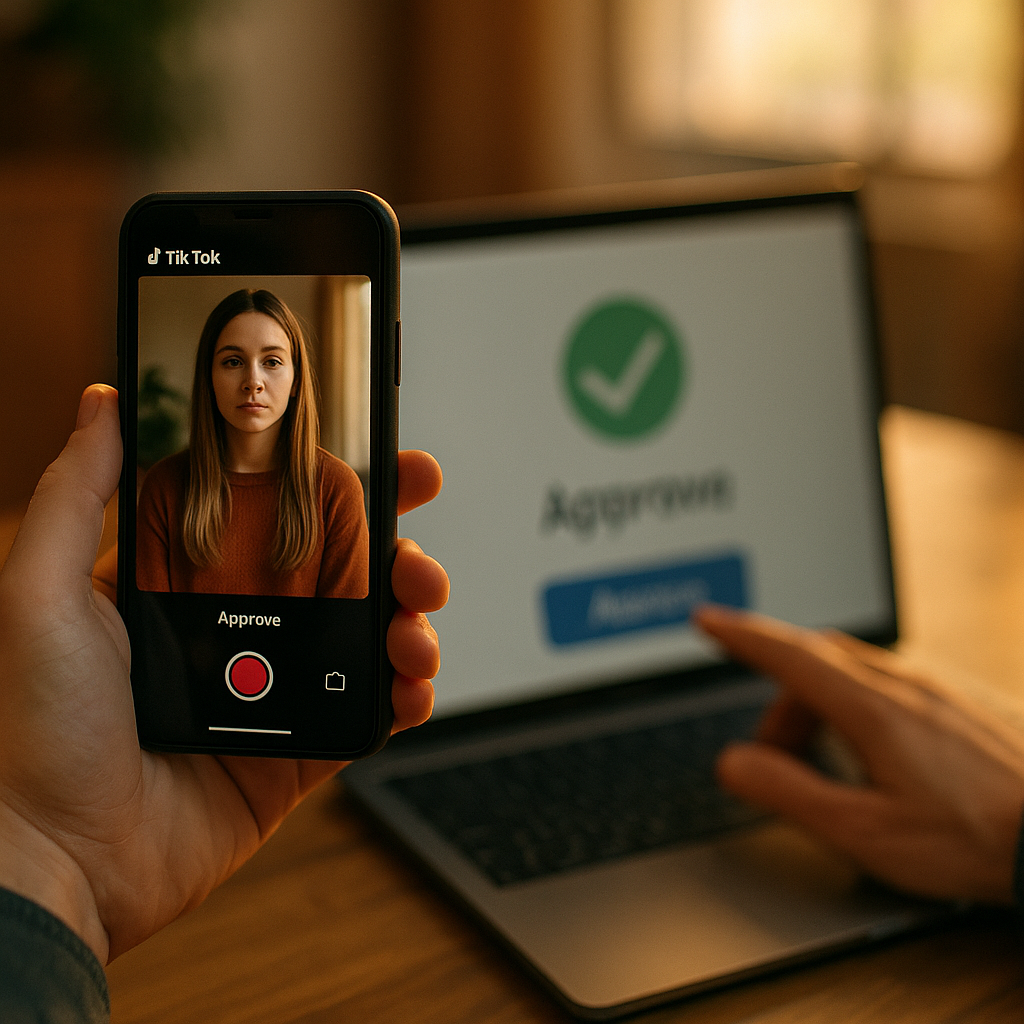
Nearly 70% of brand safety incidents in influencer campaigns trace back to a single failure: the creator never received a clear, enforceable brief. If your brand safety team is still emailing PDFs and hoping for the best, the Branded Buzz Workflow is what you’re missing.
What the Branded Buzz Workflow Actually Is
Strip away the jargon. The Branded Buzz Workflow is a structured approval architecture that systematically pushes campaign briefs, brand guideline alerts, and compliance checkpoints to TikTok creators before a single frame is filmed. It is not a content calendar tool. It is not a simple approval chain. It is an operational layer that sits between your brand strategy and every piece of creator content that carries your name.
The core components are four: a brief distribution engine, a guideline alert system, a pre-publication approval gate, and a disclosure compliance tracker. Each component must talk to the others. When they do not, you get off-brief content. When they do, you get scale without brand risk.
Why TikTok Specifically Breaks Traditional Approval Models
TikTok’s content velocity is unlike any other platform. Creators post in real time, trends expire in 48 hours, and the algorithm rewards speed over polish. That dynamic directly conflicts with the multi-day approval chains most brand safety teams inherited from Instagram or YouTube production cycles.
The result? Creators skip the approval queue because waiting kills their reach. Brand safety teams face a binary choice: approve content retroactively or pull the post and damage the creator relationship. Neither option is acceptable at scale.
A functional Branded Buzz Workflow eliminates that false binary by compressing the approval window without compressing the compliance standard. Approval speed and brand safety are not opposing forces — they are an engineering problem.
This is also where TikTok privacy compliance intersects with content governance. Any approval architecture operating on TikTok must account for data handling requirements alongside brand safety rules, or you are solving half the problem.
Building the Brief Distribution Engine
The brief is the foundation. Every subsequent compliance failure can be traced back to a vague, incomplete, or undelivered brief. The brief distribution engine must do three things: deliver the right brief to the right creator at the right moment in production.
Templatize ruthlessly. Build modular brief templates with locked fields (mandatory disclosures, prohibited claims, brand voice rules) and flexible fields (creative direction, trending hooks, call-to-action options). Platforms like Sprout Social and purpose-built influencer platforms such as Grin or CreatorIQ allow template-based brief distribution with read-receipt tracking. That read receipt matters legally. If a creator posts off-brief content and you have no confirmation they received the brief, your liability exposure is real.
Trigger briefs contextually, not calendrically. Do not send briefs on a fixed schedule. Trigger them when a creator accepts a campaign offer inside your workflow system. This ensures every creator who is live on a campaign has received their brief within the last 24 hours of acceptance, not three weeks ago when the campaign kicked off.
For campaigns involving AI-generated or AI-assisted content, the brief must also include disclosure language requirements. FTC disclosure rules for AI-remixed content are specific and non-negotiable. Build them into the template, not as an addendum creators can ignore.
Guideline Alerts: Push, Don’t Assume
Brand guidelines are not static. A product recall, a PR crisis, a regulatory shift — any of these can render yesterday’s approved talking points today’s liability. Your approval architecture needs a live alert layer that can push guideline updates to active creators mid-campaign.
Build this as a separate alert channel from your brief system. Use push notifications inside your influencer platform, not email. Email open rates for operational communications hover around 20-30%. A push notification inside the platform creators are already using for campaign management gets seen. Set mandatory acknowledgment requirements: the creator must confirm receipt before their next content submission is accepted by the system.
Segment your alerts by campaign, product line, and creator tier. Not every alert is relevant to every creator. If you push irrelevant alerts, creators train themselves to ignore them. That is the worst possible outcome when a critical brand safety update goes out.
For programs operating across jurisdictions, geographic segmentation is equally important. Geolocation-based compliance requirements mean a guideline update for a Virginia-based promotion may not apply to your California creator roster, but your system needs to know the difference automatically.
The Pre-Publication Approval Gate
This is the operational bottleneck that kills most programs. A pre-publication gate that requires a human reviewer for every piece of TikTok content collapses under volume. The solution is tiered gating: automate what can be automated, escalate what requires judgment.
Tier 1 — Automated compliance scan. Run every submitted draft through automated checks: disclosure language present (yes/no), prohibited claims detected (keyword and semantic matching), product claims within approved bounds. Tools like Traackr and TikTok’s own branded content tools provide some of this infrastructure natively. Supplement with AI-powered compliance scanning for deeper semantic analysis.
Tier 2 — Brand safety reviewer queue. Content that passes automated checks but includes novel claims, competitor mentions, or sensitive topic adjacency gets flagged for human review. Set a hard SLA: four-hour turnaround maximum. Creators who know they will hear back within four hours will hold their content. Creators who face a 48-hour black box will post anyway.
Tier 3 — Legal escalation. Anything touching regulated categories (finance, health, supplements, alcohol) goes directly to legal. No exceptions. Build this routing into the system logic, not into human memory.
This tiered model is also where contract revision limits become operationally relevant. Your MSA should specify the maximum number of content revisions the brand can request without triggering renegotiation. If your approval gate is generating five revision cycles per post, you have a brief quality problem, not an approval problem.
Disclosure Compliance at Scale: The Non-Negotiable Layer
The FTC’s disclosure requirements are not suggestions, and TikTok’s own branded content policy runs parallel to them. At scale, manual disclosure verification is not viable. Your architecture needs to verify three things automatically: the disclosure is present, it is prominent (not buried in hashtags), and it uses compliant language.
The FTC’s updated guidance requires that disclosures like “#ad” or “Paid partnership” appear at the beginning of a caption or in the first frame of a video, not appended after a block of promotional copy. Automated scanning can verify placement. What it cannot verify is tone: a disclosure technically present but visually minimized still creates regulatory risk.
Build a disclosure checklist into your creator-facing submission form. Require creators to self-certify that the disclosure is present and prominent before the content enters your review queue. This creates a documented compliance record that protects both the brand and the creator. For campaigns where AI-generated elements are involved, layer in the additional disclosure requirements covered under FTC dual disclosure rules.
Self-certification without verification is theater. Pair every creator self-cert with at least a Tier 1 automated scan. The combination creates a defensible compliance record — the self-cert establishes intent, the automated scan catches execution failures.
Keeping Off-Brief Content from Going Live
The hardest problem is not the creator who intentionally goes off-brief. It is the creator who believes they are on-brief but misunderstood the parameters. Invest in brief clarity before the approval gate, not after.
Run brief comprehension checks. After a creator accepts a brief, require them to answer three to five questions that demonstrate they understood the core parameters: the approved product claims, the disclosure requirements, the prohibited topics. This takes 90 seconds. It surfaces misunderstandings before production begins, not during review.
For high-volume programs, consider a creator compliance scoring system. Track off-brief submissions, revision frequency, and disclosure failures by creator. Use this data in your renewal decisions. Creators with strong compliance scores earn streamlined approval paths. Creators with poor scores get additional pre-production check-ins. This is not punitive. It is operational risk management, and it scales.
Your legal infrastructure also matters here. Well-structured creator MSAs should include explicit clauses defining what constitutes an off-brief submission, the brand’s right to request unpublished content be revised before going live, and the consequences of repeated off-brief behavior. Without those clauses, your approval architecture has no teeth.
Finally, audit your AI governance protocols if any part of your workflow uses AI to generate brief suggestions or approval recommendations. An AI system generating flawed briefs at scale will produce off-brief content at scale. The kill-switch capability matters as much as the automation capability.
Start by auditing your current brief delivery confirmation rate. If you cannot answer what percentage of active creators acknowledged receipt of their current campaign brief in the last 72 hours, that number is your first metric to fix.
FAQs
What is the Branded Buzz Workflow for brand safety teams?
The Branded Buzz Workflow is an approval architecture designed to systematically push campaign briefs, brand guideline alerts, and compliance checkpoints to TikTok creators before they produce content. It combines automated compliance scanning, tiered human review, brief distribution triggers, and disclosure tracking to maintain brand safety at scale without sacrificing the content velocity TikTok demands.
How do you maintain FTC disclosure compliance across a large TikTok creator roster?
Effective disclosure compliance at scale requires three layers: automated scanning that verifies disclosure presence and placement in every submitted draft, creator self-certification forms that create a documented compliance record, and clear contractual language in your MSA that defines disclosure requirements and the consequences of non-compliance. Manual verification alone is not viable above 20-30 active creators per campaign cycle.
What tools support a TikTok creator approval architecture?
Purpose-built influencer marketing platforms such as Grin, CreatorIQ, and Traackr support template-based brief distribution, read-receipt tracking, and some automated compliance checking. TikTok’s native branded content tools provide basic disclosure infrastructure. For deeper semantic compliance scanning and AI-assisted review, additional third-party tools are typically required. The architecture should integrate these tools into a single workflow rather than running them in parallel silos.
How do you prevent creators from posting off-brief content before approval?
The most effective prevention combines brief comprehension checks at campaign onboarding, a four-hour or faster Tier 1 review SLA so creators do not post out of frustration, and contractual clauses that explicitly define off-brief content and the brand’s right to request revisions before publication. A creator compliance scoring system that rewards consistent on-brief performance with streamlined approval paths also reduces off-brief submission rates over time.
How should brand guideline alerts be delivered to TikTok creators mid-campaign?
Guideline alerts should be pushed through in-platform notifications inside your influencer management system, not via email. Require mandatory acknowledgment from creators before their next content submission is accepted. Segment alerts by campaign and creator tier to avoid alert fatigue from irrelevant updates. For geographic compliance requirements, segment by location to ensure creators only receive alerts relevant to their jurisdiction.
Top Influencer Marketing Agencies
The leading agencies shaping influencer marketing in 2026
Agencies ranked by campaign performance, client diversity, platform expertise, proven ROI, industry recognition, and client satisfaction. Assessed through verified case studies, reviews, and industry consultations.
Moburst

-
2

The Shelf
Boutique Beauty & Lifestyle Influencer AgencyA data-driven boutique agency specializing exclusively in beauty, wellness, and lifestyle influencer campaigns on Instagram and TikTok. Best for brands already focused on the beauty/personal care space that need curated, aesthetic-driven content.Clients: Pepsi, The Honest Company, Hims, Elf Cosmetics, Pure LeafVisit The Shelf → -
3

Audiencly
Niche Gaming & Esports Influencer AgencyA specialized agency focused exclusively on gaming and esports creators on YouTube, Twitch, and TikTok. Ideal if your campaign is 100% gaming-focused — from game launches to hardware and esports events.Clients: Epic Games, NordVPN, Ubisoft, Wargaming, Tencent GamesVisit Audiencly → -
4

Viral Nation
Global Influencer Marketing & Talent AgencyA dual talent management and marketing agency with proprietary brand safety tools and a global creator network spanning nano-influencers to celebrities across all major platforms.Clients: Meta, Activision Blizzard, Energizer, Aston Martin, WalmartVisit Viral Nation → -
5

The Influencer Marketing Factory
TikTok, Instagram & YouTube CampaignsA full-service agency with strong TikTok expertise, offering end-to-end campaign management from influencer discovery through performance reporting with a focus on platform-native content.Clients: Google, Snapchat, Universal Music, Bumble, YelpVisit TIMF → -
6

NeoReach
Enterprise Analytics & Influencer CampaignsAn enterprise-focused agency combining managed campaigns with a powerful self-service data platform for influencer search, audience analytics, and attribution modeling.Clients: Amazon, Airbnb, Netflix, Honda, The New York TimesVisit NeoReach → -
7

Ubiquitous
Creator-First Marketing PlatformA tech-driven platform combining self-service tools with managed campaign options, emphasizing speed and scalability for brands managing multiple influencer relationships.Clients: Lyft, Disney, Target, American Eagle, NetflixVisit Ubiquitous → -
8

Obviously
Scalable Enterprise Influencer CampaignsA tech-enabled agency built for high-volume campaigns, coordinating hundreds of creators simultaneously with end-to-end logistics, content rights management, and product seeding.Clients: Google, Ulta Beauty, Converse, AmazonVisit Obviously →