


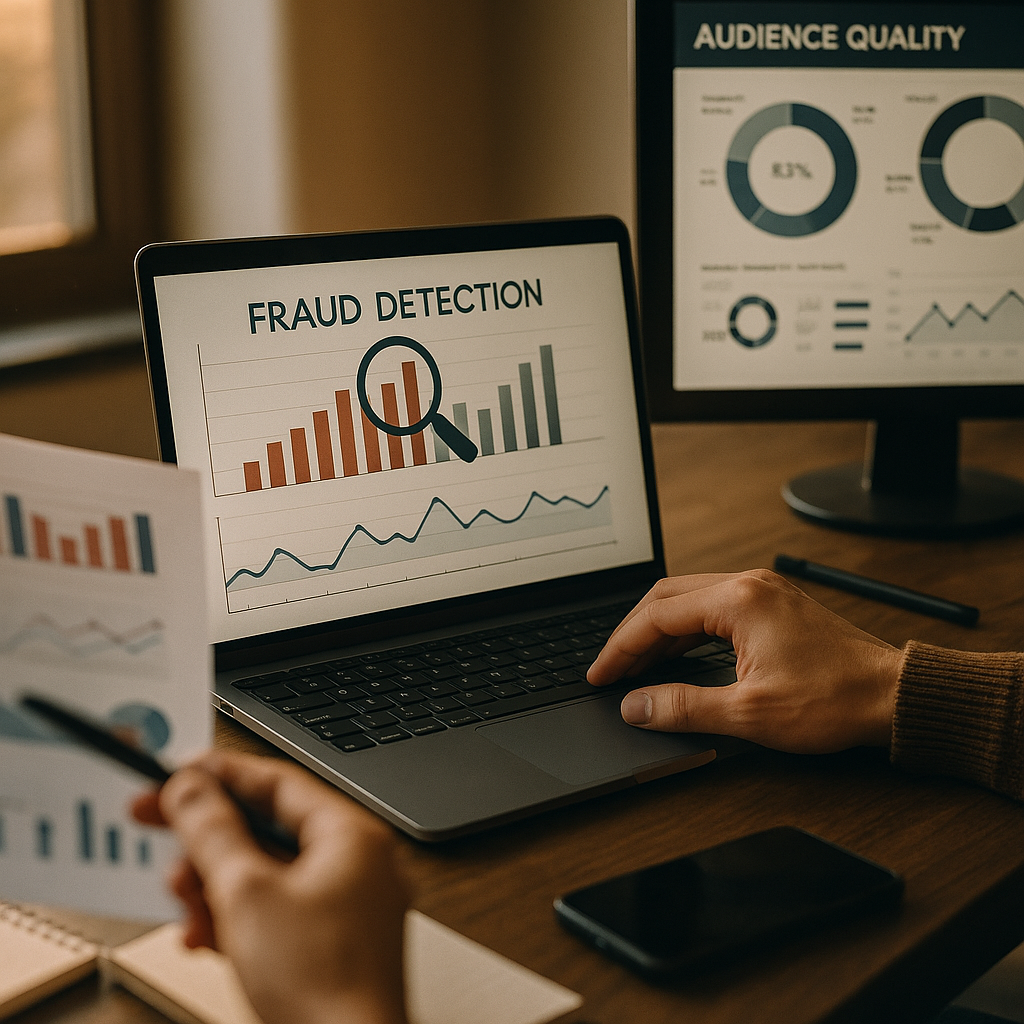
Roughly 49% of Instagram accounts with over 90,000 followers show signs of fake engagement, according to research widely cited across the influencer marketing industry. Yet most brands still run a single fraud check and call it due diligence. That’s not vetting — that’s a coin flip. Building a real pre-campaign vetting stack means pairing fraud-detection platforms with audience-quality tools, and understanding exactly where each one stops being useful.
Two Tools, Two Very Different Jobs
Here’s the confusion that trips up most marketing ops teams: fraud detection and audience quality sound like the same category. They’re not. A fraud-detection platform is forensic. It looks backward, hunting for evidence that engagement was purchased, botted, or manipulated through pods and engagement farms. An audience-quality platform is diagnostic. It looks at who’s actually in the audience right now — their demographics, their authenticity, their overlap with your target buyer.
Think of it this way: fraud detection tells you whether the numbers are lies. Audience quality tells you whether the truth is useful to you. A creator can pass a fraud screen with flying colors — real followers, real engagement, no bot signatures — and still have an audience of 14-year-olds when you’re selling B2B SaaS. Conversely, a creator can have a laser-relevant audience of enterprise buyers while padding their like counts with a $40-a-month engagement pod subscription.
Fraud detection answers “is this real?” Audience quality answers “is this real audience the one I actually need?” Skipping either question leaves half your risk exposed.
Most procurement teams buy one and assume it covers the other. It doesn’t. That gap is exactly where wasted influencer budget hides.
Why the Combined Stack Matters More Now
The fraud landscape has gotten more sophisticated, not less. AI-generated engagement, follower farms that mimic organic growth curves, and cross-platform bot networks have made single-signal detection unreliable. Platforms that only check follower-to-engagement ratios miss creators who’ve learned to game that specific metric. Meanwhile, industry data from Statista continues to show influencer marketing budgets climbing year over year, which means the dollar cost of a bad vetting decision keeps rising too.
Add regulatory pressure into the mix. The FTC’s endorsement guidelines hold brands accountable for disclosure and deceptive practices even when the creator is the one at fault. If a campaign runs on inflated or misrepresented audiences, that’s not just a wasted spend problem — it can become a compliance problem. A combined vetting stack isn’t just about ROI protection anymore. It’s about defensibility if a regulator or a client ever asks “how did you vet this partnership?”
What a Combined Vetting Stack Actually Looks Like
In practice, a mature stack runs creators through layered checks before a contract is signed, not after a campaign underperforms. A workable sequence looks like this:
- Fraud screen first. Run the creator through a dedicated fraud-detection tool to flag bot followers, sudden follower spikes, and engagement pod signatures.
- Audience-quality overlay. Layer in demographic and psychographic scoring to confirm the real audience matches your target buyer profile.
- Cross-reference the two reports. Look for contradictions — a “clean” fraud score paired with a wildly mismatched audience geography is still a red flag.
- Historical performance check. Pull past campaign data if available, ideally from a platform with payment or conversion tracking baked in.
- Manual spot-check. A five-minute scroll through actual comments still catches things software misses — copy-paste bot comments, engagement from clearly unrelated regions, tone mismatches.
None of these steps is optional if you’re spending real budget. Skipping the manual check because “the software already flagged it clean” is how brands end up explaining a bot-driven campaign to a CFO.
Where Most Teams Get the Sequencing Wrong
The common mistake: running audience-quality scoring first, loving the demographic fit, and treating the fraud check as a rubber stamp. That ordering biases the whole evaluation. Once a marketer has emotionally committed to a creator because the audience data looks perfect, they tend to underweight fraud signals that show up later. Run fraud detection first. Eliminate the bad actors before you even fall in love with the audience fit. It’s a cheaper mistake to catch early.
Our earlier breakdown on AI audience quality scoring goes deeper into the specific signals — geographic clustering, engagement velocity anomalies, follower growth curve shapes — that separate a real audience from a manufactured one. It’s worth reading alongside any fraud-tool evaluation, because the two frameworks are meant to be read together, not separately.
Do You Need Two Vendors, or One Bundled Platform?
This is the question every procurement conversation eventually lands on. Bundled platforms that claim to do fraud and audience-quality in one dashboard are appealing on paper — one contract, one login, one invoice. But bundling doesn’t automatically mean better accuracy. We covered this tension directly in our analysis of bundled fraud detection, and the short version is: bundled tools often trade specialization for convenience. A vendor that built its reputation on fraud detection may have bolted on audience scoring as a feature checkbox rather than a core competency, and vice versa.
The right call depends on scale. Brands running fewer than 50 creator partnerships a year can usually get away with a single bundled tool, provided they still do the manual spot-check. Brands running hundreds of partnerships across multiple regions need best-of-breed tools stitched together, even if that means more vendor management overhead. The accuracy gap between specialized and bundled tools tends to widen precisely at the scale where the financial risk is highest.
A bundled tool that saves you $200 a month in software costs isn’t a bargain if it misses fraud patterns that cost you a five-figure campaign.
If you’re heading into a renewal cycle and weighing vendor consolidation more broadly, it’s worth reviewing the vendor map before renewal before locking into a single-platform strategy for the sake of tidiness.
Building the Business Case Internally
Getting budget approved for a two-tool stack is harder than getting budget for one. Finance teams see redundancy where marketing ops sees complementary coverage. The way to win this argument is to frame it in terms of avoided loss, not added cost.
Pull your own historical numbers. How many creator partnerships in the last cycle underperformed relative to their audience size? How many had engagement rates that, in hindsight, looked statistically implausible? Sprout Social’s research on influencer marketing consistently shows that audience trust and authenticity correlate directly with campaign performance — which means every fraudulent or low-quality audience slipped through vetting is a direct hit to ROI, not just a compliance footnote.
Frame the stack as insurance against a specific, quantifiable failure mode: paying full rate-card price for an audience that was never going to convert. That’s a number finance understands.
Operational Integration Matters as Much as Tool Selection
A vetting stack that lives outside your workflow tools becomes a compliance checkbox nobody actually uses under deadline pressure. The best implementations plug fraud and audience-quality checks directly into the discovery and briefing pipeline, so a creator can’t move to contract stage without clearing both gates automatically. Platforms built around automated discovery and briefing workflows make this far easier than manually running reports in a separate tab and hoping someone remembers to check them.
The same logic applies downstream. If your fraud and audience data isn’t connected to payment triggers, you’re relying on someone remembering to hold payment until vetting clears — which, under campaign-launch pressure, rarely happens consistently. Our piece on fraud detection meeting payment automation covers how leading platforms are starting to gate payment releases behind vetting results, which closes the loop far more reliably than manual process ever could.
A Quick Reality Check on Tool Limitations
No fraud or audience-quality tool is perfect, and vendors that claim near-100% accuracy should raise your skepticism, not lower it. Bot detection is an arms race. As soon as a detection method becomes standard, fraud networks adapt around it. The same is true for audience-quality scoring: demographic inference from public profile data is probabilistic, not certain, especially on platforms like TikTok where profile completion rates are lower than on LinkedIn or Facebook.
Treat every vetting report as a strong signal, not gospel. Combine automated scoring with a documented manual review process, and keep a record of your vetting decisions. If a partnership goes wrong despite clean reports, that documentation is what protects your team internally and, if it ever comes to it, externally with regulators or clients asking about your due diligence process.
Start small: pick one fraud-detection tool and one audience-quality tool, run them on your next five creator candidates side by side, and document where they agree and disagree. That gap analysis will tell you more about your real risk exposure than any vendor pitch deck ever will.
FAQs
What’s the difference between fraud detection and audience-quality tools?
Fraud detection identifies manipulated metrics — bought followers, bot engagement, pod activity. Audience-quality tools assess whether the real audience matches your target demographic and buyer profile. A creator can pass one check and fail the other.
Can one platform reliably do both fraud detection and audience quality?
Some bundled platforms attempt both, but accuracy often suffers when a vendor’s core strength is in one area and the other is a bolted-on feature. At scale, best-of-breed tools stitched together typically outperform single bundled solutions.
How often should brands re-vet existing creator partners?
At minimum, before each major campaign renewal. Audience composition and fraud risk change over time as follower bases grow, so a creator vetted six months ago isn’t guaranteed to pass the same checks today.
Is manual review still necessary if we use automated vetting tools?
Yes. Automated tools miss context that a human catches in minutes — copy-paste bot comments, tonal mismatches, or regional irrelevance in the comment section. Treat manual spot-checks as a required final step, not an optional extra.
What’s the biggest mistake brands make in pre-campaign vetting?
Running audience-quality scoring first and treating fraud detection as a formality. That ordering biases decision-makers toward creators they’ve already emotionally committed to, making it easier to overlook fraud red flags.
FAQs
What’s the difference between fraud detection and audience-quality tools?
Fraud detection identifies manipulated metrics — bought followers, bot engagement, pod activity. Audience-quality tools assess whether the real audience matches your target demographic and buyer profile. A creator can pass one check and fail the other.
Can one platform reliably do both fraud detection and audience quality?
Some bundled platforms attempt both, but accuracy often suffers when a vendor’s core strength is in one area and the other is a bolted-on feature. At scale, best-of-breed tools stitched together typically outperform single bundled solutions.
How often should brands re-vet existing creator partners?
At minimum, before each major campaign renewal. Audience composition and fraud risk change over time as follower bases grow, so a creator vetted six months ago isn’t guaranteed to pass the same checks today.
Is manual review still necessary if we use automated vetting tools?
Yes. Automated tools miss context that a human catches in minutes — copy-paste bot comments, tonal mismatches, or regional irrelevance in the comment section. Treat manual spot-checks as a required final step, not an optional extra.
What’s the biggest mistake brands make in pre-campaign vetting?
Running audience-quality scoring first and treating fraud detection as a formality. That ordering biases decision-makers toward creators they’ve already emotionally committed to, making it easier to overlook fraud red flags.
Top Influencer Marketing Agencies
The leading agencies shaping influencer marketing in 2026
Agencies ranked by campaign performance, client diversity, platform expertise, proven ROI, industry recognition, and client satisfaction. Assessed through verified case studies, reviews, and industry consultations.
Moburst

-
2

The Shelf
Boutique Beauty & Lifestyle Influencer AgencyA data-driven boutique agency specializing exclusively in beauty, wellness, and lifestyle influencer campaigns on Instagram and TikTok. Best for brands already focused on the beauty/personal care space that need curated, aesthetic-driven content.Clients: Pepsi, The Honest Company, Hims, Elf Cosmetics, Pure LeafVisit The Shelf → -
3

Audiencly
Niche Gaming & Esports Influencer AgencyA specialized agency focused exclusively on gaming and esports creators on YouTube, Twitch, and TikTok. Ideal if your campaign is 100% gaming-focused — from game launches to hardware and esports events.Clients: Epic Games, NordVPN, Ubisoft, Wargaming, Tencent GamesVisit Audiencly → -
4

Viral Nation
Global Influencer Marketing & Talent AgencyA dual talent management and marketing agency with proprietary brand safety tools and a global creator network spanning nano-influencers to celebrities across all major platforms.Clients: Meta, Activision Blizzard, Energizer, Aston Martin, WalmartVisit Viral Nation → -
5

The Influencer Marketing Factory
TikTok, Instagram & YouTube CampaignsA full-service agency with strong TikTok expertise, offering end-to-end campaign management from influencer discovery through performance reporting with a focus on platform-native content.Clients: Google, Snapchat, Universal Music, Bumble, YelpVisit TIMF → -
6

NeoReach
Enterprise Analytics & Influencer CampaignsAn enterprise-focused agency combining managed campaigns with a powerful self-service data platform for influencer search, audience analytics, and attribution modeling.Clients: Amazon, Airbnb, Netflix, Honda, The New York TimesVisit NeoReach → -
7

Ubiquitous
Creator-First Marketing PlatformA tech-driven platform combining self-service tools with managed campaign options, emphasizing speed and scalability for brands managing multiple influencer relationships.Clients: Lyft, Disney, Target, American Eagle, NetflixVisit Ubiquitous → -
8

Obviously
Scalable Enterprise Influencer CampaignsA tech-enabled agency built for high-volume campaigns, coordinating hundreds of creators simultaneously with end-to-end logistics, content rights management, and product seeding.Clients: Google, Ulta Beauty, Converse, AmazonVisit Obviously →