


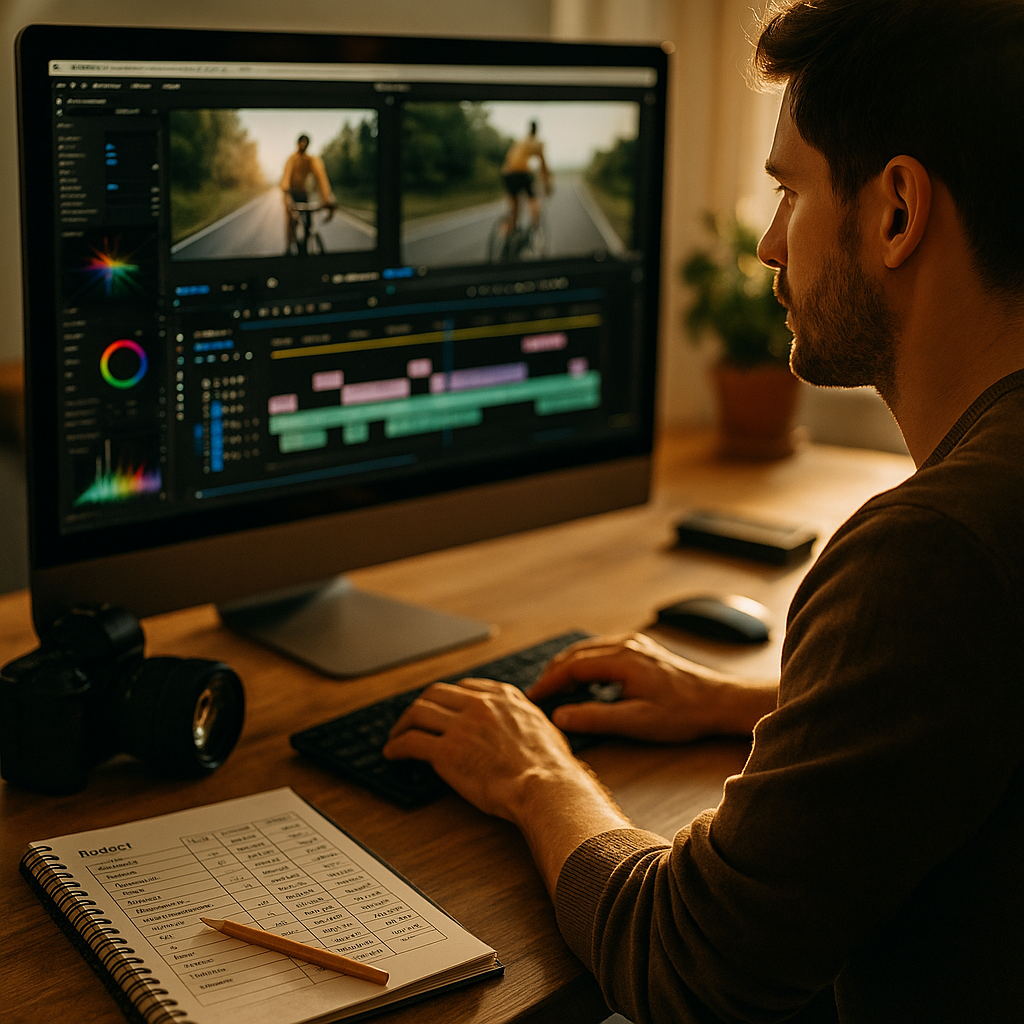
Freelance editor invoices creeping past $40,000 a month, and creative output still can’t keep pace with ad fatigue? You’re not alone. A 12-month budget transition from freelance video editing spend to an in-house rapid-iteration creative team is one of the highest-leverage moves a performance marketing org can make right now — if you sequence it correctly. Get the order wrong, and you’ll pay twice while producing less.
This isn’t a hiring memo. It’s a budget reallocation plan with checkpoints, kill criteria, and a realistic timeline for when freelance spend should actually hit zero.
Why This Transition Trips Up Even Experienced Teams
Most performance marketing leads treat this as a hiring decision. Post two roles, backfill freelance hours, declare victory. That’s backwards. The real question is throughput: how many net-new ad variants can you ship per week, and at what cost per variant, compared to your current freelance bench?
Freelance editors are elastic. You scale up during a launch, scale down after. An in-house team is a fixed cost that needs constant creative briefs to justify itself. Switch too fast and you’ll have salaried editors sitting idle between briefs, or worse, a bottleneck because your media buying team hasn’t adjusted its creative request cadence to match an internal team’s rhythm instead of a freelancer marketplace’s.
The mistake isn’t moving to in-house — it’s moving before your creative testing cadence can actually feed a full-time team’s capacity.
According to eMarketer, performance creative production costs have become one of the fastest-growing line items in paid social budgets as platforms reward creative volume over targeting precision. That shift is exactly why brands are rethinking freelance-heavy models in the first place — but the fix requires sequencing, not a switch flip.
Months 1-3: Audit Before You Reallocate a Dollar
Don’t touch freelance budgets yet. Spend the first quarter building the baseline you’ll measure everything against.
- Cost per finished variant. Pull the last six months of freelance invoices and divide by delivered assets. Most teams are shocked to find this number sitting between $180 and $600 per variant depending on complexity.
- Turnaround time. Track brief-to-delivery in business days, not calendar days. This becomes your in-house team’s benchmark to beat.
- Win rate by editor. Not all freelancers are equal. Some produce winners at 3x the rate of others. This tells you who to poach, retain as overflow, or replace entirely.
- Testing cadence. If you’re only launching new creative every two weeks, an in-house team won’t have enough throughput demand to justify headcount yet.
This is also the window to formalize your testing calendar. A structured test-and-iterate creative calendar gives you the demand signal an in-house team needs to stay fully utilized. Without it, you’re hiring editors and hoping briefs show up.
Months 4-6: Hire the Core, Keep the Freelance Safety Net
Now you start spending differently, not less. This is the overlap phase, and it’s the one budget owners most often try to skip to save money. Don’t.
Bring on your first one or two in-house hires — typically a senior editor who can also art-direct, paired with a motion/graphics generalist. Keep freelance spend at roughly 60-70% of its prior level during this window. You’re not cutting cost yet; you’re testing whether in-house output quality and speed actually beat the freelance bench under real production pressure.
Budget-wise, expect a temporary bump. Salaries plus benefits plus software licenses (Adobe Creative Cloud, Frame.io, a project management tool) will run higher than the freelance spend you’re replacing during month four or five. That’s normal. The breakeven point typically arrives around month seven or eight once the in-house team hits full velocity.
Track cost per variant weekly during this phase. If your new hires aren’t closing the gap with freelance benchmarks by month six, that’s a signal to slow the transition, not accelerate it.
Is Month Seven the Real Inflection Point?
For most brands running this playbook, yes. By month seven, your in-house team should be producing at 70-80% of the volume freelancers previously delivered, at a materially lower per-unit cost once salary is amortized across output. This is when you start cutting freelance retainers, not eliminating them.
Move from retainer-based freelance relationships to true overflow-only arrangements. Keep two or three trusted editors on a “burst capacity” basis for launch spikes, seasonal pushes, or when an internal hire is out. This isn’t about loyalty — it’s risk mitigation. A single point of failure (one in-house editor out sick during a major launch) can stall your entire testing cadence if you’ve fully severed the freelance bench.
Full in-house transitions without an overflow safety net are the number one reason brands stall their testing velocity mid-quarter — usually right when a competitor launches something that demands a fast creative response.
This is also a good moment to revisit incentive structures. Just as creator incentive tiers keep top talent loyal in influencer programs, performance-based bonuses tied to winning-variant rate can keep in-house editors motivated in ways flat salaries don’t.
Months 8-10: Scale the Team, Not Just Headcount
This is where a lot of budget owners make their second mistake: they assume “in-house” means “more editors.” Often what you actually need is better tooling and workflow, not bodies.
By month eight, layer in AI-assisted editing tools (Descript, Runway, CapCut’s commercial suite) to compress turnaround on lower-complexity variants — think caption swaps, hook A/B tests, aspect ratio reformats. This lets a three-person in-house team match what previously took five freelancers, because the humans focus on the creative decisions that actually move performance, not repetitive execution.
Reallocate the freelance budget savings into:
- AI tooling licenses (typically $200-$2,000/month depending on seat count and platform)
- A dedicated creative strategist role who bridges media buying data and editor briefs — often the highest-ROI hire in this entire sequence
- Performance bonuses tied to variant win rate, not just output volume
The creative strategist role deserves special attention. Without someone translating TikTok Ads Manager or Meta Ads Manager performance data into specific, actionable briefs, even a talented in-house team will produce technically great content that doesn’t move CPA. This mirrors what we’ve seen in hero content strategy work — the format matters less than the strategic brief behind it.
Months 11-12: Lock the Model, Set Governance
By the final quarter, freelance spend should sit at 10-15% of its original baseline, reserved purely for overflow and specialized skills you haven’t hired for (say, a 3D animator for one campaign a quarter). Your in-house team should own 85%+ of variant production.
This is the moment to formalize governance, not just celebrate the cost savings. Document:
- Escalation paths for when in-house capacity is maxed during a launch
- Approval thresholds for re-engaging freelance overflow without going back through procurement
- A quarterly review of cost-per-variant and win-rate against your original month-one baseline
Budget governance matters here the same way it matters in revenue attribution governance — without clear rules, the model quietly drifts back toward ad hoc freelance spend the first time someone’s under deadline pressure.
What the Math Actually Looks Like
A mid-market DTC brand spending $50,000/month on freelance editors typically lands on an in-house model costing $38,000-$42,000/month fully loaded (two to three salaries, software, and a 10% freelance overflow reserve) by month twelve — while producing 30-40% more variants per week thanks to tighter feedback loops and AI-assisted execution. The savings aren’t dramatic on paper. The output gain is the real win.
According to HubSpot’s marketing benchmarking research, brands that increase creative testing velocity see meaningfully higher paid social ROAS over time, largely because ad fatigue on top platforms now sets in within days, not weeks. Speed of iteration, not just cost per asset, is the metric that should anchor this entire transition.
Common Pitfalls Worth Naming
A few ways this plan goes sideways:
- Cutting freelance spend too early. If you zero out freelancers before your in-house team hits full velocity (typically month seven or eight), you’ll have a creative output gap right when campaigns need fresh variants most.
- Hiring generalists when you need specialists. A single “video editor” role rarely covers scripting, editing, and platform-specific formatting well. Most successful transitions hire two focused roles instead of one broad one.
- Ignoring compliance and rights management. In-house teams working faster means more UGC-style and creator-adjacent content moving through review quickly. Make sure your legal review process, similar to frameworks covered in social commerce compliance planning, can keep pace with higher output volume.
- No overflow reserve. Fully in-house doesn’t mean zero freelance relationships forever. Keep the door open.
For a related budgeting approach that applies zero-based thinking to creator and production spend, see zero-based budgeting frameworks — the same discipline of justifying every dollar against output applies directly to editorial headcount decisions.
The Bottom Line
Sequence this over four phases — audit, overlap, inflection, governance — and expect breakeven around month seven, not month one. Budget owners who rush the cutover trade short-term savings for creative output gaps that cost far more in stalled campaigns than they ever saved on invoices.
FAQs
How long should the overlap period between freelance and in-house editors last?
Three to four months is typical. This gives new in-house hires enough runway to hit production velocity without leaving a creative output gap if the transition takes longer than expected.
What’s a realistic in-house team size to replace $50,000/month in freelance spend?
Most brands land on two to three full-time editors plus a creative strategist, supplemented with AI-assisted editing tools and a small freelance overflow reserve of 10-15% of the original budget.
When should freelance spend hit zero?
It shouldn’t, fully. Keeping a small overflow reserve (10-15% of original spend) protects against capacity gaps during launches, illness, or specialized skill needs the in-house team doesn’t cover.
What metric matters most when evaluating the transition’s success?
Cost per finished variant combined with win rate, not raw headcount cost. A more expensive in-house team that produces higher-performing variants faster is still a win even if the monthly bill looks similar to freelance spend.
How does AI editing software change this timeline?
Tools like Descript, Runway, and CapCut’s commercial suite can compress the timeline by one to two months, since a smaller in-house team can match previous freelance output volume once repetitive execution tasks are automated.
Visible FAQ (duplicate block per instructions)
FAQs
How long should the overlap period between freelance and in-house editors last?
Three to four months is typical. This gives new in-house hires enough runway to hit production velocity without leaving a creative output gap if the transition takes longer than expected.
What’s a realistic in-house team size to replace $50,000/month in freelance spend?
Most brands land on two to three full-time editors plus a creative strategist, supplemented with AI-assisted editing tools and a small freelance overflow reserve of 10-15% of the original budget.
When should freelance spend hit zero?
It shouldn’t, fully. Keeping a small overflow reserve (10-15% of original spend) protects against capacity gaps during launches, illness, or specialized skill needs the in-house team doesn’t cover.
What metric matters most when evaluating the transition’s success?
Cost per finished variant combined with win rate, not raw headcount cost. A more expensive in-house team that produces higher-performing variants faster is still a win even if the monthly bill looks similar to freelance spend.
How does AI editing software change this timeline?
Tools like Descript, Runway, and CapCut’s commercial suite can compress the timeline by one to two months, since a smaller in-house team can match previous freelance output volume once repetitive execution tasks are automated.
Top Influencer Marketing Agencies
The leading agencies shaping influencer marketing in 2026
Agencies ranked by campaign performance, client diversity, platform expertise, proven ROI, industry recognition, and client satisfaction. Assessed through verified case studies, reviews, and industry consultations.
Moburst

-
2

The Shelf
Boutique Beauty & Lifestyle Influencer AgencyA data-driven boutique agency specializing exclusively in beauty, wellness, and lifestyle influencer campaigns on Instagram and TikTok. Best for brands already focused on the beauty/personal care space that need curated, aesthetic-driven content.Clients: Pepsi, The Honest Company, Hims, Elf Cosmetics, Pure LeafVisit The Shelf → -
3

Audiencly
Niche Gaming & Esports Influencer AgencyA specialized agency focused exclusively on gaming and esports creators on YouTube, Twitch, and TikTok. Ideal if your campaign is 100% gaming-focused — from game launches to hardware and esports events.Clients: Epic Games, NordVPN, Ubisoft, Wargaming, Tencent GamesVisit Audiencly → -
4

Viral Nation
Global Influencer Marketing & Talent AgencyA dual talent management and marketing agency with proprietary brand safety tools and a global creator network spanning nano-influencers to celebrities across all major platforms.Clients: Meta, Activision Blizzard, Energizer, Aston Martin, WalmartVisit Viral Nation → -
5

The Influencer Marketing Factory
TikTok, Instagram & YouTube CampaignsA full-service agency with strong TikTok expertise, offering end-to-end campaign management from influencer discovery through performance reporting with a focus on platform-native content.Clients: Google, Snapchat, Universal Music, Bumble, YelpVisit TIMF → -
6

NeoReach
Enterprise Analytics & Influencer CampaignsAn enterprise-focused agency combining managed campaigns with a powerful self-service data platform for influencer search, audience analytics, and attribution modeling.Clients: Amazon, Airbnb, Netflix, Honda, The New York TimesVisit NeoReach → -
7

Ubiquitous
Creator-First Marketing PlatformA tech-driven platform combining self-service tools with managed campaign options, emphasizing speed and scalability for brands managing multiple influencer relationships.Clients: Lyft, Disney, Target, American Eagle, NetflixVisit Ubiquitous → -
8

Obviously
Scalable Enterprise Influencer CampaignsA tech-enabled agency built for high-volume campaigns, coordinating hundreds of creators simultaneously with end-to-end logistics, content rights management, and product seeding.Clients: Google, Ulta Beauty, Converse, AmazonVisit Obviously →