


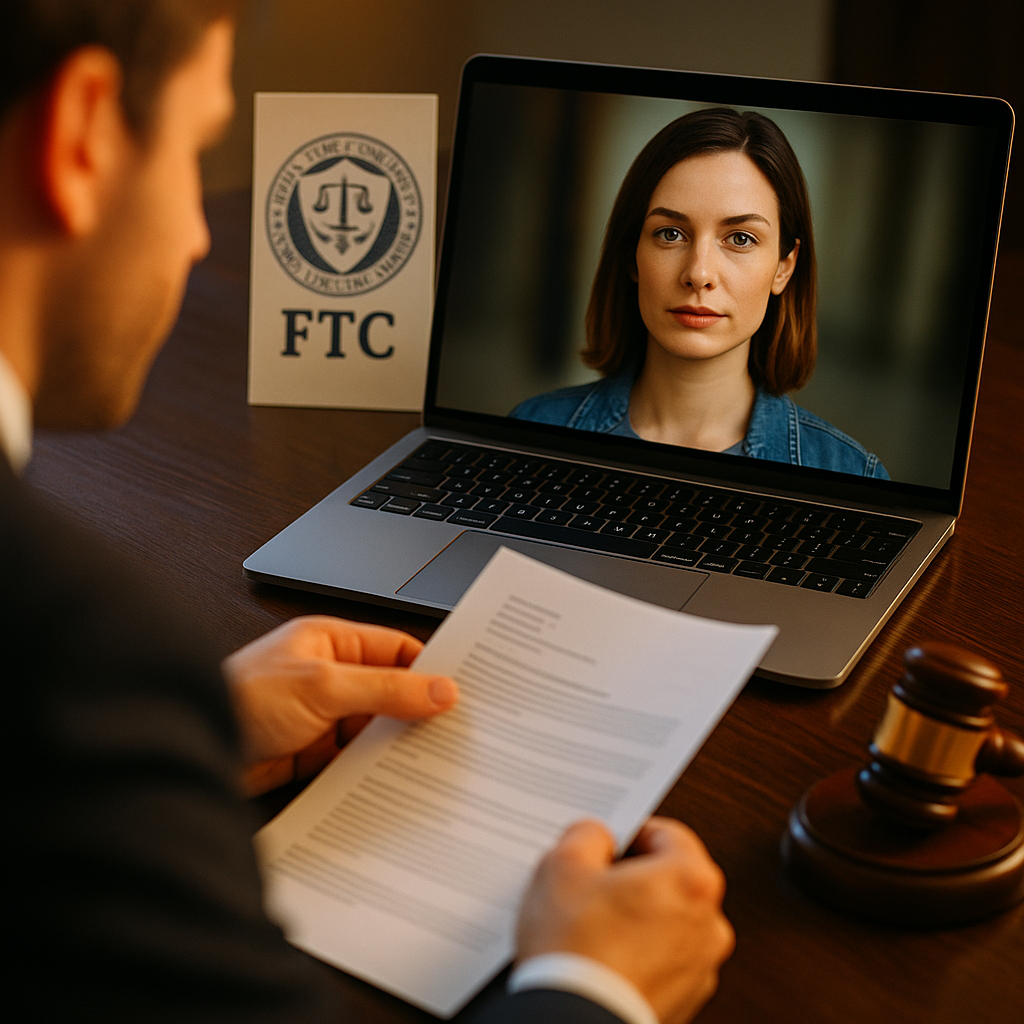
Understanding FTC Disclosure Requirements For AI-Generated Likeness matters more in 2025 than ever, as synthetic faces, voices, and performances move from novelty to everyday marketing tools. When audiences can’t tell what is real, trust becomes fragile—and regulators notice. Clear disclosures protect consumers, reduce legal risk, and strengthen brand credibility. So what, exactly, does the FTC expect when you use an AI-made likeness?
FTC disclosure requirements (what triggers them)
The Federal Trade Commission focuses on preventing deceptive and unfair practices. Using an AI-generated likeness—such as a realistic “person,” a cloned voice, or a digitally inserted spokesperson—can trigger FTC disclosure expectations when it affects how a reasonable consumer understands or evaluates a claim, an endorsement, or the nature of the content.
In practice, disclosures become essential when the AI likeness:
- Impersonates or strongly resembles a real person (a creator, employee, customer, celebrity, or expert) such that viewers may assume authenticity.
- Acts like an endorser, including speaking about product benefits, personal experience, performance results, or comparisons.
- Changes the meaning of a message by making a claim seem more credible, emotional, urgent, or “firsthand” than it truly is.
- Appears in paid advertising or sponsored content, especially where the synthetic nature is not obvious.
- Targets vulnerable groups (such as children, older adults, or health-related audiences) where clarity is critical.
Many teams assume “AI” is a production detail that doesn’t matter to the audience. The FTC’s view is more practical: if the AI element changes what people think they’re seeing, you should disclose it clearly and prominently.
Key follow-up question: Do you always need a disclosure for AI? Not always. If the synthetic nature is obvious (for example, a clearly cartoonish avatar) and it would not mislead reasonable viewers, the disclosure burden can be lower. But “obvious” is a high bar with modern photoreal tools, and relying on it is risky.
AI-generated likeness disclosure (clear, conspicuous, and timely)
FTC-aligned disclosure principles can be summed up in three words: clear, conspicuous, and timely. For AI-generated likeness, that means a disclosure that the average person will actually notice and understand before being influenced by the message.
Use these standards to evaluate your disclosure:
- Placement: Put the disclosure near the AI likeness and near the claim or endorsement. Don’t hide it in a profile bio, “about” page, or footer.
- Proximity: If the likeness speaks claims, place disclosure on-screen at the moment the claim is made, not only at the end.
- Prominence: Size, color, duration, and contrast should match the platform. If the claim is big and bold, the disclosure can’t be tiny and faint.
- Plain language: Avoid technical jargon. “AI-generated” or “synthetic” is usually clearer than “digitally rendered via generative methods.”
- Repetition where needed: For longer videos, repeat disclosures at intervals and when the context changes.
- Multi-format coverage: Use visual text in videos, audio disclosure in podcasts/radio, and both when content is consumed hands-free.
Practical disclosure phrases:
- For ads: “Paid ad. This spokesperson is AI-generated.”
- For voice clones: “This is an AI-generated voice, not a live person.”
- For recreated performances: “Dramatization using AI-generated likeness.”
- For customer-style testimonials: “AI-generated actor. Not an actual customer.”
Disclosures should answer the real consumer question: Is this a real person speaking from real experience, or a synthetic representation?
Truth-in-advertising and endorsements (FTC Guides in practice)
FTC truth-in-advertising principles apply regardless of whether you use a camera, animation, or an AI likeness. The harder issue is when the AI likeness functions like an endorser. If your AI character suggests personal use, expertise, or independent opinion, the content can look like a testimonial—even if it’s entirely scripted.
To stay aligned with FTC endorsement expectations:
- Don’t imply personal experience unless it’s true: An AI “customer” saying “I used this for 30 days” can be misleading if no real person did so under those conditions.
- Substantiate performance claims: If the AI likeness claims outcomes (“reduces wrinkles,” “cuts energy bills,” “improves focus”), you need evidence that would satisfy the FTC if challenged.
- Disclose material connections: If a real influencer licenses their likeness or voice for an AI campaign, that is a compensated relationship. Disclose it as you would any sponsorship.
- Match typical results: If you mention specific results, clarify what typical consumers can expect, unless you have strong proof the results are typical.
Likely follow-up question: What if the AI likeness is a fictional brand mascot? A clearly fictional character is generally safer, but problems arise when the content mimics real-world endorsements (for example, “I’m a doctor” or “I’m a satisfied customer”) or when the character resembles a real person closely enough to confuse viewers.
Deepfakes and synthetic media labeling (risk-based approach)
AI-generated likeness sits on a spectrum—from stylized avatars to deepfake-style realism. The more realistic and identity-like the content, the higher the deception risk and the stronger your labeling should be.
Use a risk-based framework that reflects how consumers process media:
- High risk: Photoreal faces or voices, “breaking news” formats, urgent calls to action, health/finance claims, political or civic context, or anything that imitates real people.
- Medium risk: Realistic but clearly branded promotional content where viewers may still assume a real spokesperson.
- Lower risk: Stylized animations and obvious fictional content that does not resemble real individuals and does not convey real-world testimonials.
For high-risk uses, rely on layered transparency:
- On-screen label: “AI-generated likeness” visible during key segments.
- Audio label: Spoken disclosure near the beginning and before major claims.
- Caption/description: Repeat the disclosure in the post text where users decide whether to click.
Don’t over-rely on platform labels that may appear inconsistently across devices or be hidden behind taps. If disclosure matters, you own it.
Compliance checklist for marketers and creators (EEAT-ready workflow)
In 2025, “we didn’t mean to mislead” is not a strategy. Build a repeatable process that proves you took reasonable steps to inform consumers. This is also where Google’s EEAT expectations align with compliance: audiences reward transparency, and systems reward content that demonstrates trustworthy practices.
FTC-minded checklist for AI likeness campaigns:
- Document intent and context: Define whether the AI likeness is acting as a narrator, a character, or an endorser. If it endorses, treat it like an endorsement.
- Confirm rights and permissions: Secure written permission for any real person’s likeness/voice, and confirm scope (platforms, duration, edits, and derivative AI use).
- Substantiate claims: Keep evidence files for express and implied claims. Health, safety, and financial claims require especially strong support.
- Write disclosures first: Draft disclosure language during scripting, not after editing. Make it part of the creative.
- Test “reasonable consumer” clarity: Show the content to people unfamiliar with the project. Ask what they think is real, what is paid, and what experiences are genuine.
- Ensure platform fit: Confirm disclosures are readable on mobile, not cut off by UI, and remain visible long enough.
- Review influencer and affiliate posts: If partners repost AI likeness content, require them to keep disclosures intact.
- Maintain an audit trail: Save versions, approvals, substantiation, and disclosure placements. If a complaint arises, this file matters.
EEAT tip: If you publish educational content about your AI spokesperson, explain how it’s made at a high level, what it can’t do, and how you prevent confusion. This builds credibility without revealing sensitive trade secrets.
Common mistakes with FTC advertising disclosure (and how to fix them)
Most FTC disclosure failures are not technical—they’re behavioral. Teams underestimate how fast people scroll, how often audio is muted, and how easily realistic AI can be mistaken for reality. Fixing mistakes usually means moving disclosures earlier, making them bigger, and using simpler language.
Frequent issues and corrections:
- Mistake: Disclosure appears only at the end of a video.
Fix: Put it at the beginning and during key moments, especially when claims are made. - Mistake: “#AI” buried among hashtags.
Fix: Use a clear sentence near the top: “This video uses an AI-generated spokesperson.” - Mistake: Disclosure in small, low-contrast text.
Fix: Match the ad’s visual weight; ensure legibility on mobile. - Mistake: AI “testimonial” implies a real customer story.
Fix: State plainly: “AI-generated actor. Not a real customer,” and avoid personal-use claims unless supported by real experiences. - Mistake: Voice clone sounds like a real executive giving a guarantee.
Fix: Add spoken disclosure and avoid implying real-time personal assurance unless it’s truly that person speaking. - Mistake: Relying on “everyone knows it’s AI.”
Fix: Assume some viewers won’t know. Disclose based on likely interpretation, not internal expectations.
The goal is simple: consumers should not have to guess whether the likeness is real, whether an endorsement is genuine, or whether an experience actually occurred.
FAQs (FTC disclosure and AI-generated likeness)
Do I have to disclose every time I use AI in an ad?
Not every time. You should disclose when the AI use could mislead reasonable consumers about who is speaking, whether an endorsement is real, or whether the content depicts real events. With realistic AI-generated likeness, disclosure is usually the safer choice.
What is the best wording for an AI-generated likeness disclosure?
Use plain language that answers the viewer’s likely assumption. Examples include: “This spokesperson is AI-generated,” “AI-generated voice,” or “Dramatization using AI-generated likeness.” If it resembles a testimonial, add: “Not an actual customer.”
Is a disclosure in the caption enough for short-form video?
Often, no. Many users watch without opening captions or with audio muted. Add on-screen text early and near the claims, and consider a spoken disclosure if the voice itself could be mistaken for a real person.
If a real influencer licenses their likeness to create an AI version, what must be disclosed?
Treat it like a paid endorsement. Disclose the material connection (for example, “Paid partnership”) and also clarify the synthetic format if viewers could assume the influencer personally recorded the message.
Can I use an AI “doctor” or “expert” character?
This is high risk. If the character implies medical or professional expertise, you can mislead consumers even with a disclosure. Avoid false authority signals, ensure claims are substantiated, and consider using real credentialed experts with accurate representations and clear sponsorship disclosures.
What about AI-generated customer support or chatbot voices in sales calls?
If the AI voice could be mistaken for a human agent, disclose that the consumer is interacting with AI. Also ensure scripts do not make deceptive claims, and keep records of what the system says in sales contexts.
Does the FTC require a specific label like “deepfake”?
The FTC typically focuses on whether the disclosure is clear and not misleading, rather than mandating one word. Choose language your audience understands quickly, and prioritize clarity over buzzwords.
FTC disclosure rules aren’t about punishing creativity; they’re about keeping consumers informed when AI-generated likeness changes how a message is perceived. In 2025, realistic synthetic media can look like proof, testimony, or personal authority, so disclosures must be clear, conspicuous, and placed where people actually notice them. Build disclosures into your creative workflow, substantiate claims, and document decisions. Transparency reduces risk—and earns trust.
Top Influencer Marketing Agencies
The leading agencies shaping influencer marketing in 2026
Agencies ranked by campaign performance, client diversity, platform expertise, proven ROI, industry recognition, and client satisfaction. Assessed through verified case studies, reviews, and industry consultations.
Moburst

-
2

The Shelf
Boutique Beauty & Lifestyle Influencer AgencyA data-driven boutique agency specializing exclusively in beauty, wellness, and lifestyle influencer campaigns on Instagram and TikTok. Best for brands already focused on the beauty/personal care space that need curated, aesthetic-driven content.Clients: Pepsi, The Honest Company, Hims, Elf Cosmetics, Pure LeafVisit The Shelf → -
3

Audiencly
Niche Gaming & Esports Influencer AgencyA specialized agency focused exclusively on gaming and esports creators on YouTube, Twitch, and TikTok. Ideal if your campaign is 100% gaming-focused — from game launches to hardware and esports events.Clients: Epic Games, NordVPN, Ubisoft, Wargaming, Tencent GamesVisit Audiencly → -
4

Viral Nation
Global Influencer Marketing & Talent AgencyA dual talent management and marketing agency with proprietary brand safety tools and a global creator network spanning nano-influencers to celebrities across all major platforms.Clients: Meta, Activision Blizzard, Energizer, Aston Martin, WalmartVisit Viral Nation → -
5

The Influencer Marketing Factory
TikTok, Instagram & YouTube CampaignsA full-service agency with strong TikTok expertise, offering end-to-end campaign management from influencer discovery through performance reporting with a focus on platform-native content.Clients: Google, Snapchat, Universal Music, Bumble, YelpVisit TIMF → -
6

NeoReach
Enterprise Analytics & Influencer CampaignsAn enterprise-focused agency combining managed campaigns with a powerful self-service data platform for influencer search, audience analytics, and attribution modeling.Clients: Amazon, Airbnb, Netflix, Honda, The New York TimesVisit NeoReach → -
7

Ubiquitous
Creator-First Marketing PlatformA tech-driven platform combining self-service tools with managed campaign options, emphasizing speed and scalability for brands managing multiple influencer relationships.Clients: Lyft, Disney, Target, American Eagle, NetflixVisit Ubiquitous → -
8

Obviously
Scalable Enterprise Influencer CampaignsA tech-enabled agency built for high-volume campaigns, coordinating hundreds of creators simultaneously with end-to-end logistics, content rights management, and product seeding.Clients: Google, Ulta Beauty, Converse, AmazonVisit Obviously →