


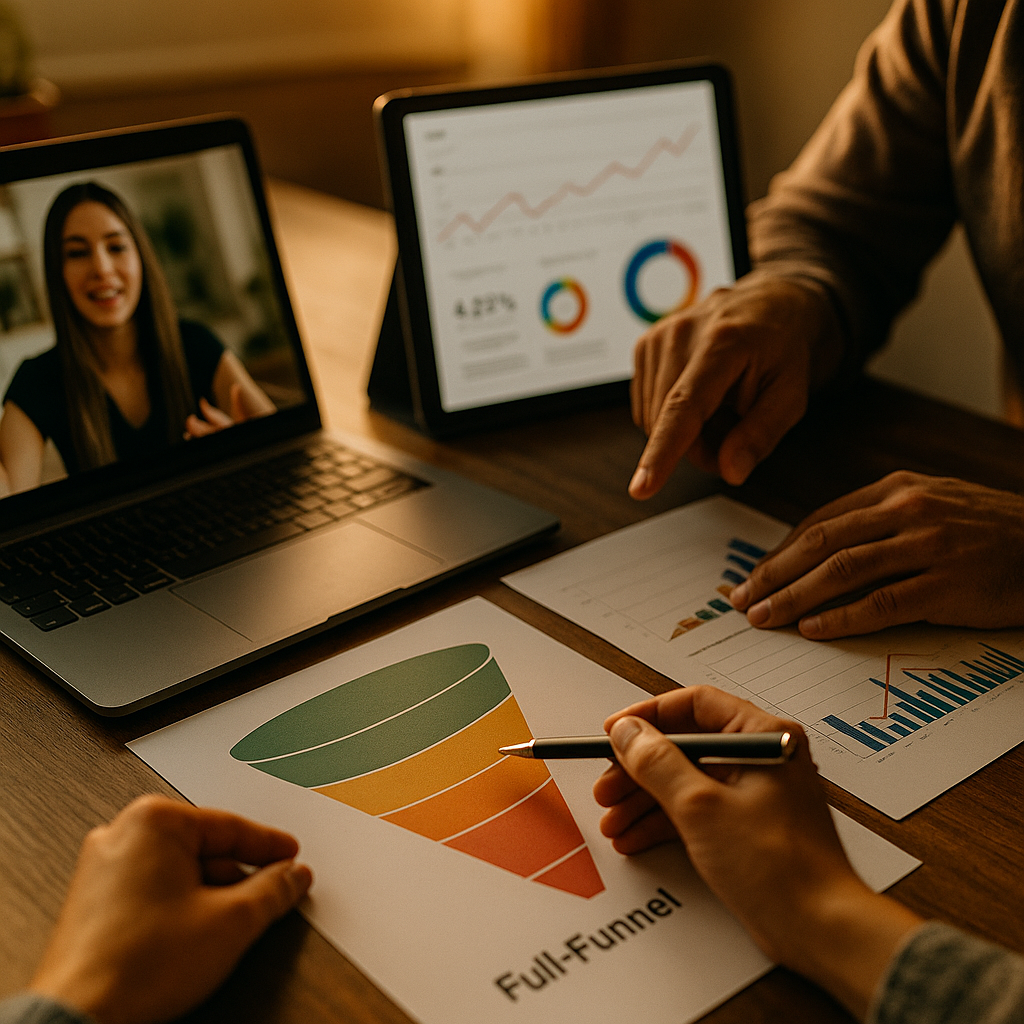
Learning how to build a full-funnel influencer plan is essential for brands seeking measurable results from influencer marketing. A strong strategy aligns influencer partnerships with every stage of the buyer’s journey, driving awareness, consideration, and purchase. If you want lasting influence and conversion, discover the modern blueprint for impactful, data-driven campaigns below.
Understanding the Full-Funnel Influencer Marketing Approach
Effective influencer marketing isn’t just about promoting products—it’s about nurturing your audience from first touchpoint to loyal customer. A full-funnel influencer marketing strategy leverages creators at every stage:
- Awareness: Reaching new audiences with engaging content that introduces your brand.
- Consideration: Encouraging potential customers to seek more information through reviews, tutorials, or testimonials.
- Conversion: Driving purchases or sign-ups, often with targeted promotions or exclusive offers.
- Loyalty & Advocacy: Deepening relationships to earn repeat business and word-of-mouth recommendations.
This process requires strong collaboration, clear goals, and a deeper understanding of which influencer formats fit the funnel best. Full-funnel influencer campaigns outperform one-off sponsorships by supporting users’ natural decision-making journey, resulting in higher ROI and brand loyalty, according to a 2024 Influencer Marketing Hub report.
Setting Campaign Objectives and Identifying KPIs
To establish a full-funnel influencer plan, start by clarifying your campaign objectives. Are you aiming for broad brand awareness, increased engagement, or direct sales? Each stage of your funnel should tie back to the brand’s overall marketing goals.
- Top of Funnel: Track reach, impressions, and follower growth. Identify high-level engagement and brand sentiment.
- Mid-Funnel: Measure website visits, time on page, shares, and comments to gauge interest and consideration.
- Bottom of Funnel: Attribute sales, sign-ups, or app downloads driven by influencer content; use UTM links or promo codes for accuracy.
- Loyalty: Monitor repeat purchase rates, user-generated content, and referral metrics.
Setting and tracking these KPIs ensures your influencer plan is measurable. Use tools like Google Analytics 4 or influencer marketing platforms to secure reliable data and gauge progress accurately.
Segmenting and Selecting Influencer Partners Effectively
Your influencer selection process should be granular and data-informed, aligning each creator’s audience and tone to their stage in the funnel. For an effective influencer strategy in 2025, consider the following segmentation:
- Top Funnel (Awareness): Collaborate with macro-influencers, celebrities, or trending creators for massive reach. Prioritize strong storytelling skills and high engagement rates.
- Mid-Funnel (Consideration): Work with niche experts or micro-influencers with deep credibility in your space. Their trusted opinions foster research and dialogue.
- Bottom Funnel (Conversion): Activate nano-influencers or loyal customers for authentic endorsements and special offers. Their tight-knit audiences are more likely to convert.
According to Influencer Marketing Hub’s 2024 report, micro and nano-influencers deliver up to 60% higher engagement rates than large creators, especially at the consideration and purchase stages. Evaluate potential partners based on audience demographics, content quality, brand alignment, and proven performance for similar campaigns.
Developing Customized Content for Each Funnel Stage
Every funnel stage demands distinct influencer content formats and messaging. A successful influencer content strategy tailors storytelling and calls-to-action:
- Awareness: Focus on visually striking, shareable posts or short-form videos that highlight brand values and spark curiosity. Campaign hashtags and challenges thrive here.
- Consideration: Create step-by-step guides, unboxings, comparisons, and Q&A sessions. Address common objections or FAQs using educational content to move audiences closer to conversion.
- Conversion: Launch time-limited offers, product demos, or testimonials, integrating clear calls-to-action (CTAs) like “shop now” or “use my code.” Owned assets (landing pages, shoppable links) streamline the path to purchase.
- Loyalty: Encourage ongoing engagement with ambassador programs, social contests, or behind-the-scenes exclusives. Foster a sense of community with interactive content and user-generated campaigns.
Maintain consistent brand guidelines and messaging, but empower influencers with creative freedom to ensure authentic, platform-native content. User trust hinges on transparency—clearly disclose sponsorships according to FTC and local regulations.
Measuring Results and Optimizing Your Influencer Marketing Strategy
No full-funnel influencer plan is complete without robust measurement and ongoing optimization. To maximize your influencer marketing ROI:
- Collect Data: Use UTM parameters, affiliate links, and integrated analytics to track performance at each funnel stage.
- Analyze & Attribute: Map influencer activity to key milestones—impressions, engagement, on-site actions, and conversions. Attribute sales accurately using first-party data and CRM integrations.
- Gather Qualitative Insights: Solicit influencer and audience feedback to reveal what resonates or falls flat, informing refinement.
- Test and Learn: Pilot various formats, messaging, or influencer tiers. AB test creative and calls-to-action to optimize conversion rates.
Regularly benchmark campaign performance against your KPIs and industry averages. A data-driven mindset fosters continuous improvement, keeping your influencer strategy ahead of trends and competition. Brands that regularly optimize their approach see conversion lifts of up to 25%, according to recent industry data.
Integrating Influencer Marketing with Wider Brand Strategy
The most impactful full-funnel influencer campaigns are never siloed. In 2025, integrated influencer campaigns involve collaboration with your social media, content, and paid advertising teams. Repurpose top-performing influencer content as part of:
- Paid social ads: Authentic influencer assets historically outperform standard branded creatives in paid campaigns.
- Email newsletters: Social proof and testimonials from creators boost open rates and clicks.
- Website and product pages: Featuring influencer reviews and UGC increases trust and drives conversions.
- In-store or event activations: Amplify reach with IRL experiences, meet-and-greets, or co-branded giveaways.
Ensure messaging is aligned across all channels and that learnings from influencer data are shared with your broader marketing and sales teams. A truly omnichannel approach supports seamless customer journeys and maximizes ROI at every funnel stage.
Building a full-funnel influencer plan in 2025 requires strategic objectives, careful partner selection, tailored content, and meticulous measurement. By guiding customers at every step, you’ll amplify brand awareness, trust, and conversions—outperforming one-off campaigns every time.
FAQs: Building a Full-Funnel Influencer Plan
-
What is a full-funnel influencer plan?
A full-funnel influencer plan is a strategic approach that leverages influencers to guide consumers through every stage of the buyer journey—from awareness to consideration, conversion, and loyalty—delivering measurable business impact beyond individual posts.
-
How do I measure the effectiveness of my influencer campaign?
Measure effectiveness by setting clear KPIs for each funnel stage, using analytics tools, UTM codes, and conversion tracking. Assess reach, engagement, traffic, conversions, and loyalty metrics to determine ROI and optimize future campaigns.
-
Which influencers should I use at each funnel stage?
Leverage macro-influencers for awareness, niche experts or micro-influencers for consideration, and nano-influencers or existing customers for conversion and loyalty. Ensure influencer values and audience align with your brand and campaign objectives.
-
How can I ensure influencer content feels authentic?
Empower influencers with creative control within your brand guidelines. Prioritize long-term partnerships and transparent sponsorship disclosure. Authentic, platform-native content builds audience trust and enhances campaign impact.
-
Can I use influencer content across multiple channels?
Yes. Repurpose influencer content in paid social, email marketing, website testimonials, and retail activations. Integrating influencer assets into your wider strategy increases reach, reinforces messaging, and maximizes ROI.
Top Influencer Marketing Agencies
The leading agencies shaping influencer marketing in 2026
Agencies ranked by campaign performance, client diversity, platform expertise, proven ROI, industry recognition, and client satisfaction. Assessed through verified case studies, reviews, and industry consultations.
Moburst

-
2

The Shelf
Boutique Beauty & Lifestyle Influencer AgencyA data-driven boutique agency specializing exclusively in beauty, wellness, and lifestyle influencer campaigns on Instagram and TikTok. Best for brands already focused on the beauty/personal care space that need curated, aesthetic-driven content.Clients: Pepsi, The Honest Company, Hims, Elf Cosmetics, Pure LeafVisit The Shelf → -
3

Audiencly
Niche Gaming & Esports Influencer AgencyA specialized agency focused exclusively on gaming and esports creators on YouTube, Twitch, and TikTok. Ideal if your campaign is 100% gaming-focused — from game launches to hardware and esports events.Clients: Epic Games, NordVPN, Ubisoft, Wargaming, Tencent GamesVisit Audiencly → -
4

Viral Nation
Global Influencer Marketing & Talent AgencyA dual talent management and marketing agency with proprietary brand safety tools and a global creator network spanning nano-influencers to celebrities across all major platforms.Clients: Meta, Activision Blizzard, Energizer, Aston Martin, WalmartVisit Viral Nation → -
5

The Influencer Marketing Factory
TikTok, Instagram & YouTube CampaignsA full-service agency with strong TikTok expertise, offering end-to-end campaign management from influencer discovery through performance reporting with a focus on platform-native content.Clients: Google, Snapchat, Universal Music, Bumble, YelpVisit TIMF → -
6

NeoReach
Enterprise Analytics & Influencer CampaignsAn enterprise-focused agency combining managed campaigns with a powerful self-service data platform for influencer search, audience analytics, and attribution modeling.Clients: Amazon, Airbnb, Netflix, Honda, The New York TimesVisit NeoReach → -
7

Ubiquitous
Creator-First Marketing PlatformA tech-driven platform combining self-service tools with managed campaign options, emphasizing speed and scalability for brands managing multiple influencer relationships.Clients: Lyft, Disney, Target, American Eagle, NetflixVisit Ubiquitous → -
8

Obviously
Scalable Enterprise Influencer CampaignsA tech-enabled agency built for high-volume campaigns, coordinating hundreds of creators simultaneously with end-to-end logistics, content rights management, and product seeding.Clients: Google, Ulta Beauty, Converse, AmazonVisit Obviously →