


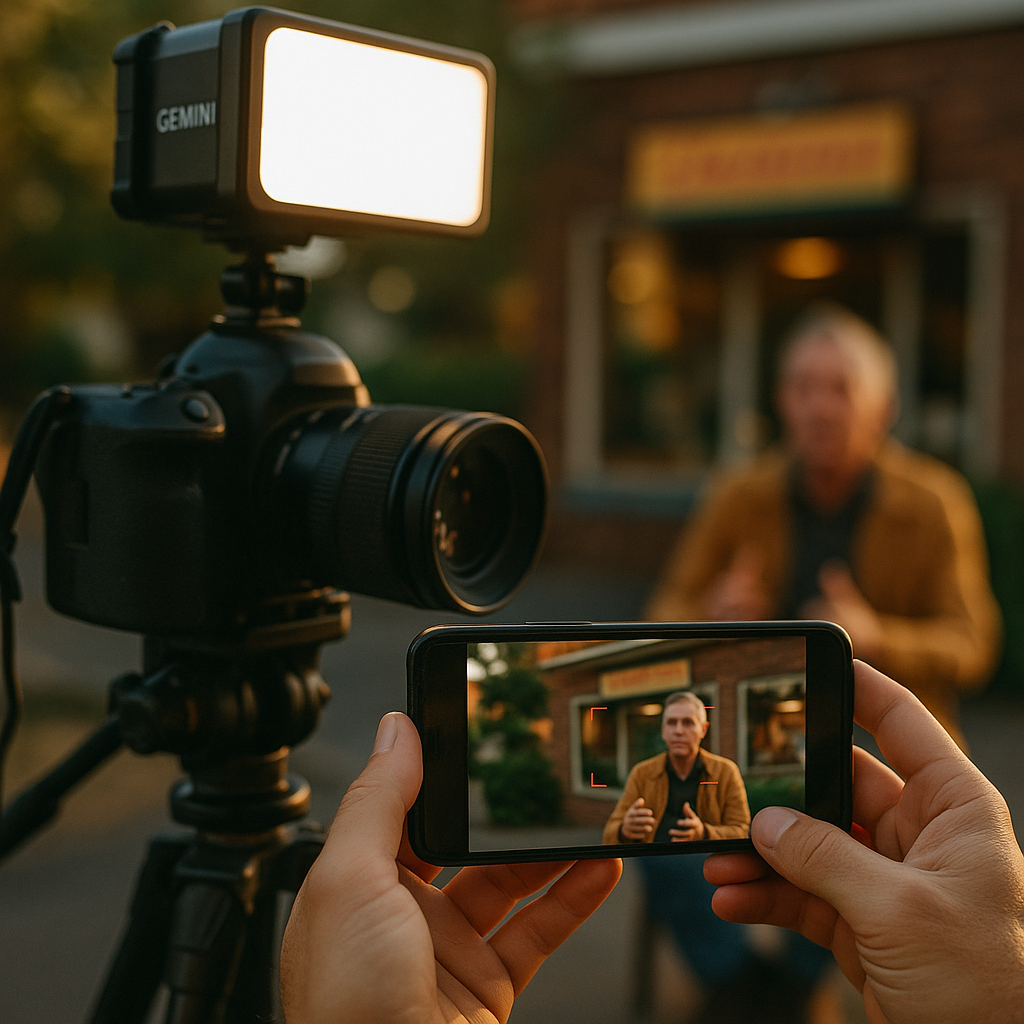
Brands producing localized video ads across five or more markets are burning 40–60% of their creative budgets on adaptation alone. Google Gemini Omni Flash changes that equation by collapsing what used to be a three-vendor production chain into a single generative pipeline — and the brands moving fastest are already seeing cost reductions that justify rewriting their entire localization playbook.
What Gemini Omni Flash Actually Does (and What It Doesn’t)
Gemini Omni Flash is Google’s multimodal generative model designed for high-throughput, low-latency tasks. Unlike earlier models that handled text, image, and video as separate inference calls with separate APIs, Omni Flash processes all three modalities in a unified context window. You can feed it a brand brief, a product image, a script, and a target market profile, then receive a coherent video asset — voiceover, visuals, and on-screen copy — in a single output pass.
That matters operationally. Previously, localization workflows required a copywriter to adapt the script, a designer to recut the visuals for cultural relevance, a voice actor or TTS layer for the audio, and a video editor to reassemble everything. Each handoff introduced latency, version drift, and budget bleed. Omni Flash compresses those four roles into one configurable pipeline stage.
What it doesn’t do: replace strategic creative direction or guarantee brand-safe outputs without governance guardrails. If your team hasn’t established clear AI creative governance policy before deploying this model, you will ship off-brand assets at scale. Speed without governance is just expensive chaos.
The Localization Cost Problem, Quantified
Consider a mid-market consumer goods brand running a hero campaign across eight markets: US, UK, Germany, France, Brazil, Mexico, Japan, and South Korea. A traditional localization workflow — per-market script adaptation, lip-sync or voiceover replacement, legal review per market, and platform format versioning (16:9, 9:16, 1:1) — runs roughly $18,000 to $35,000 per market per campaign cycle, according to production cost benchmarks tracked by Statista and corroborated by agency rate cards widely circulated in 2025.
That’s a potential $280,000 ceiling on a single campaign before media spend touches the budget. For brands running quarterly campaigns, the annualized localization cost becomes a capital allocation problem, not just a production inconvenience.
Gemini Omni Flash reduces per-market video adaptation to a prompt-and-review cycle rather than a full production sprint — cutting turnaround from weeks to hours when the pipeline is properly configured.
Brands piloting unified generative pipelines are reporting 50–70% cost reductions on localized adaptations, primarily because the model handles script rewriting, visual recontextualization, and format versioning simultaneously. The remaining cost sits in human QA, legal review, and the occasional cultural sensitivity check that no model should bypass.
Building the Pipeline: A Practical Architecture
Getting Gemini Omni Flash to produce market-ready video assets requires more than API access. You need a structured input schema and a governance checkpoint at the output stage.
Here’s the workflow architecture that’s emerging as the operational standard among enterprise brand teams:
- Input layer: Brand asset library (approved visual elements, fonts, color palettes), master script in the campaign’s source language, target market profile (cultural context, regulatory constraints, platform preference), and format spec (aspect ratio, duration, caption requirements).
- Prompt engineering layer: A structured system prompt that encodes brand voice, prohibited claims, required legal disclaimers, and localization depth (light adaptation versus full cultural recontextualization). This is where most teams underinvest — and where most failures originate.
- Generation layer: Omni Flash produces the asset. For high-volume campaigns, this runs in batch mode via Google Cloud’s Vertex AI infrastructure, enabling parallel generation across all target markets simultaneously.
- QA and governance layer: Automated brand compliance scoring (several vendors including Sprout Social and purpose-built creative AI platforms are integrating this), followed by a human reviewer for legal sign-off. This step cannot be skipped.
- Distribution layer: Assets tagged with geo content metadata for proper routing to platform ad managers, creator brief systems, and trafficking tools.
The clean data pipeline architecture underpinning this workflow is non-negotiable. Garbage inputs produce garbage outputs at the speed of light. If your brand asset library is disorganized or your market profiles are outdated, Omni Flash will confidently generate polished, wrong assets.
Where Creator Content Fits In
Here’s a question that keeps coming up in brand strategy conversations: does a generative video pipeline cannibalize creator relationships, or complement them?
The honest answer is both, depending on how you deploy it.
Gemini Omni Flash is most efficient for performance-tier content: market adaptations of hero ads, platform format conversions, localized product explainers, and A/B test variants. These are the assets that historically consumed 60–70% of production budgets while delivering marginal incremental value over a well-optimized single version.
Creator-produced content occupies a different strategic position. Authentic influencer video drives trust signals that generative assets currently cannot replicate. The brands winning in this environment are using the cost savings from AI-generated adaptations to reinvest in higher-quality creator partnerships and premium tentpole content. Understanding how AI video production fits alongside premium creator output is the strategic question worth resolving before you build the pipeline.
For creator program managers specifically, the practical implication is straightforward: use Omni Flash to handle the adaptation work, and use the freed budget to brief creators on fewer, higher-value executions. The creative data feedback loop that results from combining generative performance data with creator content performance data is genuinely powerful for iterating campaign strategy.
Compliance and Brand Safety Are Not Optional Outputs
Generative video at scale introduces a compliance surface area that most brand legal teams have not yet mapped. Three risk categories deserve specific attention:
Regulatory claims variance by market. A product claim that’s permissible in the US may violate advertising standards in Germany or the UK. Omni Flash does not know your regulatory exposure unless you encode it explicitly in the prompt schema. Work with legal to build a market-by-market claims matrix before you configure the system prompt.
AI disclosure requirements. The FTC’s guidance on AI-generated advertising content, available at ftc.gov, and the UK ICO’s framework at ico.org.uk, both point toward disclosure obligations that are tightening. Build disclosure tagging into your distribution layer now, not retroactively.
Cultural misrepresentation. Omni Flash’s cultural context knowledge has real limits. A light-touch market adaptation prompt will not catch subtler issues around color symbolism, gesture usage, or locally sensitive imagery. Human reviewers with genuine market knowledge remain essential for Japan, South Korea, and Middle East markets in particular.
For a broader view of how audiences are responding to AI-produced brand content, the backlash data in coverage of AI ads backlash is worth reading before you scale.
Measuring What You Actually Save
Cost reduction claims for generative pipelines are frequently overstated because teams measure gross production cost savings without accounting for implementation costs, prompt engineering overhead, and QA infrastructure. Build your ROI model around these actual cost centers:
- API and compute costs via Google Cloud Vertex AI (variable, scales with volume)
- Prompt engineering and schema maintenance (fixed, often underestimated at scoping)
- QA staffing or tooling (partially replaces production staff; does not eliminate headcount entirely)
- Legal review per market (unchanged from traditional workflow; do not assume AI removes this)
- Cultural consultant time for Tier 1 markets (new cost for teams not already carrying this capability)
The real ROI from Gemini Omni Flash is not just cost reduction. It’s the compression of campaign timelines from six-week localization sprints to 48-hour iteration cycles — which unlocks reactive campaign strategy that was previously impossible.
Teams that have invested in AI creative performance measurement infrastructure will get compounding value from this pipeline, because faster asset production allows faster creative testing, which feeds better performance data back into prompt optimization.
Start by auditing your current localization spend across the last two campaign cycles, isolating adaptation costs from original production costs. Build your Omni Flash pilot against a single campaign, a single market pair, and measure actual end-to-end cycle time and cost against your historical baseline. That’s your proof-of-concept case for scaling the pipeline across your full campaign calendar.
FAQ
Frequently Asked Questions
What is Google Gemini Omni Flash and how does it differ from other generative video tools?
Google Gemini Omni Flash is a multimodal generative model that processes text, image, and video within a unified context window in a single inference pass. Unlike tools that handle each modality separately and require multiple API calls or vendor handoffs, Omni Flash generates coherent video assets including visuals, script, and audio elements simultaneously. This makes it particularly efficient for high-volume localization workflows where traditional multi-step production chains create cost and latency problems.
How much can brands realistically expect to save on localized ad production using this pipeline?
Brands piloting unified generative pipelines are reporting 50–70% reductions in per-market adaptation costs. However, the actual net savings depend on implementation costs, prompt engineering overhead, QA infrastructure, and whether legal review requirements change. Teams should build ROI models that account for all cost centers rather than using gross production cost savings as the benchmark.
Does using Gemini Omni Flash for ad production require disclosure to audiences?
Yes. Regulatory guidance from the FTC and UK ICO is moving toward mandatory disclosure for AI-generated advertising content. Brands should build disclosure tagging into their asset distribution workflow now rather than waiting for formal requirements to be codified. This is especially important for markets with stricter advertising transparency regulations.
Can Gemini Omni Flash replace human creative directors and legal reviewers?
No. Gemini Omni Flash handles high-volume adaptation and format versioning efficiently, but strategic creative direction, cultural sensitivity review for complex markets, and legal sign-off per market remain human responsibilities. The appropriate model is to use Omni Flash to eliminate low-value production labor and reinvest that capacity into higher-value human judgment roles.
How does this pipeline integrate with existing creator marketing programs?
Generative video pipelines and creator content serve different strategic roles. Gemini Omni Flash is best suited for performance-tier adaptations and format versioning, while creator-produced content drives trust and authenticity signals. The cost savings from AI-generated adaptations can be reinvested into higher-quality creator partnerships, making the two approaches complementary rather than competitive when properly positioned within the campaign architecture.
Top Influencer Marketing Agencies
The leading agencies shaping influencer marketing in 2026
Agencies ranked by campaign performance, client diversity, platform expertise, proven ROI, industry recognition, and client satisfaction. Assessed through verified case studies, reviews, and industry consultations.
Moburst

-
2

The Shelf
Boutique Beauty & Lifestyle Influencer AgencyA data-driven boutique agency specializing exclusively in beauty, wellness, and lifestyle influencer campaigns on Instagram and TikTok. Best for brands already focused on the beauty/personal care space that need curated, aesthetic-driven content.Clients: Pepsi, The Honest Company, Hims, Elf Cosmetics, Pure LeafVisit The Shelf → -
3

Audiencly
Niche Gaming & Esports Influencer AgencyA specialized agency focused exclusively on gaming and esports creators on YouTube, Twitch, and TikTok. Ideal if your campaign is 100% gaming-focused — from game launches to hardware and esports events.Clients: Epic Games, NordVPN, Ubisoft, Wargaming, Tencent GamesVisit Audiencly → -
4

Viral Nation
Global Influencer Marketing & Talent AgencyA dual talent management and marketing agency with proprietary brand safety tools and a global creator network spanning nano-influencers to celebrities across all major platforms.Clients: Meta, Activision Blizzard, Energizer, Aston Martin, WalmartVisit Viral Nation → -
5

The Influencer Marketing Factory
TikTok, Instagram & YouTube CampaignsA full-service agency with strong TikTok expertise, offering end-to-end campaign management from influencer discovery through performance reporting with a focus on platform-native content.Clients: Google, Snapchat, Universal Music, Bumble, YelpVisit TIMF → -
6

NeoReach
Enterprise Analytics & Influencer CampaignsAn enterprise-focused agency combining managed campaigns with a powerful self-service data platform for influencer search, audience analytics, and attribution modeling.Clients: Amazon, Airbnb, Netflix, Honda, The New York TimesVisit NeoReach → -
7

Ubiquitous
Creator-First Marketing PlatformA tech-driven platform combining self-service tools with managed campaign options, emphasizing speed and scalability for brands managing multiple influencer relationships.Clients: Lyft, Disney, Target, American Eagle, NetflixVisit Ubiquitous → -
8

Obviously
Scalable Enterprise Influencer CampaignsA tech-enabled agency built for high-volume campaigns, coordinating hundreds of creators simultaneously with end-to-end logistics, content rights management, and product seeding.Clients: Google, Ulta Beauty, Converse, AmazonVisit Obviously →