


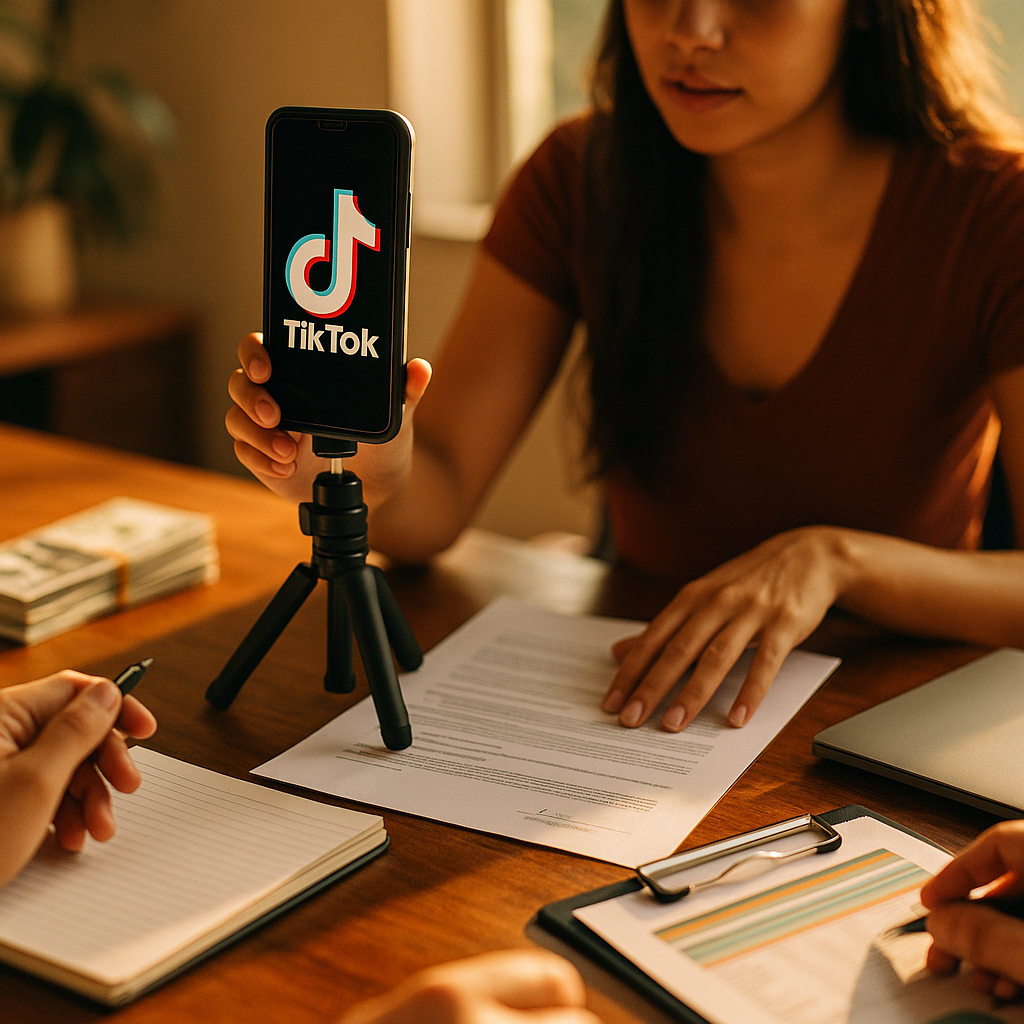
The Rate Card You Built Last Year Is Already Wrong
Brands running TikTok influencer programs at scale are hitting a wall they didn’t plan for: mid-tier creators with 50K to 500K followers are declining flat-fee offers, negotiating exclusivity carve-outs, and walking away from partnerships that would have closed without friction eighteen months ago. TikTok’s micro-influencer middle class is gaining pricing power, and most brand rate benchmarks haven’t caught up.
This isn’t anecdotal. eMarketer data shows creator ad spend accelerating past $9 billion in the U.S. alone, with long-tail and mid-tier creators capturing a larger share of total influencer budget as brands diversify away from mega-influencers. More brands chasing the same pool of high-performing micro-creators means supply constraints at exactly the tier that delivers the strongest cost-per-acquisition metrics. If your procurement team is still quoting $300 to $800 CPMs for TikTok creators in the 100K to 250K range, you’re operating on stale data.
The brands getting squeezed hardest aren’t the ones with small budgets — they’re the ones with outdated rate benchmarks and contract templates written for a buyer’s market that no longer exists.
Why This Tier Is Winning Leverage Now
The leverage shift has a structural cause. Larger platforms — TikTok’s ad platform, Meta, and YouTube — have each built creator monetization tools that give mid-tier creators direct revenue streams independent of brand deals. TikTok’s Creator Rewards Program, series subscriptions, and LIVE gifting reduce the income pressure that used to make creators in this range eager to accept whatever brands offered. A creator earning $4,000 to $8,000 monthly from platform revenue doesn’t need to accept a $500 flat-fee post that requires two rounds of revisions and a 90-day exclusivity clause.
Simultaneously, brands have done the math on conversion rates. micro-creator CPA performance consistently beats macro-influencer spend in categories like beauty, supplement, and home goods. That proof point, now widely circulated through agency pitch decks and industry benchmarks, has created more competition for the same roster of proven mid-tier TikTok creators. When demand goes up and creator leverage increases at the same time, rate inflation is inevitable.
There’s also a sophistication factor. Creators in the 50K to 500K range are increasingly represented by boutique management firms, using tools like Grin, Creator.co, and Modash to benchmark their own rates, and they understand their engagement metrics better than most brand-side managers do. They know what their comment-to-view ratio signals about community quality. They know which categories convert. They’re showing up to negotiations with data.
Restructuring Your Rate Benchmarks: A Practical Framework
The fix isn’t simply paying more. It’s building a rate framework that reflects actual performance variables rather than follower count alone. Three structural changes matter most.
Move from follower-based to engagement-adjusted CPMs. A creator with 120K followers and a 9% engagement rate on TikTok is not the same product as a creator with 400K followers and a 2.1% engagement rate. Your rate benchmark should reflect that delta. Build a tiered CPM model that weights engagement rate, video completion rate (pull this from Sprout Social or directly from creator media kits), and niche relevance to your category. A beauty creator driving 11% engagement in the acne treatment niche commands a premium over a lifestyle creator with three times the follower count.
Separate usage rights from posting fees. Most brand contracts currently bundle these, which inflates creator friction without corresponding value. Creators are increasingly willing to negotiate on posting fees but resistant to broad usage rights clauses that allow brands to repurpose their content in paid media for 12 to 24 months. Unbundling lets you optimize spend: pay a fair posting rate, negotiate separate and time-limited usage rights, and allow creators to retain organic ownership of their content. As covered in our analysis of why flat-fee contracts are mispriced, this structure also reduces the risk of over-paying for content that never gets amplified.
Build performance escalators into base rates. Offer a base rate that’s competitive but not inflated, then attach a performance bonus tied to specific outcomes: link-in-bio clicks, promo code redemptions, or view thresholds at 30 and 60 days. This aligns incentives, gives creators upside for strong performance, and protects your budget on underperformers. Creators who are confident in their audience will negotiate these terms actively. Those who resist performance escalators are often the ones whose engagement metrics are softer than their media kit suggests.
Exclusivity: The Clause Everyone’s Fighting Over
Category exclusivity is the single most contested term in mid-tier TikTok negotiations right now. Brands want 90 to 180-day category exclusivity to protect their investment. Creators want shorter windows — or none at all — because adjacent brand deals are a primary income diversification strategy at this tier.
The pragmatic solution is tiered exclusivity pricing. A 30-day exclusivity window should cost materially less than a 90-day window. Build this into your contract template as a menu of options with corresponding rate adjustments, rather than a binary negotiation. A creator in the protein supplement space, for example, might accept a 60-day exclusivity on direct competitors for a 20% rate premium, but resist a 180-day clause at any price because it blocks too much of their annual income.
Also worth examining: what “category” actually means in your contract language. Broad definitions create legal exposure and creator resentment. Define exclusivity narrowly and specifically. “Direct-to-consumer protein supplements sold via TikTok Shop” is a defensible clause. “Health and wellness” locks a creator out of dozens of adjacent partnerships and will be challenged at renewal time.
Performance Tiers: Building a Creator Roster That Scales
Smart brands are structuring their micro-influencer rosters into performance tiers that allow for dynamic budget reallocation rather than fixed campaign commitments. The architecture looks like this:
- Tier 1 (Priority Partners): 8 to 15 creators with proven conversion history in your category. Offer quarterly retainer agreements with guaranteed post volume, preferred rates, and first-look rights on new product launches. These creators get treated like media partners, not freelancers.
- Tier 2 (Active Roster): 25 to 50 creators activated on a campaign-by-campaign basis. Standardized rate cards with performance escalators. No exclusivity unless campaign-specific and short-window.
- Tier 3 (Test Pool): 50 to 100 emerging creators tested at low spend. Fixed deliverables, no usage rights, short-form agreements. This is your discovery layer.
This structure lets you concentrate relationship investment where it generates the most return while maintaining flexibility at the edges. The brands building the strongest creator rosters right now are treating Tier 1 relationships with the same seriousness they’d give to media buys. See also how creator trust in micro-communities compounds over time: long-term relationships outperform one-off activations on almost every conversion metric.
A roster of 10 deeply engaged Tier 1 creators on quarterly retainers will outperform 100 one-off activations — and cost less in operational overhead per conversion.
For brands scaling this infrastructure, the micro-influencer amplification model that pairs organic creator content with paid distribution offers the clearest path to cost efficiency. Organic reach is less predictable than it used to be; paid amplification behind proven creative fills the gap without requiring a larger creator roster.
Compliance and Disclosure: Don’t Let Leverage Shifts Create Risk
One side effect of creator leverage gains is increased pushback on disclosure requirements. Some mid-tier TikTok creators — especially those new to brand partnerships — resist FTC disclosure language because they perceive it as reducing organic feel. This is non-negotiable. The FTC’s endorsement guidelines require clear and conspicuous disclosure of material connections regardless of what creators prefer aesthetically. Brands carry compliance risk when creators don’t disclose, and that risk doesn’t diminish because the creator is mid-tier.
Build disclosure requirements into your contract as a non-negotiable term, not a preference. Provide templated language creators can adapt, and include a compliance audit step before payment is released. As the IAB’s UGC ad spend and contract guidance makes clear, disclosure infrastructure at scale requires standardized systems, not creator-by-creator negotiation.
What to Do Before Your Next Creator Negotiation
Pull your last six months of TikTok campaign data and segment performance by creator tier. If your mid-tier activations are outperforming macros on CPA (they almost certainly are), you have a budget reallocation case to make internally. Run that analysis through tools like Sprout Social or a creator analytics platform before your next upfront conversation.
Then rebuild your rate card from scratch using engagement-adjusted CPMs, unbundled usage rights, and tiered exclusivity pricing. Brief your legal and procurement teams on the changing market before they quote stale benchmarks to a creator’s manager who knows exactly what the going rate is. The brands that retain the best mid-tier TikTok talent over the next 18 months won’t be the ones with the largest budgets — they’ll be the ones with the most professionally structured agreements. And if you’re rethinking how creator content fits into broader video strategy, the paid-first creator economy budget guide is a useful next step for aligning internal stakeholders on where the spend should actually go.
Frequently Asked Questions
What follower range defines TikTok’s micro-influencer middle class?
For most brand strategy purposes, TikTok’s micro-influencer middle class covers creators with roughly 50,000 to 500,000 followers. This tier tends to have higher engagement rates than mega-influencers, more established audience relationships than nano-creators, and enough platform revenue diversification to negotiate from a position of leverage rather than necessity.
Why are micro-influencer rates on TikTok rising faster than other tiers?
Three factors are driving rate inflation at the micro-influencer level: more brands shifting budgets toward this tier after seeing stronger CPA performance versus macro-influencers, TikTok’s own creator monetization tools reducing creator income dependence on brand deals, and increased creator sophistication around benchmarking and negotiation. Demand is up while supply of high-performing, vetted creators remains relatively constrained.
How should brands structure exclusivity clauses with mid-tier TikTok creators?
Best practice is tiered exclusivity pricing with narrow, specific category definitions. Offer 30, 60, and 90-day windows as a menu with corresponding rate premiums rather than defaulting to a blanket 180-day clause. Define exclusivity at the product level, not the broad category level, to reduce creator friction and avoid over-paying for lockout periods that don’t protect your campaign objectives.
What metrics should drive performance escalators in creator contracts?
The most reliable performance triggers for mid-tier TikTok creator contracts are promo code redemptions, link-in-bio clicks tracked via UTM parameters, and view-based thresholds at 30 and 60 days post-publication. Engagement rate can supplement these but shouldn’t be the sole trigger, as it’s easier to game and harder to tie directly to business outcomes. Agree on measurement methodology before signing.
How do brands manage FTC compliance when creators push back on disclosure language?
Disclosure is non-negotiable under FTC endorsement guidelines, and brand-side liability doesn’t diminish based on creator preference. The most effective approach is to build clear disclosure language into the contract as a payment condition, provide creators with pre-approved disclosure templates that feel natural within TikTok content formats, and run a compliance check before releasing payment. This removes ambiguity and reduces risk systematically rather than relying on creator discretion.
Top Influencer Marketing Agencies
The leading agencies shaping influencer marketing in 2026
Agencies ranked by campaign performance, client diversity, platform expertise, proven ROI, industry recognition, and client satisfaction. Assessed through verified case studies, reviews, and industry consultations.
Moburst

-
2

The Shelf
Boutique Beauty & Lifestyle Influencer AgencyA data-driven boutique agency specializing exclusively in beauty, wellness, and lifestyle influencer campaigns on Instagram and TikTok. Best for brands already focused on the beauty/personal care space that need curated, aesthetic-driven content.Clients: Pepsi, The Honest Company, Hims, Elf Cosmetics, Pure LeafVisit The Shelf → -
3

Audiencly
Niche Gaming & Esports Influencer AgencyA specialized agency focused exclusively on gaming and esports creators on YouTube, Twitch, and TikTok. Ideal if your campaign is 100% gaming-focused — from game launches to hardware and esports events.Clients: Epic Games, NordVPN, Ubisoft, Wargaming, Tencent GamesVisit Audiencly → -
4

Viral Nation
Global Influencer Marketing & Talent AgencyA dual talent management and marketing agency with proprietary brand safety tools and a global creator network spanning nano-influencers to celebrities across all major platforms.Clients: Meta, Activision Blizzard, Energizer, Aston Martin, WalmartVisit Viral Nation → -
5

The Influencer Marketing Factory
TikTok, Instagram & YouTube CampaignsA full-service agency with strong TikTok expertise, offering end-to-end campaign management from influencer discovery through performance reporting with a focus on platform-native content.Clients: Google, Snapchat, Universal Music, Bumble, YelpVisit TIMF → -
6

NeoReach
Enterprise Analytics & Influencer CampaignsAn enterprise-focused agency combining managed campaigns with a powerful self-service data platform for influencer search, audience analytics, and attribution modeling.Clients: Amazon, Airbnb, Netflix, Honda, The New York TimesVisit NeoReach → -
7

Ubiquitous
Creator-First Marketing PlatformA tech-driven platform combining self-service tools with managed campaign options, emphasizing speed and scalability for brands managing multiple influencer relationships.Clients: Lyft, Disney, Target, American Eagle, NetflixVisit Ubiquitous → -
8

Obviously
Scalable Enterprise Influencer CampaignsA tech-enabled agency built for high-volume campaigns, coordinating hundreds of creators simultaneously with end-to-end logistics, content rights management, and product seeding.Clients: Google, Ulta Beauty, Converse, AmazonVisit Obviously →