


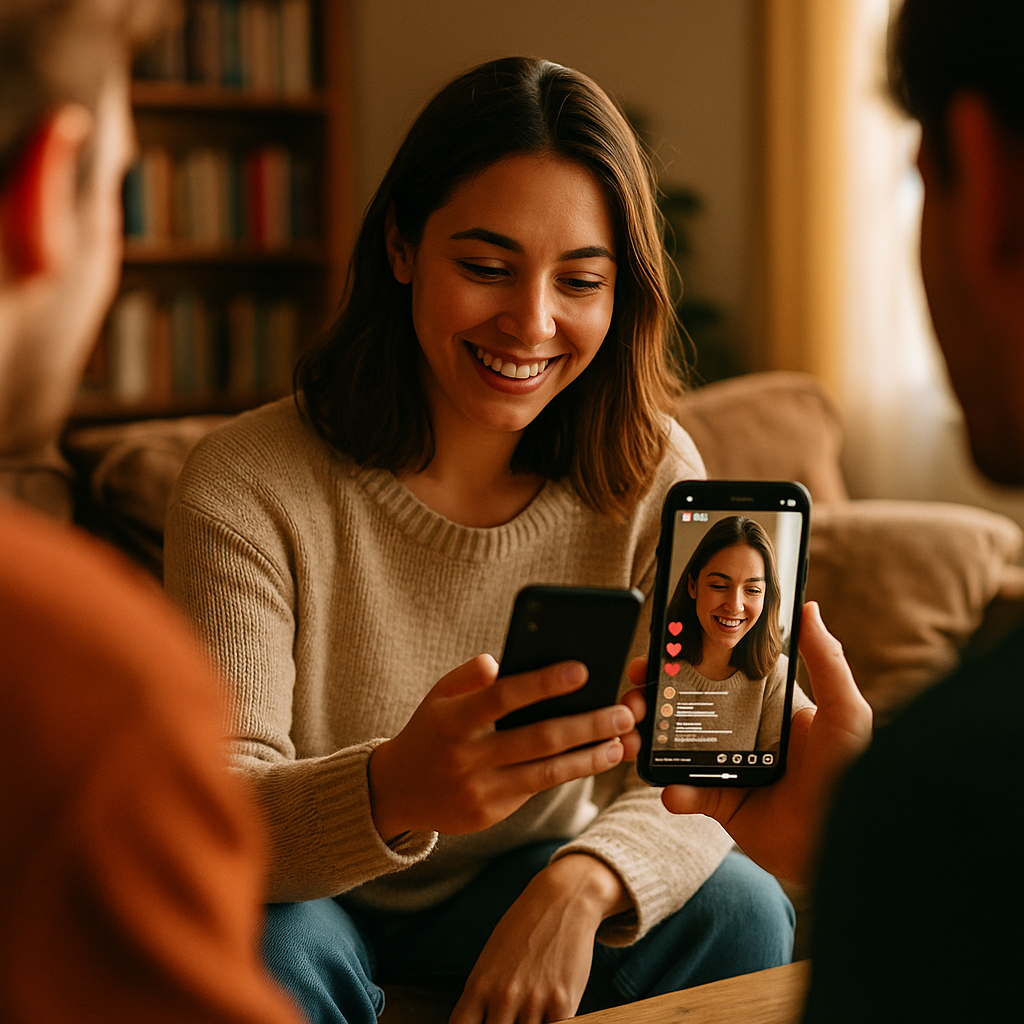
When was the last time you bought something because of a public feed post? Now ask yourself: when did you last buy something because someone in your group chat said it was worth it? That gap is your entire influencer marketing problem in 2026. Micro-communities — Discord servers, Telegram groups, Instagram Close Friends lists, WhatsApp brand circles — have quietly displaced public timelines as the environments where purchase decisions actually form.
The Trust Migration Nobody Budgeted For
Public social feeds have become billboards. Performative. Loud. Easy to scroll past. Meanwhile, platform usage data consistently shows that engagement in private, invitation-only spaces outpaces public feed interaction by a significant margin — and the recommendations exchanged there carry a completely different weight. These aren’t impressions. They’re conversations.
The shift matters operationally because most influencer marketing infrastructure — from brief templates to FTC disclosures to performance dashboards — was built for the public post. It was built for something you could screenshot, track, and put in a deck. Private sharing resists all of that. And that’s exactly why it’s worth more.
Brands that don’t restructure their creator relationships around earning private recommendation are running expensive awareness campaigns they’re calling influencer marketing. That’s a budget allocation problem with downstream consequences on CAC.
A creator with 80,000 followers who shares your product in their 400-person Discord server will generate more qualified pipeline than a creator with 800,000 followers who drops a sponsored Reel into the void. The math on micro-community reach is fundamentally different from public feed reach.
Why Creators Are Retreating to Private Spaces
This isn’t accidental. Creators are actively building micro-communities because the economics of public platforms have deteriorated. Algorithm volatility, pay compression, and audience fatigue with obvious sponsored content have pushed the most respected voices to invest in owned, intimate spaces. They can monetize through subscriptions, exclusives, and access tiers without depending on platform reach — a dynamic we’ve covered extensively in our analysis of creator-sovereign platform strategy.
The implication for brands is counterintuitive: the creators worth partnering with are the ones who have stopped optimizing for public visibility. They’ve migrated their trust capital off-platform. If your creator selection criteria still centers on follower count and public engagement rate, you’re selecting for the wrong cohort.
What does the right cohort look like? Creators with thriving Discord servers, active newsletter communities, Substack discussion threads, or tight Telegram groups where their audience actually responds. The engagement rate in those spaces tends to be 10x to 30x what you’d see on a public post — with far higher purchase intent signals because the audience opted into sustained relationship with that creator’s perspective, not just their content.
The Structural Failure of Traditional Creator Briefs
Standard creator briefs are designed to produce a deliverable: a Reel, a TikTok, a static post. They specify messaging pillars, required disclosures, brand safety guardrails, and call-to-action language. All necessary. All completely wrong for earning micro-community trust.
Private sharing can’t be specified in a brief. It happens when a creator genuinely integrates a product into their life in a way that creates a natural story — one they then tell their inner circle not because they were paid to, but because it fits the ongoing narrative of who they are. You cannot contract for that. You can only create the conditions for it.
This is where most brand relationships break down. The transaction is structured as: payment → deliverable → usage rights. What should replace it is closer to: relationship → genuine integration → organic advocacy → (separately) paid amplification where appropriate. The organic advocacy that happens in private spaces becomes the social proof that makes your paid public content actually land. They’re not competing mechanisms — they’re sequential.
For teams restructuring their approach to creator briefs, our deep-dive on briefs built for search intent offers a useful framework for thinking about audience-first brief construction, even if the channel is shifting.
What Earning Private Sharing Actually Requires
Let’s get operational about this. Earning genuine private sharing — the kind that happens in group chats and Discord servers without a disclosure tag — requires four things brands rarely do well.
- Product access before campaigns: Sending product during an active campaign is transactional. Sending it months before any commercial conversation, without expectation, is relationship-building. Creators who’ve already formed a genuine opinion before you pitch them will share differently — and their community will sense the difference.
- Inviting creators into product development: Creators whose audience trusts them for their taste and opinions will share a product they helped shape with a completely different energy than something they received in a PR package. Even small input — a beta test cohort, a naming decision, a colorway vote — changes the nature of the relationship.
- Removing usage rights pressure: The clause that lets you repurpose creator content as paid media for 12 months is a relationship tax. It signals that the brand’s primary interest is in the deliverable, not the person. Reducing rights demands — or compensating meaningfully for them — changes what creators feel when they think about your brand.
- Sustained contact outside campaign windows: Brands that only communicate with creators when they’re activating a campaign have vendors, not advocates. The ones who maintain genuine off-cycle contact — sharing relevant industry news, inviting creators to brand events with no deliverable attached, actually responding to their content — are the ones who get mentioned in private group chats because the creator genuinely likes them.
Attribution Is the Honest Conversation Nobody Wants to Have
Here’s the operational tension: everything described above produces value that is genuinely difficult to attribute. Private sharing in micro-communities generates what the industry calls dark social activity — traffic and conversions that arrive without referral tags, that can’t be traced to a specific post, that show up as direct traffic in your analytics and get misattributed to brand search.
This is a real measurement problem. But it’s also being used as an excuse to avoid investing in relationship-driven creator programs. The solution isn’t to abandon micro-community strategy because it’s hard to attribute — it’s to get better at proxy measurement. Social listening tools can track brand mentions in semi-public community spaces. Unique discount codes distributed through creator communities create partial attribution threads. Surveying new customers about where they first heard of you — actually asking — surfaces dark social pathways that analytics platforms never will.
The brands winning here are running incrementality tests, not just last-click models. They’re comparing conversion rates from audiences exposed to creator community content versus clean control groups. The lift is measurable. It just requires a different measurement architecture than you’ve probably built.
Dark social attribution isn’t a reason to avoid micro-community investment — it’s a reason to rebuild your measurement stack. The brands treating it as an excuse are ceding competitive ground to the ones treating it as an engineering problem.
Micro-Creator Networks as the Infrastructure Layer
One implication brands are underestimating: you don’t need a single creator with a giant community. You need a network of niche creators, each with their own tight micro-community, all of whom have genuine relationships with your brand. This is the architecture behind some of the strongest micro-influencer amplification models in practice — distributed trust rather than concentrated reach.
The operational challenge is relationship management at scale. Managing 200 genuine creator relationships is not the same as managing 200 contracts. It requires different tooling, different team structures, and a different success metric than impressions delivered. Some brands are solving this with dedicated creator community managers — essentially creator relations roles that sit outside the campaign management function and focus purely on relationship quality.
This connects to a broader question about how brands renegotiate the creator relationship entirely. The playbook for renegotiating creator partnerships in a world where creators have their own direct-to-community revenue channels is meaningfully different from legacy influencer contracting. The power dynamic has shifted. The brands adapting to it will get private advocacy. The ones who haven’t will get compliant public posts.
For the compliance layer, ensure your team is current with FTC disclosure guidance — micro-community sharing creates genuine gray areas around what constitutes a material connection, especially when no paid post is involved but product was gifted. Get legal aligned now before a private community share becomes a regulatory footnote.
Finally, don’t ignore the platform dimension. Meta’s community tools — broadcast channels, Close Friends features, private groups — are giving brands and creators new infrastructure for managed micro-community engagement. These aren’t the same as earned private sharing, but they can be a useful transition layer while you build the relationship depth that earns the real thing.
The move: audit your top 20 creator relationships this quarter and ask honestly — would any of these creators mention your product in their group chat without being paid? If the answer is no, you have a relationship problem, not a reach problem. Fix the relationship first.
Frequently Asked Questions
What is a micro-community in the context of influencer marketing?
A micro-community is a small, invitation-only or self-selected digital group — such as a Discord server, Telegram group, WhatsApp circle, or Instagram Close Friends list — where members share a specific interest and high mutual trust. In influencer marketing, these spaces matter because recommendations exchanged there carry significantly more purchase intent than public feed posts. Members have actively opted into ongoing conversation with a creator or peer group, which makes their recommendations more credible and actionable than broadcast content.
How do brands measure the impact of private sharing in micro-communities?
Measuring private sharing — often called dark social activity — requires proxy attribution methods rather than standard last-click analytics. Effective approaches include unique discount codes distributed through creator communities, post-purchase surveys asking customers how they discovered the brand, incrementality testing comparing exposed versus control audiences, and social listening tools that track brand mentions in semi-public community spaces. Direct traffic spikes following creator community activity are also a signal worth monitoring against a baseline.
Is gifting product to creators without a paid contract enough to earn private sharing?
Gifting alone rarely earns genuine private sharing. The difference is relationship context. Product sent in a one-time PR package is a transaction. Product sent as part of an ongoing relationship — where the brand maintains contact outside campaign windows, involves creators in product development, and demonstrates genuine interest in the creator’s perspective — creates the conditions for authentic advocacy. The distinction is whether the creator experiences the brand as a partner or a vendor.
How does FTC disclosure apply to micro-community sharing?
The FTC’s disclosure guidelines apply whenever there is a material connection between a brand and someone endorsing their product — including in private or semi-private online spaces. If a creator received gifted product or payment and shares it in a Discord server or Telegram group, a disclosure is technically required. However, the enforcement and visibility dynamics differ significantly from public posts. Brands should consult legal counsel and review current FTC guidance to establish a clear policy for both paid and gifted creator relationships across all sharing environments.
What’s the difference between a micro-community strategy and a micro-influencer strategy?
Micro-influencer strategy focuses on creator follower count — typically 10,000 to 100,000 followers — as the primary selection criterion, with the goal of higher public engagement rates relative to larger accounts. Micro-community strategy focuses on where trust actually lives. A creator with 500,000 public followers but an active 1,000-person Discord server may deliver more qualified advocacy through that private community than through their public content. The strategies can overlap, but the orientation is different: micro-influencer is about audience size, micro-community is about trust environment quality.
Top Influencer Marketing Agencies
The leading agencies shaping influencer marketing in 2026
Agencies ranked by campaign performance, client diversity, platform expertise, proven ROI, industry recognition, and client satisfaction. Assessed through verified case studies, reviews, and industry consultations.
Moburst

-
2

The Shelf
Boutique Beauty & Lifestyle Influencer AgencyA data-driven boutique agency specializing exclusively in beauty, wellness, and lifestyle influencer campaigns on Instagram and TikTok. Best for brands already focused on the beauty/personal care space that need curated, aesthetic-driven content.Clients: Pepsi, The Honest Company, Hims, Elf Cosmetics, Pure LeafVisit The Shelf → -
3

Audiencly
Niche Gaming & Esports Influencer AgencyA specialized agency focused exclusively on gaming and esports creators on YouTube, Twitch, and TikTok. Ideal if your campaign is 100% gaming-focused — from game launches to hardware and esports events.Clients: Epic Games, NordVPN, Ubisoft, Wargaming, Tencent GamesVisit Audiencly → -
4

Viral Nation
Global Influencer Marketing & Talent AgencyA dual talent management and marketing agency with proprietary brand safety tools and a global creator network spanning nano-influencers to celebrities across all major platforms.Clients: Meta, Activision Blizzard, Energizer, Aston Martin, WalmartVisit Viral Nation → -
5

The Influencer Marketing Factory
TikTok, Instagram & YouTube CampaignsA full-service agency with strong TikTok expertise, offering end-to-end campaign management from influencer discovery through performance reporting with a focus on platform-native content.Clients: Google, Snapchat, Universal Music, Bumble, YelpVisit TIMF → -
6

NeoReach
Enterprise Analytics & Influencer CampaignsAn enterprise-focused agency combining managed campaigns with a powerful self-service data platform for influencer search, audience analytics, and attribution modeling.Clients: Amazon, Airbnb, Netflix, Honda, The New York TimesVisit NeoReach → -
7

Ubiquitous
Creator-First Marketing PlatformA tech-driven platform combining self-service tools with managed campaign options, emphasizing speed and scalability for brands managing multiple influencer relationships.Clients: Lyft, Disney, Target, American Eagle, NetflixVisit Ubiquitous → -
8

Obviously
Scalable Enterprise Influencer CampaignsA tech-enabled agency built for high-volume campaigns, coordinating hundreds of creators simultaneously with end-to-end logistics, content rights management, and product seeding.Clients: Google, Ulta Beauty, Converse, AmazonVisit Obviously →