


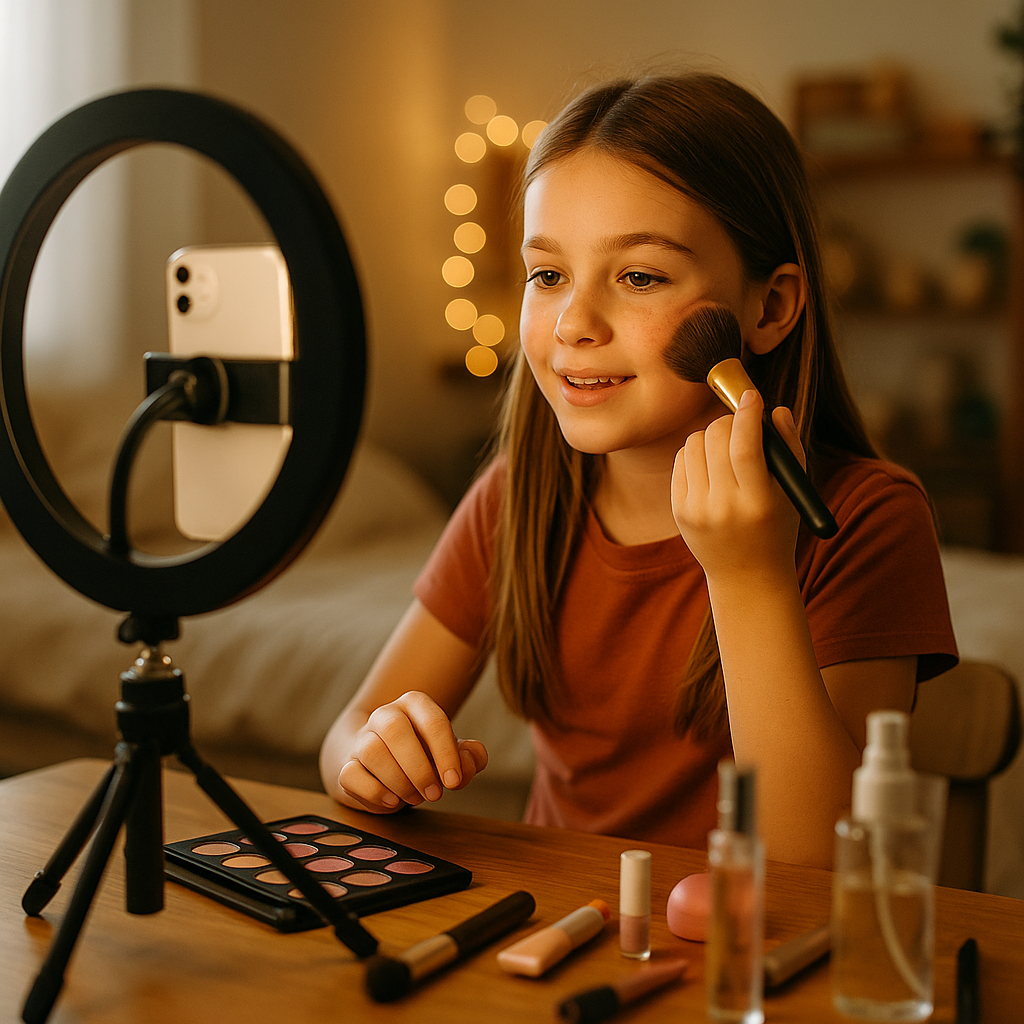
The Tween Beauty Buyer Is Not Who You Think
Eight-year-olds are building skincare routines. That sentence alone should reset every assumption your brand team holds about the Gen Alpha beauty consumer. The Gen Alpha beauty influence phenomenon, supercharged by the viral “Sephora tween” wave, has forced legacy beauty brands and specialty retailers to confront a buyer segment with no prior analog in marketing history: children with independent product conviction, platform fluency, and real purchasing power backed by parental wallets.
What “Purchasing Power” Actually Means for This Cohort
Let’s be precise. Gen Alpha (born roughly 2010 to 2025) doesn’t swipe credit cards independently, but that misses the point entirely. Research from Statista and multiple retail panels consistently shows that children aged 8 to 14 influence between 60% and 70% of household purchase decisions in categories they’re engaged with. Beauty is now one of those categories. A child who has watched 40 hours of skincare content on YouTube or TikTok walks into Sephora with a specific product list. The parent pays. The child decides.
That dynamic changes the entire creator program brief. You’re not marketing to a passive consumer who might be influenced — you’re marketing to a highly informed, peer-validated buyer who will teach their parents what to purchase. The creator strategy that reaches this segment has to operate on two levels: the child’s discovery journey and the parent’s trust threshold.
Brands that design creator programs only for the child’s attention are missing half the purchase equation. Parental trust is a co-conversion variable, not an afterthought.
How Sephora Became Ground Zero
The “Sephora tween” phenomenon wasn’t engineered by Sephora’s marketing department. It emerged organically from creator content. Young creators on TikTok and YouTube began posting hauls, routines, and product reviews using prestige brands, and the aspirational framing resonated with Gen Alpha viewers who were already spending hours on these platforms. The feedback loop accelerated: more content created more demand, more demand created more store visits, and Sephora found itself managing a floor traffic demographic it hadn’t explicitly targeted.
The backlash followed quickly. Parents complained about age-inappropriate formulations. Dermatologists flagged retinol and acid products being used by preteens. Brands like CeraVe and Drunk Elephant suddenly had a compliance and brand safety problem wrapped inside a growth story. That tension, between riding the wave and managing the risk, is where sophisticated creator program design becomes genuinely strategic.
Urban Outfitters’ Play: Lifestyle Adjacency Over Direct Beauty Positioning
Urban Outfitters has moved thoughtfully here. Rather than launching an overt Gen Alpha beauty sub-brand, they’ve leaned into lifestyle creator content that naturalizes beauty as part of a broader aesthetic identity. Their creator activations across platforms like TikTok and Pinterest emphasize room aesthetics, fashion, and ambient beauty routines, speaking to Gen Alpha’s identity-construction instincts without triggering the regulatory or reputational exposure that comes from directly marketing beauty products to minors.
This is smart brand architecture. It borrows the discovery energy of the beauty creator ecosystem without owning the compliance liability. If you’re running a multi-category retail brand with significant tween adjacency, this model is worth studying. The creator partnership architecture shift happening across the industry supports exactly this kind of layered, lifestyle-first approach.
Legacy Beauty Brands Are Splitting Their Creator Rosters
Here’s a pattern worth tracking across the industry: legacy beauty brands are quietly running bifurcated creator programs. One tier targets adult consumers through traditional influencer and creator formats. A second tier, often managed separately and with distinct compliance guardrails, is built around age-appropriate content creators who speak to the Gen Alpha discovery journey with formulations and messaging explicitly designed for younger skin.
Brands like Neutrogena and Cetaphil have accelerated creator content around their gentler, dermatologist-endorsed lines, effectively repositioning commoditized basics as the responsible Gen Alpha entry point. They’re not chasing Drunk Elephant aesthetics; they’re positioning themselves as the sensible adult in the room. And it’s working, because parents searching for “safe skincare for kids” are encountering creator content that validates exactly these brands.
For brand teams managing multi-line portfolios, the operational question becomes: how do you brief, contract, and measure a creator roster that’s doing fundamentally different jobs at the same time? The answer involves more sophisticated blended contract structures that account for different content mandates, audience age gates, and platform distribution requirements within a single program.
Platform Behavior Is Not Uniform Across Gen Alpha
Treating Gen Alpha as a single platform cohort is a strategic error. The 8-to-10 bracket still over-indexes on YouTube and gaming-adjacent platforms. The 11-to-14 cohort is deeply embedded in TikTok and increasingly active on BeReal and Discord communities. The discovery journey for a product differs significantly depending on where in that age range your target consumer sits.
YouTube remains the dominant long-form discovery engine for younger Gen Alpha, partly because parental controls are more established there and partly because the tutorial format maps well to skincare and beauty instruction. TikTok’s algorithm-driven discovery surface is where trends get compressed into virality, but it’s also where compliance risk concentrates. Any creator running beauty content for a demonstrably under-16 audience on TikTok is operating in a space that FTC guidelines and emerging platform policies are scrutinizing with increasing intensity.
Brands need to be building platform-specific distribution logic into their creator briefs, not just repurposing one format across channels. This is where AI-assisted content planning starts to pay real dividends. Understanding where specific creator audiences actually skew by age requires data infrastructure that goes well beyond basic demographic reporting. The work on AI discovery and creator content is directly relevant here, particularly for teams trying to map creator audiences to compliant distribution windows.
Platform compliance for under-16 audiences isn’t a legal department issue anymore. It’s a creator operations issue. Build the guardrails into the brief, not after the content is live.
The ROI Question Brand Teams Are Avoiding
Senior marketers are reluctant to report on Gen Alpha creator programs in standard ROI frameworks, and understandably so. Direct attribution is difficult when the buyer is a child, the purchaser is a parent, and the discovery path runs across three platforms over six months before a store visit. But “hard to measure” is not the same as “low return.”
Several beauty brands are beginning to treat Gen Alpha creator investment as customer lifetime value seeding rather than immediate conversion spend. A brand that earns a Gen Alpha consumer’s trust before they turn 14 has a potentially 40-year relationship ahead of it. That math changes how you justify budget allocation internally. If you need frameworks for presenting non-standard creator ROI to finance leadership, the work on pitching creator ROI to your CFO is a useful starting point.
Performance benchmarks for this segment also diverge from standard creator CPA models. Awareness and consideration metrics are more diagnostic than conversion rates, at least in the short term. Brands using eMarketer data and social listening tools like Sprout Social to track share-of-conversation among Gen Alpha creators are getting ahead of this measurement gap before it becomes a budget justification problem.
What Responsible Program Design Actually Looks Like
Compliance is not optional here, and brands that treat it as a legal checkbox rather than a creative constraint are taking on real reputational risk. Responsible Gen Alpha creator programs share several structural features: explicit formulation alignment (no retinol, no acids, no actives not cleared for minors), creator vetting that includes audience age verification, and content guardrails that meet or exceed FTC and ICO guidance on advertising to children.
Age-appropriate creator partnerships also require different rate and exclusivity structures. Gen Alpha-adjacent creators who have built authentic audiences in this space are increasingly aware of their leverage, particularly as brand demand has intensified. Understanding current creator rate benchmarks in emerging niches helps brand teams negotiate fairly without overpaying into a trend cycle that may normalize over the next 12 to 18 months.
The operational lift is real. But brands that build compliant, well-structured Gen Alpha creator programs now are establishing infrastructure that serves them for the next decade of beauty marketing, not just the current trend cycle.
The concrete next step: Audit your current creator roster against audience age data from your analytics stack. If any creator driving beauty content has a confirmed under-16 audience above 15%, you need a compliance review before the next campaign flight, not after it.
FAQs
What is the Sephora tween phenomenon?
The Sephora tween phenomenon refers to the surge of children aged 8 to 14 visiting prestige beauty retailers and purchasing adult skincare and cosmetic products, driven largely by creator content on TikTok and YouTube that normalized complex skincare routines for young audiences.
How should beauty brands approach marketing to Gen Alpha without legal risk?
Brands should ensure all creator content targeting or reaching under-16 audiences uses age-appropriate formulations, includes proper advertising disclosures per FTC guidelines, and vets creators for audience age composition. Lifestyle-adjacent positioning, rather than direct beauty marketing to minors, reduces both regulatory and reputational exposure.
Which platforms are most effective for reaching Gen Alpha beauty consumers?
YouTube is the dominant discovery platform for younger Gen Alpha (8 to 11), particularly for tutorial and review content. TikTok is more prevalent among the 11-to-14 segment. Brands should build platform-specific content strategies rather than repurposing one format, and must account for varying compliance requirements across each platform.
How do you measure ROI on creator programs targeting Gen Alpha?
Standard CPA and direct conversion metrics are less reliable for this segment due to the indirect purchase path (child influences, parent buys). Brands should prioritize awareness, share-of-conversation, and customer lifetime value seeding as measurement frameworks, treating Gen Alpha investment as long-term brand equity building rather than short-cycle conversion spend.
Are legacy beauty brands losing ground to newer brands in the Gen Alpha segment?
Not necessarily. Legacy brands like Neutrogena and Cetaphil are repositioning around dermatologist-endorsed, age-appropriate formulations and earning parent trust at a time when prestige brands face scrutiny over ingredient safety. The brands losing ground are those that fail to acknowledge the segment’s distinct needs and rely on adult-positioned creator content without adaptation.
Top Influencer Marketing Agencies
The leading agencies shaping influencer marketing in 2026
Agencies ranked by campaign performance, client diversity, platform expertise, proven ROI, industry recognition, and client satisfaction. Assessed through verified case studies, reviews, and industry consultations.
Moburst

-
2

The Shelf
Boutique Beauty & Lifestyle Influencer AgencyA data-driven boutique agency specializing exclusively in beauty, wellness, and lifestyle influencer campaigns on Instagram and TikTok. Best for brands already focused on the beauty/personal care space that need curated, aesthetic-driven content.Clients: Pepsi, The Honest Company, Hims, Elf Cosmetics, Pure LeafVisit The Shelf → -
3

Audiencly
Niche Gaming & Esports Influencer AgencyA specialized agency focused exclusively on gaming and esports creators on YouTube, Twitch, and TikTok. Ideal if your campaign is 100% gaming-focused — from game launches to hardware and esports events.Clients: Epic Games, NordVPN, Ubisoft, Wargaming, Tencent GamesVisit Audiencly → -
4

Viral Nation
Global Influencer Marketing & Talent AgencyA dual talent management and marketing agency with proprietary brand safety tools and a global creator network spanning nano-influencers to celebrities across all major platforms.Clients: Meta, Activision Blizzard, Energizer, Aston Martin, WalmartVisit Viral Nation → -
5

The Influencer Marketing Factory
TikTok, Instagram & YouTube CampaignsA full-service agency with strong TikTok expertise, offering end-to-end campaign management from influencer discovery through performance reporting with a focus on platform-native content.Clients: Google, Snapchat, Universal Music, Bumble, YelpVisit TIMF → -
6

NeoReach
Enterprise Analytics & Influencer CampaignsAn enterprise-focused agency combining managed campaigns with a powerful self-service data platform for influencer search, audience analytics, and attribution modeling.Clients: Amazon, Airbnb, Netflix, Honda, The New York TimesVisit NeoReach → -
7

Ubiquitous
Creator-First Marketing PlatformA tech-driven platform combining self-service tools with managed campaign options, emphasizing speed and scalability for brands managing multiple influencer relationships.Clients: Lyft, Disney, Target, American Eagle, NetflixVisit Ubiquitous → -
8

Obviously
Scalable Enterprise Influencer CampaignsA tech-enabled agency built for high-volume campaigns, coordinating hundreds of creators simultaneously with end-to-end logistics, content rights management, and product seeding.Clients: Google, Ulta Beauty, Converse, AmazonVisit Obviously →