


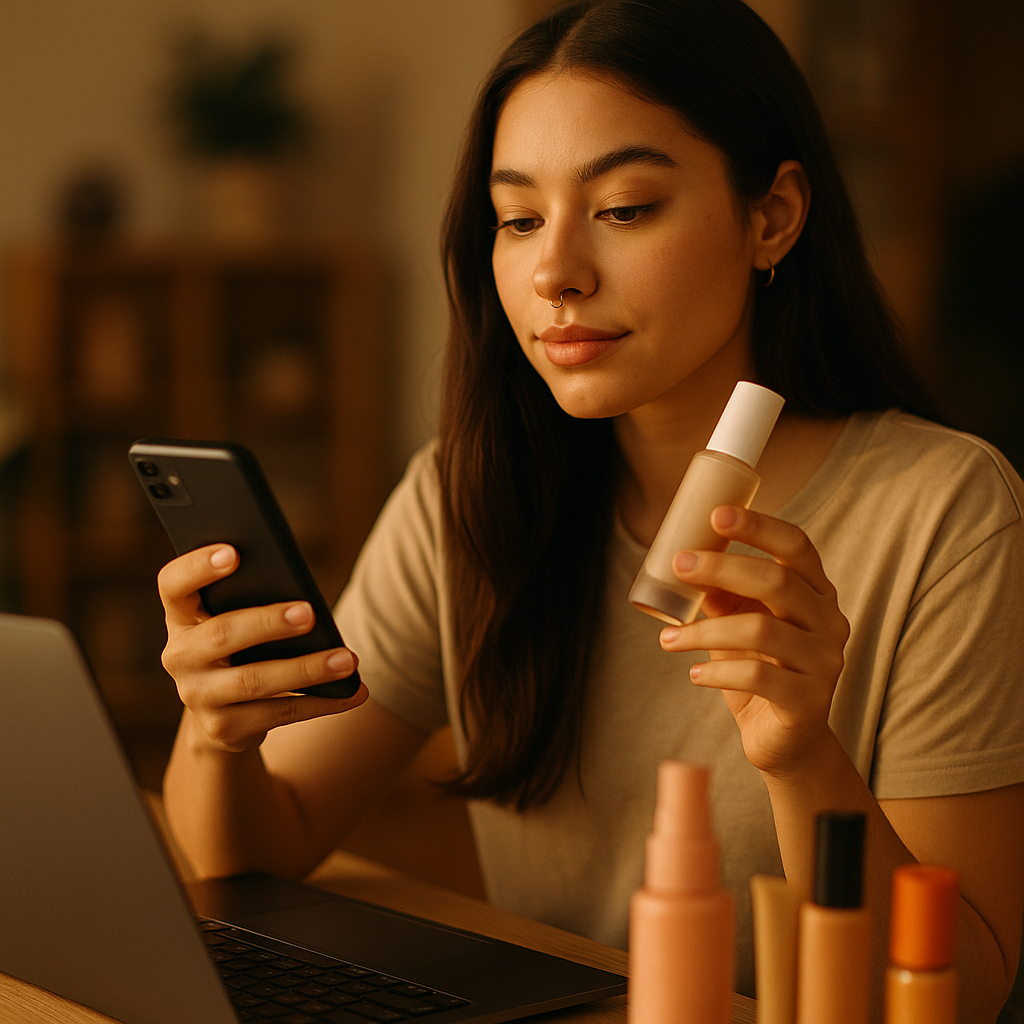
Gen Z controls an estimated $12 trillion in global spending power, and beauty brands are still burning budget on formats this generation actively tunes out. If your creator program looks the same as it did three years ago, you’re not just leaving money on the table — you’re funding your competitor’s market share.
Why Traditional Influencer Advertising Is Losing Gen Z
The data is unambiguous. According to eMarketer research, Gen Z’s ad avoidance rates consistently outpace older cohorts, and sponsored content is the category they distrust most. The polished “get ready with me” haul video, once a reliable conversion driver for beauty brands, now reads as corporate performance to a generation that grew up watching the behind-the-scenes mechanics of influencer marketing on the very platforms those influencers use.
This isn’t a tone problem. It’s a structural one. Gen Z doesn’t reject beauty content — they consume more of it than any prior generation. What they reject is the commercial intent made visible. When a creator’s disclosure comes before any authentic context, credibility collapses.
Gen Z doesn’t reject beauty content — they reject visible commercial intent. The distinction should reshape how every brief, budget line, and creator relationship in your program is structured.
For brand strategists, this creates a painful paradox: the audience with the most purchasing runway is the one least receptive to your existing playbook. Restructuring is not optional.
The Two Formats Actually Converting With Gen Z
Across beauty categories — skincare, cosmetics, fragrance, haircare — two content architectures are consistently outperforming traditional sponsored posts: community-led formats and expert-credential formats. Understanding the mechanics of each is essential before reallocating budget.
Community-led formats derive credibility from peer validation rather than creator authority. Think Reddit skincare threads seeded with real product experiences, TikTok comment-driven tutorials where the creator responds to follower questions, and Discord or Substack communities where product conversation happens organically over time. The brand’s role here is infrastructure — funding the space, not dominating the conversation.
Expert-credential formats work differently. Dermatologists, cosmetic chemists, licensed estheticians, and pharmacists have become some of the highest-converting content sources in beauty. Hyram Serrano built an audience on ingredient literacy. Dr. Shereene Idriss converts through clinical specificity. The pattern isn’t celebrity — it’s verified expertise that Gen Z can cross-reference. A creator who can cite a clinical study, explain an INCI list, or push back on a brand claim actually earns more trust than one who simply endorses.
The strategic implication: beauty brands need to stop treating these as niche channels and start treating them as primary acquisition vehicles. For a deeper look at what’s replacing traditional sponsored posts in beauty, beauty influencer ad alternatives are worth auditing against your current mix.
Restructuring Creator Program Investment: A Budget Framework
Most beauty brands currently allocate the majority of their creator budget to macro and mid-tier influencers running awareness-focused sponsored content. The restructure requires a three-part rebalance.
1. Shift from reach-first to trust-first selection criteria. Follower count becomes a secondary filter. Primary filters should include: credential verification, comment sentiment analysis (not just volume), community tenure, and content longevity. A dermatologist with 180,000 followers who generates 4,000 substantive comments per post outperforms a macro lifestyle creator with 1.2 million followers generating 900 passive reactions.
2. Invest in always-on community infrastructure, not campaign bursts. Gen Z’s purchase journey is nonlinear. They will encounter a product recommendation in a Reddit thread, revisit it six weeks later in a TikTok comment, and convert after a Discord member answers their specific skin type question. Campaign-burst thinking misses this entirely. Brands like The Ordinary and Paula’s Choice have built significant Gen Z loyalty precisely by funding community spaces where product education persists beyond any single campaign cycle.
3. Reallocate paid amplification budgets toward credentialed micro-creators. The conversion data behind micro-influencers consistently supports rate premiums when the creator carries genuine community authority. For beauty brands targeting Gen Z specifically, “micro” should be redefined to include expert-credentialed creators regardless of follower count, not just size-based tiers.
Platform Architecture Matters More Than Most Brands Admit
Where community-led and expert-credential content lives affects how Gen Z processes it. TikTok’s For You Page algorithm surfaces credentialed beauty content through engagement depth, not follower proxy. YouTube’s search behavior means expert tutorial content compounds in value over time — a well-structured ingredient breakdown from a cosmetic chemist will continue driving discovery for years. Reddit and Discord, while harder to attribute, function as the consideration layer where purchase decisions actually crystallize.
The practical question for budget allocation: are you investing in content architectures that match these discovery patterns, or are you still optimizing for Instagram grid aesthetics? Rebalancing your distribution approach around platform-native behaviors is a prerequisite for Gen Z reach.
Platform compliance is also a real risk. FTC disclosure requirements apply regardless of format, and Gen Z’s media literacy means they will flag undisclosed paid partnerships publicly and aggressively. Any expert-credential format must disclose brand relationships without undermining the credibility of the expertise itself — a creative brief challenge that your agency should be solving for explicitly.
The Attribution Problem You Need to Solve First
Here’s the operational blocker most beauty brands hit when they try to restructure: their attribution infrastructure wasn’t built for community-led conversion paths. A customer who converted after three months of lurking in a brand-funded Discord, cross-referencing claims on a dermatologist’s YouTube channel, and finally clicking a TikTok link will likely show up in last-click data as a “TikTok organic” conversion. That undervalues every upstream touchpoint.
Before reallocating budget toward community and expert formats, build the measurement model that can actually see them. Moving beyond CPM metrics to earned media value, sentiment scoring, and community health indicators gives you the reporting architecture to justify ongoing investment in slower-burn but higher-trust formats. Tools like Sprout Social and Statista for benchmark context can anchor your measurement reset.
What This Means for Creator Contracts and Program Structure
Engaging credentialed experts requires different contract architecture than standard influencer agreements. Dermatologists and cosmetic chemists operate under professional liability considerations that make exclusivity clauses, approval rights, and claim review timelines legitimately complex. Brand teams that try to run expert-credential programs through standard influencer agreement templates will create friction that drives credible experts away.
The contract structure needs to accommodate: scientific claim accuracy review (not just brand message compliance), professional disclosure requirements that sit alongside FTC requirements, and longer content development timelines. For brands scaling these programs, contract structures built for quality at scale are worth adapting rather than starting from scratch.
Expert-credential programs fail when they’re run through standard influencer contract templates. The professional liability and claim accuracy requirements of credentialed creators demand a fundamentally different agreement architecture.
The broader program maturity question is whether your organization is structured to manage this complexity. Many beauty brands that have successfully made the shift have added a dedicated creator partnerships role with a scientific affairs liaison function, or have formalized that relationship within their existing medical marketing infrastructure.
For CMOs thinking about organizational design, treating the creator economy as strategic infrastructure rather than a campaign-level tactical resource is the framing shift that unlocks the right internal investment conversations. Gen Z’s $12 trillion opportunity is real, but capturing it requires program architecture that most beauty brands haven’t built yet.
Your immediate next step: audit your current creator program against two filters — what percentage of your active creator relationships carry verifiable expert credentials, and what percentage of your budget supports always-on community formats versus campaign-burst sponsored content. The gap between your current allocation and where those numbers need to be is your restructuring brief.
Frequently Asked Questions
Why is Gen Z less responsive to traditional influencer advertising in beauty?
Gen Z grew up watching the mechanics of influencer marketing become transparent on the same platforms those influencers use. Sponsored content disclosures, predictable haul formats, and overly polished production signal commercial intent before credibility is established. This generation responds to peer validation and verified expertise, not brand-funded endorsements from creators whose primary identity is as a promotional vehicle.
What is a community-led creator format and how does it work for beauty brands?
Community-led formats derive their conversion power from peer-to-peer validation rather than top-down creator authority. Examples include brand-funded Reddit threads, TikTok comment-driven tutorials, Discord communities for skincare enthusiasts, and Substack newsletters built around ingredient education. The brand’s role is to fund and structure the infrastructure while allowing organic conversation to drive credibility. Brands like The Ordinary have demonstrated that persistent community spaces outperform episodic campaign content with Gen Z audiences.
How should beauty brands identify and vet credentialed expert creators?
Start with professional license verification: dermatologists, cosmetic chemists, pharmacists, and licensed estheticians. Then evaluate their content for scientific accuracy and audience engagement quality — specifically, whether followers are asking substantive ingredient or formulation questions rather than posting generic reactions. Tools like Sprout Social can help with comment sentiment analysis. Finally, assess whether their existing brand relationships have compromised their perceived independence, since Gen Z audiences will research this themselves.
What attribution model works for community-led beauty marketing?
Last-click attribution significantly undervalues community-led conversion paths because Gen Z’s purchase journey involves multiple low-visibility touchpoints over extended time periods. A data-clean room approach that connects community engagement signals, branded search lift, and direct traffic patterns provides a more accurate picture. Supplementing standard attribution with earned media value scoring, community health metrics, and sentiment trend analysis builds the reporting layer needed to justify ongoing investment in slower-burn formats.
How is the $12 trillion Gen Z spending power figure calculated?
The $12 trillion figure reflects projected aggregate global spending influence of the Gen Z cohort, factoring in both direct spending (including beauty, personal care, and apparel) and significant influence over household purchase decisions. Gen Z’s economic footprint is larger than raw income figures suggest because of their role in shaping family spending choices and their position as the dominant early adopter cohort for new beauty brands and formats.
Top Influencer Marketing Agencies
The leading agencies shaping influencer marketing in 2026
Agencies ranked by campaign performance, client diversity, platform expertise, proven ROI, industry recognition, and client satisfaction. Assessed through verified case studies, reviews, and industry consultations.
Moburst

-
2

The Shelf
Boutique Beauty & Lifestyle Influencer AgencyA data-driven boutique agency specializing exclusively in beauty, wellness, and lifestyle influencer campaigns on Instagram and TikTok. Best for brands already focused on the beauty/personal care space that need curated, aesthetic-driven content.Clients: Pepsi, The Honest Company, Hims, Elf Cosmetics, Pure LeafVisit The Shelf → -
3

Audiencly
Niche Gaming & Esports Influencer AgencyA specialized agency focused exclusively on gaming and esports creators on YouTube, Twitch, and TikTok. Ideal if your campaign is 100% gaming-focused — from game launches to hardware and esports events.Clients: Epic Games, NordVPN, Ubisoft, Wargaming, Tencent GamesVisit Audiencly → -
4

Viral Nation
Global Influencer Marketing & Talent AgencyA dual talent management and marketing agency with proprietary brand safety tools and a global creator network spanning nano-influencers to celebrities across all major platforms.Clients: Meta, Activision Blizzard, Energizer, Aston Martin, WalmartVisit Viral Nation → -
5

The Influencer Marketing Factory
TikTok, Instagram & YouTube CampaignsA full-service agency with strong TikTok expertise, offering end-to-end campaign management from influencer discovery through performance reporting with a focus on platform-native content.Clients: Google, Snapchat, Universal Music, Bumble, YelpVisit TIMF → -
6

NeoReach
Enterprise Analytics & Influencer CampaignsAn enterprise-focused agency combining managed campaigns with a powerful self-service data platform for influencer search, audience analytics, and attribution modeling.Clients: Amazon, Airbnb, Netflix, Honda, The New York TimesVisit NeoReach → -
7

Ubiquitous
Creator-First Marketing PlatformA tech-driven platform combining self-service tools with managed campaign options, emphasizing speed and scalability for brands managing multiple influencer relationships.Clients: Lyft, Disney, Target, American Eagle, NetflixVisit Ubiquitous → -
8

Obviously
Scalable Enterprise Influencer CampaignsA tech-enabled agency built for high-volume campaigns, coordinating hundreds of creators simultaneously with end-to-end logistics, content rights management, and product seeding.Clients: Google, Ulta Beauty, Converse, AmazonVisit Obviously →