


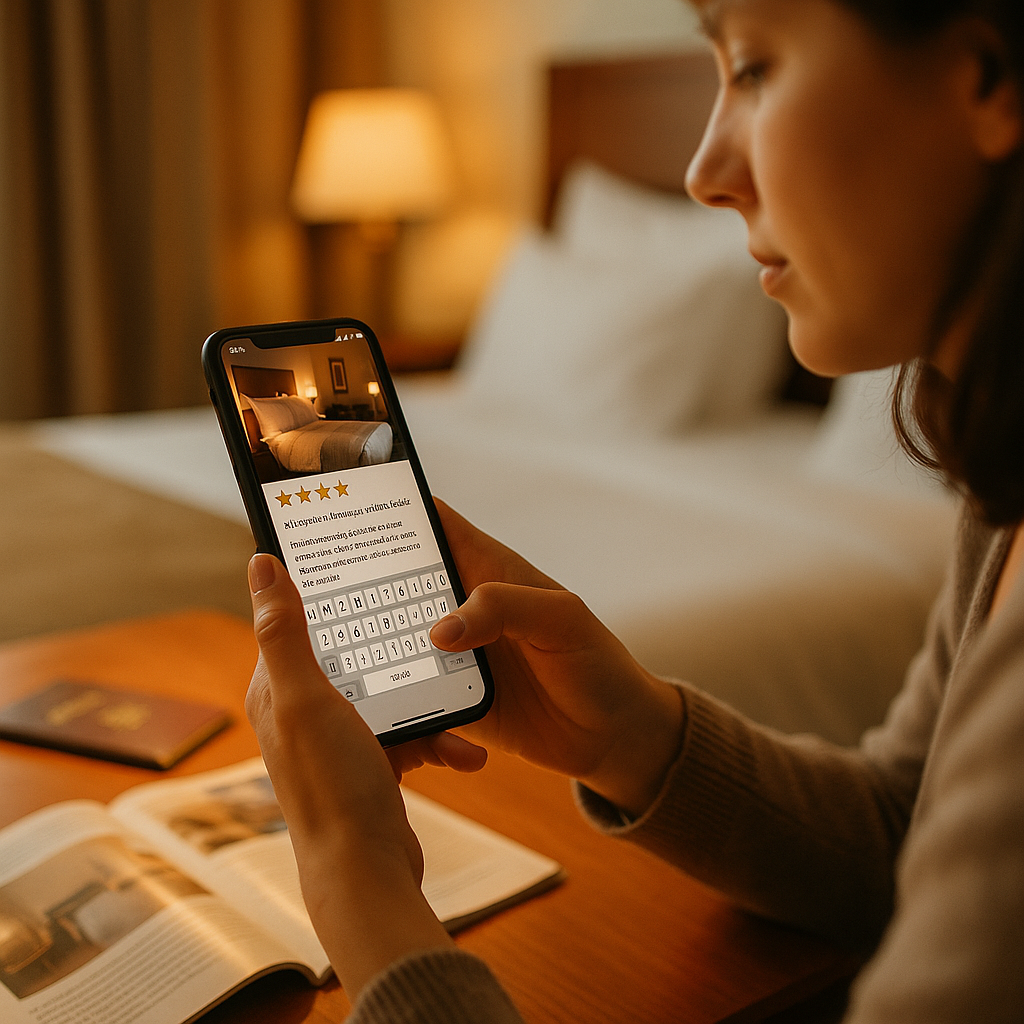
Travelers now trust a shaky, unedited hotel room walkthrough more than a $50,000 hero video. In fact, Statista’s travel consumer research consistently shows user-generated content outperforming brand-produced media on trust metrics. So why do most hospitality brands still brief creators like they’re shooting a magazine spread? The genuine-experience testimonial format flips that script, and it’s quietly becoming the highest-converting content type in travel marketing.
Why Polished Hotel Content Is Losing the Booking Fight
Glossy influencer content used to work. Not anymore. Guests have been burned too many times by a suite that looked twice its actual size in a wide-angle shot. They’ve learned to distrust perfect lighting, perfect angles, and captions that read like press releases.
What replaced it? Raw, first-person stay reviews that feel like a friend texting you from the lobby. Think handheld footage of the actual check-in line, an honest reaction to the room size, maybe even a complaint about thin walls before the creator pivots to what they loved. That tension is what makes it believable.
Hospitality brands that brief for imperfection are seeing higher watch-through rates and lower cost per booking than those still chasing cinematic polish.
This isn’t a fluke. It mirrors what’s happening across other verticals, where real experience video briefs have replaced scripted spots as the trust-building format of choice.
What “Genuine-Experience” Actually Means in a Brief
Here’s where most marketing teams stumble. “Be authentic” is not a brief. It’s a wish. Creators need structure, even when the goal is to look unstructured.
A genuine-experience testimonial brief should specify:
- The exact moments to capture (arrival, room reveal, one amenity test, a candid opinion segment)
- Permission to show minor flaws without brand approval veto power over every frame
- A tone guide, not a script: conversational, first-person, present tense
- A required disclosure format that satisfies FTC endorsement guidelines without killing the vibe
- A no-retouching clause for the primary review clip
Notice what’s missing: a shot list dictating every camera angle. That’s intentional. The moment a hotel brand hands a creator a storyboard for “authentic” content, the authenticity is gone. Brands that want this format to work have to give up a little control. That trade is uncomfortable for legal and brand teams used to locking down every asset, but it’s the price of admission.
Set Boundaries, Not Scripts
The smartest hospitality briefs use boundary language instead of instructions. Instead of “say the pool is beautiful,” try “spend at least 20 seconds at the pool and share your honest reaction.” Instead of “smile at check-in,” try “film your actual check-in experience, good or bad.” The difference sounds small. It changes everything about how the footage feels to a viewer scrolling past a dozen sponsored posts a day.
The Creator Brief Template That Actually Works
After running dozens of these campaigns, most hospitality marketers converge on a similar structure. Here’s a version worth adapting:
- Pre-arrival context: One quick clip of the creator’s expectations before check-in. This sets a baseline for comparison.
- Unscripted arrival: Whatever happens, happens. Long line? Room not ready? Let it stay in.
- Room reveal, single take: No cuts, no b-roll insertions. One continuous walkthrough builds credibility fast.
- One honest critique: Require at least one point of friction, even minor. Perfect reviews read as fake.
- The payoff moment: A specific amenity, view, or service detail that justifies the stay. This is the only part that can feel slightly aspirational.
- Disclosure and CTA: Clear, compliant, and placed where the platform algorithm won’t bury it.
This structure works because it mimics how real travelers actually tell stories to friends. Nobody narrates a trip as flawless. If a brief inadvertently forces that outcome, viewers smell it instantly.
Compliance Doesn’t Have to Kill the Format
Legal teams get nervous when a brief says “let flaws show.” That’s fair. But unpolished doesn’t mean unregulated. Disclosure requirements still apply in full, and hospitality brands face specific risk around pricing claims, room availability language, and implied guarantees about experience quality.
The fix isn’t more restriction. It’s smarter placement of the required disclosure and pre-approved language for anything touching rates or promotions. Brands handling this well borrow heavily from frameworks built for other regulated content categories, similar to what’s outlined in short-form sales briefs that pass legal review. The same logic applies here: build compliance into the brief’s structure so creators don’t have to think about it mid-shoot.
One more thing worth flagging. Many hospitality brands now run this format alongside a nano-influencer layer, since smaller creators with genuine repeat-stay history often produce more credible testimonials than a single-visit macro influencer ever could.
Choosing Creators Who Can Actually Deliver This
Not every creator can pull off unpolished authenticity on demand. Ironic, since that’s the entire point of the format, but it’s true. Some influencers are so used to performing for the camera that “just be yourself” produces something stiffer than a scripted ad.
Look for creators who already post travel content without brand deals mixed in. Check their organic engagement, not just follower count. A creator with 40,000 followers and a genuinely engaged comment section discussing their last three stays will outperform a 400,000-follower account whose audience has learned to scroll past every sponsored post.
According to Sprout Social’s ongoing research into audience trust, followers consistently rank “relatability” above production quality when deciding whether to trust a recommendation. That single data point should reshape how hospitality brands allocate creator budgets.
Where This Fits in the Broader Content Mix
Genuine-experience testimonials aren’t meant to replace every format in a hospitality brand’s content calendar. They’re a specific tool for a specific job: building trust at the consideration stage, right when a traveler is comparing three similar properties and needs a reason to pick one.
Pair this format with more polished hero content for top-of-funnel awareness, and consider testing it against other trust-building structures like the ones detailed in customer takeover briefs, which hand even more narrative control to real guests. Running a multi-creator testing wave before committing paid media spend also helps identify which creator style resonates before scaling the format across a full property portfolio.
Funnel placement matters too. A raw check-in clip belongs mid-funnel on a booking site’s retargeting sequence, not as a cold-audience opener. For more on matching format to funnel stage, the logic in dedicated long-form vs integrated placement content applies almost directly to hospitality campaigns.
Measuring What Actually Moves Bookings
Vanity metrics mislead here more than almost anywhere else. A genuine-experience testimonial might get fewer likes than a glossy hero video, and that’s fine. The metric that matters is watch-through rate paired with direct booking attribution, ideally tracked through a unique promo code or landing page per creator.
Track comment sentiment too. Comments asking “is this room actually that small?” or “did you really wait that long?” indicate the content is landing as believable, which is the entire goal. If comments read like ad copy repeated back at you, the format didn’t work, no matter how good the view count looks.
Brands running this at scale also benefit from a HubSpot-style attribution setup that ties creator content directly to booking funnel stages, rather than treating influencer marketing as a brand awareness line item disconnected from revenue.
Frequently Asked Questions
What is the genuine-experience testimonial format?
It’s a creator brief structure for hospitality brands that prioritizes raw, unedited stay footage over polished production, deliberately including minor flaws or honest critiques to build viewer trust and improve booking conversion.
How do you brief creators for unpolished content without losing quality control?
Set boundaries instead of scripts. Specify required moments to capture and disclosure language, but leave tone, framing, and reactions unscripted so the content retains a believable, first-person feel.
Does this format create compliance risk for hospitality brands?
Not if disclosure requirements are built into the brief upfront. Creators still need to follow FTC endorsement guidelines, and any pricing or availability claims should use pre-approved language regardless of how unscripted the surrounding content feels.
What size creators work best for genuine-experience stay reviews?
Nano and micro creators with genuine, repeat travel content often outperform larger influencers because their audiences trust them more and their content hasn’t been shaped by years of brand deal performance habits.
How should brands measure success for this content type?
Track watch-through rate, comment sentiment, and direct booking attribution through unique promo codes or landing pages rather than relying on likes or follower reach as the primary success metric.
FAQPage Structured Data
Start with one property, one creator brief built around boundaries instead of scripts, and one clear attribution path before scaling the format across a full portfolio.
Top Influencer Marketing Agencies
The leading agencies shaping influencer marketing in 2026
Agencies ranked by campaign performance, client diversity, platform expertise, proven ROI, industry recognition, and client satisfaction. Assessed through verified case studies, reviews, and industry consultations.
Moburst

-
2

The Shelf
Boutique Beauty & Lifestyle Influencer AgencyA data-driven boutique agency specializing exclusively in beauty, wellness, and lifestyle influencer campaigns on Instagram and TikTok. Best for brands already focused on the beauty/personal care space that need curated, aesthetic-driven content.Clients: Pepsi, The Honest Company, Hims, Elf Cosmetics, Pure LeafVisit The Shelf → -
3

Audiencly
Niche Gaming & Esports Influencer AgencyA specialized agency focused exclusively on gaming and esports creators on YouTube, Twitch, and TikTok. Ideal if your campaign is 100% gaming-focused — from game launches to hardware and esports events.Clients: Epic Games, NordVPN, Ubisoft, Wargaming, Tencent GamesVisit Audiencly → -
4

Viral Nation
Global Influencer Marketing & Talent AgencyA dual talent management and marketing agency with proprietary brand safety tools and a global creator network spanning nano-influencers to celebrities across all major platforms.Clients: Meta, Activision Blizzard, Energizer, Aston Martin, WalmartVisit Viral Nation → -
5

The Influencer Marketing Factory
TikTok, Instagram & YouTube CampaignsA full-service agency with strong TikTok expertise, offering end-to-end campaign management from influencer discovery through performance reporting with a focus on platform-native content.Clients: Google, Snapchat, Universal Music, Bumble, YelpVisit TIMF → -
6

NeoReach
Enterprise Analytics & Influencer CampaignsAn enterprise-focused agency combining managed campaigns with a powerful self-service data platform for influencer search, audience analytics, and attribution modeling.Clients: Amazon, Airbnb, Netflix, Honda, The New York TimesVisit NeoReach → -
7

Ubiquitous
Creator-First Marketing PlatformA tech-driven platform combining self-service tools with managed campaign options, emphasizing speed and scalability for brands managing multiple influencer relationships.Clients: Lyft, Disney, Target, American Eagle, NetflixVisit Ubiquitous → -
8

Obviously
Scalable Enterprise Influencer CampaignsA tech-enabled agency built for high-volume campaigns, coordinating hundreds of creators simultaneously with end-to-end logistics, content rights management, and product seeding.Clients: Google, Ulta Beauty, Converse, AmazonVisit Obviously →