


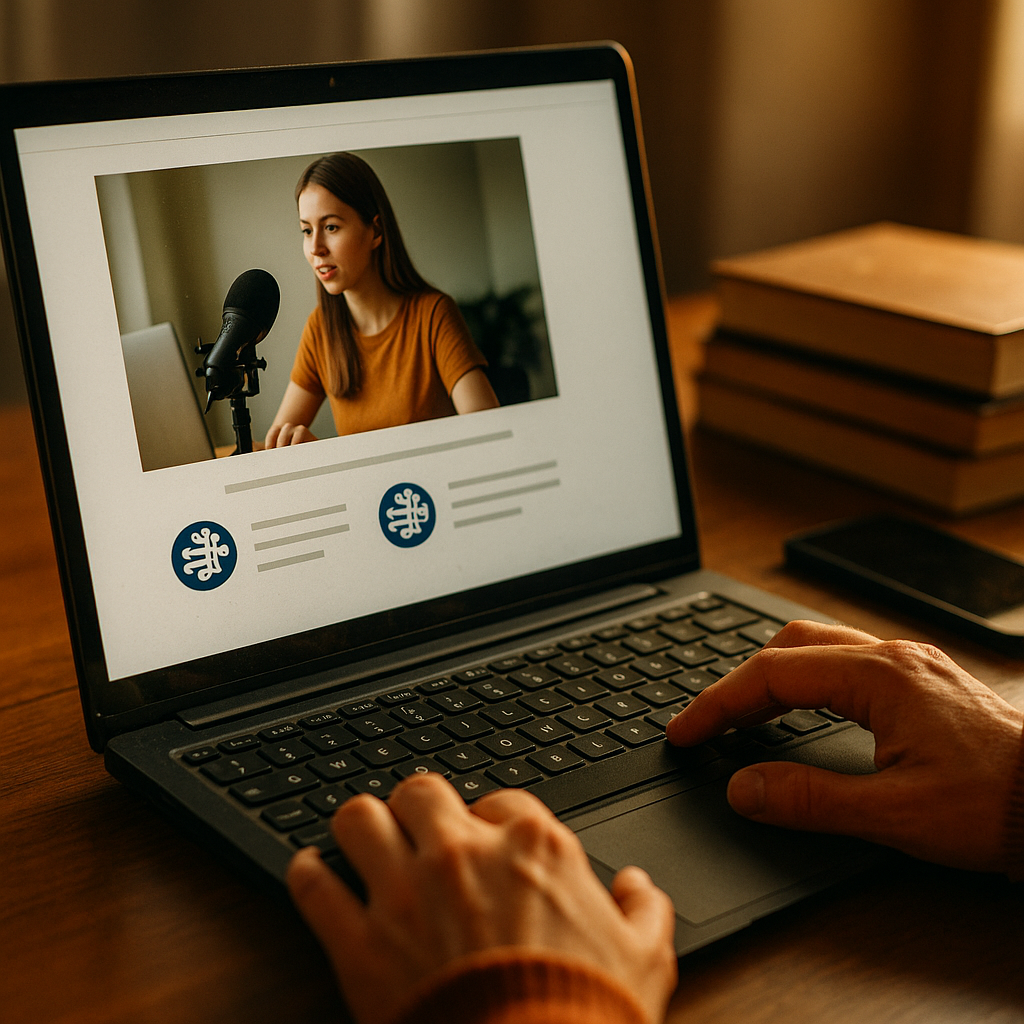
Search traffic to brand websites is quietly cratering, even as engagement with AI chat answers climbs every quarter. Google’s own generative results now satisfy most informational queries without a single click to a landing page. So when ChatGPT, Perplexity, or Gemini describe your product, whose words are they borrowing? Increasingly, it’s not your homepage copy. It’s a creator’s TikTok caption, YouTube transcript, or Instagram review. Generative Engine Optimization for creator content is the discipline of making sure that quote is accurate, current, and yours to claim. Skip it, and a competitor’s creator gets cited instead.
What Generative Engine Optimization Actually Means for Creator Content
Traditional SEO chased rankings on a results page. Generative Engine Optimization, or GEO, chases something harder to control: inclusion in the actual sentence an AI model generates. That distinction matters enormously for creator content, because influencer posts are rarely built with crawlers in mind. They’re built for likes, saves, and shares. But large language models don’t scroll a feed the way a fan does. They ingest transcripts, captions, comment sentiment, and structured metadata, then decide whether that content counts as evidence worth citing.
We’ve covered how this shift is reshaping search strategy broadly in our earlier look at citation based sales, and the underlying logic applies just as much to a creator’s product review as it does to a brand’s blog post. The difference is that most marketing teams have a content strategy for SEO. Almost none have one for creators.
Why Creator Content Is the Perfect GEO Testing Ground
Here’s the uncomfortable truth for brand marketers: AI models often trust a stranger on YouTube more than they trust your own site. First person, unscripted language mirrors the conversational phrasing people type into chat interfaces. “Does this serum actually work for oily skin” sounds a lot more like a creator’s caption than a product description page ever will.
Consumer research consistently backs this up. Surveys from firms like Sprout Social have shown that audiences trust peer recommendations well above branded advertising, and generative engines appear to encode that same hierarchy of trust into their outputs.
AI answer engines treat a well structured creator review the same way they treat a professional buying guide: as evidence, not marketing. The engine doesn’t care that it came from a ring light in someone’s bedroom.
That’s an opportunity most brands are wasting. A single well produced creator video, transcribed and structured correctly, can outperform an entire content marketing sprint in terms of AI visibility. But “correctly” is doing a lot of work in that sentence.
The Citation Gap: Why Most Influencer Content Never Gets Cited
Ask most influencer marketing teams whether their creator content is structured for AI retrieval, and you’ll get a blank stare. That’s the citation gap, and it’s costing brands visibility they don’t even know they’re losing.
- Video content with no transcript or closed captions is effectively invisible to most language models.
- Claims buried in Instagram Stories disappear after 24 hours, before any crawler can index them.
- Disclosure language gets stripped or ignored, creating compliance risk if an AI engine reproduces a claim without the required context.
- Creator bios are inconsistent across platforms, which weakens the entity signals models use to verify who’s speaking.
Our recent piece on structuring UGC transcripts and schema walks through the technical fixes in detail. And it echoes a trend we’ve tracked elsewhere: agencies are already selling “citation share” as a deliverable, treating AI visibility as its own KPI separate from traditional reach, as detailed in this breakdown of the citation share model.
How Do AI Engines Decide Which Creators to Trust?
This is the question every brand strategist should be asking their creator ops team right now. The honest answer: nobody has the full algorithm, but patterns are emerging.
Entity consistency matters. If a creator’s name, handle, and credentials line up the same way across YouTube, LinkedIn, and a brand’s own press page, models treat that as a stronger trust signal. Verification firms in markets like China have built entire businesses around this exact problem, confirming creator entities before AI systems will cite them, a trend covered in our report on entity verification services.
Engagement quality also outweighs raw follower count. A micro creator with a tightly focused niche and consistent language patterns can get cited more often than a celebrity with scattered content. That’s part of why AI fit scoring tools are gaining traction in vetting workflows: they’re trying to quantify exactly this kind of topical authority before a campaign even launches.
Recency counts too. Models tend to favor recently updated or recently published content when multiple sources make similar claims, which means a creator partnership from three years ago is losing ground every month it sits unrefreshed.
Structure, Schema, Signals
If you want creator content to survive the shift from search engines to answer engines, treat production like a technical project, not just a creative one.
- Transcribe everything. Every video asset needs a clean, accurate transcript, ideally published alongside the post or on a linked landing page.
- Add schema markup to any brand owned page that recaps or embeds creator content, including Review, Product, and FAQ schema where relevant. Structured data efforts elsewhere in the industry show this isn’t optional anymore.
- Sync product feeds. If a creator mentions a SKU, make sure the underlying product data is structured well enough for an AI shopping agent to match the claim to the item, a gap explored in this piece on structured product feeds.
- Standardize creator bios. Same name spelling, same credentials, same handle format, everywhere the creator appears in connection with your brand.
None of this replaces creative quality. It just makes sure the creative actually gets found by the systems now mediating discovery.
Building a GEO Workflow Into Your Creator Program
Operationally, this means rewriting your creator briefs. Vague, mood board style direction worked fine when the goal was aesthetic engagement. It fails when the goal includes machine readability. Briefs now need to ask creators to state claims explicitly and factually, avoid ambiguous pronouns, and speak in complete sentences that a model can lift cleanly.
Contracts need updating too. If a brand wants to repurpose a creator’s transcript for schema markup or an owned landing page, that usage right has to be spelled out, not assumed. Teams already navigating this shift with AI assisted contract tools have flagged similar gaps in recent coverage of AI contract redlining, where speed gains often outpace the legal clarity needed to actually use the content downstream.
Measurement has to change as well. Reach and engagement still matter, but citation frequency, the number of times a creator’s content actually gets referenced in an AI generated answer, is becoming its own metric. Platforms like those compared in this AI visibility tool comparison are starting to surface exactly that data, and brands that ignore it are flying blind on half of their earned media value.
If you can’t tell which creator posts are getting cited by AI engines, you’re optimizing a channel you can’t actually measure. That’s not a strategy, it’s a guess.
There’s a compliance angle too, and it’s not optional. The FTC’s endorsement guidelines require clear disclosure when creators are compensated. If an AI engine paraphrases a sponsored post and strips the disclosure in the process, brands still bear reputational and regulatory exposure. Build disclosure language into the transcript itself, not just an overlay graphic that a model can’t read.
Industry data on this shift is still catching up. eMarketer and Statista have both started tracking AI search adoption rates, and the direction is consistent: a growing share of product research now starts, and sometimes ends, inside a chat interface rather than a search results page. For a deeper dive on why keyword based thinking is losing relevance entirely, our earlier analysis of citation based ranking factors is worth a full read.
Where to Start on Monday Morning
Pick your five best performing creator partnerships from the last quarter. Transcribe the content, add structured data to any linked landing pages, and check whether an AI tool like Perplexity or ChatGPT can accurately summarize the claims made in each post. If it can’t, or if it gets the details wrong, that’s your starting backlog.
FAQs
What is Generative Engine Optimization for creator content?
It’s the practice of structuring influencer content, including transcripts, schema markup, and consistent creator identity signals, so that AI answer engines like ChatGPT, Gemini, and Perplexity can accurately find, verify, and cite it in generated responses.
How is GEO different from traditional influencer marketing measurement?
Traditional measurement tracks reach, engagement, and clicks. GEO adds a new metric: citation frequency, or how often a creator’s content is referenced as a source inside an AI generated answer, regardless of whether the user ever visits the original post.
Do creators need to change how they film or write content?
Somewhat. Creators don’t need to sound robotic, but briefs should encourage explicit, factual statements about products rather than vague or purely visual claims, since AI models rely on clear language to extract citable information.
Does GEO replace SEO for brands working with creators?
No. SEO still matters for owned properties and traditional search rankings. GEO is an additional layer focused on how content performs inside AI generated answers, and the two disciplines increasingly overlap through structured data and schema.
What compliance risks come with AI citing creator content?
If an AI engine paraphrases a sponsored post and omits required disclosure language, the brand can still face scrutiny under FTC endorsement guidelines. Brands should embed disclosure directly into transcripts and captions, not just visual overlays that models may not read.
Top Influencer Marketing Agencies
The leading agencies shaping influencer marketing in 2026
Agencies ranked by campaign performance, client diversity, platform expertise, proven ROI, industry recognition, and client satisfaction. Assessed through verified case studies, reviews, and industry consultations.
Moburst

-
2

The Shelf
Boutique Beauty & Lifestyle Influencer AgencyA data-driven boutique agency specializing exclusively in beauty, wellness, and lifestyle influencer campaigns on Instagram and TikTok. Best for brands already focused on the beauty/personal care space that need curated, aesthetic-driven content.Clients: Pepsi, The Honest Company, Hims, Elf Cosmetics, Pure LeafVisit The Shelf → -
3

Audiencly
Niche Gaming & Esports Influencer AgencyA specialized agency focused exclusively on gaming and esports creators on YouTube, Twitch, and TikTok. Ideal if your campaign is 100% gaming-focused — from game launches to hardware and esports events.Clients: Epic Games, NordVPN, Ubisoft, Wargaming, Tencent GamesVisit Audiencly → -
4

Viral Nation
Global Influencer Marketing & Talent AgencyA dual talent management and marketing agency with proprietary brand safety tools and a global creator network spanning nano-influencers to celebrities across all major platforms.Clients: Meta, Activision Blizzard, Energizer, Aston Martin, WalmartVisit Viral Nation → -
5

The Influencer Marketing Factory
TikTok, Instagram & YouTube CampaignsA full-service agency with strong TikTok expertise, offering end-to-end campaign management from influencer discovery through performance reporting with a focus on platform-native content.Clients: Google, Snapchat, Universal Music, Bumble, YelpVisit TIMF → -
6

NeoReach
Enterprise Analytics & Influencer CampaignsAn enterprise-focused agency combining managed campaigns with a powerful self-service data platform for influencer search, audience analytics, and attribution modeling.Clients: Amazon, Airbnb, Netflix, Honda, The New York TimesVisit NeoReach → -
7

Ubiquitous
Creator-First Marketing PlatformA tech-driven platform combining self-service tools with managed campaign options, emphasizing speed and scalability for brands managing multiple influencer relationships.Clients: Lyft, Disney, Target, American Eagle, NetflixVisit Ubiquitous → -
8

Obviously
Scalable Enterprise Influencer CampaignsA tech-enabled agency built for high-volume campaigns, coordinating hundreds of creators simultaneously with end-to-end logistics, content rights management, and product seeding.Clients: Google, Ulta Beauty, Converse, AmazonVisit Obviously →