


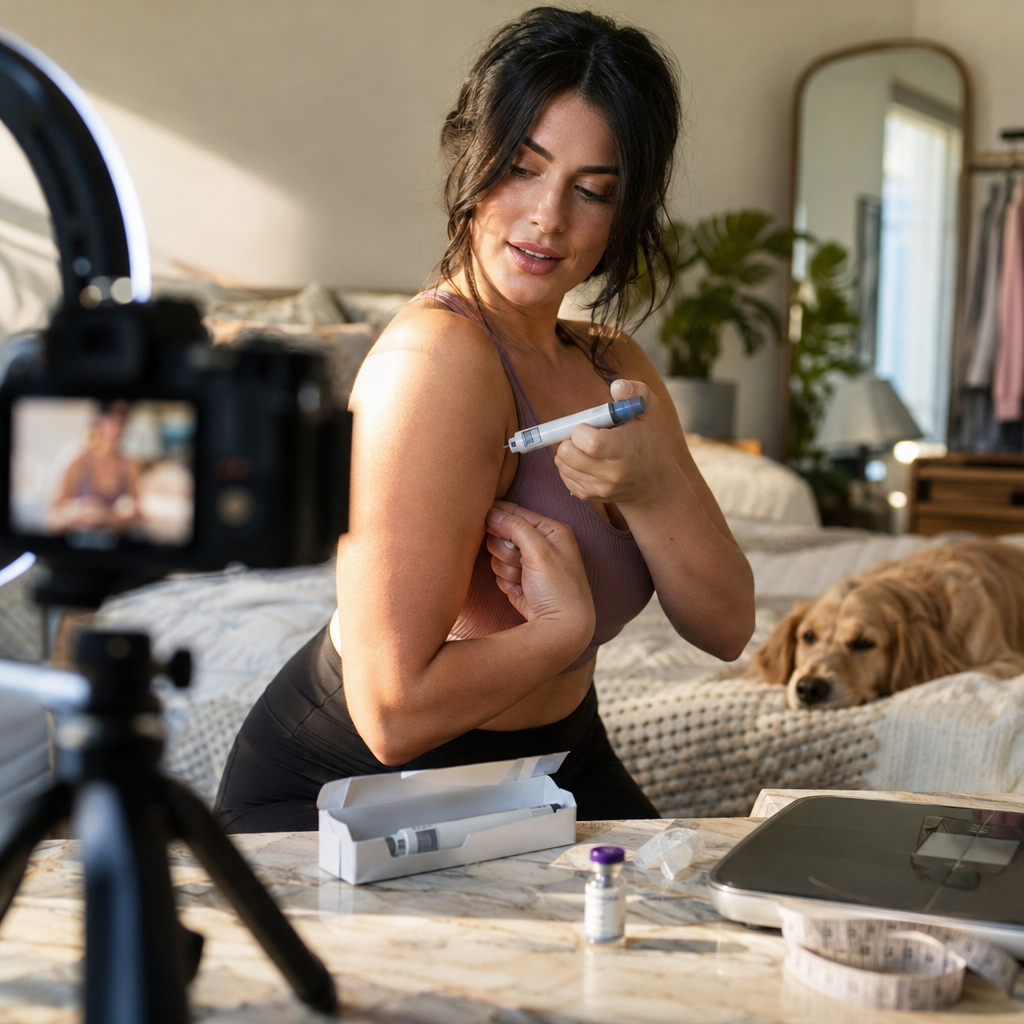
Nearly 1 in 8 American adults has tried a GLP-1 drug, according to survey data cited by health researchers, and TikTok has turned Ozempic, Wegovy, and Zepbound into content categories unto themselves. Here’s the uncomfortable part: most of the creators driving that conversation aren’t doctors, aren’t disclosed partners, and aren’t making claims anyone vetted. If your brand touches telehealth, supplements, or weight management in any way, GLP-1 influencer claims are quietly becoming one of the riskiest categories in your creator program.
Why GLP-1 Content Is a Compliance Minefield
Weight loss drugs sit at the intersection of two regulators that rarely talk to each other in practice: the FDA, which polices drug marketing and off-label promotion, and the FTC, which polices deceptive advertising and influencer disclosure. Most brand compliance teams built their creator frameworks around FTC disclosure rules, things like #ad tags and material connection statements. That framework was never designed for prescription drug claims.
Off-label promotion means marketing a drug for uses, dosages, or populations the FDA hasn’t approved. Semaglutide and tirzepatide are approved for specific indications tied to diabetes or chronic weight management under medical supervision. A creator saying “this melted 20 pounds off me in a month, no diet needed” is making an efficacy claim that likely exceeds the approved label, and if a brand paid for that content or supplied the product, the brand inherits exposure even though a creator typed the words.
The FDA doesn’t need a creator to be a licensed marketer to hold a brand accountable. If the content was sponsored, gifted, or scripted with brand input, the off-label claim becomes the brand’s problem, not just the creator’s.
Where the Risk Gap Actually Lives
Three places, consistently:
- Telehealth and compounding pharmacy partners who recruit creators to talk about “medical weight loss” without specifying drug, dosage, or approved use.
- Affiliate and UGC networks where creators are paid on conversion, incentivizing bigger, bolder efficacy claims regardless of accuracy.
- Supplement and wellness brands that ride GLP-1 search traffic by implying their product mimics or supports drug-like results without any clinical backing.
None of these require the brand to say the off-label claim directly. That’s the gap. Brands assume liability only attaches to what they script, but regulators look at what the brand enabled, funded, or failed to correct.
What Counts as a Claim Versus a Testimonial?
This is the question legal teams get wrong most often. A creator saying “I felt less hungry on this” is arguably a personal testimonial. A creator saying “this drug cures insulin resistance” or “you’ll lose 30 pounds in six weeks” is a medical and efficacy claim, and those require substantiation the creator almost never has. The FDA has historically drawn this line based on specificity and generalizability: vague personal experience gets more latitude than quantified, universal promises.
Brands that work in adjacent regulated categories already know this dance. The skincare influencer space has dealt with a near-identical problem for years, where creators make drug-like claims about retinoids and prescription-strength actives without medical qualification. Our prior reporting on skinfluencer drug claims found that brands who pre-approved scripts still got burned by creator ad-libs during filming, which is exactly the failure mode showing up now in GLP-1 content.
The Contract Clause Most Brands Are Missing
Standard influencer agreements cover usage rights, disclosure, and content ownership. Few include a medical claims substantiation clause that requires creators to submit specific language for legal review before a GLP-1 or weight loss post goes live. Without that clause, brands are relying on creator goodwill and general FTC boilerplate to prevent a problem that FTC boilerplate was never built to catch.
This is also where disclosure contract language intersects with the claims problem. A compliant #ad tag doesn’t neutralize an off-label claim. Brands sometimes treat disclosure as the whole compliance job, when it’s really just one layer. For a deeper look at how to structure these clauses so they actually hold up, see our breakdown of FTC disclosure contract clauses.
Cross-Border Rules Make This Harder
If your creator roster spans the US and UK, you’re dealing with two different enforcement philosophies. The FTC focuses on deception and material connections. The UK’s Advertising Standards Authority and MHRA take a stricter line on medicinal claims generally, including a near-blanket restriction on advertising prescription-only medicines to the public at all. A campaign that clears US review could trigger an ASA complaint in the UK within days. We’ve mapped the broader version of this problem in UK ASA versus US FTC rules, and the GLP-1 category is arguably the sharpest edge case of that whole framework, because prescription drug advertising rules are far less forgiving than general product disclosure rules.
Building the Vetting Layer Brands Actually Need
Closing this gap isn’t about banning GLP-1 adjacent creator content. It’s about adding a specific review layer before content goes live, and holding agencies and networks accountable for enforcing it. A workable framework looks like this:
- Pre-approve claims language, not just the general campaign brief. Require creators to submit exact phrasing for any statement about efficacy, speed of results, or medical mechanism.
- Separate testimonial from promotion. Personal experience language (“my experience was”) carries different risk than universal claims (“this works for everyone”).
- Audit affiliate and UGC partners on the same cadence as direct creator contracts. Off-label claims from a third-tier affiliate still trace back to the brand that supplied the product or commission structure.
- Build a kill switch into contracts allowing immediate takedown if a creator ad-libs a claim during livestream or unscripted content, which is increasingly common on TikTok Live and Instagram Reels.
Some brands are outsourcing this entirely to specialists who already run creator vetting at scale. Moburst, a global full-service digital marketing agency that has worked with over 900 clients including Samsung, Reddit, and Calm, runs its influencer marketing agency practice with built-in creator recruitment and vetting steps, which is precisely the layer missing from most ad hoc GLP-1 campaigns that rely on affiliate networks with minimal oversight.
Agencies and Networks Share the Exposure
Brands sometimes assume that outsourcing creator sourcing to an agency transfers the compliance risk along with the workload. It doesn’t, at least not automatically. Regulators and plaintiffs’ attorneys increasingly pursue vicarious liability theories against brands even when an agency selected and briefed the creator. If your agency agreement doesn’t explicitly assign claims review responsibility and indemnification, you’re carrying risk you think you’ve outsourced. Our analysis of creator agency vicarious liability walks through how to structure that handoff so it actually protects the brand rather than just adding a layer of ambiguity.
Outsourcing creator sourcing doesn’t outsource liability. Without an explicit claims-review clause in the agency contract, brands still own the off-label exposure.
What About AI-Generated or AI-Summarized Content?
Add another wrinkle: AI tools are now summarizing creator GLP-1 content into short-form clips, carousels, and even chatbot answers, often stripping original disclosure language in the process. If an AI tool repackages a creator’s off-label claim into a branded asset without the original caveats, the brand’s exposure doesn’t shrink, it potentially grows, because now there’s no disclosure at all. This mirrors a problem we’ve covered in AI-summarized sponsored content, and GLP-1 marketing is a category where that risk compounds quickly given how aggressively health content gets repurposed across platforms.
Measuring the Real Cost of Getting This Wrong
FDA warning letters are public. FTC consent orders are public. A single mishandled GLP-1 campaign can generate both, plus the reputational cost of consumer trust erosion in a category where trust is already fragile after years of shortage headlines and compounding pharmacy scandals. Data from Statista shows weight management and wellness remain among the fastest-growing consumer spending categories, which means more brands will enter this space, and more will get the compliance architecture wrong before they get it right. The brands that invest in claims review now are the ones who’ll still have creator partnerships running cleanly when the next FDA enforcement sweep hits the headlines.
Industry trackers like eMarketer and Sprout Social have both flagged health and wellness creator content as a top compliance watch area. The FDA itself has signaled increased scrutiny of social media drug promotion, and the FTC continues to treat material connection failures as a standalone enforcement priority regardless of the product category.
Closing the Gap Starts With One Clause
You don’t need to overhaul your entire creator program to fix this. Add a medical claims substantiation clause to every GLP-1 adjacent contract, require pre-approved language for efficacy statements, and extend the same review to affiliate and agency-sourced creators. That single change closes most of the risk gap brands are currently carrying without realizing it.
FAQs
What is off-label promotion in the context of GLP-1 influencer marketing?
Off-label promotion happens when marketing content, including creator content, promotes a drug for uses, dosages, or outcomes the FDA hasn’t approved. For GLP-1 drugs, this often shows up as unqualified weight loss speed claims or suggestions the drug works without medical supervision.
Who is liable when a creator makes an off-label claim, the brand or the creator?
Both can face exposure, but brands typically carry the larger practical risk because they funded, supplied product for, or approved the content. Regulators generally hold brands accountable for claims made in sponsored or gifted content regardless of who typed the words.
Does disclosing a paid partnership protect a brand from off-label claim liability?
No. Disclosure (like #ad tags) addresses FTC material connection rules, not FDA off-label promotion rules. A properly disclosed post can still contain an unapproved medical claim, and disclosure does nothing to neutralize that separate risk.
How should brands vet affiliate and UGC creators making GLP-1 claims?
Apply the same claims review process used for directly contracted creators. Require pre-approved language for any efficacy or medical statement, and audit affiliate content on a recurring schedule rather than a one-time approval.
Are weight loss supplement brands at risk even if they don’t sell prescription drugs?
Yes. Brands that imply their product replicates or supports GLP-1 drug results without clinical substantiation can face FTC deceptive advertising claims even without touching FDA prescription drug rules directly.
Top Influencer Marketing Agencies
The leading agencies shaping influencer marketing in 2026
Agencies ranked by campaign performance, client diversity, platform expertise, proven ROI, industry recognition, and client satisfaction. Assessed through verified case studies, reviews, and industry consultations.
Moburst

-
2

The Shelf
Boutique Beauty & Lifestyle Influencer AgencyA data-driven boutique agency specializing exclusively in beauty, wellness, and lifestyle influencer campaigns on Instagram and TikTok. Best for brands already focused on the beauty/personal care space that need curated, aesthetic-driven content.Clients: Pepsi, The Honest Company, Hims, Elf Cosmetics, Pure LeafVisit The Shelf → -
3

Audiencly
Niche Gaming & Esports Influencer AgencyA specialized agency focused exclusively on gaming and esports creators on YouTube, Twitch, and TikTok. Ideal if your campaign is 100% gaming-focused — from game launches to hardware and esports events.Clients: Epic Games, NordVPN, Ubisoft, Wargaming, Tencent GamesVisit Audiencly → -
4

Viral Nation
Global Influencer Marketing & Talent AgencyA dual talent management and marketing agency with proprietary brand safety tools and a global creator network spanning nano-influencers to celebrities across all major platforms.Clients: Meta, Activision Blizzard, Energizer, Aston Martin, WalmartVisit Viral Nation → -
5

The Influencer Marketing Factory
TikTok, Instagram & YouTube CampaignsA full-service agency with strong TikTok expertise, offering end-to-end campaign management from influencer discovery through performance reporting with a focus on platform-native content.Clients: Google, Snapchat, Universal Music, Bumble, YelpVisit TIMF → -
6

NeoReach
Enterprise Analytics & Influencer CampaignsAn enterprise-focused agency combining managed campaigns with a powerful self-service data platform for influencer search, audience analytics, and attribution modeling.Clients: Amazon, Airbnb, Netflix, Honda, The New York TimesVisit NeoReach → -
7

Ubiquitous
Creator-First Marketing PlatformA tech-driven platform combining self-service tools with managed campaign options, emphasizing speed and scalability for brands managing multiple influencer relationships.Clients: Lyft, Disney, Target, American Eagle, NetflixVisit Ubiquitous → -
8

Obviously
Scalable Enterprise Influencer CampaignsA tech-enabled agency built for high-volume campaigns, coordinating hundreds of creators simultaneously with end-to-end logistics, content rights management, and product seeding.Clients: Google, Ulta Beauty, Converse, AmazonVisit Obviously →