


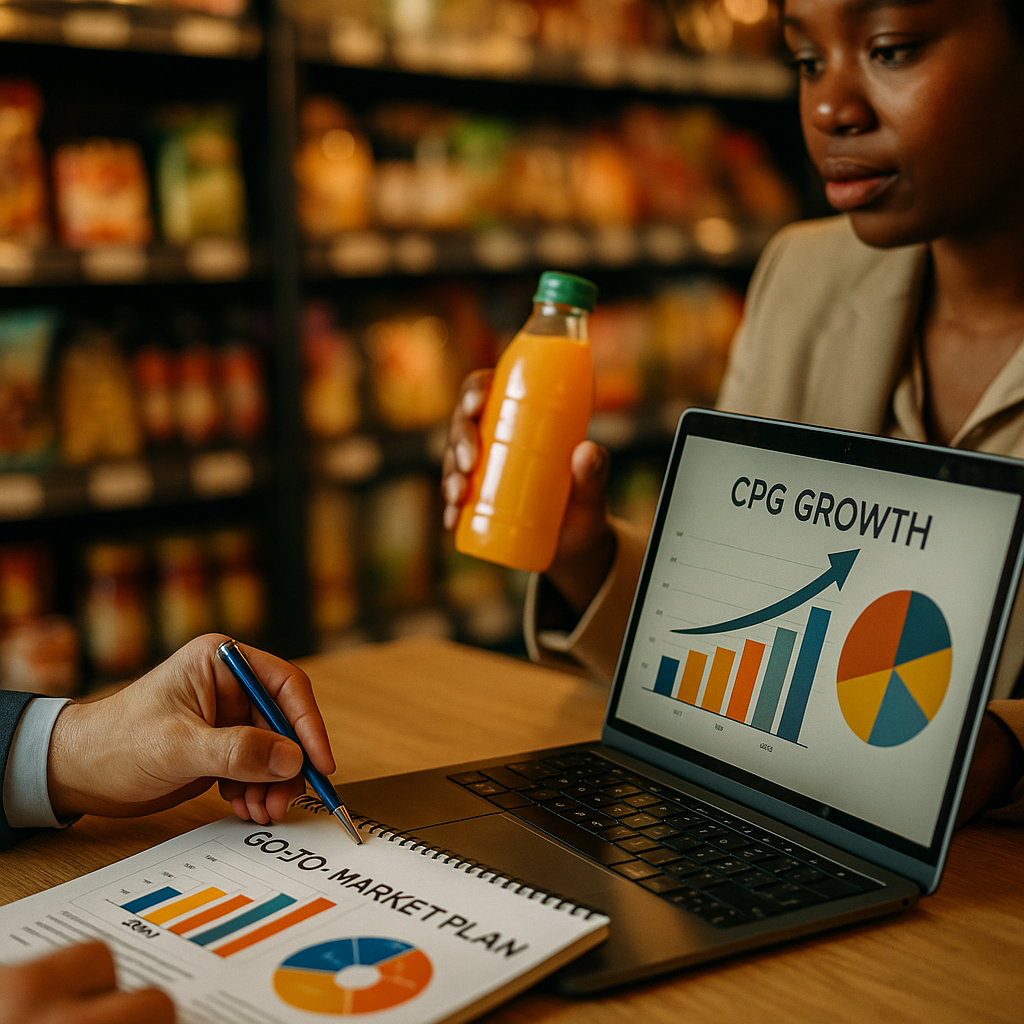
Planning a successful market entry is essential for any new product. Learning how to create a go-to-market plan for a consumer packaged good (CPG) can determine whether your offering becomes a household staple or fades into obscurity. Keep reading for a step-by-step blueprint that will position your CPG for sustainable growth in today’s dynamic consumer landscape.
Identifying Your Target Market and Consumer Insights
Understanding your audience is the foundation of any consumer packaged good (CPG) go-to-market strategy. Start by building detailed buyer personas using demographic, psychographic, and behavioral data. Analyze current market trends, category performance, and competitor products to uncover underserved segments or white space opportunities. According to NielsenIQ’s 2025 CPG Landscape Report, brands that leverage consumer insights early in the process achieve 13% faster market penetration on average.
Steps to define your target market:
- Conduct qualitative interviews and surveys to capture consumers’ pain points.
- Utilize syndicated data sources to analyze shopper demographics and preferences.
- Monitor social media conversations for emerging trends and sentiment.
- Evaluate purchase drivers, triggers, and potential barriers to adoption.
Pairing robust data analytics with direct consumer feedback will allow you to develop products that address genuine needs with clear, differentiated value.
Crafting Your Unique Value Proposition for Product Positioning
A compelling value proposition is crucial for breaking through in the crowded CPG market. Your product positioning should clearly articulate what sets your brand apart—and why consumers should choose it over alternatives. Crisply define whether you’re solving a problem, delivering an upgraded experience, or introducing innovation.
Key elements of product positioning include:
- Your product’s primary benefit or unique feature
- Target audience and their specific needs
- Supporting proof points (e.g., certifications, sustainability, taste tests)
- Emotional and functional appeals
Test your positioning through focus groups, digital ads, and in-store intercepts. Consider modern values—like transparency, sustainability, and convenience—that drive consumer loyalty in 2025. Integrate these insights into your packaging design, messaging, and brand voice to ensure cohesion across touchpoints.
Building a Multichannel Distribution and Pricing Strategy
Your distribution plan determines how, where, and when consumers will find your product. In 2025, omnichannel availability is a baseline expectation for CPG launches. A balanced mix of retail, direct-to-consumer (DTC), and online marketplaces can maximize your reach while optimizing margin.
Steps for distribution and pricing:
- Assess channel fit: Identify which retailers (national, regional, specialty), e-commerce platforms, and alternative channels best match your target audience’s habits.
- Negotiate terms: Collaborate with retail buyers and distributors on introductory offers and shelf presence.
- Establish logistics: Develop a reliable supply chain to ensure in-stock rates and efficient fulfillment for every channel.
- Plan pricing: Conduct comparative analyses to set a price point that aligns with your brand perception, cost structure, and competitive landscape. Review the impact of trade promotions, online discounts, and subscription options to drive trial and increase lifetime value.
Monitor your sales data and inventory in real time to pivot quickly when certain channels outperform or require stronger promotional support.
Developing Marketing and Launch Campaigns for CPG Success
Effective marketing is non-negotiable in establishing awareness and accelerating trial for new CPGs. In 2025, digital-first campaigns, influencer partnerships, and experiential marketing are delivering the highest ROI, according to Mintel’s 2025 Brand Innovations survey.
Best practices for launching CPG marketing campaigns:
- Leverage micro-influencers and content creators to establish trust among niche communities.
- Create omnichannel campaigns that unify in-store promotions, digital ads, email, and social media.
- Use storytelling to highlight brand values—such as sustainability or ingredient transparency.
- Offer introductory bundles, limited-time deals, and sampling events to drive initial purchases.
- Monitor KPIs like impressions, engagement, and conversion rates; adjust tactics in real time for maximum impact.
Be prepared to iterate: Agile marketing and rapid A/B testing help identify the messages and formats that resonate best with your audience. Integrate customer service touchpoints—such as live chat or product support lines—for a seamless post-purchase experience.
Setting Metrics, Measuring Performance, and Optimizing Your Go-to-Market Execution
Data-driven execution underpins every winning CPG go-to-market plan. Establish clear KPIs tied to your business objectives and channel mix, such as:
- Sell-through velocity by retailer and region
- Market share percentage within the launch category
- Customer acquisition cost and lifetime value
- Repeat purchase and referral rates
Utilize retail analytics platforms, direct consumer feedback, and social listening tools to create a holistic performance dashboard. Establish quarterly and monthly checkpoints with cross-functional teams to review metrics, collect field feedback, and act on opportunities or risks quickly.
Iterative optimization—adjusting your pricing, promotional tactics, channel investments, or creative assets based on real data—ensures you stay agile and competitive as the market evolves.
Scaling for Sustainable Growth and Brand Equity
Once your launch is underway, shift your focus toward building brand equity and long-term customer relationships. Invest in loyalty programs, cause marketing, and ongoing innovation. Encourage feedback from early adopters to refine your offering, increase satisfaction, and spark advocacy. Explore partnerships, licensing deals, and international expansion when the data supports it.
Embrace a test-and-learn culture so your CPG brand can adapt quickly to new trends—like plant-based ingredients or AI-driven personalization—that are shaping the consumer landscape in 2025. Sustainable growth relies on staying close to the consumer and continuously exceeding expectations.
Conclusion: Your Go-to-Market Blueprint for CPG Victory
A successful go-to-market plan for a consumer packaged good is rooted in deep consumer understanding, differentiated positioning, and agile execution. By applying these proven steps, you’ll raise your chances of building a beloved, lasting CPG brand. Start implementing your plan now, and let data-driven strategies guide you to market leadership and long-term growth.
Frequently Asked Questions
-
What is a go-to-market plan in CPG?
A go-to-market (GTM) plan in CPG is a strategic roadmap detailing how a product will reach its target customers, including product positioning, pricing, distribution, marketing, and KPIs for measuring success. -
How long does it take to launch a new CPG product?
Most CPG launches take between 6 to 18 months, depending on complexity, regulatory approvals, and market readiness. Early consumer testing and agile development can help shorten this timeline. -
What are the biggest challenges in CPG go-to-market planning?
Key challenges include understanding evolving consumer behavior, standing out on crowded shelves, managing retailer relationships, maintaining supply chain agility, and measuring ROI across multiple channels. -
How important is digital marketing for CPG products in 2025?
Digital marketing is critical. Most consumers now discover and research new products online, and social media drives significant trial and loyalty. Omnichannel presence and data-driven targeting are must-haves for a CPG launch. -
When should I focus on expanding to new markets?
Prioritize expansion after you’ve gained strong traction in your initial market, have proof of repeat purchase, and the operational capacity to scale. Use early results and consumer feedback to guide your next geographic or segment moves.
Top Influencer Marketing Agencies
The leading agencies shaping influencer marketing in 2026
Agencies ranked by campaign performance, client diversity, platform expertise, proven ROI, industry recognition, and client satisfaction. Assessed through verified case studies, reviews, and industry consultations.
Moburst

-
2

The Shelf
Boutique Beauty & Lifestyle Influencer AgencyA data-driven boutique agency specializing exclusively in beauty, wellness, and lifestyle influencer campaigns on Instagram and TikTok. Best for brands already focused on the beauty/personal care space that need curated, aesthetic-driven content.Clients: Pepsi, The Honest Company, Hims, Elf Cosmetics, Pure LeafVisit The Shelf → -
3

Audiencly
Niche Gaming & Esports Influencer AgencyA specialized agency focused exclusively on gaming and esports creators on YouTube, Twitch, and TikTok. Ideal if your campaign is 100% gaming-focused — from game launches to hardware and esports events.Clients: Epic Games, NordVPN, Ubisoft, Wargaming, Tencent GamesVisit Audiencly → -
4

Viral Nation
Global Influencer Marketing & Talent AgencyA dual talent management and marketing agency with proprietary brand safety tools and a global creator network spanning nano-influencers to celebrities across all major platforms.Clients: Meta, Activision Blizzard, Energizer, Aston Martin, WalmartVisit Viral Nation → -
5

The Influencer Marketing Factory
TikTok, Instagram & YouTube CampaignsA full-service agency with strong TikTok expertise, offering end-to-end campaign management from influencer discovery through performance reporting with a focus on platform-native content.Clients: Google, Snapchat, Universal Music, Bumble, YelpVisit TIMF → -
6

NeoReach
Enterprise Analytics & Influencer CampaignsAn enterprise-focused agency combining managed campaigns with a powerful self-service data platform for influencer search, audience analytics, and attribution modeling.Clients: Amazon, Airbnb, Netflix, Honda, The New York TimesVisit NeoReach → -
7

Ubiquitous
Creator-First Marketing PlatformA tech-driven platform combining self-service tools with managed campaign options, emphasizing speed and scalability for brands managing multiple influencer relationships.Clients: Lyft, Disney, Target, American Eagle, NetflixVisit Ubiquitous → -
8

Obviously
Scalable Enterprise Influencer CampaignsA tech-enabled agency built for high-volume campaigns, coordinating hundreds of creators simultaneously with end-to-end logistics, content rights management, and product seeding.Clients: Google, Ulta Beauty, Converse, AmazonVisit Obviously →