


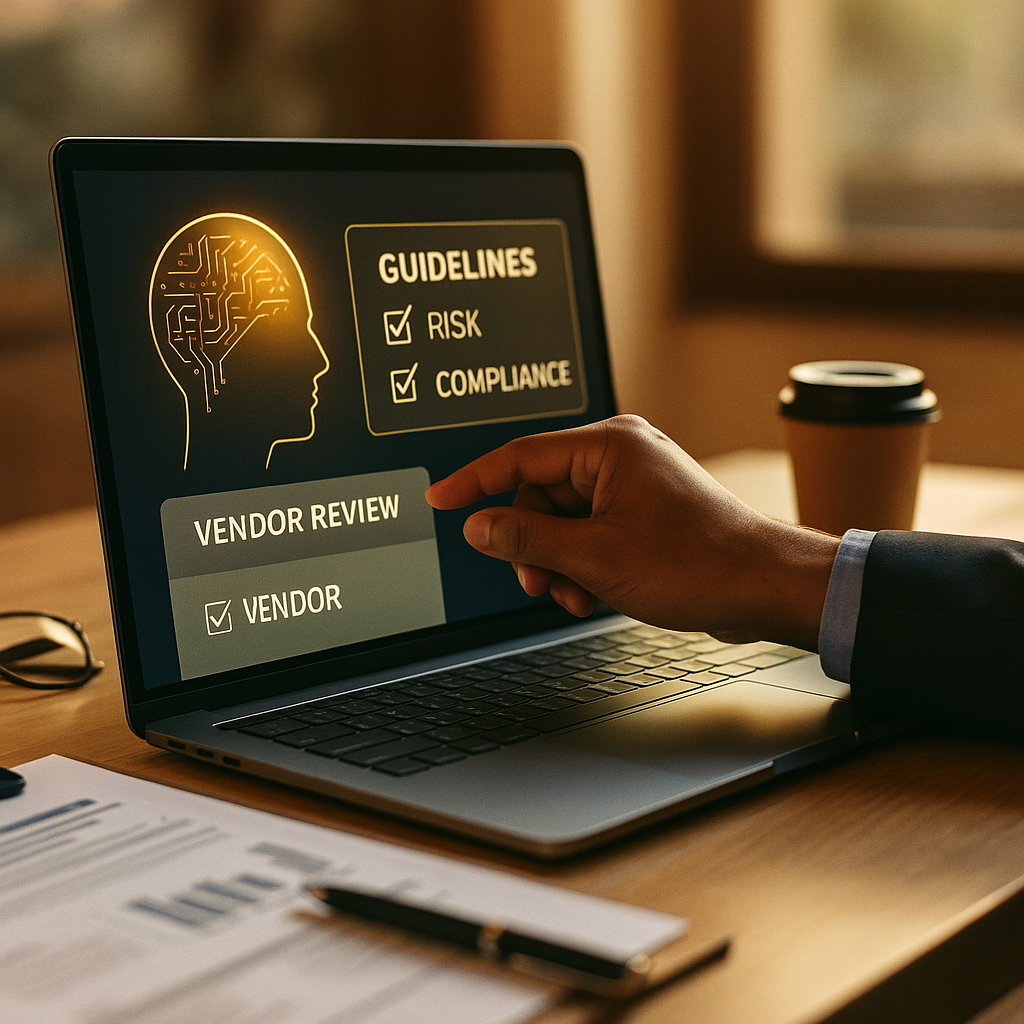
Only 26% of enterprises say they can fully audit how their AI marketing tools make decisions, according to recent industry surveys. That gap is exactly what Data Dynamics’ enterprise release is built to close, and it signals something bigger than one vendor’s product roadmap. The martech industry is moving from “software with AI bolted on” to governed AI: systems designed from the ground up to be auditable, explainable, and defensible in front of legal, finance, and regulators. If you’re evaluating vendors for the year ahead, this shift changes the entire scorecard.
The Governance Gap Nobody Budgeted For
For most of the last decade, martech procurement followed a predictable script. You compared feature lists, checked integration compatibility, negotiated per-seat pricing, and signed. AI capability was a bonus line item, not a governance question.
That script is broken now. Marketing teams are running agentic systems that bid on media, write ad copy, score leads, and personalize journeys autonomously. When something goes wrong, and it will, “the algorithm did it” is not an acceptable answer to a compliance officer or a regulator. Brands have already learned this the hard way with agentic AI marketing projects that quietly failed because nobody could trace a decision back to its source data.
Governed AI is not a compliance nicety anymore. It is the operational difference between a martech tool you can defend and one you have to unplug when a regulator asks a question.
What Data Dynamics’ Enterprise Release Actually Changes
Data Dynamics positioned its enterprise release around three pillars: lineage tracking, policy enforcement at the model layer, and role-based access controls that extend into AI decisioning, not just data storage. In plain terms, that means every prediction, score, or automated action carries a traceable record of what data fed it, which policy rules applied, and who had authority to approve the output.
This matters because most martech vendors still treat “AI governance” as a marketing checkbox rather than an architectural requirement. A recommendation engine that can tell you it upweighted a segment because of a specific attribute, and that a human reviewer signed off on that logic, is fundamentally different from a black-box model that just spits out a score. The former survives an audit. The latter becomes a liability the moment a customer files a complaint or a state attorney general comes calling.
It’s the same logic driving scrutiny of agentic AI campaign managers: autonomy without an audit trail is a risk multiplier, not a productivity win.
Why “Governed AI” Is Becoming a Procurement Category
Ask any enterprise IT security team what changed in the last two budget cycles, and they’ll tell you: AI vendor risk assessments went from a five-minute checkbox to a multi-week review process. Legal wants to know about data provenance. Finance wants to know about model drift and its impact on spend decisions. Privacy teams want documentation that satisfies frameworks referenced by regulators like the FTC and the UK’s ICO.
That pressure is why vendors are racing to rebrand around governance rather than just intelligence. It’s not altruism. It’s survival. Procurement teams at large brands are starting to require SOC 2 Type II reports, explainability documentation, and incident response plans for AI-driven decisioning before a contract even reaches legal review. Vendors without that documentation are getting quietly dropped from shortlists, regardless of how impressive their demo looks.
Data around AI adoption from eMarketer and Statista both point to the same trend: spend on AI marketing tools is climbing fast, but so is scrutiny of how those tools are governed internally. The two curves are converging, and 2026 buyers are caught in the middle.
Vendor Selection Checklist for the Governed AI Era
If you’re refreshing your martech stack or renewing contracts this cycle, the evaluation criteria need an upgrade. Feature parity is table stakes. Here’s what should actually move the needle:
- Decision lineage: Can the vendor show you, in plain language, why an AI system made a specific recommendation or took a specific action?
- Policy enforcement layer: Are governance rules baked into the model pipeline, or are they a separate dashboard nobody checks?
- Human override points: Where exactly can a person intervene before an autonomous action executes, and how fast?
- Data provenance documentation: Does the vendor know where its training and inference data actually came from?
- Incident response SLA: If a model produces a discriminatory or noncompliant output, what’s the vendor’s contractual response time?
This checklist overlaps heavily with the governance frameworks already circulating for auto-bidding systems and media buying platforms, which makes sense. Whether the AI is spending your budget or scoring your leads, the underlying risk question is identical: who’s accountable when it’s wrong?
Can Your Current Stack Survive an Audit?
Here’s an uncomfortable exercise. Pick your top three martech vendors by spend. Ask each one, in writing, to produce a decision log for a single AI-driven action from the last 30 days. Not a summary. An actual trace: input data, model version, policy rules applied, output, and who approved it.
If even one vendor can’t produce that within a week, you have a governance gap, and it’s now your liability, not just theirs. This is precisely the exercise that separates vendors quietly rebuilding for governed AI from those slapping “AI-powered” on the same architecture they had three years ago. Identity infrastructure is a good proxy here too. Vendors serious about governance are also the ones investing in clean identity resolution pipelines, because you can’t have defensible AI decisions sitting on top of messy, unresolved customer data.
An AI system is only as auditable as the data pipeline underneath it. If the foundation is messy, the governance layer on top is theater.
It’s also worth applying the same skepticism to any AI vendor’s underlying model claims. Plenty of “proprietary AI” pitches are thin wrappers over general-purpose foundation models, and that distinction changes your governance exposure significantly. Before you renew, it’s worth reading up on how to tell a proprietary AI model from a GPT wrapper.
The Cost of Getting This Wrong
Skipping governance due diligence doesn’t just create legal exposure, it creates operational drag. Teams that discover a compliance gap after deployment end up ripping out integrations mid-quarter, retraining staff on replacement tools, and explaining the mess to leadership who thought this was already handled.
Compare that to the cost of doing the diligence upfront: a few extra weeks in procurement, some uncomfortable questions to vendors, maybe a slightly higher price for the vendor that actually invested in governance infrastructure. That trade is not close. Enterprises that treated AI governance as optional in 2024 and 2025 are the ones now scrambling to retrofit compliance onto systems that were never designed for it. Data Dynamics’ release is a signal that the vendors worth your budget already saw this coming.
For teams building internal capability rather than buying it outright, similar governance logic applies to no-code predictive scoring tools: ease of use should never come at the expense of explainability.
Frequently Asked Questions
What does “governed AI” mean in a martech context?
Governed AI refers to AI systems built with built-in auditability, meaning every automated decision, score, or action can be traced back to its source data, the policy rules applied, and the human who had oversight authority. It’s distinct from AI features added on top of existing software without that traceability.
Why is Data Dynamics’ enterprise release significant for vendor selection?
Its release reflects a broader industry shift where governance features, like decision lineage and policy enforcement, are becoming baseline requirements rather than optional add-ons. Brands evaluating vendors should treat this as a signal to update procurement criteria accordingly.
What should brands ask AI martech vendors before signing a contract?
Ask for documented decision lineage, data provenance records, human override points, and a contractual incident response SLA for noncompliant or biased AI outputs. If a vendor can’t produce these on request, that’s a red flag.
How is governed AI different from standard AI compliance features?
Standard compliance features are often bolted onto existing systems as a dashboard or report. Governed AI builds policy enforcement and auditability directly into the model pipeline, so governance isn’t a separate step, it’s embedded in how the system operates.
Does adopting governed AI slow down marketing operations?
Not if it’s implemented correctly. Well-architected governance adds minimal latency to decisioning while significantly reducing the risk of costly compliance failures, audit gaps, or mid-quarter platform rip-outs.
Next step: Before your next renewal cycle, request a decision log from your top AI vendor for one live campaign action. If they can’t produce it within a week, you already have your 2026 vendor selection answer.
Frequently Asked Questions
What does “governed AI” mean in a martech context?
Governed AI refers to AI systems built with built-in auditability, meaning every automated decision, score, or action can be traced back to its source data, the policy rules applied, and the human who had oversight authority. It’s distinct from AI features added on top of existing software without that traceability.
Why is Data Dynamics’ enterprise release significant for vendor selection?
Its release reflects a broader industry shift where governance features, like decision lineage and policy enforcement, are becoming baseline requirements rather than optional add-ons. Brands evaluating vendors should treat this as a signal to update procurement criteria accordingly.
What should brands ask AI martech vendors before signing a contract?
Ask for documented decision lineage, data provenance records, human override points, and a contractual incident response SLA for noncompliant or biased AI outputs. If a vendor can’t produce these on request, that’s a red flag.
How is governed AI different from standard AI compliance features?
Standard compliance features are often bolted onto existing systems as a dashboard or report. Governed AI builds policy enforcement and auditability directly into the model pipeline, so governance isn’t a separate step, it’s embedded in how the system operates.
Does adopting governed AI slow down marketing operations?
Not if it’s implemented correctly. Well-architected governance adds minimal latency to decisioning while significantly reducing the risk of costly compliance failures, audit gaps, or mid-quarter platform rip-outs.
Top Influencer Marketing Agencies
The leading agencies shaping influencer marketing in 2026
Agencies ranked by campaign performance, client diversity, platform expertise, proven ROI, industry recognition, and client satisfaction. Assessed through verified case studies, reviews, and industry consultations.
Moburst

-
2

The Shelf
Boutique Beauty & Lifestyle Influencer AgencyA data-driven boutique agency specializing exclusively in beauty, wellness, and lifestyle influencer campaigns on Instagram and TikTok. Best for brands already focused on the beauty/personal care space that need curated, aesthetic-driven content.Clients: Pepsi, The Honest Company, Hims, Elf Cosmetics, Pure LeafVisit The Shelf → -
3

Audiencly
Niche Gaming & Esports Influencer AgencyA specialized agency focused exclusively on gaming and esports creators on YouTube, Twitch, and TikTok. Ideal if your campaign is 100% gaming-focused — from game launches to hardware and esports events.Clients: Epic Games, NordVPN, Ubisoft, Wargaming, Tencent GamesVisit Audiencly → -
4

Viral Nation
Global Influencer Marketing & Talent AgencyA dual talent management and marketing agency with proprietary brand safety tools and a global creator network spanning nano-influencers to celebrities across all major platforms.Clients: Meta, Activision Blizzard, Energizer, Aston Martin, WalmartVisit Viral Nation → -
5

The Influencer Marketing Factory
TikTok, Instagram & YouTube CampaignsA full-service agency with strong TikTok expertise, offering end-to-end campaign management from influencer discovery through performance reporting with a focus on platform-native content.Clients: Google, Snapchat, Universal Music, Bumble, YelpVisit TIMF → -
6

NeoReach
Enterprise Analytics & Influencer CampaignsAn enterprise-focused agency combining managed campaigns with a powerful self-service data platform for influencer search, audience analytics, and attribution modeling.Clients: Amazon, Airbnb, Netflix, Honda, The New York TimesVisit NeoReach → -
7

Ubiquitous
Creator-First Marketing PlatformA tech-driven platform combining self-service tools with managed campaign options, emphasizing speed and scalability for brands managing multiple influencer relationships.Clients: Lyft, Disney, Target, American Eagle, NetflixVisit Ubiquitous → -
8

Obviously
Scalable Enterprise Influencer CampaignsA tech-enabled agency built for high-volume campaigns, coordinating hundreds of creators simultaneously with end-to-end logistics, content rights management, and product seeding.Clients: Google, Ulta Beauty, Converse, AmazonVisit Obviously →