


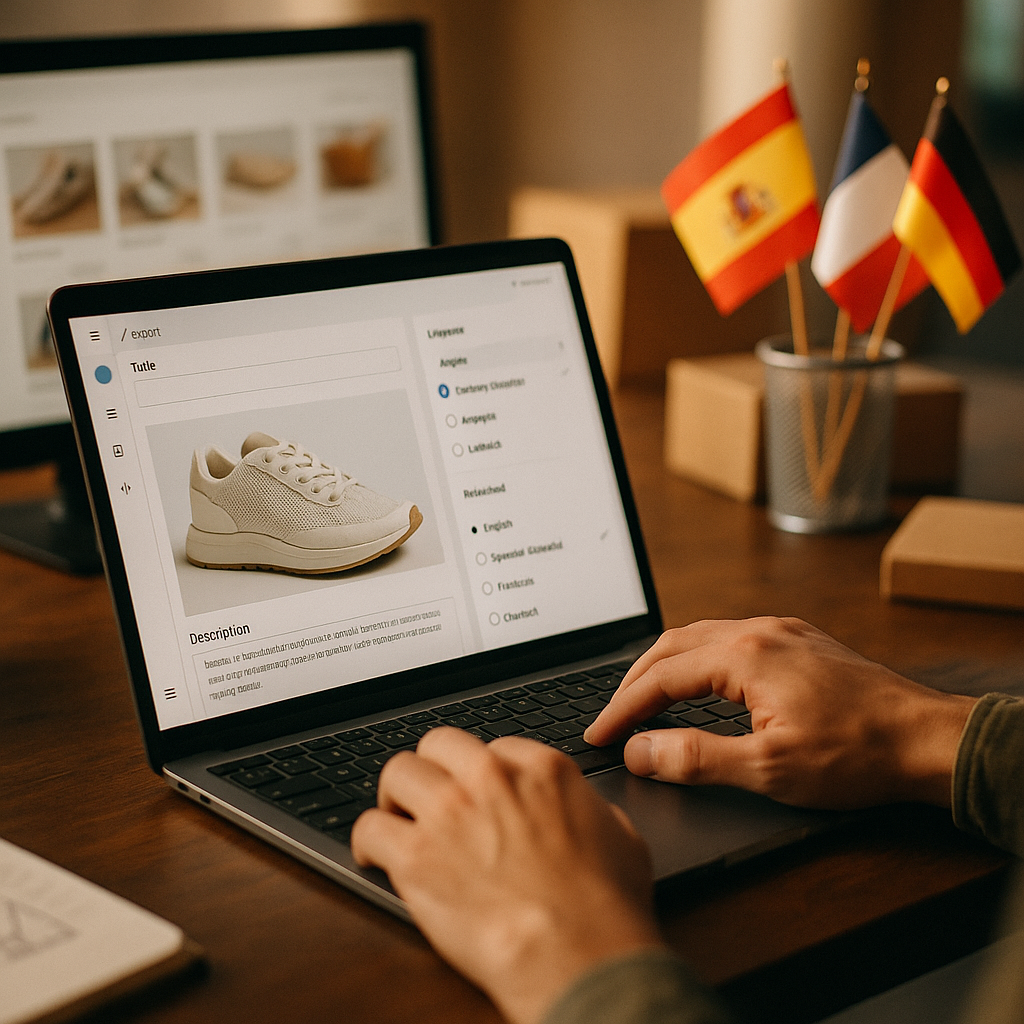
Choosing the right content backbone can make or break international growth. This review of headless CMS solutions for multi-language e-commerce focuses on platforms that handle translation workflows, localized catalogs, and omnichannel delivery without slowing teams down. In 2025, buyers expect consistent product information everywhere, in every language. Which CMS actually helps you scale, and which adds friction when markets multiply?
Multi-language e-commerce requirements
Multi-language commerce is more than translating a few landing pages. It combines editorial governance, product data accuracy, and performance across regions. Before comparing vendors, align on the capabilities your business needs so you don’t overpay for features you won’t use—or miss the ones that prevent costly localization mistakes.
Key requirements to validate:
- Localization model: support for locale-specific fields, fallback rules (e.g., “fr-CA” falls back to “fr”), and market-specific variations (currencies, units, compliance copy).
- Translation workflow: assignment, review, approvals, and audit trails; integration with TMS providers; ability to lock source content during translation cycles.
- Structured content for commerce: product descriptions, specs, FAQs, and rich media modeled as reusable components; variant-level localization when needed.
- Omnichannel delivery: APIs and SDKs that serve web, mobile apps, kiosks, marketplaces, and email consistently.
- Governance and roles: granular permissions by locale, market, and brand; approval steps to protect regulated content.
- Performance and reliability: global CDN, predictable API rate limits, caching controls, and strong uptime posture.
- Integrations: compatibility with PIM, commerce engines, search, DAM, analytics, and personalization tools.
Practical tip: separate “translation” from “localization.” Translation changes language; localization also adapts claims, sizing charts, shipping/returns, and legal text. A headless CMS should let you localize at the component or field level so you don’t fork entire pages per market.
Headless CMS evaluation criteria
Headless CMS comparisons often get stuck on marketing checklists. For multi-language e-commerce, the best evaluation approach is scenario-based: map your real workflows (launching a new category page in five locales, updating safety copy globally, running a seasonal campaign with market-specific bundles) and test how quickly teams can execute.
Use these criteria to score platforms:
- Content modeling depth: Can you model product stories and editorial content without creating brittle structures? Look for components, references, and validation rules.
- Locale handling: Do you get per-field localization and meaningful fallback logic? Can you prevent publishing when required locales are missing?
- Editorial experience: Does the UI support non-technical teams with clear previews, side-by-side locale views, and change history?
- Developer experience: Quality of APIs, webhooks, CLI tools, SDKs, type generation, and environment management (dev/stage/prod).
- Security and compliance: SSO/SAML, RBAC, audit logs, encryption, data residency options, and vendor transparency on incident handling.
- Scalability and cost predictability: Pricing tied to seats, API calls, locales, or bandwidth can surprise fast-growing stores. Model costs for your expected traffic and publishing volume.
EEAT note: Favor vendors that publish clear documentation, security statements, and architectural guidance, and that have a track record of supporting commerce-grade scale. Your internal expertise also matters: a slightly less “feature-rich” CMS can outperform if your team can operate it confidently.
Contentful for localization at scale
Contentful remains a common choice for global brands because it pairs mature content modeling with strong ecosystem integrations. For multi-language e-commerce, its locale framework supports localized fields and structured entries that work well for product storytelling, buying guides, and regional marketing pages.
Where Contentful fits best:
- Complex editorial + commerce blends: rich, structured content that complements a separate commerce engine.
- Large teams: role-based access and workflows can support multiple markets and brands.
- Integration-heavy stacks: common connectors and a wide partner ecosystem for search, personalization, DAM, and translation.
Strengths for multi-language: localized fields, content types with validations, environment support for safe rollouts, and webhooks for automation. Teams can set up patterns like “global base content + market overrides” using references and locale fallbacks.
Watch-outs: governance and modeling require discipline; without clear content architecture, multilingual complexity can balloon. Also validate cost drivers around usage and scale—especially API traffic and the number of environments needed for your release process.
Follow-up question answered: Do you need a PIM if you use Contentful? If you maintain large catalogs with frequent attribute updates, a dedicated PIM is usually still the source of truth for product data. Contentful often works best for merchandising narratives and enriched content that surrounds PIM-managed attributes.
Strapi for self-hosted control
Strapi is popular with engineering-led organizations that want flexibility, self-hosting options, and direct control over infrastructure. For multi-language e-commerce, its approach can work well when your team is comfortable owning deployments, scaling, and security hardening.
Where Strapi fits best:
- Organizations with strong DevOps: you can tune performance, caching, and regional hosting to your needs.
- Custom workflows: when you need bespoke roles, approvals, or integrations that are easier to implement with custom code.
- Budget-sensitive builds: where predictable infrastructure costs matter more than fully managed convenience.
Strengths for multi-language: flexibility in content types and the ability to tailor localization workflows to your process. Self-hosting can also support specific data residency requirements if that’s part of your compliance posture.
Watch-outs: “You build it, you run it” is real. Multi-region uptime, backups, upgrades, and vulnerability response become your responsibility. If your e-commerce roadmap depends on rapid market launches, ensure you have staffing to support platform operations without slowing feature delivery.
Follow-up question answered: Will self-hosting help with performance in every region? It can, but only if you design for it: regional read replicas, caching, CDN strategy, and API scaling. A managed headless CMS may deliver more predictable global performance if your team is small.
Sanity for structured content and workflows
Sanity stands out for teams that want highly structured content, strong editorial customization, and real-time collaboration patterns. Its “content as data” approach is effective for complex multilingual experiences like localized buying guides, region-specific category hubs, and content-rich product pages.
Where Sanity fits best:
- Content-heavy commerce: brands that compete on storytelling, education, and editorial discovery.
- Teams wanting a tailored studio: you can shape the editor interface to match your localization workflow and reduce mistakes.
- Advanced content operations: when you want automation around validation, enrichment, and publishing gates.
Strengths for multi-language: flexible schemas, the ability to create locale-aware structures, and strong customization for editorial UX. This can improve accuracy when many locales are involved because you can design guardrails directly into the editing experience.
Watch-outs: customization is power, but it requires engineering ownership. You’ll want to define a clear governance model early: what is global, what is market-specific, and how overrides work. Without that, editors can end up duplicating content rather than localizing it cleanly.
Follow-up question answered: Is Sanity “too developer-centric”? It can be if you expect an out-of-the-box editorial setup. It becomes very editor-friendly once your team invests in configuring the studio for your real workflows.
Storyblok and Contentstack for enterprise localization
If your priority is getting multilingual teams publishing quickly with strong governance, Storyblok and Contentstack are often shortlisted. Both emphasize scalable workflows and enterprise-ready controls, which matters when you manage multiple regions, brands, and approval chains.
Storyblok highlights:
- Visual editing: helpful for marketers managing localized landing pages and campaigns with fewer back-and-forth cycles.
- Component-based content: supports reusable blocks across locales while still allowing market-specific variations.
- Faster publishing operations: many teams value the clarity it brings to page assembly and review.
Contentstack highlights:
- Enterprise governance: strong role controls, workflows, and auditability for larger organizations.
- Localization readiness: designed with multi-locale content operations in mind, including structured publishing processes.
- Scale-focused posture: typically attractive when reliability, support, and organizational controls are top priorities.
What to validate for both: translation integrations you rely on, preview flows for each storefront, and how each platform handles “shared global components” (like returns policy) versus “market overrides.” Also confirm how pricing scales with locales, seats, and traffic so international expansion doesn’t create budget surprises.
Follow-up question answered: Do visual editors improve localization quality? They can. Seeing layout context reduces issues like truncated buttons, overflow in longer languages, and mismatched imagery. Still, you need style rules and locale-specific QA, especially for right-to-left languages.
FAQs
What is the best headless CMS for multi-language e-commerce?
The best option depends on your operating model. If you want a widely adopted SaaS with strong ecosystem support, Contentful is a common fit. If you need self-hosted control and customization, Strapi can work well. If you want deeply structured content and a tailored editorial studio, Sanity is compelling. For enterprise workflows and faster marketer autonomy, Storyblok or Contentstack are strong contenders.
How should a headless CMS handle translations and localized variants?
Look for per-field localization, locale fallback rules, and workflow states (draft, in translation, review, approved). The CMS should also support market overrides without duplicating entire pages, and it should integrate cleanly with your translation management system so jobs, glossaries, and review cycles stay consistent.
Do I need a PIM if I use a headless CMS?
Often, yes. A PIM is typically the system of record for product attributes, taxonomy, and supplier data. A headless CMS complements it by managing brand storytelling, editorial merchandising, and market-specific content components that enrich product pages. Some smaller catalogs can live fully in a CMS, but complexity grows quickly.
How do I avoid duplicate content and SEO issues across languages?
Use unique, localized copy where it matters, maintain clean URL structures per locale, and ensure each locale has correct metadata fields available in the CMS. Your frontend should implement hreflang correctly and avoid accidentally publishing partially translated pages. A CMS that enforces required localized fields before publish reduces these mistakes.
What’s the biggest hidden risk when scaling to many locales?
Workflow and governance breakdown. Without clear ownership and approval gates, teams duplicate entries, lose track of which locale is authoritative, and ship inconsistent legal or pricing statements. Choose a CMS that supports roles by market, audit logs, and structured validation, then document a “global vs local” content policy.
How do I run a fair proof of concept?
Define three real scenarios: launching a campaign in five locales, updating a global policy across all locales, and creating a product story with market-specific sections. Time the work for editors and developers, measure content reuse, confirm translation integrations, and simulate peak read traffic to test API performance and caching behavior.
Choosing a headless CMS is ultimately an operations decision as much as a technology decision. In 2025, multi-language commerce demands structured content, predictable workflows, and governance that keeps every market accurate and on-brand. Start by mapping your localization reality, then shortlist platforms that match your team’s strengths. The takeaway: pick the CMS you can run confidently at scale, not the one with the longest feature list.