


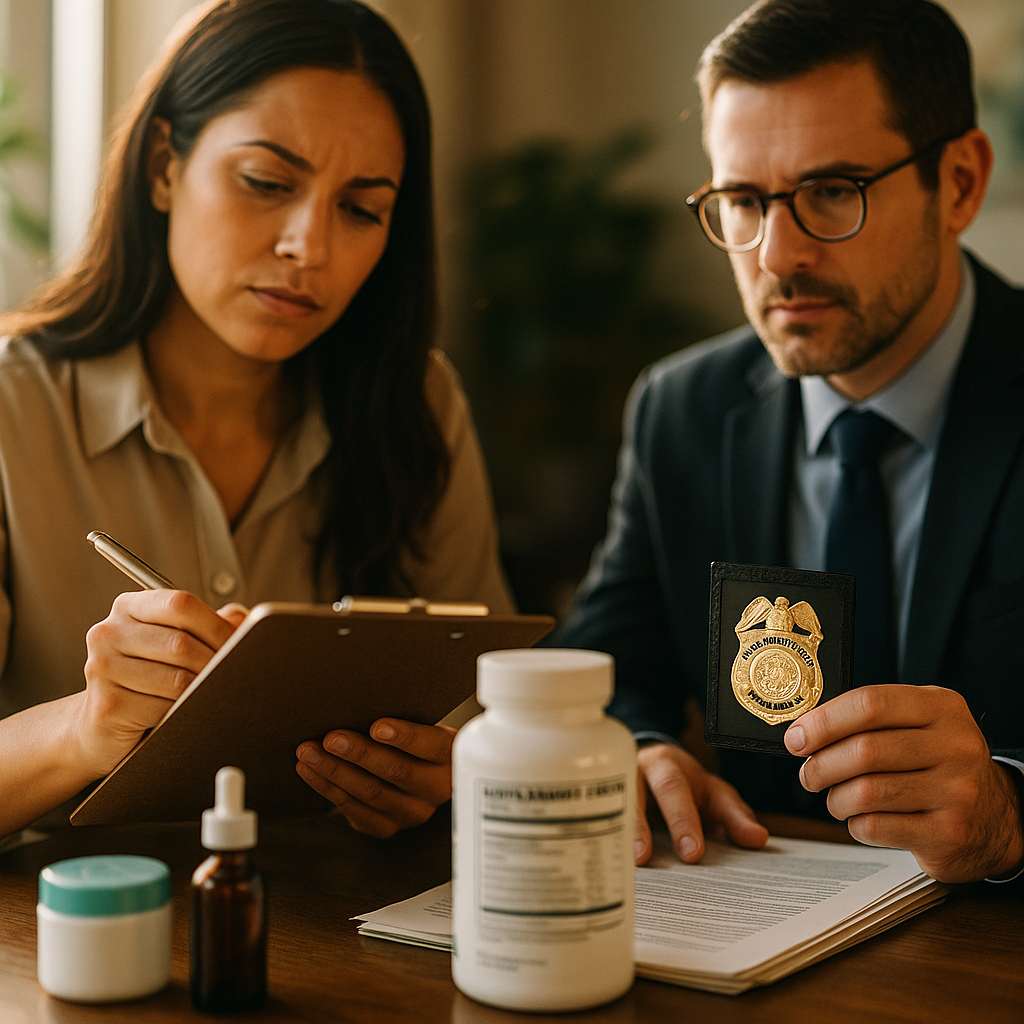
Understanding how to comply with “Health and Wellness” advertising regulations from the FDA and FTC is essential for brands and marketers aiming to promote their products lawfully and ethically. With increased scrutiny on product claims, compliance is both a legal necessity and a trust-building tool. Discover actionable steps and expert tips to ensure your advertising remains compliant and effective.
Understanding FDA Health Claims in Advertising
FDA health claims play a pivotal role in shaping the boundaries of health and wellness marketing in the U.S. The Food and Drug Administration (FDA) oversees the labeling and promotion of food, dietary supplements, drugs, and certain medical devices. If your product makes a claim about preventing, diagnosing, treating, or curing diseases, it may be regulated as a drug, not just a supplement or food.
Under current rules, health claims in advertising must be substantiated with credible scientific evidence. The FDA categorizes claims as:
- Health Claims: Explicitly link a substance to a reduced risk of a disease or health condition. These require significant scientific agreement and prior FDA approval.
- Nutrient Content Claims: Describe the level of a nutrient (e.g., “low in fat”). These must comply with FDA regulations on defined meanings.
- Structure/Function Claims: Relate to how a nutrient affects the body’s structure or function (e.g., “supports immune health”). These don’t need pre-approval but must be truthful and not misleading.
Companies must notify the FDA within 30 days of marketing a supplement with a structure/function claim and include the standard disclaimer: “This statement has not been evaluated by the FDA…” Failing to follow these rules can result in warning letters or product recalls.
Complying with FTC Truth-in-Advertising Standards
Understanding FTC health advertising regulations is crucial for digital and traditional marketers. The Federal Trade Commission (FTC) enforces laws against deceptive or unfair advertising for all consumer products, including health and wellness items. The FTC requires that:
- Claims must be truthful and not misleading. Marketers can’t exaggerate results or make promises they can’t substantiate.
- Claims must be substantiated. You need “competent and reliable scientific evidence,” often at the level of well-controlled human clinical studies, especially for products making disease-related claims.
- Disclosures must be clear and conspicuous. If any information is necessary to prevent an ad from being misleading, it must be prominently displayed, not buried in small print.
In 2022 and 2023, the FTC issued warning letters and fines to several supplement and wellness companies promoting unproven COVID-19 cures and weight loss treatments. This underscores the importance of reviewing claims and ensuring documented support before launching campaigns.
Building Trust Through Accurate Wellness Marketing
Accurate wellness product advertising compliance should be at the core of every marketing strategy. With rising consumer skepticism and watchdog agency activities, misleading claims can result in not just regulatory action but major reputational harm.
To demonstrate trustworthiness and follow Google’s EEAT (Experience, Expertise, Authoritativeness, and Trustworthiness) principles, brands should:
- Collaborate with medical professionals to review product formulations and claims.
- Display research sources clearly on your website and in advertising materials, linking to reputable, peer-reviewed studies when possible.
- Avoid absolute statements such as “cures” or “guarantees results.”
- Encourage honest reviews and testimonials from real customers, ensuring that they reflect typical, documented outcomes.
- Keep staff updated on evolving FDA and FTC requirements by participating in industry webinars and compliance training.
Consistently accurate, transparent advertising not only satisfies regulators but also enhances your brand’s credibility and conversion rates.
Best Practices for Social Media and Influencer Campaigns
Applying social media wellness advertising rules is vital as more health and wellness products are marketed on TikTok, Instagram, and YouTube. The FDA and FTC both monitor digital platforms closely, especially influencer partnerships.
- Disclose paid partnerships. Influencers and brands must clearly disclose any “material connections”—such as payments, gifts, or commissions—using language like “#ad” or “Sponsored.”
- Monitor influencer claims. Brands are responsible for ensuring that influencers do not make false or misleading statements about their products.
- Substantiate endorsements. Personal testimonials, even if true for one person, can’t imply results that aren’t typical unless you clearly state the likely outcome for most consumers.
- Respect platform ad policies. Social media companies continue to tighten advertising rules for health-related products, from managing before-and-after photos to restricting claims related to weight loss and COVID-19.
Brands should create influencer marketing policies, provide claim guidelines to partners, and retain records of all approvals and campaign materials in the event of an audit.
Recordkeeping and Responding to Regulatory Scrutiny
Good recordkeeping is a pillar of health marketing regulatory compliance. Both the FDA and FTC request documented substantiation if they audit your ads or receive consumer complaints.
- Retain supporting scientific evidence. This includes clinical trial data, published research, expert opinions, and testing protocols.
- Keep records of all advertising versions, disclaimers, and approval processes.
- Document customer feedback and complaints, as well as how your team responded.
- Prepare response plans—designate compliance contacts and rehearse procedures for replying to warning letters or requests for substantiation.
Proactive compliance reviews and legal counsel engagement can help identify red flags before federal agencies initiate action. In serious cases, swift corrective action—such as discontinuing misleading ads or issuing refunds—demonstrates good faith and may mitigate penalties.
Staying Ahead of 2025 Health Advertising Trends and Updates
To maintain FDA and FTC wellness advertising compliance in 2025, marketers need to stay abreast of evolving rules and industry best practices. Recent regulatory themes include:
- Tighter restrictions on AI-generated advertising copy, holding brands accountable for claims made by automated tools.
- Increased enforcement of “green” or “eco-friendly” health product claims, which now require special substantiation.
- Greater attention to childrens’ health and wellness ads, with new guidelines on influencer campaigns and age-appropriate testimonials.
Stay updated by subscribing to FDA and FTC newsletters, attending trade conferences, and consulting legal experts specializing in health advertising regulations. Continuous education proves invaluable as the compliance landscape shifts.
Complying with FDA and FTC regulations for health and wellness advertising is non-negotiable for today’s brands. Keeping claims truthful, evidence-backed, and transparent builds consumer trust and protects both your reputation and bottom line.
FAQs About Health and Wellness Advertising Compliance
-
What counts as a “health claim” under FDA rules?
A health claim ties a product or ingredient to the prevention, treatment, or cure of a disease. Only claims supported by robust scientific evidence and pre-approved by the FDA may be used. Structure/function claims (e.g., “supports heart health”) are less tightly regulated but still require substantiation and disclaimers.
-
What kind of evidence do I need to support claims in my health ad?
You need “competent and reliable scientific evidence.” For most health-related claims, this means well-designed human clinical trials published in peer-reviewed journals. Anecdotal evidence or animal studies are generally not enough for disease-specific claims.
-
What are common mistakes that trigger FDA or FTC action?
Common errors include unsubstantiated disease claims, omitting disclaimers, misleading “before and after” photos, or failing to disclose paid influencer relationships.
-
Do I need legal review before launching a health and wellness campaign?
While not legally required, expert review is highly recommended. Advertising lawyers are trained to spot regulatory risks and can help prevent costly enforcement actions.
-
How do I handle customer testimonials in health product advertising?
Testimonials must accurately reflect typical results and not suggest outcomes that most people would not achieve. Disclose if compensation was provided, and confirm that statements are backed by scientific evidence.
Top Influencer Marketing Agencies
The leading agencies shaping influencer marketing in 2026
Agencies ranked by campaign performance, client diversity, platform expertise, proven ROI, industry recognition, and client satisfaction. Assessed through verified case studies, reviews, and industry consultations.
Moburst

-
2

The Shelf
Boutique Beauty & Lifestyle Influencer AgencyA data-driven boutique agency specializing exclusively in beauty, wellness, and lifestyle influencer campaigns on Instagram and TikTok. Best for brands already focused on the beauty/personal care space that need curated, aesthetic-driven content.Clients: Pepsi, The Honest Company, Hims, Elf Cosmetics, Pure LeafVisit The Shelf → -
3

Audiencly
Niche Gaming & Esports Influencer AgencyA specialized agency focused exclusively on gaming and esports creators on YouTube, Twitch, and TikTok. Ideal if your campaign is 100% gaming-focused — from game launches to hardware and esports events.Clients: Epic Games, NordVPN, Ubisoft, Wargaming, Tencent GamesVisit Audiencly → -
4

Viral Nation
Global Influencer Marketing & Talent AgencyA dual talent management and marketing agency with proprietary brand safety tools and a global creator network spanning nano-influencers to celebrities across all major platforms.Clients: Meta, Activision Blizzard, Energizer, Aston Martin, WalmartVisit Viral Nation → -
5

The Influencer Marketing Factory
TikTok, Instagram & YouTube CampaignsA full-service agency with strong TikTok expertise, offering end-to-end campaign management from influencer discovery through performance reporting with a focus on platform-native content.Clients: Google, Snapchat, Universal Music, Bumble, YelpVisit TIMF → -
6

NeoReach
Enterprise Analytics & Influencer CampaignsAn enterprise-focused agency combining managed campaigns with a powerful self-service data platform for influencer search, audience analytics, and attribution modeling.Clients: Amazon, Airbnb, Netflix, Honda, The New York TimesVisit NeoReach → -
7

Ubiquitous
Creator-First Marketing PlatformA tech-driven platform combining self-service tools with managed campaign options, emphasizing speed and scalability for brands managing multiple influencer relationships.Clients: Lyft, Disney, Target, American Eagle, NetflixVisit Ubiquitous → -
8

Obviously
Scalable Enterprise Influencer CampaignsA tech-enabled agency built for high-volume campaigns, coordinating hundreds of creators simultaneously with end-to-end logistics, content rights management, and product seeding.Clients: Google, Ulta Beauty, Converse, AmazonVisit Obviously →