


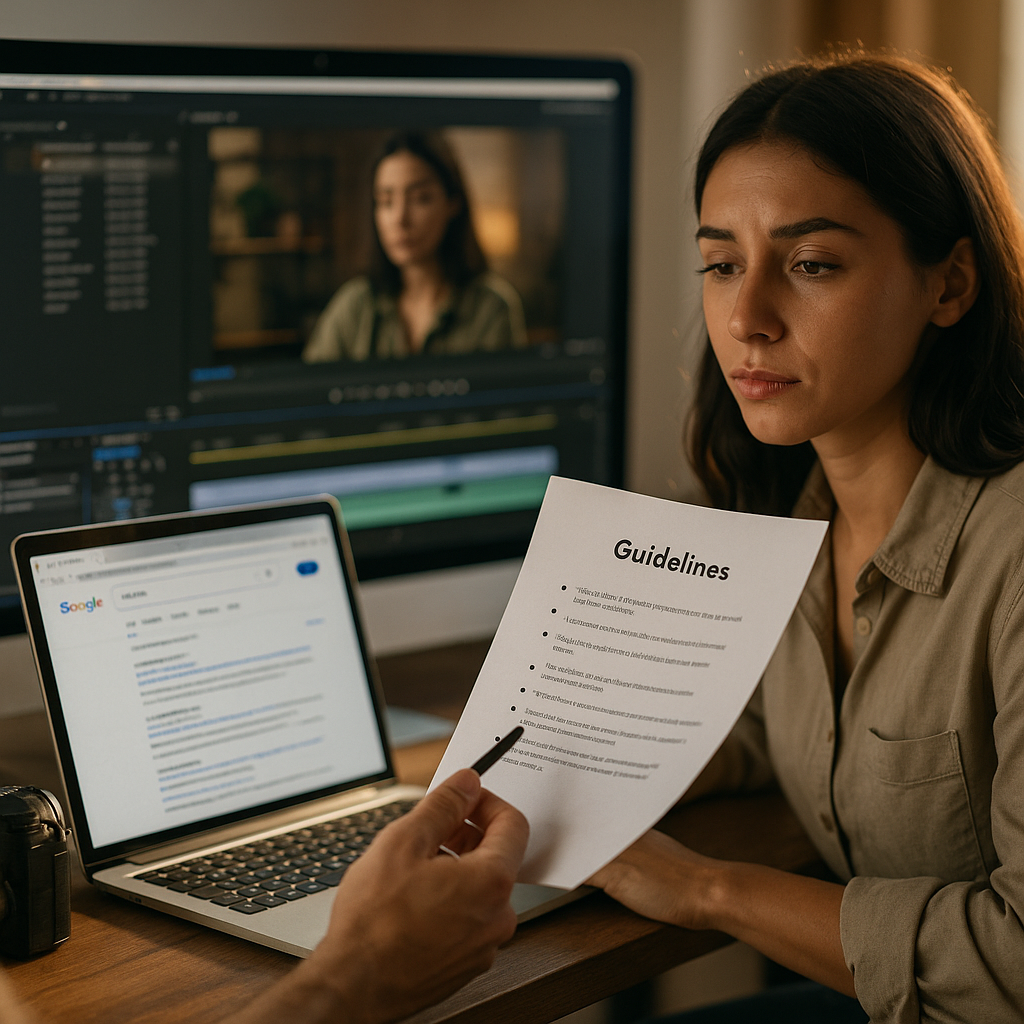
Most Creator Content Is Invisible to AI Search Engines
Generative AI handles over 50% of informational queries across ChatGPT, Gemini, and Perplexity combined, according to data tracked by Statista. Yet the vast majority of branded creator content gets zero citations in those answers. The brief you’re sending creators right now was built for social algorithms, not large language models. That gap costs brands visibility at the exact moment purchase intent is highest.
Why LLMs Cite Some Content and Ignore Everything Else
Before you can brief a creator effectively, you need to understand the retrieval logic. ChatGPT (via Browse), Gemini, and Perplexity all use a combination of semantic indexing, factual signal density, and authority heuristics to select which content surfaces in a generated answer. They are not running keyword searches. They are scanning for retrievable claims: specific, verifiable, structured statements that answer a question completely enough to be worth quoting.
Vague brand messaging fails this test every time. “Our collagen supplement supports your wellness journey” is not a retrievable claim. “Each serving delivers 10g of hydrolyzed collagen peptides, clinically shown to improve skin elasticity in 8 weeks” is. That distinction is the foundation of everything that follows.
LLMs don’t reward creativity. They reward specificity. A creator who states a verifiable fact with a clear structure will outrank one with ten times the engagement but zero factual density in their copy.
Perplexity in particular has become a benchmark for how citation logic works: it surfaces sources that contain direct, declarative answers to the query, prioritizes content with structured metadata, and favors authors or channels with demonstrated topical consistency. If a creator only posts about skincare once in twelve posts, Perplexity has no authority signal to latch onto.
Factual Density Standards to Build Into Every Brief
Your brief needs a dedicated “factual payload” section. This is non-negotiable for LLM citation optimization. Give creators a block of five to eight specific, citable facts about your product or category. Each fact should follow this structure: claim, supporting data, source or study reference. You are essentially writing the citations you want the AI to repeat.
Practical example for a protein bar brand:
- Claim: “This bar has 20g of complete protein per serving.”
- Data: “Third-party tested at NSF-certified labs.”
- Context: “Most category competitors average 14g, per USDA nutritional database.”
When a creator packages those three elements into a single sentence or paragraph, they’ve built a retrievable unit. LLMs can pull it, attribute it, and surface it in response to queries like “which protein bars have the most protein” or “NSF-certified protein snacks.” That’s the citation path you’re engineering.
Set a minimum factual density standard in your brief: at least three retrievable claim units per piece of content, regardless of format. For YouTube scripts, require one per major section. For long-form blog content (yes, some creators still write), require one per 300 words. You can find additional structural guidance in this AI answer engine brief template developed specifically for generative search discovery.
Conversational Answer Structure: Write for the Query, Not the Caption
This is where most brand briefs fail completely. A creator brief written for Instagram engagement tells the creator to “hook fast, keep it visual, drive emotion.” All correct for social. But for LLM retrieval, you need the content to also answer a natural language question in full.
Ask yourself: what are the three questions a potential buyer would type into Perplexity before purchasing this product? Build those questions explicitly into the brief. Then instruct the creator to answer each one directly, in one or two sentences, within the body of their content. This isn’t about stuffing keywords. It’s about mirroring the conversational query pattern that LLMs are trained to match.
A creator reviewing a meal prep service should include a passage like: “If you’re asking whether [Brand] works for high-protein diets, the answer is yes — every plan is built around a minimum 35% protein macro split, reviewed by a registered dietitian.” That sentence directly answers “does [Brand] work for high-protein diets” and includes a verifiable credential. Gemini will find that. It will cite it.
For creators producing video content, this same logic applies to transcripts. Both Gemini and Perplexity now index YouTube transcripts actively. Build your answer structure into the spoken script, not just the description. See how other brands have handled cross-platform brief architecture for AI search to understand how transcript optimization integrates into a unified workflow.
Authoritative Claim Framing
LLMs assess authority signals. A creator saying “I think this works great” contributes nothing retrievable. A creator saying “In a double-blind trial published by the American Journal of Sports Nutrition, this ingredient class reduced recovery time by 22%” is citing primary research. Even if the creator is paraphrasing your brief, the framing matters enormously.
Train creators to use authority framing by giving them templates in the brief itself. Four patterns that work:
- Research-anchored: “According to [source], [claim].”
- Comparative: “[Brand] delivers X, compared to the category average of Y.”
- Credential-backed: “Formulated with [ingredient], which is [certification] certified.”
- Experiential with specificity: “After 30 days of daily use, I tracked [specific measurable outcome].”
The fourth pattern is important. Creator first-person experience, when it includes measurable outcomes and time frames, functions as a verifiable claim unit for LLMs. It’s not just testimonial. It’s structured data in narrative form. FTC disclosure requirements still apply fully, and your brief should explicitly remind creators that material connections must be disclosed regardless of how the content is structured for AI retrieval.
The brief is your content architecture document. If it doesn’t include factual templates, authority framing patterns, and structured answer prompts, you’re asking creators to optimize for something without giving them the tools.
Metadata Tagging Requirements for LLM Retrieval
This is the operational layer that most influencer marketing teams skip entirely. Metadata is how you signal to AI crawlers what a piece of content is about, who produced it, and why it should be trusted. For written and blog-format creator content, this means proper schema markup: Google’s structured data guidelines remain the benchmark. Require creators (or their web managers) to implement Article schema, with author credentials populated, publication date accurate, and category taxonomy aligned to your campaign keywords.
For video content, metadata requirements include: a keyword-aligned title (not a creative title alone), a description of 250+ words with at least two retrievable claim units, chapter timestamps for YouTube, and a closed-caption file uploaded separately rather than relying on auto-generated transcripts. Auto-generated captions have error rates that break the factual integrity of your content. Upload the script.
For social-native content like TikTok or Instagram Reels, the retrieval vector is different. Perplexity and Gemini increasingly index the link-in-bio destination and any associated web content rather than the social post itself. This means the creator’s linked landing page, Linktree page, or associated blog post needs to carry the metadata load. Brief creators on what to include in those destinations, not just in the post caption. Review how AI campaign optimizer briefs handle this metadata handoff between social and owned content.
One more operational note: topical consistency across a creator’s content archive is a soft authority signal that both eMarketer-tracked AI search platforms and Perplexity weight in citation decisions. Briefing a creator to post one piece of LLM-optimized content works far less well than briefing a creator who has posted consistently in your category for six months. Factor creator topical authority into your selection criteria, not just audience demographics.
Structuring the Brief Itself
Pull this together into a brief format with six distinct sections: campaign objective (one sentence), factual payload (five to eight claim units with source references), required question-answer pairs (three conversational queries with model answers), authority framing templates (the four patterns above), metadata checklist (title format, description length, schema type, caption file), and compliance reminders (FTC, platform-specific disclosure rules). That’s it. Keep it under two pages. Creators don’t need a manifesto — they need structured raw material.
If you’re running multi-creator campaigns at scale, this brief structure integrates cleanly with AI content workflows. The micro-asset governance framework covers how to version-control factual payloads across a creator roster without introducing inconsistency. Consistency in factual claims across multiple creators amplifies your authority signal for LLMs because multiple independent sources are saying the same verifiable thing. That’s corroboration, and LLMs weight it heavily.
Also worth reviewing: HubSpot’s content optimization research confirms that structured, answer-formatted content generates significantly higher AI overview inclusion rates than unstructured long-form. Your creators are producing content that competes in that environment whether you brief them for it or not.
Start by auditing one recent creator campaign: pull five pieces of content and run them as Perplexity queries on your brand category. If none of those pieces appear as citations, your brief was built for the wrong algorithm. Rebuild the factual payload section this week and test the next campaign batch against the same queries.
FAQs
What is a “retrievable claim unit” in the context of LLM citation?
A retrievable claim unit is a self-contained statement that combines a specific claim, supporting data or credential, and enough context for an LLM to quote it independently. For example: “The formula contains 500mg of magnesium glycinate, a form shown in peer-reviewed studies to have 80% higher bioavailability than magnesium oxide.” That sentence answers a potential query, includes a specific quantity, and references a verifiable evidence type. LLMs can extract and cite it without needing surrounding context.
Does this approach work differently across ChatGPT, Gemini, and Perplexity?
Yes, with meaningful nuances. Perplexity crawls live web content most aggressively and surfaces structured, link-backed sources fastest. Gemini weights YouTube transcript quality heavily and favors Google-indexed content with proper schema markup. ChatGPT’s Browse feature prioritizes domain authority and factual density in page copy. Across all three, factual specificity and conversational answer structure are consistent citation drivers. Optimize for those first, then layer in platform-specific metadata requirements.
How do FTC disclosure rules interact with content structured for LLM retrieval?
FTC disclosure obligations apply regardless of how the content is structured or where it’s ultimately surfaced. If a creator has a material connection to a brand, that disclosure must be clear and conspicuous in the content itself. Structuring content for AI citation does not create an exemption. In fact, if an LLM cites a piece of branded content without the disclosure being part of the retrievable text, the citation may strip the compliance context. Brief creators to embed disclosure language naturally within the body of the content, not just in hashtags.
Should brands select creators differently for LLM-citation-focused campaigns?
Yes. Traditional influencer selection prioritizes audience size, engagement rate, and demographic fit. For LLM citation campaigns, add topical authority depth to your selection criteria: how consistently has this creator published in your category, do they already appear in AI search results for relevant queries, and do they have a web presence with indexable content beyond social posts? A creator with 50,000 followers and a well-indexed blog in your product category will often outperform a creator with 500,000 followers and no indexed web content for generative AI citation purposes.
How often should the factual payload in a creator brief be updated?
Treat the factual payload like a living document. Update it whenever your product specs change, new clinical or efficacy data becomes available, or competitive benchmarks shift. LLMs index content continuously, so outdated factual claims in older creator content can resurface. Build a quarterly review cycle into your campaign operations to ensure that the factual payload distributed to creators remains accurate, current, and defensible across all active and archived content.
Top Influencer Marketing Agencies
The leading agencies shaping influencer marketing in 2026
Agencies ranked by campaign performance, client diversity, platform expertise, proven ROI, industry recognition, and client satisfaction. Assessed through verified case studies, reviews, and industry consultations.
Moburst

-
2

The Shelf
Boutique Beauty & Lifestyle Influencer AgencyA data-driven boutique agency specializing exclusively in beauty, wellness, and lifestyle influencer campaigns on Instagram and TikTok. Best for brands already focused on the beauty/personal care space that need curated, aesthetic-driven content.Clients: Pepsi, The Honest Company, Hims, Elf Cosmetics, Pure LeafVisit The Shelf → -
3

Audiencly
Niche Gaming & Esports Influencer AgencyA specialized agency focused exclusively on gaming and esports creators on YouTube, Twitch, and TikTok. Ideal if your campaign is 100% gaming-focused — from game launches to hardware and esports events.Clients: Epic Games, NordVPN, Ubisoft, Wargaming, Tencent GamesVisit Audiencly → -
4

Viral Nation
Global Influencer Marketing & Talent AgencyA dual talent management and marketing agency with proprietary brand safety tools and a global creator network spanning nano-influencers to celebrities across all major platforms.Clients: Meta, Activision Blizzard, Energizer, Aston Martin, WalmartVisit Viral Nation → -
5

The Influencer Marketing Factory
TikTok, Instagram & YouTube CampaignsA full-service agency with strong TikTok expertise, offering end-to-end campaign management from influencer discovery through performance reporting with a focus on platform-native content.Clients: Google, Snapchat, Universal Music, Bumble, YelpVisit TIMF → -
6

NeoReach
Enterprise Analytics & Influencer CampaignsAn enterprise-focused agency combining managed campaigns with a powerful self-service data platform for influencer search, audience analytics, and attribution modeling.Clients: Amazon, Airbnb, Netflix, Honda, The New York TimesVisit NeoReach → -
7

Ubiquitous
Creator-First Marketing PlatformA tech-driven platform combining self-service tools with managed campaign options, emphasizing speed and scalability for brands managing multiple influencer relationships.Clients: Lyft, Disney, Target, American Eagle, NetflixVisit Ubiquitous → -
8

Obviously
Scalable Enterprise Influencer CampaignsA tech-enabled agency built for high-volume campaigns, coordinating hundreds of creators simultaneously with end-to-end logistics, content rights management, and product seeding.Clients: Google, Ulta Beauty, Converse, AmazonVisit Obviously →