


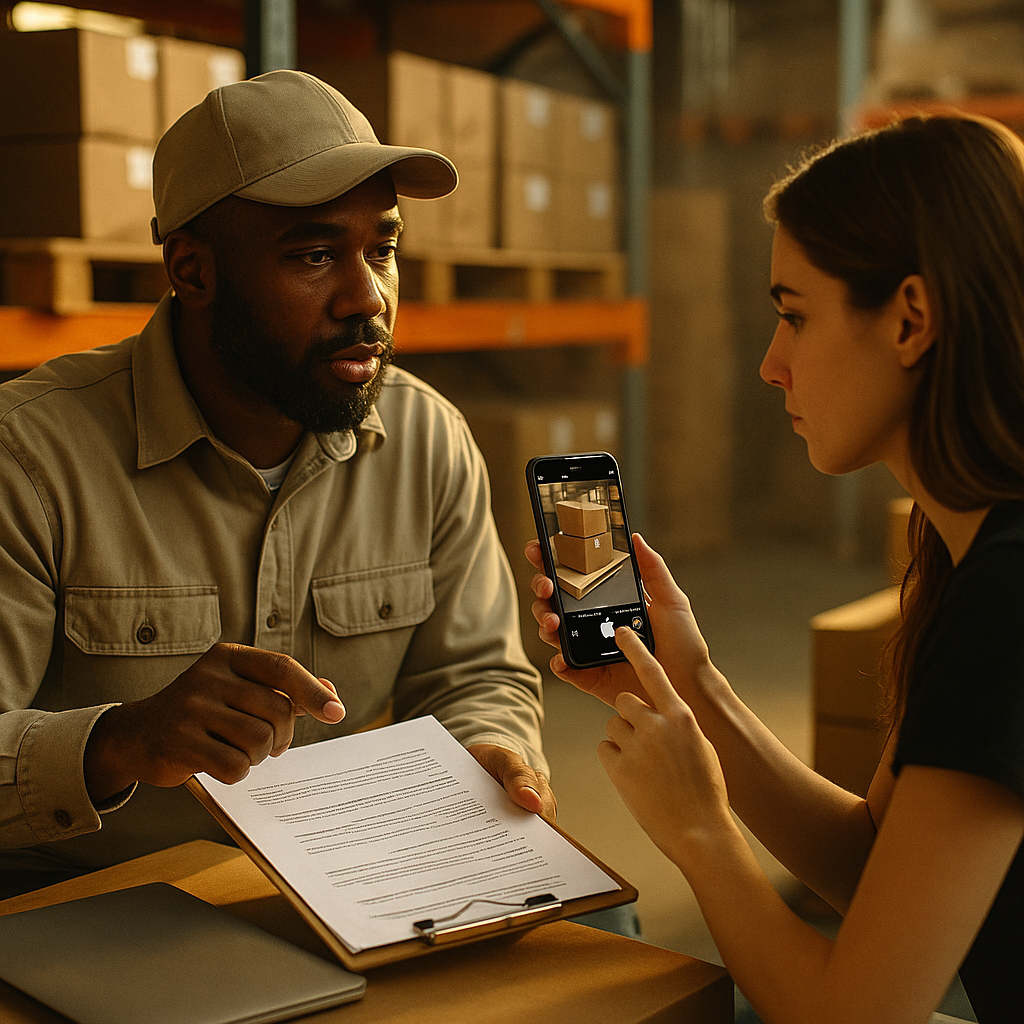
Out-of-stock badges are conversion killers. Shoppers who see “sold out” twice don’t come back a third time. That’s why a growing number of DTC brands are pulling back the curtain on their warehouses, handing creators a camera and saying: film the restock. The warehouse restock format isn’t just satisfying to watch — it’s become one of the sharpest trust and scale signals a brand can send in a crowded feed.
Consumers have grown numb to polished product shots. What they haven’t grown numb to is proof. A pallet of boxes stacked to the ceiling says “we sold out because people want this,” far louder than any ad copy could. It’s operational transparency dressed up as content, and it’s converting.
Why Inventory Footage Works Better Than Another Testimonial
Trust in influencer marketing has been eroding for years. Edelman’s Trust Barometer research has repeatedly shown that consumers trust peer recommendations more than brand messaging, but even peer content is starting to feel scripted. Audiences can smell a paid testimonial from three seconds in.
Warehouse content sidesteps that fatigue because it isn’t selling anything directly. There’s no call to action buried in a forklift shot. The creator is simply documenting a process: pallets arriving, SKUs getting scanned, shelves refilling. It reads as behind-the-scenes journalism, not advertising, even when a brand has fully directed the shoot.
A warehouse restock clip doesn’t need a hook line or a CTA to convert. The inventory itself is the proof point — scale, demand, and legitimacy communicated in a single wide shot of a loading dock.
This matters for brands fighting the “is this a real company or a dropship storefront” perception problem. Gen Z shoppers in particular have grown suspicious of brands that exist only as ad accounts. Show them a real building, real pallets, real people scanning barcodes, and skepticism drops fast.
The Format, Broken Down
Most successful warehouse restock videos follow a loose but recognizable structure:
- The arrival: a truck backing up to a loading dock, or pallets being wheeled off a lift gate.
- The reveal: boxes opened to show volume — “we ordered 10,000 units and they’re already half gone.”
- The process: barcode scanning, shelf restocking, quality checks, sometimes a warehouse team member speaking briefly to camera.
- The payoff: a shot of the product back live on the site, or a countdown to the drop.
That last beat is where this format overlaps with restock teaser arc content. The difference is emphasis: a teaser arc builds anticipation for a launch moment, while the warehouse format builds credibility around the operation itself. Brands running both in sequence — warehouse prep, then countdown — tend to see stronger conversion than either format alone, because the audience has already been shown the “why” before the “when.”
Scale as a Trust Signal, Not Just a Vanity Metric
There’s a reason brands love showing pallet counts. Volume implies validation. If a brand is reordering 50,000 units of a skincare SKU, the market has already voted. That’s a far more persuasive argument than five-star reviews, which shoppers increasingly assume are curated or purchased.
This is the same psychological mechanism behind algorithmic receipt format content and other “proof of demand” formats — the goal is to let data or physical evidence do the persuading instead of a creator’s opinion. Warehouse footage is just the physical-world version of that same logic.
Where Brands Get This Wrong
The failure mode is predictable: brands over-script it. They hand a creator a shot list so tight it starts to feel like a corporate training video, and the entire point — authenticity — evaporates. If viewers sense choreography, the format loses its power immediately.
The second failure mode is safety and operational risk. Warehouses are not built for content shoots. Forklifts move, pallets shift, and a creator wandering backward for a better angle is a liability incident waiting to happen. Any brand greenlighting this format needs a walkthrough with warehouse ops and, ideally, a signed acknowledgment covering safety protocols before a single frame is shot.
Third: disclosure. If a creator is compensated, given free product, or working under a paid partnership, FTC endorsement guidance still applies even though the content looks like a documentary. A warehouse tour is still an ad if money or product changed hands for it. Brands that skip disclosure here are taking on the same legal exposure as any other sponsored post — arguably more, since the format’s whole appeal rests on appearing unsponsored. For a deeper look at how creative teams handle this tension between authenticity and compliance, the silent comparison format guide covers similar disclosure mechanics in a no-script context.
Briefing the Shoot: What Actually Belongs in the Doc
A good creative brief for this format resists over-direction while still protecting the brand. Structure it around outcomes, not shot-by-shot instructions:
- Context, not script. Tell the creator why the restock matters (sellout speed, demand spike, new manufacturing partner) and let them find the visual story themselves.
- Safety boundaries first. Define no-go zones, required PPE, and who on the warehouse team is the on-camera point of contact.
- Disclosure language, pre-approved. Give the creator exact hashtag and caption language that satisfies FTC requirements without sounding like legal boilerplate.
- A soft CTA, not a hard sell. “Link in bio when it’s back” performs better than an aggressive discount push — the format’s power comes from restraint.
- Data points to reference. Sell-through rate, reorder size, wait-list numbers. Let the creator narrate real numbers instead of vague superlatives.
Brands already running structured briefs for other trust-driven formats will recognize this approach. It’s the same operating principle behind the price-per-use breakdown format guide: give creators a factual skeleton, then let their voice fill in the rest.
Does This Format Actually Move Sales?
Hard causal data on warehouse-specific content is still thin, since most brands lump it into broader “behind-the-scenes” content buckets in their reporting. But the directional signals are strong. eMarketer has tracked growing consumer preference for “unpolished” brand content across short-form video, and Sprout Social’s consumer research consistently finds that transparency ranks among the top drivers of brand trust on social platforms, ahead of influencer popularity or follower count.
Anecdotally, DTC operators running this format report a lift in wait-list sign-ups when restock content posts ahead of a drop, compared to a standard product-restock announcement. That’s consistent with the logic behind unboxing reversal format content — showing the unglamorous, unresolved parts of a product’s life cycle builds more trust than another polished hero shot ever could.
Behind-the-scenes footage doesn’t need to be beautiful to convert. It needs to be believable. Warehouse content wins because imperfection is the credibility signal, not a flaw to edit out.
Where It Fits in a Broader Content Calendar
This format works best as connective tissue, not a standalone campaign. Pair it with:
- A pre-restock teaser to build anticipation (see the restock teaser arc approach).
- A post-restock unboxing or “what’s in my cart” follow-up once product ships (the what’s in my cart format pairs naturally here).
- Occasional craftsperson or process content for brands with a manufacturing story worth telling, similar in spirit to the craftsperson micro-documentary format.
Sequenced this way, warehouse content becomes the credibility anchor in a three-part arc: anticipation, proof, then unboxing payoff. Brands running TikTok Shop programs in particular have found this sequencing useful for justifying urgency claims — see TikTok’s advertising guidance for platform-specific creative requirements around promotional claims.
A Note on Measurement
Don’t just track views. Track wait-list sign-ups, saves, and shares against a control period without warehouse content. If you’re running paid amplification behind these clips, segment performance separately from your standard UGC — the audience intent behind someone watching a forklift video is different from someone watching a product demo, and blending the two in reporting will muddy your read on what’s actually working. Marketing teams benchmarking creator content performance broadly can find useful frameworks through HubSpot’s marketing research hub and eMarketer’s consumer behavior data.
Compliance teams should also keep an eye on how claims get made inside these videos. “We can barely keep this in stock” is a demand claim, and if it’s not true, it’s the kind of statement that draws regulatory attention. The FTC’s endorsement guidance applies just as much to a warehouse walkthrough as it does to a sponsored haul video.
The Takeaway
The warehouse restock format works because it replaces persuasion with proof — but proof still needs guardrails. Brief for safety, disclose clearly, and let the mess stay a little messy; that’s the part audiences actually trust.
Frequently Asked Questions
What is the warehouse restock format in influencer marketing?
It’s a content format where creators film behind-the-scenes footage of a brand’s inventory replenishment process — truck arrivals, pallet counts, shelf restocking — to signal demand and operational legitimacy rather than directly promoting the product.
Does warehouse content require FTC disclosure?
Yes. If a creator is compensated, gifted product, or otherwise incentivized to produce the content, standard FTC endorsement disclosure rules apply, regardless of how documentary-style the footage looks.
How is this different from a restock teaser?
A restock teaser builds anticipation for a specific launch moment, usually with a countdown. Warehouse restock content focuses on demonstrating scale and operational credibility, and often airs before a teaser to establish trust ahead of the drop.
What safety issues should brands plan for?
Warehouses involve moving equipment, forklifts, and shifting pallets. Brands should conduct a safety walkthrough with operations staff, define no-go zones, and require appropriate PPE before any creator films on-site.
How do brands measure success for this format?
Track wait-list sign-ups, saves, and shares against a baseline period, and segment paid performance separately from standard product-demo UGC since audience intent differs significantly.
Frequently Asked Questions
What is the warehouse restock format in influencer marketing?
It’s a content format where creators film behind-the-scenes footage of a brand’s inventory replenishment process — truck arrivals, pallet counts, shelf restocking — to signal demand and operational legitimacy rather than directly promoting the product.
Does warehouse content require FTC disclosure?
Yes. If a creator is compensated, gifted product, or otherwise incentivized to produce the content, standard FTC endorsement disclosure rules apply, regardless of how documentary-style the footage looks.
How is this different from a restock teaser?
A restock teaser builds anticipation for a specific launch moment, usually with a countdown. Warehouse restock content focuses on demonstrating scale and operational credibility, and often airs before a teaser to establish trust ahead of the drop.
What safety issues should brands plan for?
Warehouses involve moving equipment, forklifts, and shifting pallets. Brands should conduct a safety walkthrough with operations staff, define no-go zones, and require appropriate PPE before any creator films on-site.
How do brands measure success for this format?
Track wait-list sign-ups, saves, and shares against a baseline period, and segment paid performance separately from standard product-demo UGC since audience intent differs significantly.
Top Influencer Marketing Agencies
The leading agencies shaping influencer marketing in 2026
Agencies ranked by campaign performance, client diversity, platform expertise, proven ROI, industry recognition, and client satisfaction. Assessed through verified case studies, reviews, and industry consultations.
Moburst

-
2

The Shelf
Boutique Beauty & Lifestyle Influencer AgencyA data-driven boutique agency specializing exclusively in beauty, wellness, and lifestyle influencer campaigns on Instagram and TikTok. Best for brands already focused on the beauty/personal care space that need curated, aesthetic-driven content.Clients: Pepsi, The Honest Company, Hims, Elf Cosmetics, Pure LeafVisit The Shelf → -
3

Audiencly
Niche Gaming & Esports Influencer AgencyA specialized agency focused exclusively on gaming and esports creators on YouTube, Twitch, and TikTok. Ideal if your campaign is 100% gaming-focused — from game launches to hardware and esports events.Clients: Epic Games, NordVPN, Ubisoft, Wargaming, Tencent GamesVisit Audiencly → -
4

Viral Nation
Global Influencer Marketing & Talent AgencyA dual talent management and marketing agency with proprietary brand safety tools and a global creator network spanning nano-influencers to celebrities across all major platforms.Clients: Meta, Activision Blizzard, Energizer, Aston Martin, WalmartVisit Viral Nation → -
5

The Influencer Marketing Factory
TikTok, Instagram & YouTube CampaignsA full-service agency with strong TikTok expertise, offering end-to-end campaign management from influencer discovery through performance reporting with a focus on platform-native content.Clients: Google, Snapchat, Universal Music, Bumble, YelpVisit TIMF → -
6

NeoReach
Enterprise Analytics & Influencer CampaignsAn enterprise-focused agency combining managed campaigns with a powerful self-service data platform for influencer search, audience analytics, and attribution modeling.Clients: Amazon, Airbnb, Netflix, Honda, The New York TimesVisit NeoReach → -
7

Ubiquitous
Creator-First Marketing PlatformA tech-driven platform combining self-service tools with managed campaign options, emphasizing speed and scalability for brands managing multiple influencer relationships.Clients: Lyft, Disney, Target, American Eagle, NetflixVisit Ubiquitous → -
8

Obviously
Scalable Enterprise Influencer CampaignsA tech-enabled agency built for high-volume campaigns, coordinating hundreds of creators simultaneously with end-to-end logistics, content rights management, and product seeding.Clients: Google, Ulta Beauty, Converse, AmazonVisit Obviously →