


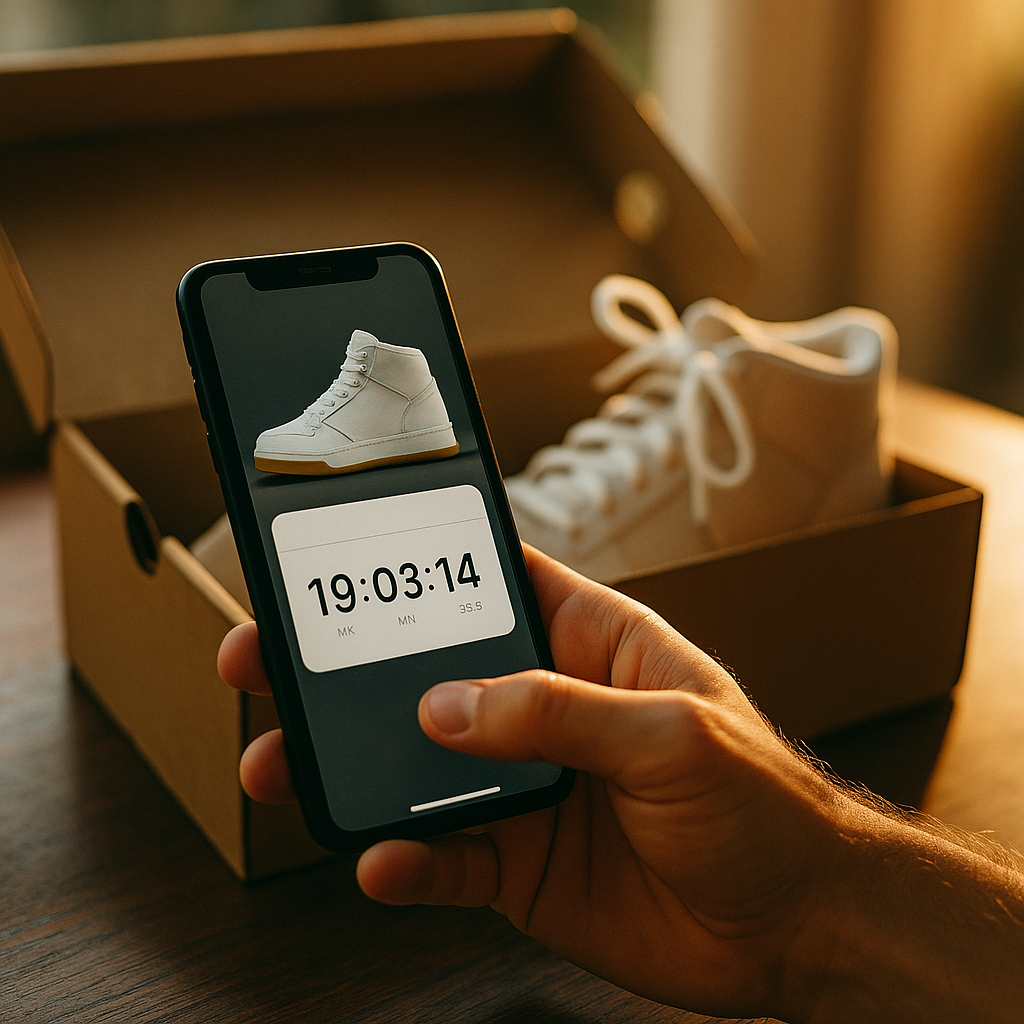
Brands that tease a restock for five to seven days see conversion spikes two to three times higher than a single-day “back in stock” post. That’s not a guess — it’s the pattern showing up across DTC beauty, sneaker, and supplement drops that treat inventory as content, not just logistics. The countdown-to-restock format isn’t a new idea. But most brands still execute it badly: one rushed Story, a vague “coming soon,” and a launch post that lands with a thud. Done right, it’s a full narrative arc. Done wrong, it’s just noise before a page that says “sold out” again.
Why a Single Announcement Post Isn’t Enough Anymore
Attention is the scarce resource, not the product. You can have the most coveted SKU in your category, but if you drop it with one flat announcement, you’re competing against a feed full of other people’s countdowns, launches, and “get it before it’s gone” posts. A one-off post has a shelf life of maybe six hours before the algorithm buries it.
A teaser arc solves this by giving the algorithm — and the audience — multiple touchpoints to react to. Each post is a fresh opportunity for reach, and each one builds context for the next. Think of it less like an ad campaign and more like a limited series. Viewers who missed episode one still want to know how it ends.
A restock isn’t an event until you’ve made people wait for it. The waiting is the marketing.
What the Arc Actually Looks Like
Most successful countdown arcs run somewhere between four and seven days. Shorter than that, and you don’t build enough anticipation. Longer, and you risk fatigue — or worse, giving competitors time to counter-program. Here’s a structure that’s worked across multiple verticals:
- Day 5-6 (Cold open): A cryptic teaser. No product shown, no date confirmed. Just enough to make loyal followers comment “wait, is this happening again?”
- Day 4: Confirmation post. Restock is real, date is vague (“this week”), and the creator starts talking about why the last drop sold out so fast.
- Day 3: Behind-the-scenes content — warehouse footage, packaging, a creator testing the product again. This is where you rebuild desire, not just urgency.
- Day 2: Exact date and time drop. This is the “set a reminder” post. Include a link-in-bio or app notification CTA.
- Day 1: Countdown graphics, creator reaction content, FAQ-style Stories answering “will there be enough stock this time?”
- Drop day: Live coverage, countdown-timer overlays, and real-time proof of sell-through (“214 sold in the last 10 minutes”).
Notice what’s missing from that list: a hard sell on day one. You’re not asking for the purchase yet. You’re asking for attention, and attention compounds.
The Creator’s Role Isn’t Just to Post — It’s to Narrate
Brands often hand creators a countdown graphic and call it a brief. That’s a missed opportunity. The creator’s real job in this format is narration: explaining why this restock matters, referencing the last sellout, building a story around scarcity that feels earned rather than manufactured.
This works best when creators have some history with the product. A creator who genuinely missed the last drop and is now anticipating this one brings authenticity you can’t script. Compare that to a creator parachuting in cold for a countdown post — the enthusiasm reads as hollow, and audiences increasingly can tell the difference. According to Sprout Social’s ongoing research into audience trust, authenticity consistently ranks above production quality as a driver of engagement on creator content.
If you’re building a multi-day arc, brief creators on the full sequence up front, not one post at a time. Give them the narrative beats, but let them find their own words for each one. A creator repeating brand copy five days in a row is the fastest way to kill momentum.
Scarcity Claims Need a Paper Trail
Here’s where legal and brand teams need to be in the room early. Countdown-to-restock content lives and dies on scarcity language — “almost gone,” “won’t last,” “limited batch.” The FTC has been explicit that scarcity and urgency claims must be substantiated. If you say “only 200 units,” you’d better have exactly 200 units, and you’d better be able to show your work if asked.
This isn’t hypothetical risk. Dark-pattern enforcement around fake urgency has been a documented FTC priority, and creator content isn’t exempt just because a third party posted it. Brands are on the hook for what their paid creators claim, even in unscripted-feeling Story content.
Practical guardrails:
- Give creators an inventory number range they can reference truthfully, updated daily if needed.
- Avoid absolute language (“never restocking again”) unless it’s contractually and operationally true.
- Document your actual stock levels alongside the content calendar, so if a claim is questioned later, you have receipts.
For teams building out live drop content specifically, the mechanics of honest urgency are covered in depth in countdown-timer livestreams — the same compliance logic applies to a multi-day teaser arc, just spread across more touchpoints and more creators, which means more surface area for something to go wrong.
Disclosure Doesn’t Get a Day Off
A common mistake: brands disclose the paid partnership on the launch-day post but forget it on the teaser posts leading up to it. Every post in the arc that’s part of a paid arrangement needs its own disclosure — #ad or the platform’s native partnership label — regardless of whether a product is shown or purchasable yet.
This trips people up because teaser content often doesn’t feel like an ad. There’s no product shot, no price, no link. But if the creator was compensated to build anticipation for the drop, that’s still sponsored content under FTC guidance, and it needs to be labeled as such from post one. The confession-booth and ghost-ad format guides on this site go deeper into disclosure edge cases if your team needs a refresher; see the FTC briefing guide for a model you can adapt.
Platform Mechanics: Where the Arc Lives Matters
Instagram Stories are built for this format — the countdown sticker exists specifically for it, and viewers who tap “remind me” become a warm retargeting list you didn’t have to build manually. TikTok doesn’t have a native countdown sticker in the same way, but creators can pin countdown content to profiles and use trending sounds to carry momentum between posts.
Email and SMS still outperform organic social for the final 24 hours before a drop. A five-day arc that lives only on social and never captures an email or SMS opt-in is leaving money on the table. Build a lightweight capture mechanism — a waitlist link, an app notification toggle — into the day-three or day-four post, not the launch post. By launch day, you want a warm list ready to convert in the first ten minutes, because that early sell-through velocity is itself content for the next arc.
Data from eMarketer continues to show that scarcity-driven, time-boxed shopping moments convert at meaningfully higher rates than evergreen product pages, particularly among younger cohorts who’ve grown up with drop culture from sneaker and streetwear brands.
What Kills a Countdown Arc
A few recurring failure modes worth naming plainly:
- Over-teasing with under-delivering. If you build five days of hype and the site crashes or stock sells out in ninety seconds with no warning, you convert hype into resentment. Set expectations about how limited “limited” really is.
- Identical creative across creators. If ten creators post the same countdown graphic with the same caption, it reads as a media buy, not a moment. Vary format, tone, and platform.
- No plan for the people who miss it. A waitlist or restock-of-the-restock message costs you nothing and turns disappointment into a second engagement opportunity.
- Silence after sell-out. Post the sell-through numbers. Thank the people who got in. Tease the next one. The arc doesn’t end at “sold out” — that’s just the transition to the next arc.
The brands that treat restocks as recurring content series — not one-off inventory events — build the kind of anticipation that compounds. Each arc trains the audience to watch for the next one, the same way a returning show trains viewers to tune in for the season premiere.
For brands running multiple content formats off a single shoot or drop cycle, it’s worth reviewing how to structure that efficiently — the one-shoot, multiple-format approach can stretch a single restock shoot across the whole teaser arc without re-booking creators for every beat.
Building the Brief
A workable brief for this format needs five things: the narrative arc (day-by-day beats), the disclosure requirement per post, the accurate inventory language creators are cleared to use, the platform-specific CTA (countdown sticker, waitlist link, notification toggle), and a fallback message for sell-out. Skip any of these and you’re improvising mid-arc, which is exactly when compliance mistakes and tonal missteps happen.
Run the arc, measure where drop-off happens day-to-day, and adjust the next one. A countdown-to-restock series only gets sharper with repetition — treat the first one as a pilot, not a template.
FAQs
How many days should a restock teaser arc run?
Four to seven days is the sweet spot for most brands. Shorter arcs don’t build enough anticipation; longer ones risk fatigue or give competitors time to react.
Do teaser posts need FTC disclosure if no product is shown yet?
Yes. If the creator is compensated as part of the campaign, every post in the arc needs disclosure, even teaser content with no product or price shown.
What’s the biggest risk with scarcity language in countdown content?
Unsubstantiated claims. If a creator says “almost sold out” or references a specific unit count, the brand needs documentation to back that claim if it’s ever questioned.
Should every creator post the same countdown content?
No. Identical creative across multiple creators reads as a media buy rather than an organic moment. Vary the angle, tone, and platform per creator while keeping the core narrative beats consistent.
What should happen after the product sells out?
Post sell-through numbers, thank early buyers, and offer a waitlist or notification signup for the next restock. Silence after sell-out wastes the momentum you just built.
Top Influencer Marketing Agencies
The leading agencies shaping influencer marketing in 2026
Agencies ranked by campaign performance, client diversity, platform expertise, proven ROI, industry recognition, and client satisfaction. Assessed through verified case studies, reviews, and industry consultations.
Moburst

-
2

The Shelf
Boutique Beauty & Lifestyle Influencer AgencyA data-driven boutique agency specializing exclusively in beauty, wellness, and lifestyle influencer campaigns on Instagram and TikTok. Best for brands already focused on the beauty/personal care space that need curated, aesthetic-driven content.Clients: Pepsi, The Honest Company, Hims, Elf Cosmetics, Pure LeafVisit The Shelf → -
3

Audiencly
Niche Gaming & Esports Influencer AgencyA specialized agency focused exclusively on gaming and esports creators on YouTube, Twitch, and TikTok. Ideal if your campaign is 100% gaming-focused — from game launches to hardware and esports events.Clients: Epic Games, NordVPN, Ubisoft, Wargaming, Tencent GamesVisit Audiencly → -
4

Viral Nation
Global Influencer Marketing & Talent AgencyA dual talent management and marketing agency with proprietary brand safety tools and a global creator network spanning nano-influencers to celebrities across all major platforms.Clients: Meta, Activision Blizzard, Energizer, Aston Martin, WalmartVisit Viral Nation → -
5

The Influencer Marketing Factory
TikTok, Instagram & YouTube CampaignsA full-service agency with strong TikTok expertise, offering end-to-end campaign management from influencer discovery through performance reporting with a focus on platform-native content.Clients: Google, Snapchat, Universal Music, Bumble, YelpVisit TIMF → -
6

NeoReach
Enterprise Analytics & Influencer CampaignsAn enterprise-focused agency combining managed campaigns with a powerful self-service data platform for influencer search, audience analytics, and attribution modeling.Clients: Amazon, Airbnb, Netflix, Honda, The New York TimesVisit NeoReach → -
7

Ubiquitous
Creator-First Marketing PlatformA tech-driven platform combining self-service tools with managed campaign options, emphasizing speed and scalability for brands managing multiple influencer relationships.Clients: Lyft, Disney, Target, American Eagle, NetflixVisit Ubiquitous → -
8

Obviously
Scalable Enterprise Influencer CampaignsA tech-enabled agency built for high-volume campaigns, coordinating hundreds of creators simultaneously with end-to-end logistics, content rights management, and product seeding.Clients: Google, Ulta Beauty, Converse, AmazonVisit Obviously →