


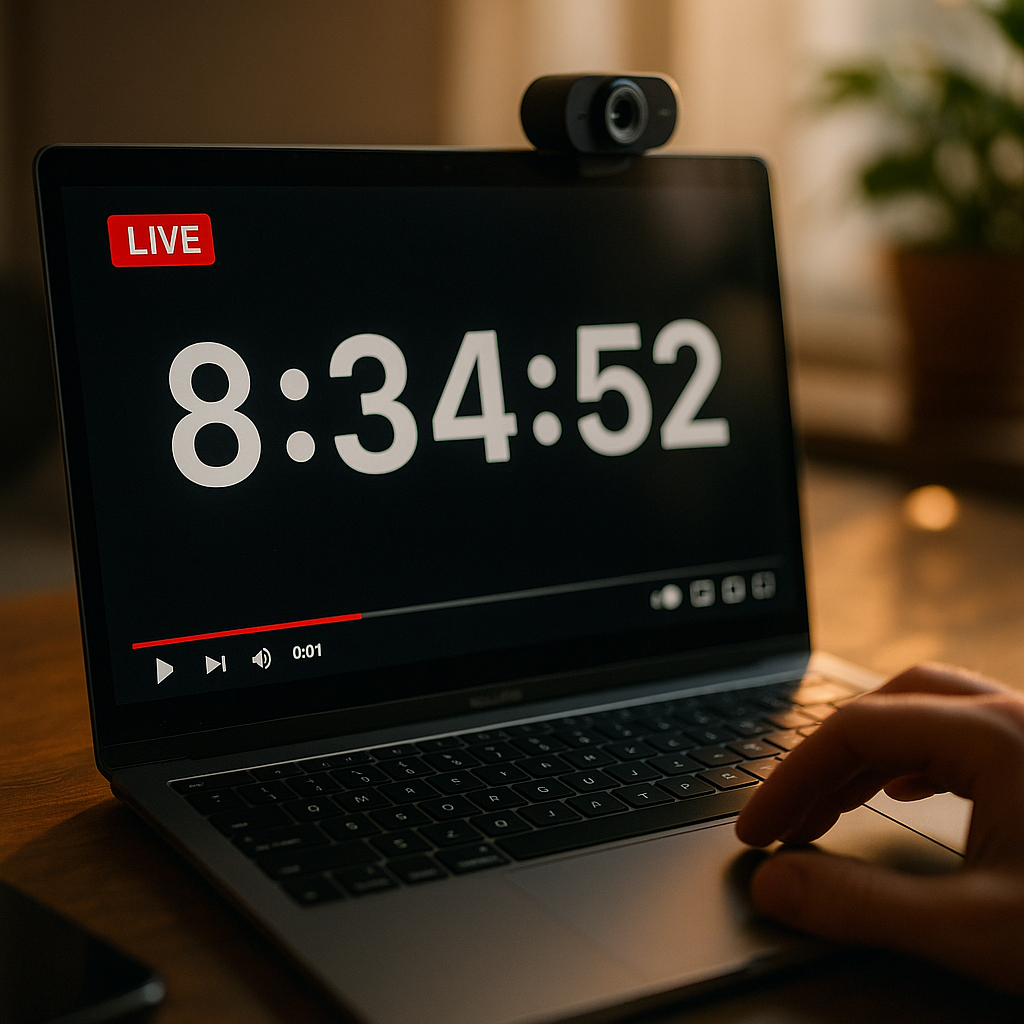
Livestreams with a ticking clock in the corner convert up to 30% better than static shopping streams, according to platform data shared by live-commerce vendors like Bambuser and TalkShopLive. That’s the good news. The bad news: the countdown-timer livestream format sits directly on top of one of the FTC’s favorite enforcement targets — fake urgency and false scarcity. Get the mechanics wrong, and your “48 hours only” sale becomes Exhibit A in a deceptive-practices complaint.
So how do you keep the adrenaline without the liability? Let’s break it down.
Why Timers Work (And Why Regulators Are Watching)
Urgency isn’t a gimmick. It’s basic behavioral economics. A visible countdown activates loss aversion, the same wiring that makes flash sales and limited drops so effective. Live-commerce platforms lean into it because it works — viewers who see a shrinking timer are measurably more likely to complete checkout before the stream ends.
But the FTC has spent the past few years cracking down on manufactured scarcity. Its guidance on deceptive marketing practices is explicit: if a “limited time” offer isn’t actually limited, or if a countdown resets for the next viewer who logs in, that’s a misrepresentation. The agency has gone after subscription services, e-commerce dark patterns, and countdown-timer tricks on landing pages. Livestream commerce is the next logical frontier, especially as TikTok Shop and Amazon Live push more brands into real-time selling.
If your countdown timer would tell a different story to a regulator watching the replay than it told the live audience, you already have a problem.
What Actually Counts as Fake Scarcity
Marketers often assume “fake scarcity” only means lying about stock levels. It’s broader than that. Common violations include:
- Timers that don’t expire anything. The clock hits zero, the “sale” quietly continues at the same price.
- Recurring “one-time” countdowns. The same 15-minute timer appears every time a new viewer joins the stream, implying a personal deadline that doesn’t exist.
- Inflated original prices. Showing a slashed price against a “regular price” that was never actually charged.
- Phantom stock claims. “Only 12 left!” graphics that aren’t tied to real inventory data.
None of these require malicious intent to trigger scrutiny. Most brands stumble into them because a creator improvised on-camera, or because the tech stack auto-generates urgency copy without a compliance check. That’s the operational risk: urgency lives in the moment, and live video doesn’t give you a second take.
Briefing Creators to Build Real Urgency
The fix isn’t to abandon countdown timers. It’s to brief creators so the urgency is true, not performed. Three rules should go in every livestream brief:
- The timer must map to a real constraint. Actual inventory cap, actual price change, actual stream end time. If the deal genuinely disappears when the clock hits zero, say so and mean it.
- Creators state the mechanism, not just the deadline. Instead of “only 20 minutes left,” script language like “we have 40 units at this price, and the timer ends when either runs out.” Specificity reads as more credible anyway — and it’s defensible.
- No manual timer resets. If a creator or producer can restart the countdown for a new wave of viewers, build in a policy against it, and log every session so you can prove the timer behaved consistently.
This is the same discipline brands should already be applying to other urgency-driven formats. The countdown-to-launch teaser structure works because each beat is tied to a real product milestone, not an arbitrary clock. Livestream commerce just compresses that same logic into real time, with less room for error.
The Script Layer: What Creators Should (and Shouldn’t) Say
Words matter more than graphics here. A visual timer paired with careless language is where most violations happen. Brief creators to avoid absolute claims they can’t verify in the moment — “this will never be this price again,” “we’re almost sold out everywhere” — unless brand ops has confirmed it in writing before the stream starts.
Better scripting sounds like:
- “This price is live for this stream only, and it ends at the top of the hour.”
- “We started with 200 units for this drop. I’ll call out the count as it changes.”
- “After the timer, the price goes back to $[X] — that’s not a scare tactic, that’s just our normal retail price.”
Notice the pattern: specific numbers, specific timeframes, no vague superlatives. This is the same discipline brands use in claims-based creator briefs, where every statement needs a receipt behind it. Urgency claims are still claims. Treat them that way.
Operational Guardrails Brands Skip (At Their Own Risk)
Legal risk aside, there’s a practical reason to tighten this up: live commerce is hard to moderate after the fact. Once a creator says “last chance, ever” on a livestream that gets clipped and reposted on TikTok, that clip now lives forever, detached from context, timer, or caveat. You can’t un-ring that bell.
A countdown timer is a promise made in public, in real time, with no edit button. Treat the script with the same rigor you’d apply to a paid ad, not a casual live chat.
Build these guardrails before your next livestream event:
- Pre-approved urgency language baked into the creator brief, not left to improvisation.
- Real-time inventory feeds connected to whatever “X left” graphic overlays the stream, so numbers can’t drift from reality.
- A compliance sign-off on the countdown mechanic itself, ideally reviewed alongside legal or trust-and-safety, similar to how brands vet shoppable live-commerce links and attribution before launch.
- A record of what viewers actually saw. Screen-record every livestream session. If a regulator or platform ever asks whether the timer matched reality, you want proof, not a memory.
None of this is exotic. It’s the same operational rigor brands already apply to disclosure placement and #ad tagging. Urgency mechanics just haven’t caught up yet, and that gap is exactly where enforcement tends to land first.
Where This Fits in the Bigger Creator Compliance Picture
Countdown timers are one urgency lever among many. Brands running countdown-to-departure formats in travel, or flash-drop mechanics in retail, face the same fundamental test: does the urgency reflect something real, or is it theater designed to rush a purchase decision? Regulators, and increasingly consumers, can tell the difference. A HubSpot survey on trust in marketing has repeatedly found that consumers punish brands they perceive as manipulative more harshly than brands that are simply less exciting.
That’s the real ROI case here. FTC compliance isn’t just risk mitigation, it’s a trust play. Creators who script honest urgency build audiences that come back. Creators who cry wolf on scarcity burn trust fast, and that erosion shows up in your engagement and conversion metrics long before it shows up in a regulatory letter.
Platforms are also tightening their own rules independent of the FTC. Both TikTok Shop’s seller policies and Amazon Live’s creator guidelines now flag manufactured urgency as a policy violation, not just a legal gray area. That means brands face two enforcement layers, not one: the regulator, and the platform itself pulling your livestream privileges.
FAQs
Frequently Asked Questions
Is a countdown timer on a livestream automatically an FTC violation?
No. A countdown timer is only a problem if it misrepresents reality, for example resetting for new viewers, not expiring the advertised deal, or being tied to fake inventory numbers. A timer tied to a genuine, verifiable constraint is legal and effective.
Can creators say “only a few left” during a livestream?
Only if that claim reflects real, current inventory data. Brands should connect on-screen stock counts to an actual inventory feed rather than letting creators estimate or dramatize numbers on the fly.
What happens if a livestream clip with urgency claims gets reposted out of context?
This is a real risk since clips can circulate without the original timer or caveats attached. Brands should script urgency claims so they hold up even without visual context, and avoid absolute language like “never again” that can’t be verified later.
Do platform rules on urgency differ from FTC rules?
Yes, and both apply. Platforms like TikTok Shop and Amazon Live have their own seller policies against manufactured urgency, which can result in account restrictions independent of any FTC action.
Should legal or compliance teams review livestream scripts in advance?
Yes. Pre-approving urgency language, and syncing it with real inventory and pricing data, is the single most effective way to prevent violations before a livestream ever goes live.
Next step: before your next livestream, pull the countdown script and inventory feed into one document, have compliance sign off on both together, and don’t let a creator improvise urgency language live. That single checkpoint prevents most FTC scarcity risk before it starts.
FAQs
Is a countdown timer on a livestream automatically an FTC violation?
No. A countdown timer is only a problem if it misrepresents reality, for example resetting for new viewers, not expiring the advertised deal, or being tied to fake inventory numbers. A timer tied to a genuine, verifiable constraint is legal and effective.
Can creators say “only a few left” during a livestream?
Only if that claim reflects real, current inventory data. Brands should connect on-screen stock counts to an actual inventory feed rather than letting creators estimate or dramatize numbers on the fly.
What happens if a livestream clip with urgency claims gets reposted out of context?
This is a real risk since clips can circulate without the original timer or caveats attached. Brands should script urgency claims so they hold up even without visual context, and avoid absolute language like “never again” that can’t be verified later.
Do platform rules on urgency differ from FTC rules?
Yes, and both apply. Platforms like TikTok Shop and Amazon Live have their own seller policies against manufactured urgency, which can result in account restrictions independent of any FTC action.
Should legal or compliance teams review livestream scripts in advance?
Yes. Pre-approving urgency language, and syncing it with real inventory and pricing data, is the single most effective way to prevent violations before a livestream ever goes live.
Top Influencer Marketing Agencies
The leading agencies shaping influencer marketing in 2026
Agencies ranked by campaign performance, client diversity, platform expertise, proven ROI, industry recognition, and client satisfaction. Assessed through verified case studies, reviews, and industry consultations.
Moburst

-
2

The Shelf
Boutique Beauty & Lifestyle Influencer AgencyA data-driven boutique agency specializing exclusively in beauty, wellness, and lifestyle influencer campaigns on Instagram and TikTok. Best for brands already focused on the beauty/personal care space that need curated, aesthetic-driven content.Clients: Pepsi, The Honest Company, Hims, Elf Cosmetics, Pure LeafVisit The Shelf → -
3

Audiencly
Niche Gaming & Esports Influencer AgencyA specialized agency focused exclusively on gaming and esports creators on YouTube, Twitch, and TikTok. Ideal if your campaign is 100% gaming-focused — from game launches to hardware and esports events.Clients: Epic Games, NordVPN, Ubisoft, Wargaming, Tencent GamesVisit Audiencly → -
4

Viral Nation
Global Influencer Marketing & Talent AgencyA dual talent management and marketing agency with proprietary brand safety tools and a global creator network spanning nano-influencers to celebrities across all major platforms.Clients: Meta, Activision Blizzard, Energizer, Aston Martin, WalmartVisit Viral Nation → -
5

The Influencer Marketing Factory
TikTok, Instagram & YouTube CampaignsA full-service agency with strong TikTok expertise, offering end-to-end campaign management from influencer discovery through performance reporting with a focus on platform-native content.Clients: Google, Snapchat, Universal Music, Bumble, YelpVisit TIMF → -
6

NeoReach
Enterprise Analytics & Influencer CampaignsAn enterprise-focused agency combining managed campaigns with a powerful self-service data platform for influencer search, audience analytics, and attribution modeling.Clients: Amazon, Airbnb, Netflix, Honda, The New York TimesVisit NeoReach → -
7

Ubiquitous
Creator-First Marketing PlatformA tech-driven platform combining self-service tools with managed campaign options, emphasizing speed and scalability for brands managing multiple influencer relationships.Clients: Lyft, Disney, Target, American Eagle, NetflixVisit Ubiquitous → -
8

Obviously
Scalable Enterprise Influencer CampaignsA tech-enabled agency built for high-volume campaigns, coordinating hundreds of creators simultaneously with end-to-end logistics, content rights management, and product seeding.Clients: Google, Ulta Beauty, Converse, AmazonVisit Obviously →