


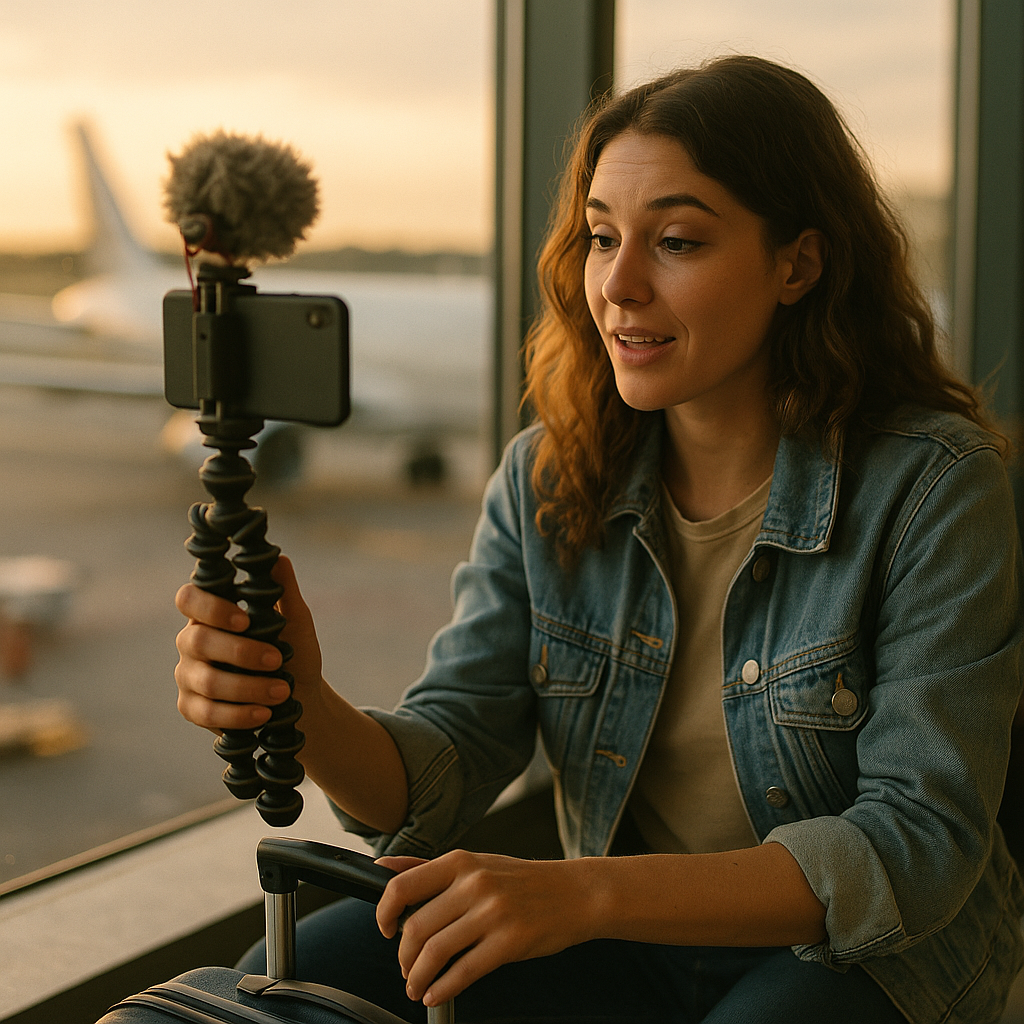
Travel bookings made on impulse convert at a fraction of the rate of those built up over time — yet most travel brands still brief a single creator post and hope for the best. A countdown-to-departure format, run across five to seven posts leading into a booking deadline, consistently outperforms one-off placements on both engagement and click-through. If you’re still buying isolated posts from travel creators, you’re leaving conversion lift on the table.
What the Countdown-to-Departure Format Actually Is
It’s a structured, multi-post creator series that tracks the days (or weeks) leading up to a real booking deadline — a flight sale ending, a peak-season cutoff, a limited-availability tour date. Each post marks a milestone: packing, planning, anticipation, last-chance messaging. The creator isn’t just promoting a destination once. They’re living the countdown publicly, and the audience rides along.
Think of it as the travel-industry cousin of the countdown-to-launch livestream format used in product drops, except stretched across days or weeks instead of hours, and built around a booking window instead of a checkout cart.
A single sponsored post has one shot to convert. A countdown series gets five to seven shots, each one reinforcing urgency without repeating the same pitch.
Why a Single Post Can’t Do What a Series Can
One post is a snapshot. A series is a narrative arc. And narrative arcs are what make people book flights they’d otherwise “think about.”
Here’s the practical problem with one-off travel posts: the algorithm shows them to a fraction of followers, once, and then buries them. If someone scrolls past on day one, they never see it again. A countdown series solves this by re-surfacing the same offer under different creative angles — packing content, itinerary reveals, price-deadline reminders — across multiple days. Each post is a new chance at impression share, and each one builds on the last.
There’s also a psychological mechanism at work. Behavioral marketers have long known that visible deadlines paired with repeated reminders increase conversion far more than a single mention ever could. HubSpot’s research on urgency marketing consistently shows that scarcity messaging performs best when it’s reinforced, not one-shot. A countdown series is scarcity messaging with a content calendar attached.
The Anatomy of a Booking-Deadline Countdown Series
Most successful series run five to seven posts, though the exact cadence depends on how far out the deadline sits. A good default structure:
- Post 1 (T-minus 3 weeks or more): The announcement. Creator reveals the trip, tags the deadline, frames the stakes (“prices jump after this date”).
- Post 2 (T-minus 2 weeks): Planning content. Itinerary building, research, comparing options — this is where split-screen itinerary comparisons perform especially well, showing the “before I booked” versus “what I actually got.”
- Post 3 (T-minus 10 days): Social proof or FOMO beat. Comments from followers asking questions, creator responding, maybe a quick poll on destinations or dates.
- Post 4 (T-minus 1 week): Packing or prep content. Tangible, visual, low-effort to produce, high completion rate.
- Post 5 (T-minus 2-3 days): The hard urgency push. Explicit deadline messaging, price comparison, last-chance framing.
- Post 6 (Deadline day): Final call. Often a Story or short-form video, stripped of production polish, just a direct “this ends tonight.”
- Post 7 (Post-deadline, optional): Departure-day or early-trip content that rewards the audience who booked and seeds the next cycle.
Notice the pacing isn’t evenly spaced. It compresses as the deadline nears, mirroring how urgency actually builds in a buyer’s mind. Spacing posts evenly across three weeks wastes the emotional momentum that a tightening cadence creates.
Where Brands Get the Brief Wrong
The most common mistake: treating every post in the series as a standalone ad. Compliance teams love this because it’s easy to review, but audiences hate it because every post feels like the same paid pitch replayed six times. The FTC’s guidance on clear and conspicuous disclosure doesn’t require every post to look like a commercial — it requires the material connection to be disclosed, consistently, throughout the series. That’s a very different bar.
The fix is to brief for variation within consistency. Disclosure stays constant (paid partnership tags on every post, verbal mention where relevant). But the content type shifts: one post is planning-focused, another is emotional, another is pure urgency copy. This is the same principle behind blending polish and raw footage — variety in production value keeps a series from feeling like a loop of the same ad.
Second mistake: no clear deadline in the creative. If the creator never states the actual date, or vaguely references “book soon,” the urgency mechanism collapses. Every single post should carry some visible reference to the deadline — a sticker, a caption line, a spoken cue. Redundancy here isn’t lazy, it’s the entire point.
Booking Windows Aren’t All Equal — Match the Format to the Deadline Type
Not every travel deadline deserves the full seven-post arc. A flash sale with 48 hours left doesn’t have time for a three-week countdown; it needs a compressed two-to-three-post version. A peak-season booking cutoff (think winter sun packages closing in early autumn) has room for the full arc and benefits from it, because the audience needs time to plan logistics, get time off work, and coordinate with travel companions.
Match the series length to the actual decision cycle of the traveler, not to an arbitrary content calendar. Brands that force a seven-post arc onto a 72-hour flash sale end up with posts that feel manufactured and rushed — which undermines the authenticity the format depends on.
Measuring What Actually Matters
Vanity metrics (views, likes) tell you almost nothing about whether a countdown series moved bookings. What you actually want:
- Click-to-book rate by post position — which post in the sequence drove the most link clicks? Usually it’s post 5 or 6, but not always, and knowing this shapes next quarter’s brief.
- Attributed bookings via unique promo codes per creator, tracked across the whole series rather than per post.
- Drop-off between posts — if engagement craters after post 2, the planning content isn’t landing and needs a format change.
- Deadline-day spike — a healthy series shows a visible booking spike on the final 48 hours, proof the urgency mechanic is working as designed.
Platforms like Sprout Social and native creator dashboards on TikTok and Instagram both support cohort tracking across a date range, which is exactly what you need to evaluate a series rather than a single post. eMarketer data on travel ad spend consistently shows multi-touch campaigns outperforming single-exposure ads on booking conversion, and a countdown series is essentially a multi-touch campaign wearing creator-content clothing.
If you can’t tell which post in the sequence drove the booking spike, you’re not measuring a series — you’re just collecting posts.
Casting the Right Creator for the Arc
Not every travel creator can carry a multi-post series. Some are excellent at single, polished destination content but fall flat when asked to sustain a narrative across three weeks. Look for creators who already post trip-planning content organically — the ones whose feed shows research, comparison, and anticipation as a natural habit, not a performance.
This is also where a creator’s existing community trust matters more than follower count. A mid-tier travel creator with an engaged, question-asking comment section will often outperform a mega-influencer on a countdown series, because the format depends on back-and-forth: followers asking “did you book yet?”, the creator replying, the deadline becoming a shared event rather than an ad. That dynamic is hard to fake and impossible to buy at scale — it has to be cast for.
Consider pairing the countdown structure with a local guide takeover element in the middle posts. Having a destination-based creator join partway through adds a credibility layer — “here’s what’s actually waiting for you” — that pure trip-planning content from a single creator can’t replicate on its own.
A Quick Word on Fatigue
Run this format too often with the same creator and audiences start to tune out the urgency cues — deadline fatigue is real, and it compounds fast in travel content specifically because so many brands lean on “book now” messaging simultaneously during peak sale windows. Rotate creators across booking cycles, and don’t run back-to-back countdown series with the same voice more than once a quarter unless the destination or offer is meaningfully different.
Next step: before your next seasonal sale or booking deadline, map out a five-to-seven-post countdown brief with a compressing cadence, consistent disclosure, and unique tracking per creator — then measure click-to-book by post position, not just aggregate views. That single change in measurement will tell you more about ROI than three months of one-off placements ever could.
FAQs
How long before a booking deadline should a countdown series start?
For a full seven-post arc, start three to four weeks out. For flash sales or shorter windows, compress to two or three posts starting no more than a week ahead — the cadence should match the traveler’s actual decision timeline.
How many creators should run a single countdown campaign?
Three to five creators per campaign is a common sweet spot for mid-size travel brands. It’s enough to diversify audience reach and cast against fatigue risk, without diluting budget so thin that no single series gets proper production support.
Does every post in the series need an FTC disclosure?
Yes. Every post in a paid series requires clear disclosure of the material connection, even if earlier posts already disclosed it. The FTC’s guidance treats each post as its own disclosure event, not a one-time requirement for the campaign.
What’s the biggest metric brands overlook in this format?
Click-to-book rate by post position within the series. Most brands track aggregate engagement and miss which specific post in the sequence actually triggered the booking, which means they can’t optimize the next series intelligently.
Can this format work for last-minute or flash travel deals?
Yes, but compress the arc to two or three posts over 48-72 hours instead of forcing a three-week structure. The key elements — visible deadline, escalating urgency, consistent disclosure — still apply, just at higher speed.
FAQs
How long before a booking deadline should a countdown series start?
For a full seven-post arc, start three to four weeks out. For flash sales or shorter windows, compress to two or three posts starting no more than a week ahead — the cadence should match the traveler’s actual decision timeline.
How many creators should run a single countdown campaign?
Three to five creators per campaign is a common sweet spot for mid-size travel brands. It’s enough to diversify audience reach and cast against fatigue risk, without diluting budget so thin that no single series gets proper production support.
Does every post in the series need an FTC disclosure?
Yes. Every post in a paid series requires clear disclosure of the material connection, even if earlier posts already disclosed it. The FTC’s guidance treats each post as its own disclosure event, not a one-time requirement for the campaign.
What’s the biggest metric brands overlook in this format?
Click-to-book rate by post position within the series. Most brands track aggregate engagement and miss which specific post in the sequence actually triggered the booking, which means they can’t optimize the next series intelligently.
Can this format work for last-minute or flash travel deals?
Yes, but compress the arc to two or three posts over 48-72 hours instead of forcing a three-week structure. The key elements — visible deadline, escalating urgency, consistent disclosure — still apply, just at higher speed.
Top Influencer Marketing Agencies
The leading agencies shaping influencer marketing in 2026
Agencies ranked by campaign performance, client diversity, platform expertise, proven ROI, industry recognition, and client satisfaction. Assessed through verified case studies, reviews, and industry consultations.
Moburst

-
2

The Shelf
Boutique Beauty & Lifestyle Influencer AgencyA data-driven boutique agency specializing exclusively in beauty, wellness, and lifestyle influencer campaigns on Instagram and TikTok. Best for brands already focused on the beauty/personal care space that need curated, aesthetic-driven content.Clients: Pepsi, The Honest Company, Hims, Elf Cosmetics, Pure LeafVisit The Shelf → -
3

Audiencly
Niche Gaming & Esports Influencer AgencyA specialized agency focused exclusively on gaming and esports creators on YouTube, Twitch, and TikTok. Ideal if your campaign is 100% gaming-focused — from game launches to hardware and esports events.Clients: Epic Games, NordVPN, Ubisoft, Wargaming, Tencent GamesVisit Audiencly → -
4

Viral Nation
Global Influencer Marketing & Talent AgencyA dual talent management and marketing agency with proprietary brand safety tools and a global creator network spanning nano-influencers to celebrities across all major platforms.Clients: Meta, Activision Blizzard, Energizer, Aston Martin, WalmartVisit Viral Nation → -
5

The Influencer Marketing Factory
TikTok, Instagram & YouTube CampaignsA full-service agency with strong TikTok expertise, offering end-to-end campaign management from influencer discovery through performance reporting with a focus on platform-native content.Clients: Google, Snapchat, Universal Music, Bumble, YelpVisit TIMF → -
6

NeoReach
Enterprise Analytics & Influencer CampaignsAn enterprise-focused agency combining managed campaigns with a powerful self-service data platform for influencer search, audience analytics, and attribution modeling.Clients: Amazon, Airbnb, Netflix, Honda, The New York TimesVisit NeoReach → -
7

Ubiquitous
Creator-First Marketing PlatformA tech-driven platform combining self-service tools with managed campaign options, emphasizing speed and scalability for brands managing multiple influencer relationships.Clients: Lyft, Disney, Target, American Eagle, NetflixVisit Ubiquitous → -
8

Obviously
Scalable Enterprise Influencer CampaignsA tech-enabled agency built for high-volume campaigns, coordinating hundreds of creators simultaneously with end-to-end logistics, content rights management, and product seeding.Clients: Google, Ulta Beauty, Converse, AmazonVisit Obviously →