


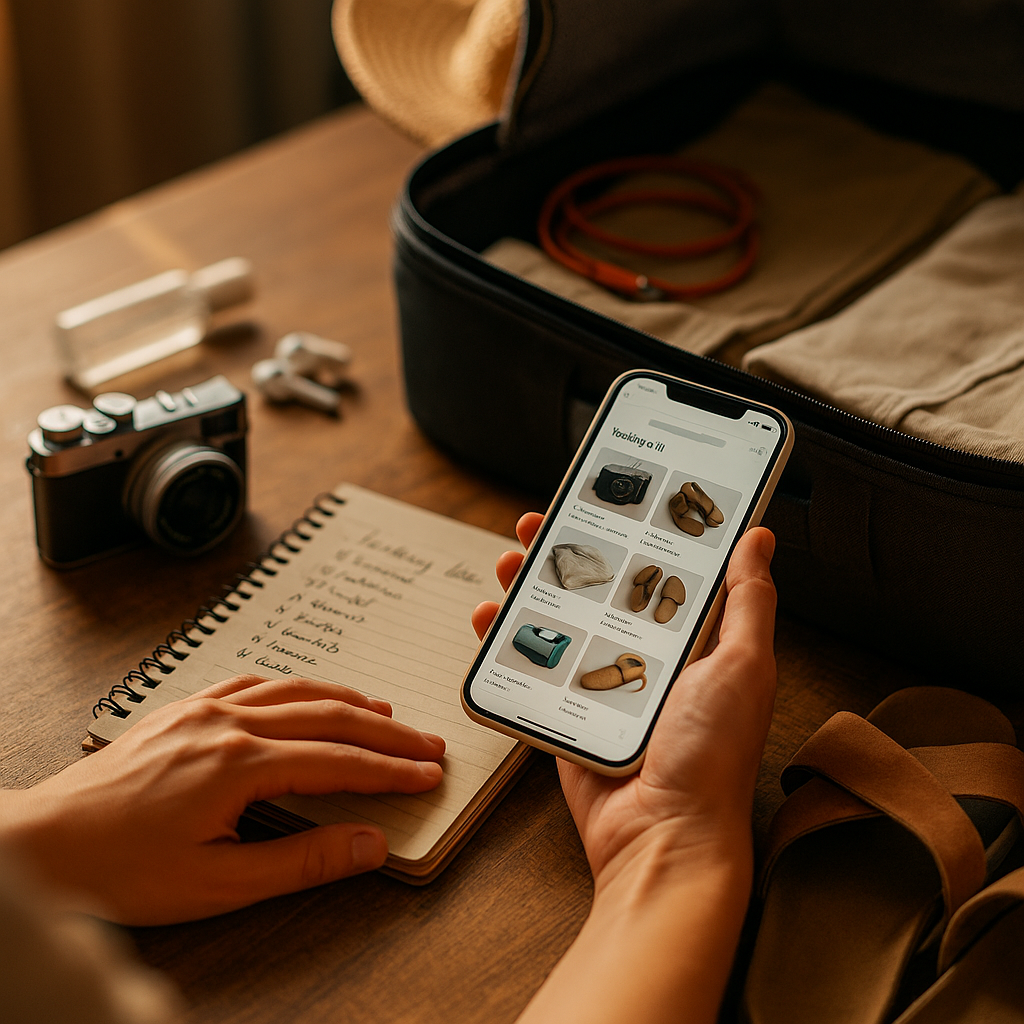
Travel creators post an average of two to three “what’s in my bag” videos per trip, and most brands treat them as an afterthought. That’s the gap. The packing-list product bundle format isn’t a nice-to-have add-on to travel content — done right, it’s one of the highest-converting affiliate formats in the category, because it catches travelers at the exact moment they’re deciding what to buy before they leave.
Packing lists work because they solve a real problem at a real decision point. Nobody watches a packing video for entertainment. They watch because they’re leaving in eight days and haven’t bought a single thing yet. That intent is gold for brands, and most are wasting it with generic gifting and vague “check the link in bio” calls to action.
Why Packing Lists Outperform Standard Travel Content
Most travel sponsorships chase aspiration. Gorgeous drone shots, infinity pools, golden-hour beach walks. Beautiful, sure. But aspiration doesn’t have a “buy now” button. A packing list does.
The format works because it’s inherently transactional without feeling like an ad. A creator standing over an open suitcase, narrating why she picked a specific packing cube system or a particular pair of hiking boots, reads as advice, not promotion. It borrows credibility from the utility genre — similar to how recipe card remix content converts because it’s saved and referenced later, not just watched once.
Packing videos get saved, screenshotted, and revisited in the days before departure — exactly when purchase intent peaks.
A packing list isn’t content marketing. It’s a curated shopping cart wearing a travel-vlog costume — and that distinction is exactly why it converts at higher rates than lifestyle B-roll.
Data backs the intent signal. eMarketer has repeatedly flagged travel as one of the strongest verticals for affiliate and shoppable content, largely because purchase decisions cluster tightly around a trip date. Unlike, say, home goods or beauty, travel purchases have a hard deadline. That urgency is a conversion lever brands should be pulling harder.
What a Shoppable Packing List Actually Requires
A packing list isn’t just a creator holding up products on camera. To convert, it needs structure — the same way a split-screen itinerary comparison needs a clear before/after logic to land. Here’s what separates a bundle that sells from one that just gets views:
- A finite, curated list. Ten to fifteen items max. More than that and the viewer’s decision fatigue kicks in and nothing gets clicked.
- Tiered options where relevant. A budget alternative next to the premium pick increases the odds someone finds a price point that works for them.
- A persistent, trackable link hub. LTK, ShopMy, and Amazon Storefronts all support this natively. Whatever tool the creator uses, it needs unique tracking per SKU so you can actually attribute sales.
- Context, not just a list. “This packing cube system because my last one exploded in Lisbon” converts better than “packing cubes, link below.”
- A destination or trip-type frame. “What I packed for 10 days in Southeast Asia” outperforms generic “travel essentials” because it signals relevance to a specific traveler segment.
Brands that skip the tracking-link requirement are the ones who end up in Q4 budget meetings unable to prove the format worked. Don’t be that team.
Briefing Creators: What to Specify (and What to Leave Alone)
Over-briefing kills packing-list content. The entire appeal is that it feels like a friend’s honest recommendation, not a script. But under-briefing leads to vague, low-converting posts that never mention pricing, sizing, or where to actually buy the thing.
The right brief sits in the middle. Specify the non-negotiables. Leave the voice alone.
What to lock down:
- Which SKUs must appear, and whether alternates or competitor products can be mentioned alongside them.
- Disclosure requirements per the FTC’s endorsement guidelines — every affiliate link needs a clear, conspicuous disclosure, not just a hashtag buried in a caption.
- The link platform and UTM structure, so performance data flows back to your dashboards, not just the creator’s.
- A minimum shelf life for the content — packing lists should stay pinned or featured for the full booking season, not disappear after 48 hours.
What to leave open: the narrative frame, the destination story, the personal reasoning behind each pick. This is where creators consistently outperform brand-scripted copy, because audiences can smell a script from a mile away, especially in a format built on trust.
It’s worth pairing this brief approach with lessons from demonstration-first briefs, which apply the same “show, don’t script” logic to product proof. Packing lists are demonstration content with a shopping cart attached.
Platform Mechanics: Where the Format Actually Lives
Instagram Stories and TikTok are where discovery happens, but neither is built for a persistent, revisitable list. That’s the job of link-in-bio tools and dedicated storefronts.
LTK remains the dominant player for fashion-adjacent travel creators, with built-in shoppable lists that read like a curated store shelf. ShopMy has gained ground fast with creators who want more control over commission negotiation. Amazon Storefronts work well for gear-heavy niches — hiking, backpacking, camera equipment — where audiences already trust Amazon’s checkout flow and return policy.
The mistake brands make is assuming one platform covers it. A creator posting a “packing list for a ski trip” audience might convert better through an Amazon storefront (fast checkout, familiar return policy for gear) while a “what I packed for a Positano getaway” creator converts better through LTK’s more editorial, fashion-forward interface. Match the platform to the purchase psychology, not just the creator’s existing following.
Consider also how the format nests inside a broader content calendar. A countdown-to-departure series pairs naturally with a packing list drop at the midpoint — build anticipation, then deliver the shopping payoff right when urgency peaks.
Measuring What Matters (Not Just Vanity Clicks)
Click-through rate on a packing list is a vanity metric if that’s all you track. The number that matters is conversion rate per SKU, plus average order value on the bundle versus single-item purchases.
Why? Because the entire value proposition of a curated list is the cross-sell. If someone clicks through for the packing cubes but also picks up the neck pillow and the compression socks in the same cart, that’s the format doing its job. Track bundle AOV separately from single-link AOV, and you’ll start to see which creators build carts, not just clicks.
If you’re only measuring click-through rate on a packing list, you’re measuring the wrong thing — the format’s real ROI shows up in cart size, not click volume.
Attribution windows matter more here than in most influencer formats. Because packing decisions happen over days or weeks before departure, a 24-hour cookie window will systematically undercount performance. Push for at least a 7-day window with your affiliate network, and longer if the platform supports it. This is the same attribution discipline that matters in shoppable livestream production, where the gap between view and purchase can also stretch past a single session.
Run a quarterly audit comparing creator-reported sales against your own affiliate dashboard numbers. Discrepancies happen more often than brands admit, usually from broken links or expired promo codes that nobody caught.
Common Failure Points (And How to Avoid Them)
Three things kill packing-list performance more than anything else:
- Dead or expired links. A packing list posted in shoulder season and still linked six months later, pointing to a sold-out product, is worse than no content at all. Set a content refresh cadence.
- Too much brand, not enough traveler. If every item on the list is from the sponsoring brand, audiences clock it instantly and trust collapses. Let creators include one or two non-sponsored picks. It’s what makes the sponsored picks credible.
- No seasonal relevance. A packing list for “summer in Greece” posted in November is dead content. Time these drops against actual booking windows, which for most leisure travel run 60-90 days pre-departure according to Statista’s travel booking data.
Brands running affiliate programs at scale should also look at how this format complements other high-trust travel content, like local guide takeovers. A packing list gets someone ready to go. A local guide takeover convinces them where. Sequenced well, the two formats cover both ends of the booking funnel.
The Takeaway
Stop briefing packing-list content as an afterthought to your hero travel campaign. Treat it as its own conversion channel, with its own tracking links, its own attribution window, and its own creative brief — because the traveler watching it has already decided to buy something. Your only job is making sure it’s your product they click.
Frequently Asked Questions
What makes the packing-list format different from standard travel influencer content?
Packing lists target a viewer with active purchase intent rather than general travel inspiration. The format is inherently transactional — the audience is watching specifically to decide what to buy before a trip, which is why conversion rates typically outperform lifestyle or destination-focused content.
Which affiliate platforms work best for travel packing lists?
LTK and ShopMy dominate for fashion-adjacent travel content, while Amazon Storefronts tend to convert better for gear-heavy niches like hiking or camera equipment. The best choice depends on the audience’s purchase psychology and trust in the checkout experience, not just the creator’s platform of choice.
How long should a packing-list attribution window be?
At least seven days, since packing decisions often happen over one to three weeks leading up to departure. A standard 24-hour cookie window will undercount conversions significantly for this format.
How many products should be included in a shoppable packing list?
Ten to fifteen items is the practical ceiling. Beyond that, viewers experience decision fatigue and click-through rates drop across the whole list, not just the excess items.
Should brands require exclusivity in packing-list content?
No. Including one or two non-sponsored items alongside the sponsored product actually increases trust and, counterintuitively, improves conversion on the sponsored picks. An all-brand list reads as an ad and loses credibility fast.
How do brands stay FTC-compliant with packing-list affiliate content?
Every affiliate link requires a clear, conspicuous disclosure per FTC endorsement guidelines, not a buried hashtag. Brands should specify disclosure placement and language in the creator brief rather than leaving it to interpretation.
Frequently Asked Questions
What makes the packing-list format different from standard travel influencer content?
Packing lists target a viewer with active purchase intent rather than general travel inspiration. The format is inherently transactional — the audience is watching specifically to decide what to buy before a trip, which is why conversion rates typically outperform lifestyle or destination-focused content.
Which affiliate platforms work best for travel packing lists?
LTK and ShopMy dominate for fashion-adjacent travel content, while Amazon Storefronts tend to convert better for gear-heavy niches like hiking or camera equipment. The best choice depends on the audience’s purchase psychology and trust in the checkout experience, not just the creator’s platform of choice.
How long should a packing-list attribution window be?
At least seven days, since packing decisions often happen over one to three weeks leading up to departure. A standard 24-hour cookie window will undercount conversions significantly for this format.
How many products should be included in a shoppable packing list?
Ten to fifteen items is the practical ceiling. Beyond that, viewers experience decision fatigue and click-through rates drop across the whole list, not just the excess items.
Should brands require exclusivity in packing-list content?
No. Including one or two non-sponsored items alongside the sponsored product actually increases trust and, counterintuitively, improves conversion on the sponsored picks. An all-brand list reads as an ad and loses credibility fast.
How do brands stay FTC-compliant with packing-list affiliate content?
Every affiliate link requires a clear, conspicuous disclosure per FTC endorsement guidelines, not a buried hashtag. Brands should specify disclosure placement and language in the creator brief rather than leaving it to interpretation.
Top Influencer Marketing Agencies
The leading agencies shaping influencer marketing in 2026
Agencies ranked by campaign performance, client diversity, platform expertise, proven ROI, industry recognition, and client satisfaction. Assessed through verified case studies, reviews, and industry consultations.
Moburst

-
2

The Shelf
Boutique Beauty & Lifestyle Influencer AgencyA data-driven boutique agency specializing exclusively in beauty, wellness, and lifestyle influencer campaigns on Instagram and TikTok. Best for brands already focused on the beauty/personal care space that need curated, aesthetic-driven content.Clients: Pepsi, The Honest Company, Hims, Elf Cosmetics, Pure LeafVisit The Shelf → -
3

Audiencly
Niche Gaming & Esports Influencer AgencyA specialized agency focused exclusively on gaming and esports creators on YouTube, Twitch, and TikTok. Ideal if your campaign is 100% gaming-focused — from game launches to hardware and esports events.Clients: Epic Games, NordVPN, Ubisoft, Wargaming, Tencent GamesVisit Audiencly → -
4

Viral Nation
Global Influencer Marketing & Talent AgencyA dual talent management and marketing agency with proprietary brand safety tools and a global creator network spanning nano-influencers to celebrities across all major platforms.Clients: Meta, Activision Blizzard, Energizer, Aston Martin, WalmartVisit Viral Nation → -
5

The Influencer Marketing Factory
TikTok, Instagram & YouTube CampaignsA full-service agency with strong TikTok expertise, offering end-to-end campaign management from influencer discovery through performance reporting with a focus on platform-native content.Clients: Google, Snapchat, Universal Music, Bumble, YelpVisit TIMF → -
6

NeoReach
Enterprise Analytics & Influencer CampaignsAn enterprise-focused agency combining managed campaigns with a powerful self-service data platform for influencer search, audience analytics, and attribution modeling.Clients: Amazon, Airbnb, Netflix, Honda, The New York TimesVisit NeoReach → -
7

Ubiquitous
Creator-First Marketing PlatformA tech-driven platform combining self-service tools with managed campaign options, emphasizing speed and scalability for brands managing multiple influencer relationships.Clients: Lyft, Disney, Target, American Eagle, NetflixVisit Ubiquitous → -
8

Obviously
Scalable Enterprise Influencer CampaignsA tech-enabled agency built for high-volume campaigns, coordinating hundreds of creators simultaneously with end-to-end logistics, content rights management, and product seeding.Clients: Google, Ulta Beauty, Converse, AmazonVisit Obviously →