


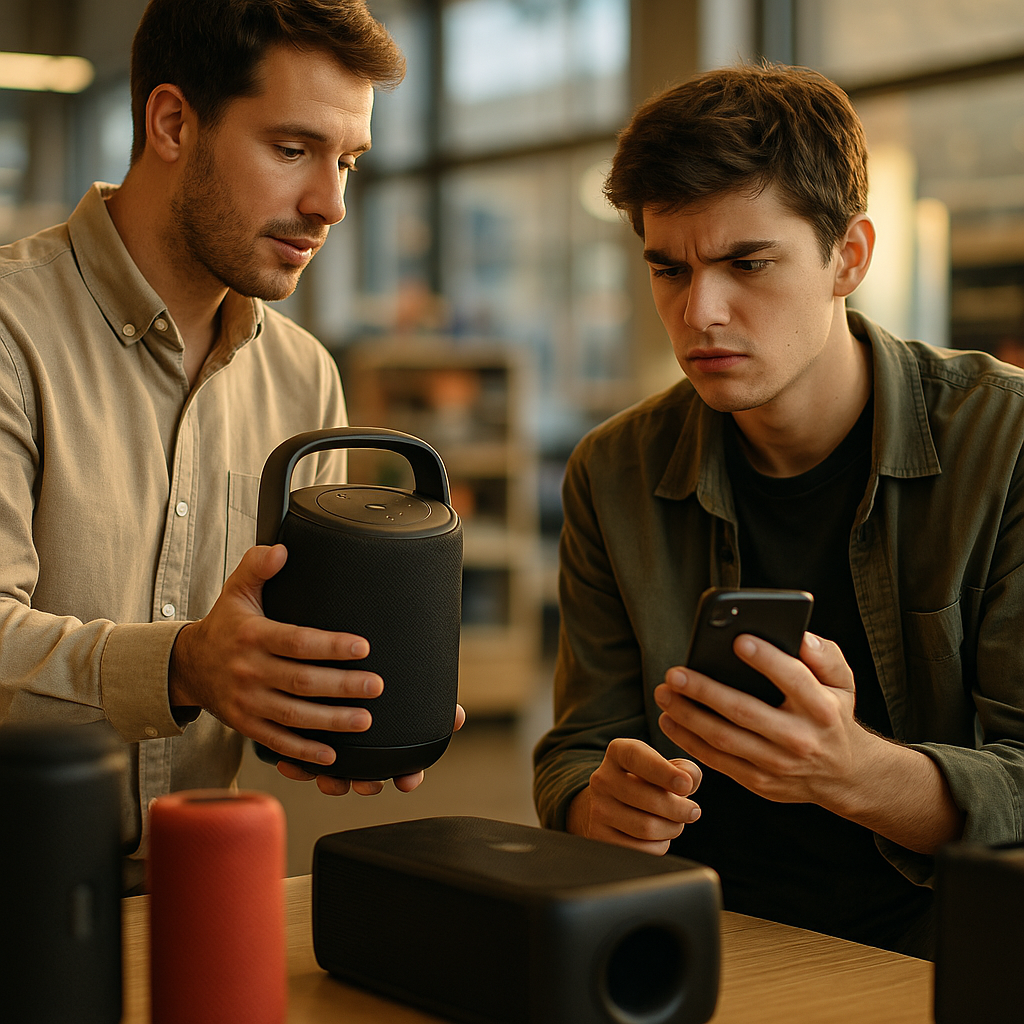
Gen Z spends an average of 53% less time watching branded ad content before skipping it, compared to older generations — yet they’ll sit through a 90-second unedited product demo without blinking. That gap tells you everything about where influencer marketing needs to go. The demonstration-first format isn’t a trend. It’s a correction to a decade of overclaiming.
If your briefs are still asking creators to “highlight key benefits” or “convey product superiority,” you’re speaking a language this audience no longer trusts. They want proof, not adjectives.
Why Claims Stopped Working
Gen Z grew up watching brands lie in real time. Filtered skin, staged unboxings, “results not typical” fine print buried under glowing testimonials. They’ve developed what researchers at eMarketer have called a structural skepticism toward advertising claims — not cynicism exactly, but a default assumption that marketing language is decorative, not informative.
So when a creator says “this blender is incredibly powerful,” that sentence carries zero evidentiary weight. It’s noise. But show the blender pulverizing ice cubes and frozen mango in four seconds, filmed in one continuous shot with no cuts? That’s data. The audience does their own reasoning from there.
This is the core mechanic of demonstration-first content: you stop telling the audience what to conclude, and you give them the raw material to conclude it themselves.
Gen Z doesn’t reject advertising. They reject unverifiable advertising. Demonstration-first content works because it removes the burden of trust from the brand’s word and places it on the viewer’s own eyes.
What Demonstration-First Actually Means in a Brief
This isn’t just “show, don’t tell” repackaged for a marketing deck. It’s a specific set of production choices that make the proof legible and hard to fake.
A demonstration-first brief typically requires:
- Unbroken or minimally-cut footage of the product in actual use, not simulated use.
- A stated variable or comparison point — before/after, competitor vs. product, claim vs. reality.
- Visible failure conditions where relevant. If the product doesn’t work in some scenario, showing that builds more trust than hiding it.
- Neutral or skeptical framing from the creator, rather than enthusiastic narration layered over the footage.
- Timestamped or real-time elements that make it obvious the demo wasn’t edited to hide a failure or delay.
Compare this to a traditional influencer brief, which usually leads with talking points: three benefits, a CTA, maybe a discount code overlay. Demonstration-first briefs lead with a test protocol. What are we proving? How will the viewer know it’s real? What would disprove the claim, and are we willing to show that too?
This last point matters more than most brands want to admit. A skincare brand that briefs a creator to show 14 days of consistent, unfiltered morning skin photos — including the days where nothing visibly changed — earns more credibility than one that only shows day 1 and day 14 under identical lighting. The messy middle is the proof.
The Format in Practice
Demonstration-first content tends to show up in a handful of recognizable structures. None of these are new inventions — they’re refinements of formats creators already use naturally, just briefed with more intention.
Side-by-side comparison tests. Two products, same conditions, same creator, filmed in one sitting. This works especially well for durability claims (phone case drop tests, fabric pilling, cookware scratch resistance).
Real-time stress tests. Instead of a polished 30-second cutdown, creators film the product under duress for its full duration — a battery drain test, a stain removal attempt, a workout in the apparel. Similar in spirit to the one-take challenge demo format, where the lack of editing is itself the credibility signal.
Blind evaluation formats. The creator doesn’t know which product is the sponsor’s until after testing, or reveals brand identity only at the end. This has become especially popular in food and beverage, closely related to the mechanics used in blind taste-test briefs.
Sourcing and process verification. For CPG and beauty brands, demonstration sometimes means proving where the product comes from, not just what it does. This overlaps with the approach covered in the product origin mapping format.
Each of these shares a common DNA: the proof is embedded in the footage, not the voiceover.
Why This Reduces Compliance Risk (Not Just Boosts Engagement)
Here’s the part that should get a brand’s legal and compliance teams paying attention. Demonstration-first content is inherently lower-risk from an FTC perspective, because it shifts the content away from subjective superlative claims — the language that triggers substantiation requirements — toward observable, filmable outcomes.
The FTC’s endorsement guidelines are clear that claims made by influencers need to be truthful and substantiated, and that unrealistic or unverifiable claims create liability for both the creator and the brand. “This serum eliminated my dark spots in a week” is a claim that needs backup data. A 7-day filmed log showing actual skin, actual lighting, actual dates, is closer to being its own substantiation.
That doesn’t mean demonstration content is compliance-proof. Creators still need disclosure language, and brands still need to avoid cherry-picking only the best demo take. But the format naturally steers creators away from the kind of loose, unverifiable superlatives that get flagged. It’s a structural risk reduction, not just a stylistic choice.
Demonstration-first content doesn’t just convert better — it’s a lower-liability content category by design, because the proof lives in the footage rather than in a spoken claim that requires separate substantiation.
Briefing Creators: What Changes Operationally
Shifting a brand’s influencer program toward demonstration-first content changes what you ask for at every stage.
Creative briefs need a “proof point” section, not just a “key message” section. Instead of telling a creator what to say, you tell them what to show and how to show it authentically. That means specifying camera setup (fixed shot vs. handheld), lighting consistency, and whether cuts are allowed at all.
Talent selection also shifts. Creators known for hype-heavy delivery aren’t always the right fit here. You want creators comfortable with a slower, more observational style — closer to the tone used in waiting-room testimonial formats or store-return video content, where the creator’s role is closer to narrator-witness than salesperson.
Approval workflows need to change too. If you’re asking creators to show real, unedited results, you lose some control over outcome. That’s uncomfortable for brand teams used to script approval. But it’s the tradeoff that makes the format credible in the first place. A brand that insists on reshooting until the demo looks perfect has quietly turned a demonstration back into a claim.
Production timelines usually get longer, not shorter. A 14-day skin log or a durability stress test can’t be compressed into a single afternoon shoot. Brands need to plan demonstration-first campaigns with longer lead times than they’d budget for a standard sponsored post, and build that into content calendars alongside other formats like progress log briefs that run over extended periods.
Where It Fits Against Other Trust-Building Formats
Demonstration-first isn’t a replacement for every other creator format — it’s one lever among several that brands are using to counter Gen Z’s ad skepticism. It pairs particularly well with formats that already lean on authenticity signals: customer-handoff unboxings, employee takeovers, and split-decision videos where a creator weighs two options on camera.
Data from Sprout Social’s consumer research on social trust consistently shows that audiences rank peer demonstration and user-generated proof above brand messaging and celebrity endorsement, in that order. Demonstration-first content sits squarely at the top of that hierarchy, because it combines a real creator’s presence with objectively observable outcomes.
For brands running mixed-format influencer programs, the practical move is to reserve demonstration-first briefs for products where the proof is genuinely visual and repeatable — performance apparel, appliances, skincare with measurable timelines, food and beverage taste claims. Products where the value proposition is more abstract (software, financial services, subscription bundles) may need a hybrid approach, pairing demonstration elements with narrative formats like slow-burn product reveal series.
The Real Test: Would You Show the Failure Take?
Here’s a useful internal filter for any brand considering this format: if the demonstration didn’t go perfectly, would you still post it?
If the honest answer is no, you haven’t actually committed to demonstration-first content. You’ve just made your claims more cinematic. The format only earns trust when the audience senses that the outcome wasn’t guaranteed in advance. That’s uncomfortable for brand teams used to controlling every frame. It’s also exactly why it works.
Next step: Audit your next three creator briefs. If they ask creators to describe the product more than they ask creators to prove something about it, rewrite them around a single testable claim, and let the footage do the talking.
FAQs
What is demonstration-first content in influencer marketing?
It’s a creative approach where creators prove product performance through visible, largely unedited evidence — comparison tests, real-time use, stress tests — rather than describing benefits through spoken claims or scripted talking points.
Why does this format work better with Gen Z audiences specifically?
Gen Z has grown up with heavy exposure to advertising and influencer marketing, which has produced a default skepticism toward unverifiable claims. Demonstration-first content shifts the burden of proof from the brand’s language to observable footage, which this audience trusts more readily.
Does demonstration-first content reduce FTC compliance risk?
It can, because it reduces reliance on subjective superlative claims that require separate substantiation. However, creators still need proper disclosure, and brands still need to avoid selectively editing out failed results, which would undermine the format’s credibility and could still raise compliance concerns.
What types of products work best for this format?
Products with visually observable, repeatable outcomes work best: appliances, skincare with measurable timelines, apparel durability, food and beverage taste comparisons. Abstract products like software or financial services usually need a hybrid approach combining demonstration with narrative formats.
How does this change the creative brief process?
Briefs need a defined proof point and testing protocol instead of a list of key messages. Brands also need to loosen approval control, since authentic demonstration requires accepting outcomes that aren’t fully scripted in advance.
Does demonstration-first content take longer to produce than standard sponsored posts?
Usually, yes. Formats involving multi-day logs or extended stress tests require longer production timelines than a single-session sponsored post, so brands need to build that into their content calendars.
FAQs
Top Influencer Marketing Agencies
The leading agencies shaping influencer marketing in 2026
Agencies ranked by campaign performance, client diversity, platform expertise, proven ROI, industry recognition, and client satisfaction. Assessed through verified case studies, reviews, and industry consultations.
Moburst

-
2

The Shelf
Boutique Beauty & Lifestyle Influencer AgencyA data-driven boutique agency specializing exclusively in beauty, wellness, and lifestyle influencer campaigns on Instagram and TikTok. Best for brands already focused on the beauty/personal care space that need curated, aesthetic-driven content.Clients: Pepsi, The Honest Company, Hims, Elf Cosmetics, Pure LeafVisit The Shelf → -
3

Audiencly
Niche Gaming & Esports Influencer AgencyA specialized agency focused exclusively on gaming and esports creators on YouTube, Twitch, and TikTok. Ideal if your campaign is 100% gaming-focused — from game launches to hardware and esports events.Clients: Epic Games, NordVPN, Ubisoft, Wargaming, Tencent GamesVisit Audiencly → -
4

Viral Nation
Global Influencer Marketing & Talent AgencyA dual talent management and marketing agency with proprietary brand safety tools and a global creator network spanning nano-influencers to celebrities across all major platforms.Clients: Meta, Activision Blizzard, Energizer, Aston Martin, WalmartVisit Viral Nation → -
5

The Influencer Marketing Factory
TikTok, Instagram & YouTube CampaignsA full-service agency with strong TikTok expertise, offering end-to-end campaign management from influencer discovery through performance reporting with a focus on platform-native content.Clients: Google, Snapchat, Universal Music, Bumble, YelpVisit TIMF → -
6

NeoReach
Enterprise Analytics & Influencer CampaignsAn enterprise-focused agency combining managed campaigns with a powerful self-service data platform for influencer search, audience analytics, and attribution modeling.Clients: Amazon, Airbnb, Netflix, Honda, The New York TimesVisit NeoReach → -
7

Ubiquitous
Creator-First Marketing PlatformA tech-driven platform combining self-service tools with managed campaign options, emphasizing speed and scalability for brands managing multiple influencer relationships.Clients: Lyft, Disney, Target, American Eagle, NetflixVisit Ubiquitous → -
8

Obviously
Scalable Enterprise Influencer CampaignsA tech-enabled agency built for high-volume campaigns, coordinating hundreds of creators simultaneously with end-to-end logistics, content rights management, and product seeding.Clients: Google, Ulta Beauty, Converse, AmazonVisit Obviously →