


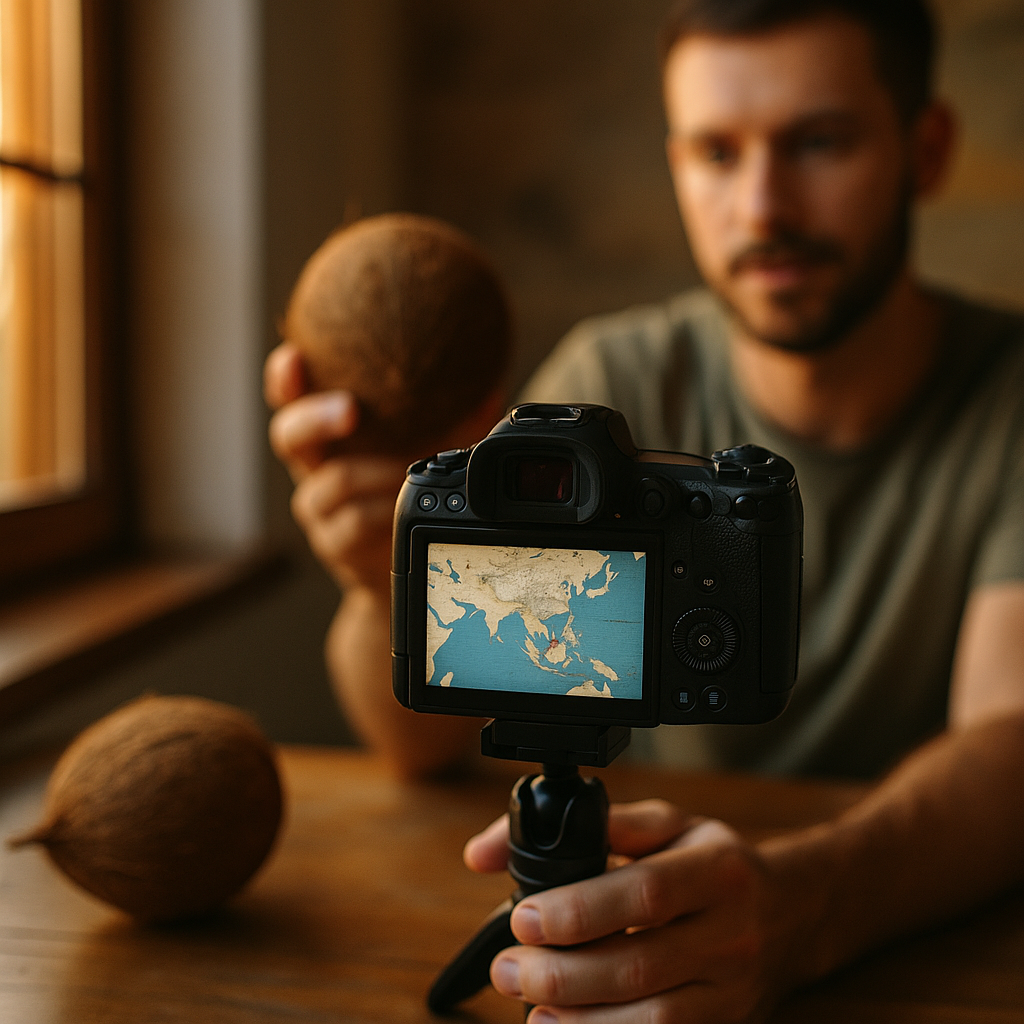
Sixty-seven percent of consumers say they’d pay more for products with verified ethical sourcing, according to Statista consumer trust research. But here’s the catch: most brands still “prove” sourcing with a paragraph of copy and a stock photo of a farm. The product origin map format replaces that guesswork with clickable, geo-tagged video that lets shoppers trace a product from field to shelf. It’s transparency you can actually click through, not just read about.
Why Supply Chain Claims Stopped Being Enough
Brands have been making sourcing claims for decades. “Ethically sourced.” “Farm to table.” “Sustainably harvested.” Consumers got tired of trusting the label. Then came the FTC’s tightened stance on green and ethical marketing claims, and suddenly vague sourcing language became a liability rather than a selling point.
The FTC’s Green Guides make it clear: unsubstantiated environmental and sourcing claims can trigger enforcement action. That’s not a hypothetical risk anymore. It’s a documented one, and legal teams at CPG and beauty companies are increasingly the ones vetoing sourcing language that marketing can’t back up with evidence.
This is where the origin map format earns its keep. Instead of asserting a claim, brands show it — pinned locations, timestamped footage, a literal map of the journey. It’s the difference between saying “our coffee is direct-trade” and showing the actual farm, the actual farmer, and the actual GPS coordinates where the beans were picked.
Geo-tagged origin video doesn’t just support a sourcing claim — it removes the need to make an unverifiable claim in the first place.
What the Format Actually Looks Like
Picture an interactive video embed on a product page. A world map sits alongside (or beneath) the video player. As the footage moves from raw material harvest to processing to packaging, pins light up on the map in sequence. Viewers can click any pin and jump straight to that stage of the journey.
The best executions layer in:
- Timestamped, geo-tagged clips shot on location, not stock B-roll.
- Named, on-camera sources — farmers, factory workers, logistics staff — who speak for themselves rather than being narrated over.
- Batch or lot-level detail, so a shopper can theoretically trace the specific product in their cart, not just “the brand” in general.
- Third-party verification badges or certifications linked directly to the relevant map pin.
This isn’t a one-off video. It’s closer to an interactive documentary series, built modularly so new sourcing regions or suppliers can be added without reshooting everything.
Why Geo-Tagging Beats a Regular Sourcing Video
A standard sourcing video is linear. You watch it start to finish, or you don’t watch it at all. Geo-tagged, map-based video is exploratory. Shoppers control their own path through the content, which does two things brands should care about.
First, it increases dwell time on product pages. HubSpot’s research on interactive content consistently shows that clickable, explorable formats hold attention longer than passive video, and longer attention on a PDP correlates with higher conversion intent, per HubSpot’s content engagement benchmarks.
Second, and more importantly, it makes the claim self-verifying. A viewer who clicks on a specific farm pin and sees the actual coordinates, actual weather, actual person standing there, isn’t being told to trust the brand. They’re watching evidence assemble itself. That’s a fundamentally different trust mechanism than narration.
Compare this to formats built on a similar “show, don’t tell” principle, like the one-take challenge demo, where the lack of editing itself is the trust signal. The origin map format applies that same logic to sourcing, using location data as the unfakeable layer instead of an unbroken take.
Who’s Actually Using This Right Now
Coffee and chocolate brands were early adopters, largely because direct-trade claims have been contested territory for years. Several mid-size roasters now embed origin maps directly on PDPs, letting customers scan a QR code on the bag and land on a map showing the specific cooperative and harvest date.
Apparel brands working with recycled or traceable materials are following. Fashion supply chains are notoriously opaque, and regulators in the EU are moving toward mandatory digital product passports that will require this kind of traceability by law within a few years. Brands building the origin map format now aren’t just marketing, they’re getting ahead of compliance requirements that are coming whether they like it or not.
Beauty and skincare brands sourcing botanicals from specific regions (shea from Ghana, argan from Morocco) use the format to counter greenwashing skepticism. When a $40 body butter says “ethically sourced shea,” a skeptical TikTok comment section will ask for proof within hours. An interactive origin map is a pre-loaded answer to that exact objection.
The Creator’s Role Isn’t What You’d Expect
Here’s the part brands get wrong initially: they treat this as a production project, not a creator brief. But the strongest origin map content comes from pairing a creator with the sourcing trip itself, not just handing raw footage to an editor afterward.
A creator who travels to the source, films their own reactions, and interviews suppliers on camera brings something a corporate video crew can’t: a viewer stand-in. Someone the audience already trusts, asking the questions the audience would ask. This is the same principle behind behind-the-scenes employee formats — proximity to the real thing, filtered through a relatable human, builds more trust than a polished corporate narrative ever will.
Brief creators to capture:
- Unscripted first impressions on arrival at each location.
- Direct questions to suppliers about pay, conditions, and process — even slightly uncomfortable ones.
- Raw GPS or location-stamped footage (many phones do this natively; make sure it’s preserved in export).
- B-roll of the actual physical environment, not staged shots.
Agencies scaling this across multiple sourcing regions should look at how UGC content harvesting workflows handle volume, since an origin map series often needs footage from six or more locations shot months apart, then assembled into one coherent interactive experience.
Compliance: Where Brands Get Nervous, and Where They Should
Geo-tagged content raises real questions legal teams need to answer before a single frame gets shot.
Data accuracy is non-negotiable. If a pin says “Sourced in Oaxaca” and it turns out that supplier relationship ended eight months ago, that’s not a minor error — it’s a material misrepresentation. Map content needs a maintenance owner, someone whose job includes auditing pins quarterly against active supplier contracts.
Worker consent and safety matter more here than in almost any other format. Showing named individuals at named locations creates identifiable footage of real workers, sometimes in countries with limited labor protections. Get documented consent, and think hard about whether showing faces and names creates any risk for the people on camera.
An origin map that overstates traceability is arguably a bigger liability than no map at all — it converts a vague claim into a specific, falsifiable one.
This echoes the same discipline brands need for testimonial-style content. The waiting-room testimonial format guide covers the broader principle: any format that trades on “this is real” needs a compliance process at least as rigorous as the creative process.
Third, disclosure still applies. If suppliers or creators are compensated for appearing, that needs to be flagged per standard influencer disclosure rules, even in a documentary-style sourcing piece. Regulators in the UK apply similar scrutiny; brands operating there should check current guidance from the ICO on data handling if location data ties back to identifiable individuals.
Production Realities Nobody Mentions
Interactive geo-tagged video is genuinely more expensive than a standard brand film, and brands underestimate this by a wide margin. Budget for:
- Multi-location shoots, often across different countries and time zones, with separate crews or a traveling creator-and-editor team.
- Interactive video tooling — platforms like hotspot-enabled video players or custom map overlays, which usually require a developer or a specialized vendor, not just a video editor.
- Ongoing maintenance, since sourcing relationships shift and stale maps are worse than none.
- Localization if the brand sells globally; a map pin’s tooltip copy needs translation, not just the video captions.
A smart middle path: start with one sourcing region as a pilot, wrapped into existing PDP or landing page real estate, before committing to a full multi-region interactive map. Test whether it actually moves conversion or time-on-page before scaling the format brand-wide.
For brands already running hybrid video formats across channels, the production logic overlaps with vertical-horizontal hybrid briefs — footage shot once, reformatted for PDP embeds, social cutdowns, and paid placements, which helps offset the higher upfront cost of the map format itself.
Where This Is Heading
Expect origin map content to merge with QR-driven packaging next. Scan a code on the box, land directly on the map pin for that batch. Combine that with blockchain-based supply chain verification (already piloted by several food and luxury brands) and you get something closer to an audit trail than a marketing asset.
That convergence is the real opportunity. Marketing teams that build origin maps now, with clean data and real consent processes, will have a head start when traceability shifts from “nice differentiator” to “regulatory requirement.” The brands scrambling to retrofit this later will pay more and move slower.
Next step: Pick your single most defensible sourcing claim, the one with the cleanest paper trail and most cooperative supplier, and pilot a one-region origin map before committing budget to a full rollout.
FAQs
What is the product origin map format in video marketing?
It’s an interactive video experience where geo-tagged clips are linked to map pins, letting viewers click through a product’s supply chain journey from raw material to finished good, verifying sourcing claims with location-stamped footage instead of text alone.
How is this different from a standard brand sourcing video?
Standard sourcing videos are linear and narrated. The origin map format is exploratory and viewer-controlled, pairing footage with actual GPS data and named sources so the content functions as evidence rather than just storytelling.
Is geo-tagged sourcing video required by any regulation yet?
Not universally, but the EU’s move toward digital product passports signals mandatory traceability requirements are coming for certain categories, particularly apparel and electronics. Brands building this capability now are getting ahead of compliance rather than reacting to it.
What compliance risks come with this format?
The biggest risks are stale or inaccurate map data, lack of documented worker consent for identifiable footage, and undisclosed compensation to creators or suppliers appearing in the content. Each requires an ongoing review process, not a one-time legal check.
How expensive is it to produce an interactive origin map?
Costs run higher than typical brand video due to multi-location shoots, interactive video tooling, and ongoing maintenance as supplier relationships change. Most brands pilot with a single sourcing region before scaling to a full multi-region map.
Can creators be used instead of a corporate production crew?
Yes, and it’s often more effective. A creator traveling to the source and asking unscripted questions builds more viewer trust than narrated corporate footage, similar to the trust mechanics seen in behind-the-scenes and employee-led content formats.
Top Influencer Marketing Agencies
The leading agencies shaping influencer marketing in 2026
Agencies ranked by campaign performance, client diversity, platform expertise, proven ROI, industry recognition, and client satisfaction. Assessed through verified case studies, reviews, and industry consultations.
Moburst

-
2

The Shelf
Boutique Beauty & Lifestyle Influencer AgencyA data-driven boutique agency specializing exclusively in beauty, wellness, and lifestyle influencer campaigns on Instagram and TikTok. Best for brands already focused on the beauty/personal care space that need curated, aesthetic-driven content.Clients: Pepsi, The Honest Company, Hims, Elf Cosmetics, Pure LeafVisit The Shelf → -
3

Audiencly
Niche Gaming & Esports Influencer AgencyA specialized agency focused exclusively on gaming and esports creators on YouTube, Twitch, and TikTok. Ideal if your campaign is 100% gaming-focused — from game launches to hardware and esports events.Clients: Epic Games, NordVPN, Ubisoft, Wargaming, Tencent GamesVisit Audiencly → -
4

Viral Nation
Global Influencer Marketing & Talent AgencyA dual talent management and marketing agency with proprietary brand safety tools and a global creator network spanning nano-influencers to celebrities across all major platforms.Clients: Meta, Activision Blizzard, Energizer, Aston Martin, WalmartVisit Viral Nation → -
5

The Influencer Marketing Factory
TikTok, Instagram & YouTube CampaignsA full-service agency with strong TikTok expertise, offering end-to-end campaign management from influencer discovery through performance reporting with a focus on platform-native content.Clients: Google, Snapchat, Universal Music, Bumble, YelpVisit TIMF → -
6

NeoReach
Enterprise Analytics & Influencer CampaignsAn enterprise-focused agency combining managed campaigns with a powerful self-service data platform for influencer search, audience analytics, and attribution modeling.Clients: Amazon, Airbnb, Netflix, Honda, The New York TimesVisit NeoReach → -
7

Ubiquitous
Creator-First Marketing PlatformA tech-driven platform combining self-service tools with managed campaign options, emphasizing speed and scalability for brands managing multiple influencer relationships.Clients: Lyft, Disney, Target, American Eagle, NetflixVisit Ubiquitous → -
8

Obviously
Scalable Enterprise Influencer CampaignsA tech-enabled agency built for high-volume campaigns, coordinating hundreds of creators simultaneously with end-to-end logistics, content rights management, and product seeding.Clients: Google, Ulta Beauty, Converse, AmazonVisit Obviously →