


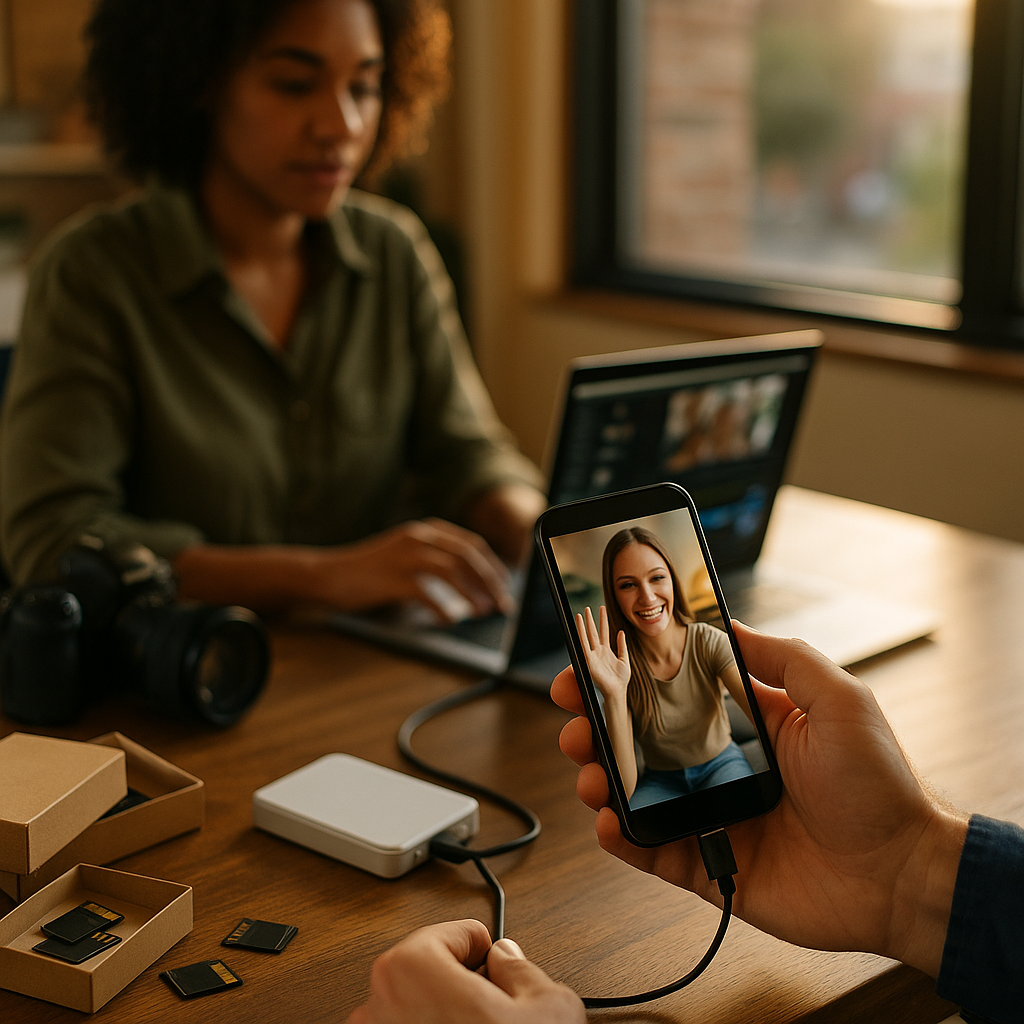
Brands now field thousands of creator submissions per campaign. Sorting them by hand used to take weeks. UGC studio content harvesting is how agencies quietly fixed that, building production pipelines that treat authentic-looking footage like an industrial input rather than a lucky find. The result: faster turnaround, fewer legal headaches, and content libraries that actually scale.
Ask any brand marketer running a creator program at volume what keeps them up at night, and it’s rarely the creative brief. It’s the logistics. Where does footage live? Who cleared usage rights? Which version is FTC-compliant? UGC studios exist because someone had to solve that problem systematically, and the agencies doing it well are quietly becoming the most valuable vendors in the influencer marketing stack.
What “Content Harvesting” Actually Means Now
The term sounds cold for something built on authenticity, and that’s kind of the point. Harvesting isn’t about manufacturing fake spontaneity. It’s about creating repeatable systems to source, vet, license, and reformat creator content so it can be deployed across paid, owned, and earned channels without a single point of failure.
A decade ago, “UGC” mostly meant reposting a flattering customer tweet. Today it means running parallel content pipelines: paid creator briefs, organic community submissions, whitelisted ad variants, and spark ads, often for the same product simultaneously. Studios like those built by agencies partnering with brands on TikTok’s ad platform or Meta’s creator tools now manage hundreds of assets per month for a single account.
The shift isn’t creative — it’s operational. Agencies that treat UGC as a supply chain problem outperform those that still treat it as a casting call.
Why Volume Broke the Old Model
Manual UGC sourcing worked fine at ten pieces a month. At five hundred, it collapses. Spreadsheets can’t track usage rights across a hundred creators. Slack threads don’t scale as a rights-management system. And nobody wants to discover, three months post-launch, that a top-performing ad used footage from a creator whose contract expired.
That breaking point is exactly what pushed agencies toward dedicated pipelines: intake forms, tagging systems, rights databases, and QA layers that didn’t exist in most influencer programs five years ago.
Inside an Agency-Built Pipeline
Every mature UGC studio runs some version of the same five-stage pipeline, even if the tooling differs.
- Sourcing: Creators are recruited through marketplaces, direct outreach, or brand ambassador programs, often briefed using standardized formats rather than open-ended asks.
- Intake and tagging: Raw footage is ingested into a DAM (digital asset management) system, tagged by format, product, hook type, and usage rights window.
- Compliance review: Legal and disclosure checks happen before creative review, not after. This is where FTC issues get caught.
- Editorial curation: Editors select, trim, and sometimes lightly reformat content for platform-specific delivery, without stripping the raw quality that makes it convert.
- Distribution and performance tagging: Assets get pushed to paid, organic, or whitelisting workflows, with performance data looped back to inform future briefs.
Notice what’s missing from that list: heavy production. The whole premise of harvesting is that the content should still feel unscripted. Studios aren’t polishing footage into commercials. They’re building the scaffolding that lets raw footage move fast, safely, and repeatedly.
The Formats That Feed the Pipeline
Not all creator content is equally harvestable. Certain formats have become pipeline staples because they’re fast to brief, easy to verify, and reliably high-performing. Think one-take challenge demos, unboxing handoff videos, and group chat screenshot formats, all of which lend themselves to templated briefs and quick compliance turnaround.
Studios also lean on formats built around low-effort, high-trust signals — a silent vlog brief, for instance, sidesteps a lot of scripting risk while still reading as authentic. The same goes for waiting-room testimonial formats, which have become popular in healthcare and wellness verticals precisely because they’re easy to brief compliantly at scale.
The common thread: these formats are structured enough to brief consistently, but loose enough that the output doesn’t look scripted. That tension is the entire art of harvesting at scale.
Compliance Is the Real Bottleneck, Not Creativity
Ask a studio operator what actually slows down delivery, and it’s rarely finding creators. It’s clearing them. The FTC’s endorsement guidelines require clear, conspicuous disclosure whenever there’s a material connection between brand and creator, and enforcement has gotten sharper, not looser. Agencies that skip this step are gambling with brand equity, not just legal exposure.
Good pipelines build disclosure checks into the intake stage, not as an afterthought before publishing. Some studios now use standardized rebuttal and response frameworks, similar to what’s outlined in creator rebuttal video briefs, to handle negative sentiment without triggering fresh compliance risk.
Nearly 80% of marketers say measuring influencer ROI remains a top challenge, according to eMarketer research on creator marketing spend — and unclear rights tracking is a quiet contributor to that gap.
Rights management deserves its own callout. A single piece of UGC might have different usage windows for organic posting versus paid whitelisting versus international markets. Studios that don’t track this granularly end up either overpaying for renewed licenses or, worse, running ads on expired rights. Neither is a good look in front of a CMO.
Curation Over Creation: Why That Distinction Matters
There’s a temptation to think UGC studios are just content factories. They’re not, or at least the good ones aren’t. The value isn’t in producing more content. It’s in knowing which content to keep, which to kill, and which to feed into a paid amplification budget.
That curation instinct comes from pattern recognition across hundreds of campaigns. Studios that have run enough split-decision video formats or overheard conversation ads know within the first few submissions whether a batch is going to perform, long before it hits a media buyer’s dashboard.
This is also where AI has started to earn its keep, not as a content generator, but as a triage tool. Machine tagging can flag which clips have strong hook potential in the first three seconds, which creators consistently overperform on watch-through rate, and which footage needs reshoots before it’s usable. Sprout Social’s published research on social content performance backs up what most media buyers already suspect: hook strength in the first few seconds predicts most of the downstream performance variance.
What Gets Cut, and Why That’s a Feature
Most studios reject far more content than they publish. That’s healthy. A pipeline that approves everything isn’t curating, it’s just relabeling raw footage as finished product. Rejection criteria usually include weak disclosure language, off-brand claims, inconsistent product framing, or simply flat performance signals from similar past content.
Some formats get cut not because they’re bad, but because they’re legally fragile. Blind taste-test briefs, for example, need very specific disclosure language to avoid implying false objectivity. Studios that understand this nuance save brands from costly reshoots or, worse, takedown requests.
Where This Is Headed
The next competitive edge isn’t sourcing more creators. It’s building better feedback loops between performance data and briefing. Studios that can tell a brand “this hook style outperforms by 34% on Reels but underperforms on TikTok” are worth more than ones that just deliver a folder of clips.
Expect more studios to formalize this into retainer-based operating models rather than one-off production deals, closer to how Meta’s creator marketing tools and LinkedIn’s B2B content ecosystem already push brands toward always-on content strategies rather than campaign bursts.
Formats will keep evolving too. Studios are already testing longer-arc content, like progress log briefs, that build trust over months rather than a single viral moment. That’s a harder pipeline to manage, but it produces stickier brand relationships and less creative fatigue.
The brands that win this decade won’t be the ones with the biggest creator rosters. They’ll be the ones with the tightest pipeline between sourcing, compliance, and performance data.
Frequently Asked Questions
What is UGC content harvesting?
It’s the systematic process agencies use to source, vet, license, and distribute creator-generated content at scale, rather than sourcing UGC one piece at a time through informal outreach.
How is a UGC studio different from a traditional production agency?
A UGC studio focuses on curating and lightly editing authentic creator footage rather than producing polished branded content from scratch. The emphasis is on volume, speed, and compliance rather than high production value.
Why does compliance matter so much in UGC pipelines?
Because disclosure and usage rights violations carry real regulatory and reputational risk. The FTC actively enforces endorsement guidelines, and unclear rights tracking can expose brands to legal exposure across multiple markets.
Can AI replace human curation in UGC pipelines?
Not entirely. AI tools are useful for tagging, triage, and predicting hook performance, but human judgment still drives decisions about brand fit, tone, and legal risk.
What metrics should brands track when evaluating a UGC pipeline?
Turnaround time from submission to publish, rights compliance rate, creator approval rate, and downstream performance metrics like watch-through rate and conversion lift by format.
Next step: Audit your current UGC intake process for one gap — usually rights tracking or disclosure timing — and fix that single bottleneck before scaling creator volume further.
Frequently Asked Questions
What is UGC content harvesting?
It’s the systematic process agencies use to source, vet, license, and distribute creator-generated content at scale, rather than sourcing UGC one piece at a time through informal outreach.
How is a UGC studio different from a traditional production agency?
A UGC studio focuses on curating and lightly editing authentic creator footage rather than producing polished branded content from scratch. The emphasis is on volume, speed, and compliance rather than high production value.
Why does compliance matter so much in UGC pipelines?
Because disclosure and usage rights violations carry real regulatory and reputational risk. The FTC actively enforces endorsement guidelines, and unclear rights tracking can expose brands to legal exposure across multiple markets.
Can AI replace human curation in UGC pipelines?
Not entirely. AI tools are useful for tagging, triage, and predicting hook performance, but human judgment still drives decisions about brand fit, tone, and legal risk.
What metrics should brands track when evaluating a UGC pipeline?
Turnaround time from submission to publish, rights compliance rate, creator approval rate, and downstream performance metrics like watch-through rate and conversion lift by format.
Top Influencer Marketing Agencies
The leading agencies shaping influencer marketing in 2026
Agencies ranked by campaign performance, client diversity, platform expertise, proven ROI, industry recognition, and client satisfaction. Assessed through verified case studies, reviews, and industry consultations.
Moburst

-
2

The Shelf
Boutique Beauty & Lifestyle Influencer AgencyA data-driven boutique agency specializing exclusively in beauty, wellness, and lifestyle influencer campaigns on Instagram and TikTok. Best for brands already focused on the beauty/personal care space that need curated, aesthetic-driven content.Clients: Pepsi, The Honest Company, Hims, Elf Cosmetics, Pure LeafVisit The Shelf → -
3

Audiencly
Niche Gaming & Esports Influencer AgencyA specialized agency focused exclusively on gaming and esports creators on YouTube, Twitch, and TikTok. Ideal if your campaign is 100% gaming-focused — from game launches to hardware and esports events.Clients: Epic Games, NordVPN, Ubisoft, Wargaming, Tencent GamesVisit Audiencly → -
4

Viral Nation
Global Influencer Marketing & Talent AgencyA dual talent management and marketing agency with proprietary brand safety tools and a global creator network spanning nano-influencers to celebrities across all major platforms.Clients: Meta, Activision Blizzard, Energizer, Aston Martin, WalmartVisit Viral Nation → -
5

The Influencer Marketing Factory
TikTok, Instagram & YouTube CampaignsA full-service agency with strong TikTok expertise, offering end-to-end campaign management from influencer discovery through performance reporting with a focus on platform-native content.Clients: Google, Snapchat, Universal Music, Bumble, YelpVisit TIMF → -
6

NeoReach
Enterprise Analytics & Influencer CampaignsAn enterprise-focused agency combining managed campaigns with a powerful self-service data platform for influencer search, audience analytics, and attribution modeling.Clients: Amazon, Airbnb, Netflix, Honda, The New York TimesVisit NeoReach → -
7

Ubiquitous
Creator-First Marketing PlatformA tech-driven platform combining self-service tools with managed campaign options, emphasizing speed and scalability for brands managing multiple influencer relationships.Clients: Lyft, Disney, Target, American Eagle, NetflixVisit Ubiquitous → -
8

Obviously
Scalable Enterprise Influencer CampaignsA tech-enabled agency built for high-volume campaigns, coordinating hundreds of creators simultaneously with end-to-end logistics, content rights management, and product seeding.Clients: Google, Ulta Beauty, Converse, AmazonVisit Obviously →