


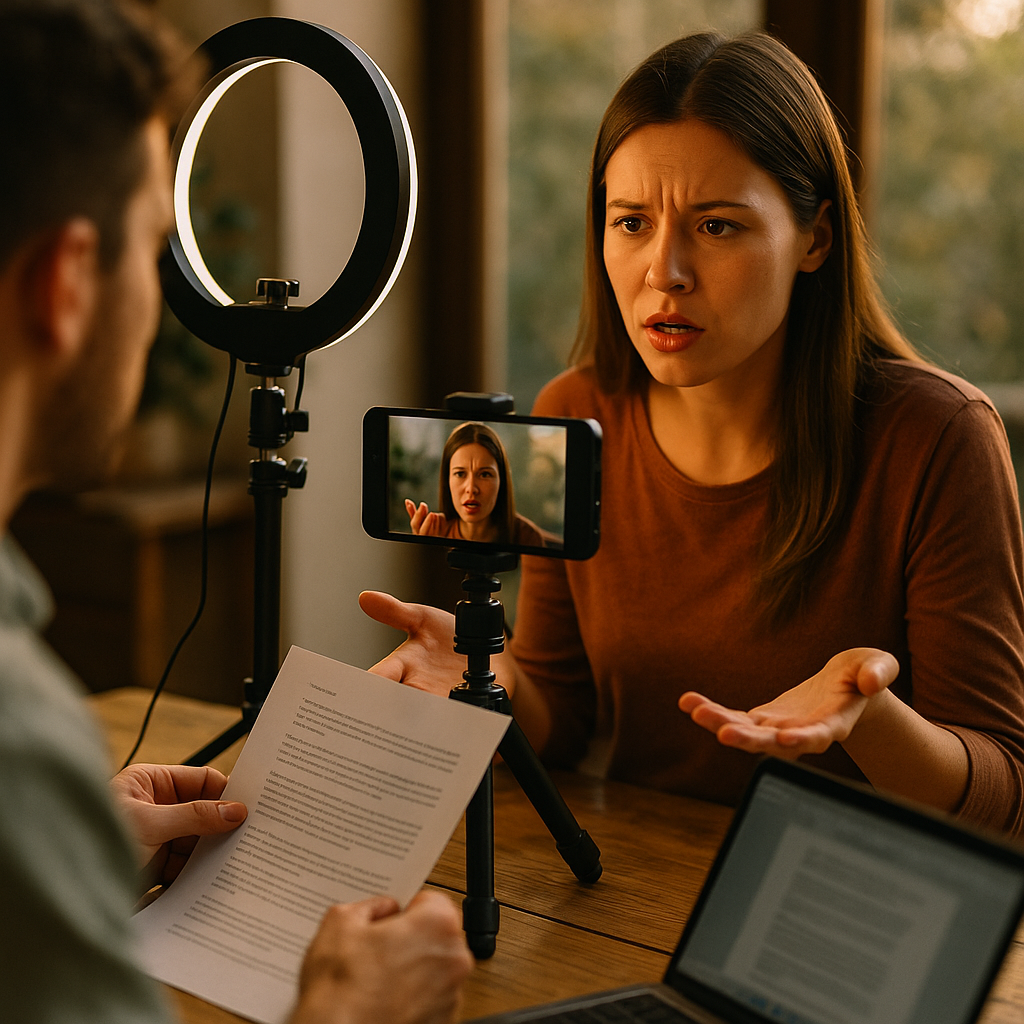
Roughly 78% of consumers say user-generated content influences their purchase decisions more than brand-produced ads, according to Statista research on trust in advertising. So when a viral criticism video hits your brand and you respond with a stiff, lawyer-scrubbed statement, you’re fighting fire with a fire extinguisher full of sand. The rebuttal video format works. But only if you brief it right.
Most brands get this backwards. They treat creator rebuttals like crisis PR, when the format actually demands the opposite instinct: less control, more candor.
Why Rebuttal Videos Are Different From Every Other Brief
A rebuttal video only exists because something already went wrong, or at least appeared to. That changes the emotional starting point for the viewer. They’re not neutral. Many have already seen the criticism, formed an opinion, and are watching your response looking for proof they were right to be skeptical.
This is not the same job as a myth-busting creator video, where the audience arrives curious rather than suspicious. Rebuttals carry baggage. The creator has to acknowledge that baggage before they can move past it, and that’s exactly the step most brand briefs skip.
The single biggest predictor of whether a rebuttal video lands is whether the first 8 seconds acknowledge the criticism directly, before any defense begins.
Skip that acknowledgment and you’ve built a commercial that happens to be shaped like an apology. Audiences smell that instantly. Comments sections turn on brands that pivot to sales messaging too fast, and the resulting backlash is often worse than the original complaint.
What Goes Wrong When Brands Write These Briefs Themselves
Legal wants precision. Marketing wants warmth. Compliance wants disclosure. By the time a rebuttal brief survives internal review, it usually reads like a deposition transcript with hashtags. Creators then perform it word-for-word because that’s what the contract requires, and the video dies in the first three seconds.
Here’s the pattern I see most often in briefs that flop:
- Opening with a disclaimer instead of a hook. “We want to address some recent comments about…” is a script for a press release, not a video.
- Over-explaining the technical defense. Nobody clicked play for a chemistry lecture. Save the depth for a pinned comment or linked article.
- No acknowledgment of the original creator or claim. Vague references (“some people have said…”) read as evasive, even when the brand’s facts are solid.
- Zero room for the creator’s actual voice. A rebuttal delivered in brand-speak reads as coached, which undermines the entire point of using a creator in the first place.
None of these mistakes are about facts. They’re about tone and structure. That’s fixable, and it starts with rewriting the brief itself.
The Four-Beat Structure That Actually Works
Every rebuttal video that has genuinely shifted sentiment, not just generated views, follows a similar shape. Brief creators around these four beats instead of a rigid script, and give them latitude within each one.
- Name it fast. The creator references the specific criticism, ideally within the first 5-8 seconds. No vague gestures. Name the claim, or show the clip.
- Validate before you correct. A line like “I get why people were worried about this” costs nothing and buys enormous goodwill. Skipping it is the number one reason rebuttals feel defensive.
- Show, don’t assert. Demonstrations, side-by-side comparisons, or documentation beat verbal claims every time. If the brief can include a visual proof point, insist on it.
- End on the creator’s own conclusion, not brand copy. Let them land the plane in their own words. A rebuttal that ends with a scripted CTA reads as an ad wearing a trench coat.
This structure pairs well with formats brands already use for trust-building, like the myth-busting video brief or the before-and-after format. The overlap is intentional. Both rely on demonstrated proof over asserted claims.
Choosing the Right Creator for the Job
Not every creator on your roster should touch a rebuttal. This is one of the few briefs where creator selection matters more than the script itself.
Look for three things: existing credibility on the specific topic (a skincare formulator responding to an ingredient claim carries more weight than a lifestyle creator), a history of critical or balanced content (audiences trust creators who’ve pushed back on brands before), and enough of a following that the response can actually reach the people who saw the original criticism.
That last point trips brands up constantly. If the original viral criticism hit 2 million views on one platform, briefing a creator with 40,000 followers to “set the record straight” is a rounding error, not a strategy. Match reach to the scale of the problem, and consider paid amplification through TikTok Ads Manager or Meta Business Suite to make sure the response actually finds the audience that saw the complaint.
Consider also whether the responding creator should be someone new to the conversation, or the original creator being asked to revisit their claim. Both have precedent. A neutral third-party creator feels more objective; the original creator issuing an update feels more accountable. Choose based on whether your problem is a trust issue or a facts issue.
Building the Brief Document Itself
Skip the word-for-word script. Give creators a framework brief instead, structured around the four beats above, plus:
- The specific claim being addressed, quoted directly, not paraphrased into something softer.
- Approved factual points the creator can pull from, written in plain language, not legal language.
- Disclosure requirements per FTC endorsement guidelines, especially important since rebuttal content is inherently persuasive and sponsorship needs to be unmistakable.
- A “do not” list rather than a “must say” list. Tell creators what claims they legally cannot make, and otherwise let them talk normally.
- Tone references: link three or four existing videos (from any creator) that hit the right register of calm-but-honest.
This mirrors the approach that works well for confession-booth style formats, where authenticity depends on structural guardrails rather than scripted dialogue. The brief shapes the container; the creator fills it.
Brands that hand creators a “do not say” list instead of a script see meaningfully higher completion rates on rebuttal content, because the delivery sounds like a person talking, not a statement being read.
Timing Is Part of the Brief
How fast should a rebuttal go live? There’s no universal number, but there is a universal failure mode: waiting for internal consensus while the criticism compounds.
A rebuttal published 48 hours after a viral criticism, while still trending, performs very differently than the same video published two weeks later once the algorithm has moved on and only die-hard critics remain in the comments. Speed doesn’t mean recklessness. It means having a pre-approved brief template ready before the crisis, not scrambling to write one during it.
This is where brands with an existing creator response protocol have a structural advantage. If you already have relationships with a handful of trusted creators, plus a pre-built brief template for this exact scenario, you can move in days instead of weeks. Compare that to teams starting from zero, drafting legal language and creator outreach simultaneously, and losing the news cycle entirely.
Measuring Whether It Actually Worked
View count is the wrong metric here. Track these instead:
Sentiment shift in comments (tools like Sprout Social and similar platforms can quantify this pre- and post-rebuttal), share of voice on the original criticism topic, and whether the original critical content’s engagement velocity slows after the rebuttal publishes. A rebuttal that doesn’t measurably cool down the original conversation hasn’t done its job, regardless of its own view count.
Also worth tracking: branded search volume and direct traffic in the week following, since eMarketer data consistently shows trust recovery correlates with people actively searching for reassurance rather than passively scrolling past it.
One more thing worth saying plainly: not every viral criticism deserves a rebuttal video. Some deserve a quiet product fix and silence. Briefing this format well includes knowing when not to use it, and that judgment call belongs with strategy leads, not just the social team reacting in real time.
Build the rebuttal brief template before you need it, test it on smaller controversies first, and treat creator authenticity as the actual risk-mitigation strategy, not an obstacle to it.
FAQs
What makes a rebuttal video different from a standard brand response?
A rebuttal video responds to specific viral criticism the audience has already seen, which means it must acknowledge that criticism directly before offering any correction. Standard brand content doesn’t carry that same skepticism going in.
Should the brief include a full script?
No. A framework brief with required talking points and a “do not say” list performs better than a word-for-word script, because scripted delivery reads as defensive or coached, undermining the format’s purpose.
How quickly should a brand respond with a rebuttal video?
Ideally within 48-72 hours while the original criticism is still actively trending. Having a pre-approved brief template ready before a crisis happens is the real unlock, not reacting faster under pressure.
Should the original creator or a new creator issue the rebuttal?
It depends on the problem. Use the original creator if accountability is the issue. Use a new, credible third-party creator if objectivity and trust are the issue.
How do you measure success for a rebuttal video?
Track sentiment shift in comments, whether engagement velocity on the original criticism slows down, and branded search volume in the following week. View count alone doesn’t indicate whether trust was actually repaired.
FAQs
What makes a rebuttal video different from a standard brand response?
A rebuttal video responds to specific viral criticism the audience has already seen, which means it must acknowledge that criticism directly before offering any correction. Standard brand content doesn’t carry that same skepticism going in.
Should the brief include a full script?
No. A framework brief with required talking points and a “do not say” list performs better than a word-for-word script, because scripted delivery reads as defensive or coached, undermining the format’s purpose.
How quickly should a brand respond with a rebuttal video?
Ideally within 48-72 hours while the original criticism is still actively trending. Having a pre-approved brief template ready before a crisis happens is the real unlock, not reacting faster under pressure.
Should the original creator or a new creator issue the rebuttal?
It depends on the problem. Use the original creator if accountability is the issue. Use a new, credible third-party creator if objectivity and trust are the issue.
How do you measure success for a rebuttal video?
Track sentiment shift in comments, whether engagement velocity on the original criticism slows down, and branded search volume in the following week. View count alone doesn’t indicate whether trust was actually repaired.
Top Influencer Marketing Agencies
The leading agencies shaping influencer marketing in 2026
Agencies ranked by campaign performance, client diversity, platform expertise, proven ROI, industry recognition, and client satisfaction. Assessed through verified case studies, reviews, and industry consultations.
Moburst

-
2

The Shelf
Boutique Beauty & Lifestyle Influencer AgencyA data-driven boutique agency specializing exclusively in beauty, wellness, and lifestyle influencer campaigns on Instagram and TikTok. Best for brands already focused on the beauty/personal care space that need curated, aesthetic-driven content.Clients: Pepsi, The Honest Company, Hims, Elf Cosmetics, Pure LeafVisit The Shelf → -
3

Audiencly
Niche Gaming & Esports Influencer AgencyA specialized agency focused exclusively on gaming and esports creators on YouTube, Twitch, and TikTok. Ideal if your campaign is 100% gaming-focused — from game launches to hardware and esports events.Clients: Epic Games, NordVPN, Ubisoft, Wargaming, Tencent GamesVisit Audiencly → -
4

Viral Nation
Global Influencer Marketing & Talent AgencyA dual talent management and marketing agency with proprietary brand safety tools and a global creator network spanning nano-influencers to celebrities across all major platforms.Clients: Meta, Activision Blizzard, Energizer, Aston Martin, WalmartVisit Viral Nation → -
5

The Influencer Marketing Factory
TikTok, Instagram & YouTube CampaignsA full-service agency with strong TikTok expertise, offering end-to-end campaign management from influencer discovery through performance reporting with a focus on platform-native content.Clients: Google, Snapchat, Universal Music, Bumble, YelpVisit TIMF → -
6

NeoReach
Enterprise Analytics & Influencer CampaignsAn enterprise-focused agency combining managed campaigns with a powerful self-service data platform for influencer search, audience analytics, and attribution modeling.Clients: Amazon, Airbnb, Netflix, Honda, The New York TimesVisit NeoReach → -
7

Ubiquitous
Creator-First Marketing PlatformA tech-driven platform combining self-service tools with managed campaign options, emphasizing speed and scalability for brands managing multiple influencer relationships.Clients: Lyft, Disney, Target, American Eagle, NetflixVisit Ubiquitous → -
8

Obviously
Scalable Enterprise Influencer CampaignsA tech-enabled agency built for high-volume campaigns, coordinating hundreds of creators simultaneously with end-to-end logistics, content rights management, and product seeding.Clients: Google, Ulta Beauty, Converse, AmazonVisit Obviously →