


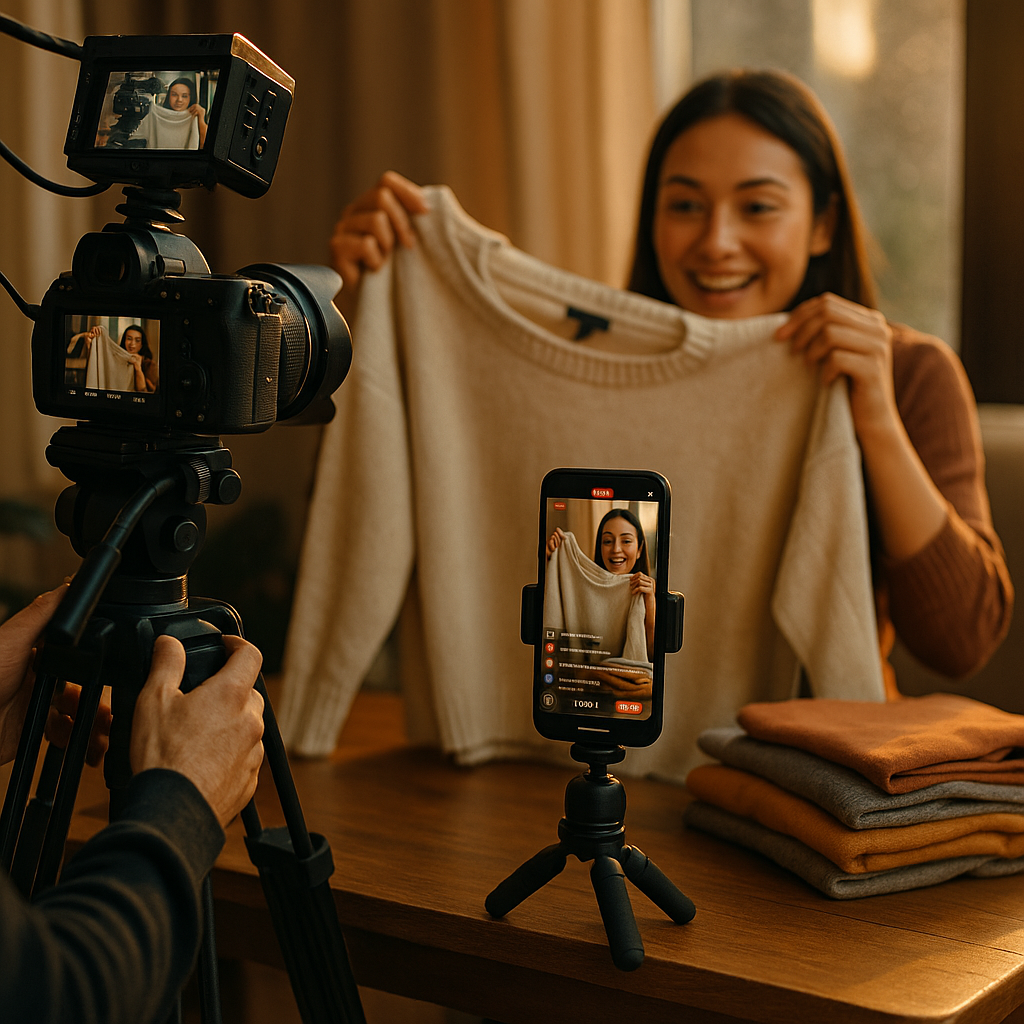
Live commerce generated an estimated $68 billion in US sales last year, and yet most brands still treat their first shoppable livestream like a one-off event rather than infrastructure. That’s the mistake. A real shoppable livestream production program needs standards — repeatable ones — before you ever hit “go live” a second time.
Here’s the uncomfortable truth: the brands winning at live commerce aren’t the ones with the biggest influencer budgets. They’re the ones who treated their third stream exactly like their thirtieth. That takes standards, not enthusiasm.
Why a Single Successful Stream Doesn’t Prove You Have a Program
You ran one livestream. It converted well, maybe a 10x better rate than static product pages, which is roughly in line with what eMarketer has reported for engaged livestream audiences. Congratulations — you’ve proven demand exists. You haven’t proven you can operate a program.
A program means recurring cadence: weekly or biweekly streams, consistent hosts, predictable production quality, and a supply chain that can handle spikes without breaking. Most brands discover the gap the hard way. Inventory runs out mid-stream. The host mispronounces a claim that legal never approved. The checkout link breaks during peak viewership. None of these are creative failures. They’re operational ones, and operational failures compound every time you go live again.
The difference between a viral livestream moment and a live-commerce program is documentation: what’s scripted, what’s approved, what’s measured, and who’s accountable when something breaks on camera.
The Tech Stack You Actually Need — Not the One a Vendor Sold You
Every platform pitch sounds the same: “seamless checkout,” “real-time inventory sync,” “one-click purchase.” In practice, most brands need four layers working together, and gaps between them are where revenue leaks out.
- Streaming layer: TikTok Shop, Instagram Live Shopping, Amazon Live, or a dedicated platform like Bambuser or CommentSold. Pick based on where your audience already buys, not where the demo looked prettiest.
- Commerce layer: Real-time inventory sync is non-negotiable. If your product feed lags by even five minutes, you will oversell during a spike and issue refunds you didn’t budget for.
- Compliance layer: A system for logging on-screen claims, disclosures, and pricing in real time, ideally with timestamped recordings for FTC purposes.
- Analytics layer: Viewer-to-cart-to-purchase tracking that ties back to specific segments of the stream, not just an aggregate conversion number.
Don’t buy all four from one vendor unless you’ve stress-tested the integration. The “all-in-one” promise rarely survives a 20,000-viewer spike.
Staffing: Who Actually Needs to Be in the Room
A recurring show needs a real crew, not just a host and a phone. Minimum viable staffing for a weekly program looks like this:
- A host or co-hosting creator pair (rotation matters for fatigue and authenticity)
- A producer managing pacing, cues, and technical troubleshooting in real time
- A moderator triaging comments and flagging questions the host should answer live
- A compliance reviewer, present or on-call, who can pull a claim off-screen instantly
- An inventory/ops liaison monitoring stock levels against real-time viewership
Five roles. Not five full-time hires — some can be part-time or agency-supplied — but five distinct functions that must exist every single stream. Skip the moderator role and your comment section turns into an unmoderated liability, especially if a customer complaint goes viral mid-broadcast.
Host selection deserves its own scrutiny. The best-performing live-commerce hosts blend retail-floor energy with QVC-style pacing: they can talk through objections in real time the way a good sales associate would. That’s a skill closer to the improvisational trust-building you see in formats like the retail employee video format, where authenticity comes from proximity to the actual customer experience, not a script.
Script Flexibility Without Compliance Chaos
Here’s the tension every brand hits: live commerce works because it feels unscripted, but unscripted claims are exactly what get brands FTC letters. The FTC’s endorsement guidance doesn’t have a livestream exemption. A claim made live is treated the same as one in a paid ad.
The solution isn’t a rigid script. It’s a claims bank: a pre-approved list of statements, comparisons, and disclosures the host can pull from in any order, plus a hard “no-go” list of claims that require legal sign-off before they’re ever said on air. Brands that skip this step usually find out the hard way, mid-stream, when a host says “clinically proven” about a product that was only “consumer tested.”
This is the same discipline used in blind taste-test briefs that convert without FTC risk — give creators structure around the edges, freedom in the middle. Livestream hosts need the same guardrails, just delivered faster because there’s no edit pass before it airs.
If your compliance review happens after the stream airs, it’s not compliance. It’s damage control.
What Happens When Something Breaks (Because It Will)
Payment processor times out. Product goes out of stock at minute 12 of a 45-minute show. A commenter posts something offensive and it’s visible to 8,000 live viewers. None of these are hypothetical — they’re Tuesday for any brand running weekly streams.
Build a failure playbook before you need one:
- Out-of-stock mid-stream: Pre-script a pivot line (“this one’s moving fast — here’s what’s still available”) and have a backup SKU ready to feature within 60 seconds.
- Technical outage: Know your platform’s specific downtime protocol. Amazon Live, TikTok Shop, and Instagram each handle stream drops differently — test this before launch day, not during it.
- Comment moderation failure: Give your moderator delete/ban authority in real time, not just flagging authority. Waiting for approval defeats the purpose.
- Host error on a claim: Have a correction script ready (“let me clarify that”) rather than hoping no one notices. Regulators and customers both notice.
Treat this like an incident response plan, the same way IT teams do for outages. Because that’s functionally what it is.
Measuring Beyond GMV
Gross merchandise value is the headline number every brand reports up the chain. It’s also incomplete. A recurring live-commerce program needs a scorecard that captures the operational health of the show, not just the sales it produced.
Track these alongside GMV:
- Watch-through rate at 5, 15, and 30-minute marks — tells you where pacing drags
- Cart-to-checkout ratio specific to the live session versus your baseline site rate
- Repeat viewer rate across episodes — this is your real loyalty signal, not one-off GMV spikes
- Claims flagged for review per stream, trending down as your host gets better calibrated
- Technical downtime minutes per stream, because this correlates directly with lost revenue
According to Sprout Social‘s research on social commerce trust, audiences increasingly expect brands to demonstrate consistency, not just one great show. That consistency is measurable, and it’s what separates a program from a stunt.
Content Doesn’t Die When the Stream Ends
Every livestream produces raw footage that most brands throw away after the broadcast. That’s a waste. Clip the strongest product demos, objection-handling moments, and reaction shots into short-form assets for the weeks between streams. This is the same logic behind UGC content harvesting — a single production cycle should feed multiple content formats, not just the live moment.
Genuine, in-the-moment reactions from live chat or a host’s unscripted response to a question also translate well into formats like rapid-fire Q&A videos, which reuse the same authenticity signal without needing a live audience. Build your repurposing plan before the stream, not after, so your editor knows what to isolate in real time.
Vendor Selection: Questions Most Brands Forget to Ask
Before signing with a live-commerce platform or production agency, ask these directly:
- What’s your documented uptime over the last twelve months, and can you show it?
- How does inventory sync handle a demand spike of 5x normal traffic?
- Do you provide timestamped recordings for compliance archiving?
- What’s the moderator tooling — can it ban/delete in real time, or only flag?
- Can we A/B test hosts or formats within the same platform without rebuilding the integration?
If a vendor can’t answer the uptime question with real numbers, that’s your answer. Meta’s commerce tools and TikTok Shop both publish enough documentation that “we’ll get back to you” isn’t an acceptable response anymore.
Building the Cadence That Makes This Sustainable
Weekly is the sweet spot for most mid-size brands: frequent enough to build audience habit, infrequent enough that your team doesn’t burn out producing it. Monthly loses momentum. Daily is a media company’s job, not a brand marketing team’s.
Whatever cadence you pick, lock it in publicly. Tell your audience when the next stream airs. That single habit — a fixed, dependable schedule — does more for repeat viewership than any single production upgrade. Consistency is the product here, arguably more than the discounts or the host.
Next step: before your next livestream, write down your failure playbook and your claims bank as actual documents, not tribal knowledge in someone’s head. If you can’t hand both to a new producer and have them run a compliant show cold, you don’t have a program yet — you have a lucky streak.
FAQs
What is shoppable livestream production, exactly?
It’s the operational discipline behind running live-commerce broadcasts — covering tech stack, staffing, compliance, and failure recovery — that turns a one-off live shopping event into a repeatable, measurable program.
How much does a recurring live-commerce program typically cost?
Costs vary widely by platform and staffing model, but brands should budget for host fees, producer/moderator labor, platform fees, and a compliance review process as ongoing line items, not one-time production costs.
Which platform is best for shoppable livestreams?
There’s no universal answer. TikTok Shop tends to favor discovery-driven audiences, Amazon Live suits brands with existing Amazon catalogs, and Instagram Live Shopping works well for brands with strong existing followings. Choose based on where your audience already shops.
How do brands stay FTC-compliant during live, unscripted broadcasts?
By pre-building a claims bank of approved statements and a “no-go” list of claims requiring legal sign-off, plus having a compliance reviewer on standby who can flag or correct issues in real time rather than after the stream airs.
What’s the biggest operational risk in a recurring live-commerce program?
Inventory desync during demand spikes. If your commerce layer doesn’t sync in real time, you’ll oversell live and issue refunds, damaging both margin and customer trust.
How often should brands run shoppable livestreams?
Weekly is the most sustainable cadence for most mid-size brands — frequent enough to build viewer habit, manageable enough to avoid team burnout.
Top Influencer Marketing Agencies
The leading agencies shaping influencer marketing in 2026
Agencies ranked by campaign performance, client diversity, platform expertise, proven ROI, industry recognition, and client satisfaction. Assessed through verified case studies, reviews, and industry consultations.
Moburst

-
2

The Shelf
Boutique Beauty & Lifestyle Influencer AgencyA data-driven boutique agency specializing exclusively in beauty, wellness, and lifestyle influencer campaigns on Instagram and TikTok. Best for brands already focused on the beauty/personal care space that need curated, aesthetic-driven content.Clients: Pepsi, The Honest Company, Hims, Elf Cosmetics, Pure LeafVisit The Shelf → -
3

Audiencly
Niche Gaming & Esports Influencer AgencyA specialized agency focused exclusively on gaming and esports creators on YouTube, Twitch, and TikTok. Ideal if your campaign is 100% gaming-focused — from game launches to hardware and esports events.Clients: Epic Games, NordVPN, Ubisoft, Wargaming, Tencent GamesVisit Audiencly → -
4

Viral Nation
Global Influencer Marketing & Talent AgencyA dual talent management and marketing agency with proprietary brand safety tools and a global creator network spanning nano-influencers to celebrities across all major platforms.Clients: Meta, Activision Blizzard, Energizer, Aston Martin, WalmartVisit Viral Nation → -
5

The Influencer Marketing Factory
TikTok, Instagram & YouTube CampaignsA full-service agency with strong TikTok expertise, offering end-to-end campaign management from influencer discovery through performance reporting with a focus on platform-native content.Clients: Google, Snapchat, Universal Music, Bumble, YelpVisit TIMF → -
6

NeoReach
Enterprise Analytics & Influencer CampaignsAn enterprise-focused agency combining managed campaigns with a powerful self-service data platform for influencer search, audience analytics, and attribution modeling.Clients: Amazon, Airbnb, Netflix, Honda, The New York TimesVisit NeoReach → -
7

Ubiquitous
Creator-First Marketing PlatformA tech-driven platform combining self-service tools with managed campaign options, emphasizing speed and scalability for brands managing multiple influencer relationships.Clients: Lyft, Disney, Target, American Eagle, NetflixVisit Ubiquitous → -
8

Obviously
Scalable Enterprise Influencer CampaignsA tech-enabled agency built for high-volume campaigns, coordinating hundreds of creators simultaneously with end-to-end logistics, content rights management, and product seeding.Clients: Google, Ulta Beauty, Converse, AmazonVisit Obviously →