


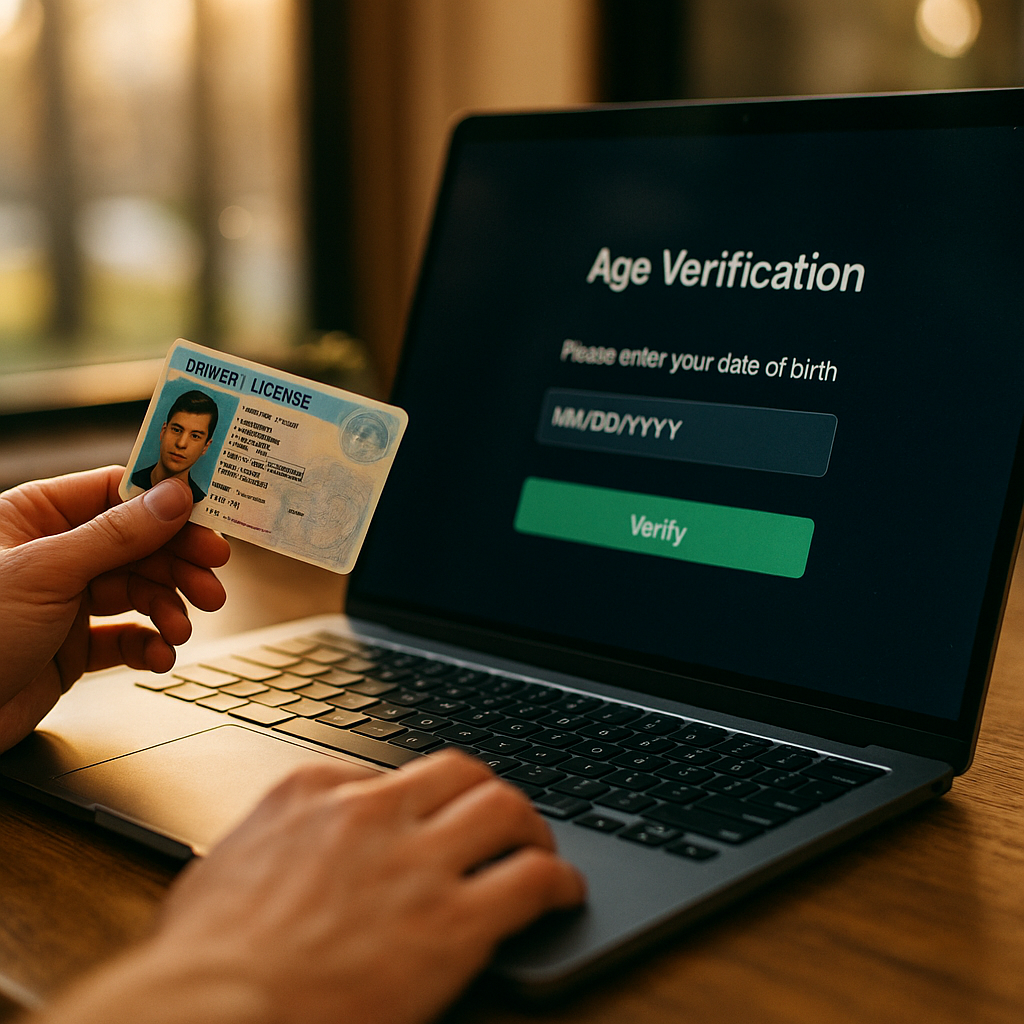
Nineteen U.S. states now have live or pending age-verification statutes touching digital advertising and platform access. Add the UK’s Online Safety Act enforcement and Australia’s social media minimum age law, and a single creator campaign can trigger three different legal regimes before lunch. State age-verification statutes were supposed to protect minors. Instead, they’ve handed brand legal teams a jurisdictional migraine with real financial teeth.
If your influencer program still runs on a single, US-centric compliance checklist, you’re already behind. Here’s how to build one matrix that actually holds up across borders.
Why This Is Suddenly a Brand Problem, Not Just a Platform Problem
For years, age verification was Meta’s problem, TikTok’s problem, YouTube’s problem. Brands assumed platforms handled the gatekeeping and moved on. That assumption is dead.
Regulators in multiple US states have started naming advertisers directly in enforcement actions and civil suits tied to minor-targeted marketing, not just the platforms hosting the content. Louisiana, Utah, Texas, and Virginia have each passed or amended statutes that extend liability to any party that “knowingly” markets age-restricted products or services to unverified minors through social channels. Some of these laws define “knowingly” broadly enough to include brands that ran campaigns through creators with substantial teen followings, regardless of platform-level verification.
Meanwhile, Australia’s social media minimum age legislation, enforced through the eSafety Commissioner, puts obligations on platforms but creates downstream commercial risk for advertisers whose campaigns get swept into compliance reviews. And the UK’s Online Safety Act, overseen by Ofcom, imposes age-assurance duties on services likely to be accessed by children, which increasingly includes influencer-hosted livestreams and shoppable content.
Three regulatory regimes, three definitions of “verified,” and zero harmonization. That’s the current state of play for any brand running creator campaigns across UK, Australia, and US markets simultaneously.
The Core Divergence: What “Verified” Actually Means Changes by Border
This is where most compliance teams get tripped up. They assume age verification is binary — verified or not. It isn’t. Each jurisdiction defines acceptable verification methods differently, and some explicitly reject methods that others mandate.
- United Kingdom: Ofcom’s guidance under the Online Safety Act favors “highly effective” age assurance — think facial age estimation, ID verification, or bank-account confirmation. Self-declared birthdates are explicitly deemed insufficient for high-risk content categories.
- Australia: The social media minimum age law (effective for under-16s) places the verification burden on platforms, but the eSafety Commissioner has signaled that “reasonable steps” will be assessed case-by-case, with no single approved method locked in yet.
- US states: Louisiana and Utah lean on app-store-level verification and parental consent APIs. Texas’s approach folds in “reasonable age verification” language borrowed from adult-content statutes, originally written for a completely different risk category, now getting applied to influencer marketing and social commerce.
Translation: a verification method that satisfies Ofcom might not satisfy Texas. A method that satisfies Texas might be irrelevant in Australia, where the obligation sits with the platform rather than the advertiser. Brands running global always-on creator programs cannot rely on one verification standard and call it done.
Building the Matrix: Four Dimensions That Actually Matter
Forget building a matrix by state or country alone. That gets unwieldy fast, and it doesn’t scale as new statutes land (and they will, likely another six to ten US states by next legislative cycle, per tracking from the FTC’s ongoing children’s privacy enforcement priorities). Instead, structure your matrix around four dimensions that cut across jurisdictions.
1. Content Risk Category
Is the campaign promoting an age-restricted product (alcohol, gambling, vaping), a general-audience product with teen-skewing creator reach, or content hosted on a platform feature (livestream, DM-based shopping) that itself triggers age-assurance duties? Risk category determines which statutes even apply.
2. Creator Audience Composition
Pull actual audience demographics per creator, not platform-reported estimates. Utah and Louisiana both reference “actual knowledge or reason to know” standards, meaning if your creator’s own analytics dashboard shows a meaningful under-16 segment, ignorance stops being a defense. This is functionally similar to the audience-data diligence brands already need for creator audience data requests under privacy law.
3. Platform-Level Verification Baseline
Document what each platform already does. TikTok, Instagram, and YouTube have different age-assurance stacks, and none of them map cleanly onto UK, Australian, or US state requirements. Treat platform verification as a floor, not a ceiling.
4. Jurisdictional Trigger
Where is the audience located, where is the brand headquartered, and where is the creator based? Statutes can attach based on any of these three, and increasingly on audience location alone. This is the same jurisdiction-stacking problem brands have already run into with disclosure rules that break across state lines, and the same logic applies here.
Score each campaign against these four dimensions before launch. A campaign that scores high-risk on content category and audience composition needs the strictest applicable verification standard, full stop, even if that means over-complying in markets where the legal bar is technically lower.
What This Costs If You Get It Wrong
Utah’s Social Media Regulation Act allows for statutory damages, and Louisiana’s framework permits enforcement actions carrying civil penalties per violation, per minor exposed. Multiply that across a campaign with meaningful reach and the numbers escalate fast. Australia’s eSafety Commissioner has civil penalty powers running into the millions of dollars for systemic non-compliance. The UK’s Ofcom can levy fines up to 10% of global annual revenue under the Online Safety Act for the most severe breaches.
These aren’t theoretical. Enforcement bodies across all three markets have signaled, through public statements and early actions, that influencer-driven campaigns are a priority area precisely because they’ve historically operated with less oversight than traditional media buys, per reporting tracked by eMarketer’s regulatory coverage.
Operationalizing the Matrix Without Killing Campaign Velocity
Legal teams love matrices. Media buyers hate anything that slows down a launch. The trick is building compliance checks into the workflow you already have, not bolting on a new approval layer.
- Pre-brief risk scoring: Add the four-dimension score to your creative brief template, the same way brands now flag AI-remix rights before production starts. See how AI-remixed content clauses already get baked into briefs; age-verification risk scoring can sit in the same section.
- Contract language by tier: Build three tiers of creator contract language, one for low-risk general audience campaigns, one for age-restricted product categories, and one for confirmed teen-skewing creators. Don’t negotiate this clause-by-clause every time; standardize it the way you would audit contract clauses at renewal.
- Platform documentation library: Keep an updated one-pager per platform documenting current age-assurance mechanisms. Update quarterly. Platforms change these mechanisms more often than legal teams expect.
- Escalation trigger: Define the specific audience-composition threshold that forces legal sign-off before launch, mirroring the sign-off gates already used for AI-modified creative.
None of this needs to add weeks to a campaign timeline. It needs to add a checklist, ideally one that lives inside whatever project management or DAM tool your team already uses.
The Compliance Officers Who’ll Get This Right
The brands handling this well share one habit: they’ve stopped treating regulatory tracking as a once-a-year legal review and started treating it as a live feed, the same way marketing teams monitor platform algorithm changes. Assign someone, even part-time, to monitor state legislative sessions and Ofcom/eSafety guidance updates. Subscribe to HubSpot’s marketing compliance resources or similar aggregators for early signal, then verify against primary sources before acting.
Cross-reference this against your existing FTC disclosure workflows. If you’ve already built escalation logs for disclosure compliance, extend that same infrastructure to cover age-verification triggers. You’re not building a new system. You’re adding a new column to one you already run.
FAQs
Frequently Asked Questions
Do brands face direct liability under state age-verification statutes, or only platforms?
Increasingly, brands face direct exposure. Several US states, including Louisiana and Texas, have drafted language that extends liability to advertisers with “actual knowledge or reason to know” that campaigns reach unverified minors, meaning platform-level compliance no longer fully shields the brand.
Is there a single age-verification standard that satisfies UK, Australian, and US requirements at once?
No. Ofcom favors highly effective methods like facial age estimation, Australia’s framework places the primary burden on platforms rather than advertisers, and US states vary between app-store verification and parental consent APIs. Brands need a tiered approach, not a single standard.
How often do these statutes change?
Frequently. Expect new US state legislation nearly every legislative session, alongside evolving Ofcom and eSafety Commissioner guidance as enforcement precedent builds. Treat this as a continuously monitored risk area, not a one-time audit.
What creator audience data should brands collect before a campaign launch?
Actual demographic breakdowns from the creator’s own platform analytics, not brand-side estimates. Several state statutes use a “reason to know” standard, meaning documented audience composition data becomes central to any liability defense.
Does this only apply to age-restricted product categories like alcohol or gambling?
No. General-audience products marketed through creators with substantial teen followings can still trigger obligations, particularly where the platform feature itself (livestream, DM commerce) carries age-assurance duties under laws like the UK’s Online Safety Act.
Next step: Pull your last two quarters of creator campaigns and score them against the four-dimension matrix above. If more than one campaign would fail today’s stricter standard, your compliance gap is already live, not hypothetical.
Frequently Asked Questions
Do brands face direct liability under state age-verification statutes, or only platforms?
Increasingly, brands face direct exposure. Several US states, including Louisiana and Texas, have drafted language that extends liability to advertisers with “actual knowledge or reason to know” that campaigns reach unverified minors, meaning platform-level compliance no longer fully shields the brand.
Is there a single age-verification standard that satisfies UK, Australian, and US requirements at once?
No. Ofcom favors highly effective methods like facial age estimation, Australia’s framework places the primary burden on platforms rather than advertisers, and US states vary between app-store verification and parental consent APIs. Brands need a tiered approach, not a single standard.
How often do these statutes change?
Frequently. Expect new US state legislation nearly every legislative session, alongside evolving Ofcom and eSafety Commissioner guidance as enforcement precedent builds. Treat this as a continuously monitored risk area, not a one-time audit.
What creator audience data should brands collect before a campaign launch?
Actual demographic breakdowns from the creator’s own platform analytics, not brand-side estimates. Several state statutes use a “reason to know” standard, meaning documented audience composition data becomes central to any liability defense.
Does this only apply to age-restricted product categories like alcohol or gambling?
No. General-audience products marketed through creators with substantial teen followings can still trigger obligations, particularly where the platform feature itself (livestream, DM commerce) carries age-assurance duties under laws like the UK’s Online Safety Act.
Top Influencer Marketing Agencies
The leading agencies shaping influencer marketing in 2026
Agencies ranked by campaign performance, client diversity, platform expertise, proven ROI, industry recognition, and client satisfaction. Assessed through verified case studies, reviews, and industry consultations.
Moburst

-
2

The Shelf
Boutique Beauty & Lifestyle Influencer AgencyA data-driven boutique agency specializing exclusively in beauty, wellness, and lifestyle influencer campaigns on Instagram and TikTok. Best for brands already focused on the beauty/personal care space that need curated, aesthetic-driven content.Clients: Pepsi, The Honest Company, Hims, Elf Cosmetics, Pure LeafVisit The Shelf → -
3

Audiencly
Niche Gaming & Esports Influencer AgencyA specialized agency focused exclusively on gaming and esports creators on YouTube, Twitch, and TikTok. Ideal if your campaign is 100% gaming-focused — from game launches to hardware and esports events.Clients: Epic Games, NordVPN, Ubisoft, Wargaming, Tencent GamesVisit Audiencly → -
4

Viral Nation
Global Influencer Marketing & Talent AgencyA dual talent management and marketing agency with proprietary brand safety tools and a global creator network spanning nano-influencers to celebrities across all major platforms.Clients: Meta, Activision Blizzard, Energizer, Aston Martin, WalmartVisit Viral Nation → -
5

The Influencer Marketing Factory
TikTok, Instagram & YouTube CampaignsA full-service agency with strong TikTok expertise, offering end-to-end campaign management from influencer discovery through performance reporting with a focus on platform-native content.Clients: Google, Snapchat, Universal Music, Bumble, YelpVisit TIMF → -
6

NeoReach
Enterprise Analytics & Influencer CampaignsAn enterprise-focused agency combining managed campaigns with a powerful self-service data platform for influencer search, audience analytics, and attribution modeling.Clients: Amazon, Airbnb, Netflix, Honda, The New York TimesVisit NeoReach → -
7

Ubiquitous
Creator-First Marketing PlatformA tech-driven platform combining self-service tools with managed campaign options, emphasizing speed and scalability for brands managing multiple influencer relationships.Clients: Lyft, Disney, Target, American Eagle, NetflixVisit Ubiquitous → -
8

Obviously
Scalable Enterprise Influencer CampaignsA tech-enabled agency built for high-volume campaigns, coordinating hundreds of creators simultaneously with end-to-end logistics, content rights management, and product seeding.Clients: Google, Ulta Beauty, Converse, AmazonVisit Obviously →