


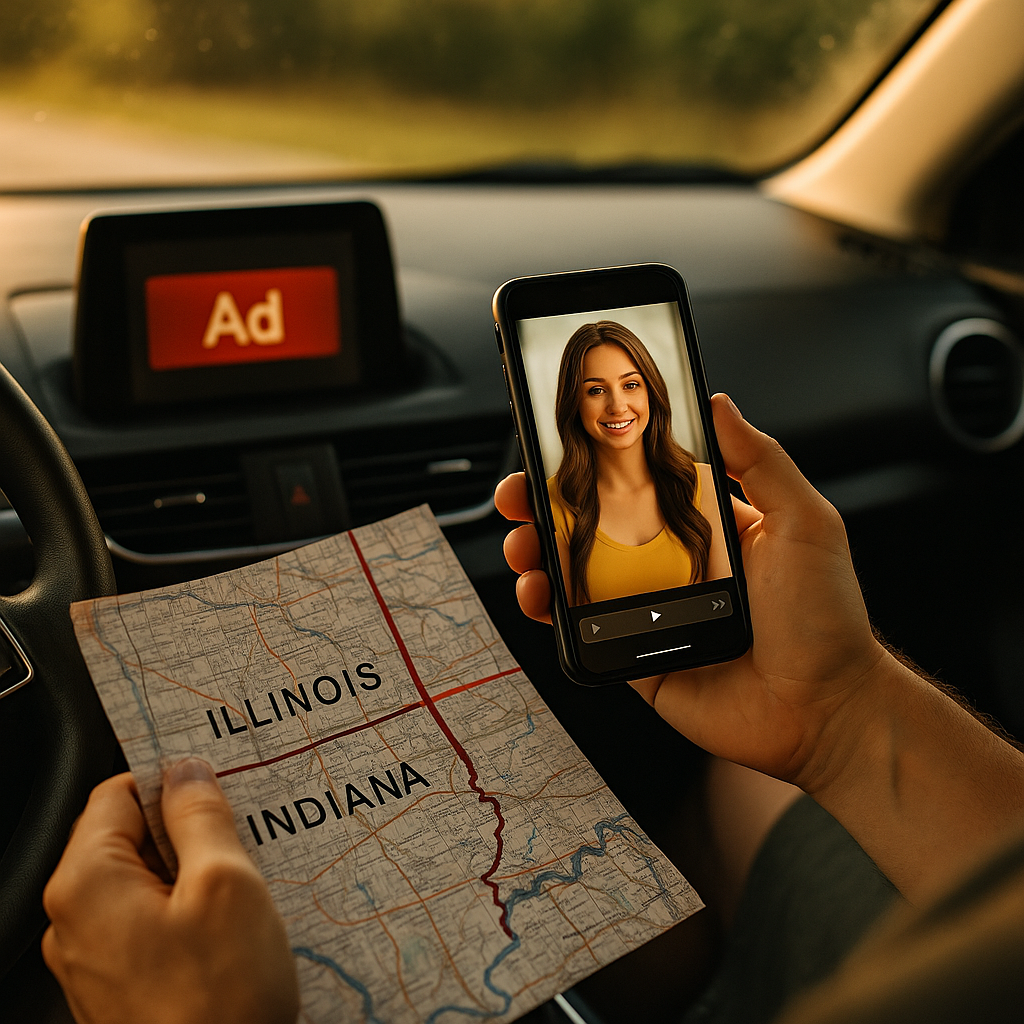
Ten states now require synthetic performer disclosure. Zero states have jurisdiction over the internet. That mismatch is where brands are getting hurt. A creator video shot in a compliant state, boosted through paid amplification, can land in front of consumers in a state with tougher rules, or none at all, and suddenly your synthetic performer disclosure strategy is a liability instead of a shield.
The Problem Isn’t the Content. It’s the Media Buy.
Most brand legal teams treat synthetic performer disclosure as a content production issue. Get the label right, embed it in the video, ship it. Done. Except that’s not how paid distribution works anymore.
When a piece of creator content gets boosted through Meta’s ad platform, TikTok Spark Ads, or a programmatic buy, it doesn’t stay in the state where it was approved. It follows the audience targeting. A campaign built to satisfy California’s AB 2602-style requirements or New York’s synthetic performer statutes can get served to consumers in Texas, Florida, or Ohio, states with different thresholds, different definitions of “synthetic,” and in some cases no disclosure requirement at all, but also no safe harbor protecting the brand from FTC scrutiny either.
This is the disclosure gap. It’s not about whether you disclosed. It’s about whether your disclosure travels with the content across every jurisdiction your media buy touches.
A synthetic performer disclosure that satisfies ten states’ laws can still fail an FTC deception standard the moment paid amplification pushes it into an eleventh.
Why “10-State Compliant” Is a Misleading Milestone
We’ve seen brand compliance decks proudly list “10-state synthetic performer coverage” as a finished project. It’s not. It’s a snapshot of state legislative activity, and that activity is accelerating, not stabilizing.
Our earlier breakdown of synthetic performer disclosure laws by state found meaningful variation in triggers: some states key off “materially altered” likeness, others off fully AI-generated performers, others off voice-only synthesis. A disclosure format built to satisfy California’s definition may not meet Illinois’ broader biometric-adjacent language. Layer in paid amplification, which by design pushes content beyond organic reach and often beyond the geographic assumptions baked into your original compliance review, and you have a structural blind spot.
Here’s the part legal teams often miss: the FTC doesn’t care about your state-by-state checklist. It cares about whether a “reasonable consumer” was deceived, nationally, regardless of which state law technically applied to the ad buy. The FTC has been explicit that AI-generated endorsements and synthetic personas fall under existing deception authority (see the FTC’s guidance on endorsements), independent of state statutes. A ten-state patchwork strategy gives you no federal cover.
How Paid Amplification Actually Breaks Geographic Assumptions
Think about how a typical influencer campaign scales today. A creator posts organic content. It performs. The brand or agency whitelists it, or runs it as a boosted post, or repackages it into a Spark Ad, a Reels ad, a Shorts pre-roll. That’s when targeting logic takes over, and targeting logic doesn’t know or care about your synthetic performer disclosure map.
Three specific failure points show up repeatedly:
- Lookalike and interest-based targeting. Platforms optimize for conversion, not compliance. A campaign geofenced to “compliant” states at launch can drift as algorithms chase performance across state lines, especially with automated budget reallocation.
- Cross-platform syndication. Content approved for one platform’s disclosure format (say, TikTok’s AI-generated content label) gets repurposed into a Meta ad without re-verifying that the label satisfies Meta’s own policy or the destination state’s law. Our comparison of AI ad labeling rules across Google, Meta, and TikTok shows just how inconsistent these frameworks already are before you even add state law on top.
- Algorithmic ad placement. Regulators are already circling this. The UK’s Advertising Standards Authority has signaled that algorithmic ad placement puts brands on the hook for where content actually lands, not just where it was intended to land. Expect U.S. state AGs to adopt similar reasoning.
None of this is hypothetical. It’s the default behavior of every major ad platform’s optimization engine.
What “Crossing State Lines” Really Means for Liability
Brand counsel sometimes assumes liability attaches at the point of content creation or initial publish. It doesn’t. Liability attaches at the point of consumer exposure, and paid amplification multiplies exposure points across jurisdictions in ways organic posting never did.
Consider a synthetic spokesperson campaign built for a national DTC brand. The content is produced with disclosure language meeting the strictest applicable state standard, say, a clear on-screen label plus verbal disclosure. Solid start. But the paid media plan runs national reach with no state-level exclusions, because the media buyer’s job is performance, not compliance. Nobody flagged that three states in the buy’s footprint have disclosure trigger thresholds the current label doesn’t technically meet, because the label was built for the ten states the legal team reviewed, not the fifty the media plan actually touches.
Multiply that by every whitelisted asset, every dynamic creative variant, every geo-targeted budget shift, and you get a compliance exposure surface that grows every week the campaign runs.
Disclosure compliance built for content creation doesn’t automatically transfer to disclosure compliance for paid distribution. Treat them as two separate risk events.
Building a Disclosure Layer That Survives Amplification
The fix isn’t more legal review at the content stage. It’s building compliance into the media buying workflow itself, the same way brands are already being pushed to do for other AI-adjacent risks.
A practical framework looks like this:
- Map disclosure requirements to targeting geography, not creative approval geography. Before a campaign scales via paid amplification, cross-reference the actual audience targeting parameters against every state’s synthetic performer statute, not just the states where the content was originally cleared.
- Build a disclosure format that satisfies the strictest applicable jurisdiction, then apply it universally. Rather than maintaining ten different label variants, standardize on the toughest requirement in your active footprint. It’s more conservative, but far less operationally fragile.
- Treat whitelisting and amplification as a re-approval trigger. Any time organic content moves into paid, run it back through compliance review. This mirrors the logic in our whitelisted creator ads compliance analysis, where content that was FTC-compliant organically still tripped platform-level policy once it entered paid rotation.
- Layer in a GEO-aware content compliance system. This is where a structured GEO content compliance layer earns its keep, flagging when a piece of amplified content is being served into a jurisdiction its current disclosure doesn’t cover.
- Contract for it. Creator agreements should explicitly address re-labeling obligations if content is repurposed into paid media across new geographies. Pair this with the broader remix and reuse protections outlined in our AI remix rights contract clause guide.
None of this requires exotic tooling. It requires treating media planning as a compliance checkpoint, not just a performance lever.
The Vendor Question Nobody’s Asking
If you’re using an AI creator-matching or content-generation vendor to produce synthetic performer assets at scale, ask them directly: does your platform track destination-state disclosure requirements at the point of ad delivery, or only at the point of content generation? Most don’t. That’s a gap worth surfacing in vendor due diligence, similar to the questions raised in our vendor risk assessment template for AI creator-matching platforms. A vendor contract that doesn’t account for amplification-stage compliance is quietly pushing that risk back onto your brand.
Industry data backs up why this matters now rather than later. Marketers are scaling AI-generated and AI-assisted creator content fast, with adoption surveys from eMarketer and Statista both showing sharp year-over-year growth in branded synthetic content spend. Regulatory scrutiny is scaling in parallel. State legislatures added synthetic media provisions to consumer protection and election law bills at a pace that outstripped most brands’ compliance updates last cycle. Waiting for a “final” 50-state map before building an amplification-aware disclosure process means operating exposed for years.
FAQs
Frequently Asked Questions
What is the synthetic performer disclosure gap?
It’s the compliance failure that occurs when creator content featuring AI-generated or synthetic performers is compliant in the states where it was created and approved, but gets served to consumers in other states through paid amplification, where different or stricter disclosure laws apply.
Does complying with 10 states’ synthetic performer laws protect a brand nationally?
No. State compliance only covers the jurisdictions reviewed. Paid amplification, algorithmic targeting, and cross-platform syndication routinely push content into states outside that original review, and the FTC’s deception standard applies nationally regardless of state-specific coverage.
Who is liable when amplified content crosses into a non-compliant state?
Liability typically attaches to the brand or advertiser directing the campaign, not just the platform or creator, especially where the brand controlled targeting parameters, budget allocation, or whitelisting decisions that expanded the content’s reach.
How can brands prevent disclosure gaps during paid amplification?
Map disclosure requirements against actual ad targeting geography (not just content approval geography), standardize labels to the strictest applicable jurisdiction, treat whitelisting as a compliance re-check trigger, and build contractual re-labeling obligations into creator agreements.
Are platform-level AI content labels enough to satisfy state disclosure laws?
Not necessarily. Platform labeling policies (on Meta, TikTok, or Google) vary from state statutory requirements and from each other, so a label that satisfies platform policy may not meet a specific state’s synthetic performer disclosure standard.
The next move is operational, not legal: audit your current media plans against actual delivery geography this week, not your original content approval list, and flag any synthetic performer campaign running paid amplification without a jurisdiction-aware disclosure check built into the buy.
Top Influencer Marketing Agencies
The leading agencies shaping influencer marketing in 2026
Agencies ranked by campaign performance, client diversity, platform expertise, proven ROI, industry recognition, and client satisfaction. Assessed through verified case studies, reviews, and industry consultations.
Moburst

-
2

The Shelf
Boutique Beauty & Lifestyle Influencer AgencyA data-driven boutique agency specializing exclusively in beauty, wellness, and lifestyle influencer campaigns on Instagram and TikTok. Best for brands already focused on the beauty/personal care space that need curated, aesthetic-driven content.Clients: Pepsi, The Honest Company, Hims, Elf Cosmetics, Pure LeafVisit The Shelf → -
3

Audiencly
Niche Gaming & Esports Influencer AgencyA specialized agency focused exclusively on gaming and esports creators on YouTube, Twitch, and TikTok. Ideal if your campaign is 100% gaming-focused — from game launches to hardware and esports events.Clients: Epic Games, NordVPN, Ubisoft, Wargaming, Tencent GamesVisit Audiencly → -
4

Viral Nation
Global Influencer Marketing & Talent AgencyA dual talent management and marketing agency with proprietary brand safety tools and a global creator network spanning nano-influencers to celebrities across all major platforms.Clients: Meta, Activision Blizzard, Energizer, Aston Martin, WalmartVisit Viral Nation → -
5

The Influencer Marketing Factory
TikTok, Instagram & YouTube CampaignsA full-service agency with strong TikTok expertise, offering end-to-end campaign management from influencer discovery through performance reporting with a focus on platform-native content.Clients: Google, Snapchat, Universal Music, Bumble, YelpVisit TIMF → -
6

NeoReach
Enterprise Analytics & Influencer CampaignsAn enterprise-focused agency combining managed campaigns with a powerful self-service data platform for influencer search, audience analytics, and attribution modeling.Clients: Amazon, Airbnb, Netflix, Honda, The New York TimesVisit NeoReach → -
7

Ubiquitous
Creator-First Marketing PlatformA tech-driven platform combining self-service tools with managed campaign options, emphasizing speed and scalability for brands managing multiple influencer relationships.Clients: Lyft, Disney, Target, American Eagle, NetflixVisit Ubiquitous → -
8

Obviously
Scalable Enterprise Influencer CampaignsA tech-enabled agency built for high-volume campaigns, coordinating hundreds of creators simultaneously with end-to-end logistics, content rights management, and product seeding.Clients: Google, Ulta Beauty, Converse, AmazonVisit Obviously →