


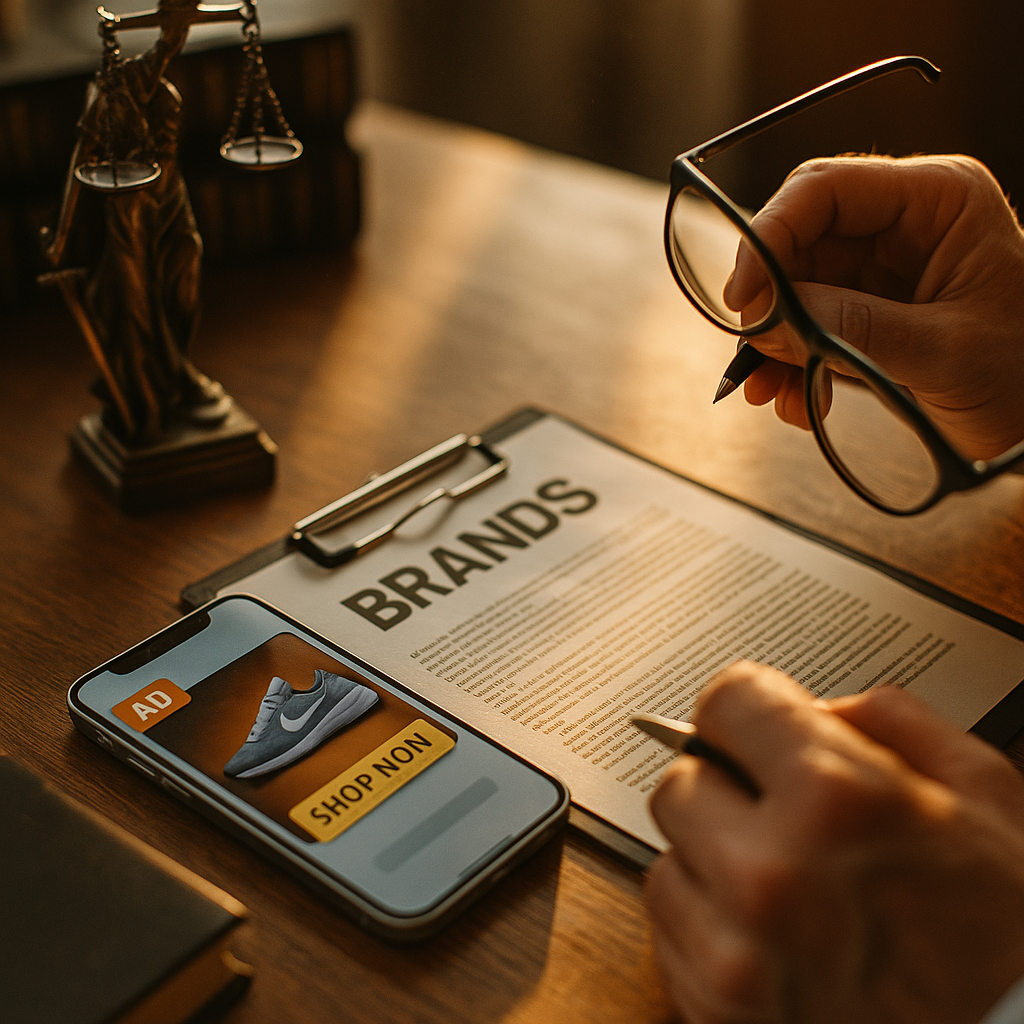
One TikTok that a creator disclosed correctly in month one can resurface in month six, stripped of context, served to a completely new audience by the recommendation engine, with no #ad in sight. The UK ASA’s new guidance on algorithmic ad placement says that’s not a technical glitch. It’s a compliance failure, and it’s the brand’s problem.
What The ASA Actually Changed
For years, the compliance conversation around influencer content stopped at publication. Creator posts sponsored content, adds the right hashtag, brand approves the caption, everyone moves on. The ASA’s updated position blows that assumption apart.
The guidance now treats algorithmic redistribution as a fresh instance of ad exposure. If TikTok’s recommendation engine resurfaces a branded video weeks or months after its original post, and that resurfaced version has lost its disclosure label, banner, or on-screen tag due to re-encoding, clipping, or duet/stitch remixing, the ASA considers this a new, potentially non-compliant placement. It doesn’t matter that the original post was fully compliant on day one.
This matters because TikTok’s “For You” algorithm doesn’t respect publish dates. Content gets revived constantly based on engagement signals, trending sounds, or hashtag resurgence. A skincare haul from Q1 can suddenly spike in February because a completely unrelated sound went viral and the platform’s matching logic pulled the clip back into rotation. TikTok’s own advertising documentation acknowledges the recommendation system optimizes for watch time and completion, not disclosure integrity.
The ASA’s core argument: disclosure isn’t a one-time event tied to a post’s creation. It’s a continuous obligation tied to every instance the content is served to a consumer.
Why Redistribution Breaks Traditional Disclosure Models
Most brand compliance workflows were built for a linear world. Creator posts once. Brand’s legal team checks it once. Done.
But TikTok’s engine doesn’t work linearly. A single video can get re-served in at least four different technical states that strip disclosure:
- Duet and stitch remixes that crop out the original creator’s on-screen disclosure tag entirely.
- Third-party downloads and re-uploads where the disclosure caption gets deleted during re-editing.
- Algorithmic resurfacing after an edit, where a creator updates a caption and inadvertently removes the paid partnership label.
- Cross-posting to other platforms (Instagram Reels, YouTube Shorts) where the native disclosure tool doesn’t carry over.
Each of these scenarios produces the same outcome: a consumer sees branded content with no indication it’s sponsored, and the brand named in the video is on the hook, whether or not it authorized the redistribution.
This isn’t just a UK problem in isolation. It echoes a pattern regulators globally are converging on. We’ve already covered how algorithmic remix creates a disclosure liability gap, and the ASA’s guidance is effectively the UK’s formal codification of that gap into enforceable policy.
Who’s Actually Liable Here?
Short answer: the brand, mostly.
The ASA’s position leans on the same logic that underpins its existing influencer marketing rules: brands that have “control” over marketing communications bear responsibility for their compliance, including downstream distribution they didn’t directly execute. Creators share responsibility for original disclosure, but once content leaves their control via platform-level redistribution, the ASA expects brands to have systems in place that monitor for disclosure decay.
That’s a meaningfully different bar than “we made sure the creator tagged it correctly at posting.” It’s closer to an ongoing audit obligation. Brands now need visibility into where their sponsored content is circulating on TikTok, months after the original campaign closed, and whether disclosure is still intact when the algorithm serves it.
If that sounds operationally heavy, that’s because it is. Most brand compliance teams don’t have tooling built for this. Most creator contracts don’t even address it.
The Compliance Framework: Four Things To Build Now
Here’s where the practical work starts. Waiting for enforcement action isn’t a strategy. Building the monitoring and contract infrastructure now is.
1. Contractual redistribution clauses
Standard influencer agreements typically cover the initial post. They rarely address what happens when the platform’s algorithm reshares, remixes, or resurfaces that content later. Brands need clauses that explicitly require creators to maintain disclosure across edits, and that assign responsibility if third-party remixing strips the tag. This is the same logic driving the push toward remix rights clauses in AI-generated content deals, applied here to algorithmic redistribution instead.
2. Periodic re-audit of live campaigns
A campaign shouldn’t be “closed” the moment content goes live. Brands need a recurring audit cadence, monthly or quarterly depending on spend volume, that checks whether previously compliant creator content is still showing disclosure when it resurfaces in the wild. This mirrors the audit-first approach we’ve recommended for auditing creator claims for regulatory risk more broadly: don’t just check content once, build a system that keeps checking.
3. Platform-level monitoring tools
Manual monitoring doesn’t scale past a handful of creators. Brands running programs at any real volume need social listening or brand safety tooling that flags when sponsored content reappears without disclosure markers. Sprout Social and similar platforms have started building out listening capabilities that can be configured to catch resurfaced branded mentions, though none yet offer a purpose-built “disclosure decay” alert. That’s a gap vendors will likely fill fast, given the regulatory pressure.
4. A designated compliance owner, not a committee
Ambiguity kills compliance programs. If no single team owns “monitor redistributed creator content for disclosure integrity,” it won’t get done. Brands should assign this to whoever already owns influencer program governance, typically brand marketing or legal, and give them a clear escalation path when a resurfaced video is flagged.
The single biggest operational shift: compliance now needs a monitoring budget line, not just a legal review line item.
How This Compares To Other Regulatory Trends
The ASA isn’t operating in a vacuum. This guidance sits alongside a broader global tightening around AI labeling, algorithmic transparency, and disclosure enforcement. Meta’s own advertising policies have moved toward stricter labeling requirements for AI-assisted and algorithmically distributed content, and the FTC has signaled similar interest in the US around synthetic and redistributed endorsement content.
Brands managing multi-market creator programs should treat the ASA guidance as a preview, not an isolated UK quirk. If you’re already building compliance frameworks for AI ad labeling across Google, Meta, and TikTok, extending that same infrastructure to cover algorithmic redistribution is a natural next step rather than a separate project.
There’s also a contractual dimension worth stress-testing. Many brands are only now updating agreements to account for platform algorithm changes generally. If you haven’t reviewed your force majeure language for algorithm changes, this is a good moment to fold redistribution disclosure risk into that same rewrite.
What This Means For Budgets And Reporting
Compliance monitoring costs money. That’s the uncomfortable truth brands need to plan for. Whether it’s a listening tool subscription, a legal retainer for periodic audits, or headcount to manage flagged content, the ASA’s guidance effectively adds a new line item to influencer program budgets.
Marketing leaders should build this into planning cycles now rather than reacting after an ASA complaint lands. Firms tracking creator economy spend, including eMarketer’s influencer marketing forecasts, continue to show budgets growing year over year in the UK and globally; regulatory overhead scaling alongside that spend is the predictable next phase, not a surprise.
There’s also a reporting angle. Brands should be prepared to demonstrate, if challenged, that they have an active monitoring process, not just a policy document sitting in a drawer. The ASA has shown in adjacent rulings (see the broader pattern in algorithm-related enforcement across the UK and EU) that documented process matters as much as outcome when regulators assess good faith compliance efforts.
Next Step
Don’t wait for an ASA complaint to discover your six-month-old TikTok content lost its disclosure tag somewhere in the algorithm’s rotation. Build the redistribution clause into your next creator contract, set a quarterly re-audit cadence, and assign one owner to watch for disclosure decay before a regulator does it for you.
FAQs
What is the ASA’s new guidance on algorithmic ad placement?
It’s updated ASA policy stating that when TikTok’s recommendation engine redistributes creator content and strips its original disclosure label, that redistribution counts as a new, potentially non-compliant ad exposure, making brands responsible for monitoring it.
Who is liable when TikTok’s algorithm resurfaces undisclosed sponsored content?
Primarily the brand. The ASA holds brands responsible for maintaining oversight of sponsored content even after it leaves the creator’s direct control, since brands are considered to have “control” over the marketing communication regardless of platform-level redistribution.
Does this apply only to TikTok, or other platforms too?
The guidance specifically addresses TikTok’s recommendation engine, but the underlying principle, that algorithmic redistribution can strip disclosure and create new liability, applies to any platform with a similar recommendation or remix feature, including Instagram Reels and YouTube Shorts.
How can brands monitor for disclosure decay at scale?
Through social listening tools configured to flag brand mentions in creator content, periodic manual audits of past campaigns, and contractual requirements that creators report when their content gets remixed or reposted without disclosure.
Should creator contracts be updated because of this guidance?
Yes. Contracts should include explicit clauses covering disclosure maintenance across edits, remixes, and redistribution, along with defined responsibilities if third-party reposting removes disclosure tags.
Frequently Asked Questions (JSON-LD)
Top Influencer Marketing Agencies
The leading agencies shaping influencer marketing in 2026
Agencies ranked by campaign performance, client diversity, platform expertise, proven ROI, industry recognition, and client satisfaction. Assessed through verified case studies, reviews, and industry consultations.
Moburst

-
2

The Shelf
Boutique Beauty & Lifestyle Influencer AgencyA data-driven boutique agency specializing exclusively in beauty, wellness, and lifestyle influencer campaigns on Instagram and TikTok. Best for brands already focused on the beauty/personal care space that need curated, aesthetic-driven content.Clients: Pepsi, The Honest Company, Hims, Elf Cosmetics, Pure LeafVisit The Shelf → -
3

Audiencly
Niche Gaming & Esports Influencer AgencyA specialized agency focused exclusively on gaming and esports creators on YouTube, Twitch, and TikTok. Ideal if your campaign is 100% gaming-focused — from game launches to hardware and esports events.Clients: Epic Games, NordVPN, Ubisoft, Wargaming, Tencent GamesVisit Audiencly → -
4

Viral Nation
Global Influencer Marketing & Talent AgencyA dual talent management and marketing agency with proprietary brand safety tools and a global creator network spanning nano-influencers to celebrities across all major platforms.Clients: Meta, Activision Blizzard, Energizer, Aston Martin, WalmartVisit Viral Nation → -
5

The Influencer Marketing Factory
TikTok, Instagram & YouTube CampaignsA full-service agency with strong TikTok expertise, offering end-to-end campaign management from influencer discovery through performance reporting with a focus on platform-native content.Clients: Google, Snapchat, Universal Music, Bumble, YelpVisit TIMF → -
6

NeoReach
Enterprise Analytics & Influencer CampaignsAn enterprise-focused agency combining managed campaigns with a powerful self-service data platform for influencer search, audience analytics, and attribution modeling.Clients: Amazon, Airbnb, Netflix, Honda, The New York TimesVisit NeoReach → -
7

Ubiquitous
Creator-First Marketing PlatformA tech-driven platform combining self-service tools with managed campaign options, emphasizing speed and scalability for brands managing multiple influencer relationships.Clients: Lyft, Disney, Target, American Eagle, NetflixVisit Ubiquitous → -
8

Obviously
Scalable Enterprise Influencer CampaignsA tech-enabled agency built for high-volume campaigns, coordinating hundreds of creators simultaneously with end-to-end logistics, content rights management, and product seeding.Clients: Google, Ulta Beauty, Converse, AmazonVisit Obviously →