


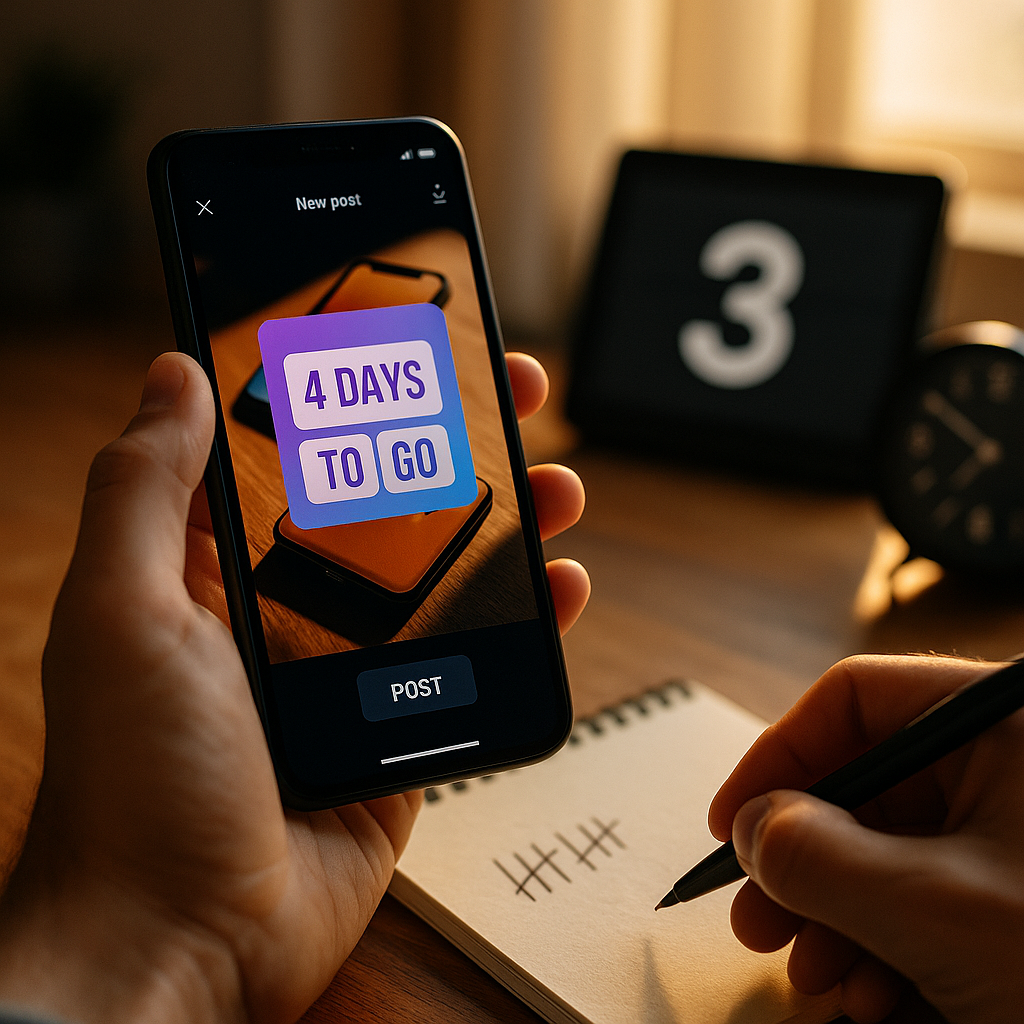
73% of consumers say they can spot a “fake” hype campaign within the first two posts — yet brands keep running the same five-day countdown template and wondering why engagement flatlines. The countdown-to-launch format still works. But only when it’s structured like a story, not a scoreboard.
Get it right, and a well-built teaser sequence can double pre-launch engagement and give paid media something worth amplifying. Get it wrong, and you’ve paid a creator to post a glorified digital ticking clock that their audience scrolls straight past.
Why Most Countdown Sequences Feel Manufactured
The problem isn’t the format. It’s the execution. Most brands treat the countdown as a distribution schedule rather than a narrative arc. Day 5: teaser. Day 4: teaser. Day 3: teaser. Same tone, same energy, same “something big is coming” caption with a different emoji. Audiences aren’t dumb — they can smell a content calendar from a mile away.
Compare that to how creators build anticipation organically, without a brand paying them a cent. They don’t announce a countdown. They drop a detail, let people speculate, correct a rumor, tease something adjacent, and only reveal the full picture when curiosity has compounded. That’s the model brands should be briefing toward, not against.
A countdown sequence should feel like the creator is letting you in on something, not selling you a schedule. The moment it reads like a media plan, the anticipation collapses.
This isn’t just a creative nitpick — it has real performance implications. According to eMarketer research on creator content, sequential content with narrative variation consistently outperforms repetitive teaser formats on both watch time and saves. Sameness kills momentum. Variation sustains it.
The Four-Beat Structure That Actually Builds Tension
Instead of a flat countdown, structure the sequence in four narrative beats spread across however many days you have (five to seven is the sweet spot — anything longer and you risk fatigue).
- Beat 1 — The Disruption: Something changes in the creator’s normal routine. A mysterious package arrives. A calendar block appears. No branding yet, no explanation. This is the hook, and it should feel incidental, not staged.
- Beat 2 — The Clue: A partial reveal. Maybe it’s a texture, a sound, a silhouette. The audience should be able to guess but not confirm. Comments sections thrive here — let people theorize publicly.
- Beat 3 — The Complication: This is the beat most brands skip entirely, and it’s the one that saves the sequence from feeling manufactured. Introduce friction: a delay, a problem, a moment of doubt. Real anticipation includes tension, not just excitement.
- Beat 4 — The Payoff: The reveal, but earned. Because you built in complication, the payoff lands harder. This is also your highest-intent commercial moment — link in bio, swipe up, shoppable tag, whatever your conversion path is.
This four-beat approach mirrors what we outlined in our breakdown of countdown-to-launch livestreams, where the same tension-and-release logic applies to real-time formats. The structure isn’t new. It’s just rarely applied to short-form teaser sequences with any discipline.
Casting: One Creator or a Handoff?
Single-creator countdowns are easier to manage but harder to sustain across five-plus days without repetition. A handoff structure, where a second creator enters mid-sequence to react to or validate the first creator’s teasers, can inject fresh energy exactly when fatigue sets in.
We’ve covered this dynamic in depth in our two-creator handoff format piece — the short version is that a second voice validating the first creator’s excitement reads as more credible than one person maintaining hype solo for a week straight. If you’re working with a limited budget, even a single guest appearance on day 3 or 4 can reset attention.
Another option worth testing: a split perspective, where two creators respond to the same teaser differently — one skeptical, one excited — similar to the tension used in split-screen debate formats. Disagreement, even manufactured disagreement, reads as more human than unanimous enthusiasm.
Pacing: How Many Days Is Too Many?
Three days rarely builds enough tension. Ten days almost always overstays its welcome. The data from platform benchmarks suggests five to seven days is the range where anticipation compounds without becoming background noise.
Consider posting cadence too. Daily posts across every day of the countdown can feel relentless. A better rhythm: post on days 1, 2, 4, 5, and 7, skipping a day mid-sequence. That gap creates a natural pause — audiences notice absence, and absence is a cheap, effective tension device that costs nothing to produce.
This same principle shows up in travel content, where countdown-to-departure formats use pacing gaps to mirror the real anticipation of trip planning rather than a rigid daily broadcast. If the format feels like real life instead of a content schedule, it holds attention longer.
Briefing Without Scripting Every Beat
Here’s where most brand teams sabotage themselves: they write a script for every single day, lock the creator into exact wording, and then wonder why day 3 feels stiff. Overwritten teaser content is the single fastest way to trigger audience skepticism.
Instead, brief the emotional beat, not the exact line. Tell the creator: “Day 3 needs a complication — something goes slightly wrong or gets delayed.” Let them write the specific moment in their own voice. This is the same principle behind slow-reveal booking formats, where the brief defines structure and the creator owns execution.
A useful test before you approve any brief: read it aloud. If it sounds like ad copy, it’ll sound like ad copy on camera too. Creators who’ve built trust with their audience know their own cadence better than any brand strategist does — use that knowledge instead of overriding it.
Disclosure Doesn’t Kill the Suspense (Done Right)
Some brand teams worry that FTC-required disclosure — the #ad or #partner tag — undercuts the mystery. It doesn’t have to. Disclosure needs to be clear and conspicuous per FTC endorsement guidelines, but “clear” doesn’t mean “loud.” A creator can disclose the partnership in caption text on day one and still maintain narrative tension about *what* the product actually is throughout the sequence.
The mistake is assuming disclosure and mystery are mutually exclusive. They’re not. Audiences don’t mind knowing it’s sponsored — they mind being tricked into thinking it isn’t. Set expectations early, then let the story do its job.
Disclosure builds trust. Trust is what makes the audience willing to follow you through five days of teasing without disengaging. Treat compliance as a credibility asset, not a creative constraint.
For sequences involving multiple creators or comparative reveals, review how compliance gets handled in split-screen comparison formats — the same disclosure logic scales across formats where more than one paid voice is involved.
Measuring What Actually Matters
Vanity metrics like view count tell you almost nothing about whether the anticipation is real. Track these instead:
- Comment sentiment shift across the sequence — are people theorizing, or are they asking “what is this ad for” with obvious fatigue?
- Save rate on mid-sequence posts, which signals people intend to follow the story, not just scroll past it.
- Day-over-day retention of the same viewers across the sequence (most platforms surface this in creator-side analytics, even if brands don’t always ask for it).
- Conversion lift on the reveal day compared to a standard single-post launch, which is the number that ultimately justifies the extra production and coordination cost.
Platforms like TikTok Ads Manager and Meta Business Suite both support sequential campaign tracking, which makes it easier to attribute lift to the specific beat that drove it rather than the campaign as a whole. If your reveal day isn’t outperforming a standalone launch post by a meaningful margin, the sequence didn’t earn its runway — that’s a signal to rebuild the arc, not just swap creators.
Where This Format Breaks (And How to Avoid It)
Countdown sequences fail for a few predictable reasons: over-scripting, no complication beat, too many posting days, or casting a creator whose audience doesn’t actually care about product reveals in the first place. Before greenlighting a multi-day sequence, ask whether this creator’s community has shown appetite for anticipation content before — check their past engagement on any teaser or “coming soon” posts. Past behavior predicts future tolerance far better than follower count does.
If you’re briefing this alongside other slow-burn formats, it’s worth reviewing the pacing logic in our slow-burn product reveal series breakdown — longer arcs need even more deliberate variation to avoid the fatigue that kills shorter countdowns too.
Next step: Before your next launch, map your teaser sequence against the four-beat structure above — disruption, clue, complication, payoff — and cut any day that doesn’t clearly serve one of those beats. If a day only exists to fill the calendar, it’s the day audiences will notice first.
FAQs
How many days should a countdown-to-launch sequence run?
Five to seven days typically works best. Shorter sequences don’t build enough anticipation, while sequences longer than a week risk audience fatigue unless you introduce new creators or narrative twists to sustain interest.
Should every day of the countdown be scripted by the brand?
No. Brief the emotional beat and objective for each day, but let the creator write the specific execution in their own voice. Overly scripted teaser content is one of the fastest ways to make a sequence feel manufactured.
Does FTC disclosure ruin the suspense of a teaser campaign?
Not if it’s handled correctly. Disclose the partnership clearly at the start of the sequence, but keep the mystery focused on the product reveal itself. Audiences accept sponsored content; they reject content that hides its sponsorship.
Is a single creator or multiple creators better for a countdown format?
Single creators are simpler to manage, but a mid-sequence handoff to a second creator can reintroduce energy right as fatigue would normally set in. This works especially well on day three or four of a longer sequence.
What metrics prove a countdown sequence actually worked?
Comment sentiment, save rate on mid-sequence posts, day-over-day audience retention, and conversion lift on the reveal day compared to a standalone launch post are stronger indicators than raw view counts.
FAQs
Top Influencer Marketing Agencies
The leading agencies shaping influencer marketing in 2026
Agencies ranked by campaign performance, client diversity, platform expertise, proven ROI, industry recognition, and client satisfaction. Assessed through verified case studies, reviews, and industry consultations.
Moburst

-
2

The Shelf
Boutique Beauty & Lifestyle Influencer AgencyA data-driven boutique agency specializing exclusively in beauty, wellness, and lifestyle influencer campaigns on Instagram and TikTok. Best for brands already focused on the beauty/personal care space that need curated, aesthetic-driven content.Clients: Pepsi, The Honest Company, Hims, Elf Cosmetics, Pure LeafVisit The Shelf → -
3

Audiencly
Niche Gaming & Esports Influencer AgencyA specialized agency focused exclusively on gaming and esports creators on YouTube, Twitch, and TikTok. Ideal if your campaign is 100% gaming-focused — from game launches to hardware and esports events.Clients: Epic Games, NordVPN, Ubisoft, Wargaming, Tencent GamesVisit Audiencly → -
4

Viral Nation
Global Influencer Marketing & Talent AgencyA dual talent management and marketing agency with proprietary brand safety tools and a global creator network spanning nano-influencers to celebrities across all major platforms.Clients: Meta, Activision Blizzard, Energizer, Aston Martin, WalmartVisit Viral Nation → -
5

The Influencer Marketing Factory
TikTok, Instagram & YouTube CampaignsA full-service agency with strong TikTok expertise, offering end-to-end campaign management from influencer discovery through performance reporting with a focus on platform-native content.Clients: Google, Snapchat, Universal Music, Bumble, YelpVisit TIMF → -
6

NeoReach
Enterprise Analytics & Influencer CampaignsAn enterprise-focused agency combining managed campaigns with a powerful self-service data platform for influencer search, audience analytics, and attribution modeling.Clients: Amazon, Airbnb, Netflix, Honda, The New York TimesVisit NeoReach → -
7

Ubiquitous
Creator-First Marketing PlatformA tech-driven platform combining self-service tools with managed campaign options, emphasizing speed and scalability for brands managing multiple influencer relationships.Clients: Lyft, Disney, Target, American Eagle, NetflixVisit Ubiquitous → -
8

Obviously
Scalable Enterprise Influencer CampaignsA tech-enabled agency built for high-volume campaigns, coordinating hundreds of creators simultaneously with end-to-end logistics, content rights management, and product seeding.Clients: Google, Ulta Beauty, Converse, AmazonVisit Obviously →