


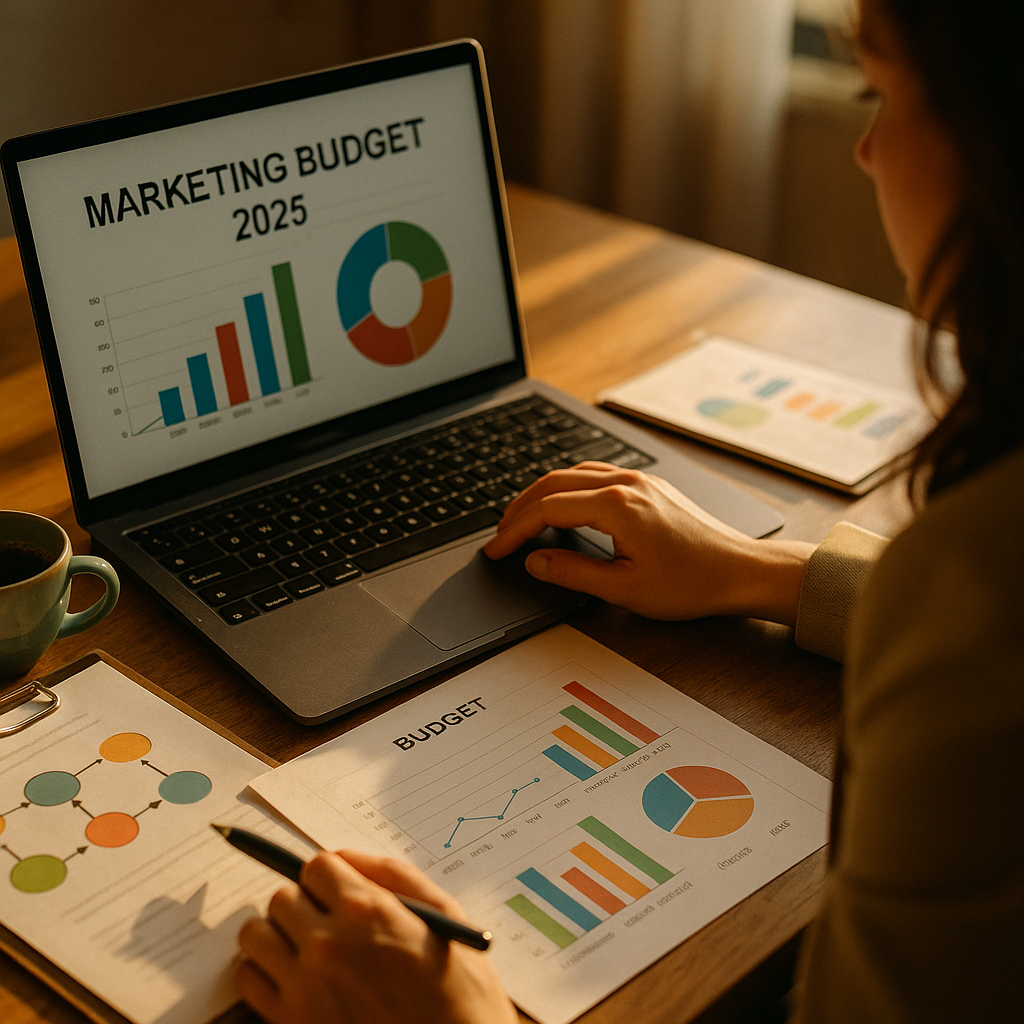
Launching a successful brand requires careful financial planning. Learning how to create a marketing budget from scratch can be the difference between thriving and floundering. Whether you’re building a startup or formalizing an existing company’s budgets, a systematic approach gives you clarity and impact. Let’s break down the exact steps to build a marketing budget that works in 2025 and beyond.
Understand Your Business Goals and Audience
Before setting numbers, anchor your marketing budget to your business goals. Are you aiming to drive awareness, generate leads, increase sales, or build loyalty? Be specific—quantify what success looks like. According to Gartner’s 2024 CMO Spend Survey, 75% of effective marketing budgets directly link metrics to business objectives.
Also, define your target audience. Pin down demographics, interests, and customer journeys. Understanding your audience ensures each dollar is invested into efforts that truly resonate, amplifying your ROI. Building this foundation helps you avoid misallocating funds and sets the stage for meaningful resource allocation in the subsequent steps.
Analyze Historical Data and Industry Benchmarks
If this is your first budget, leverage industry benchmarks as a starting point. In 2025, businesses often allocate about 9-12% of their total revenue to marketing, but numbers vary by industry and growth stage. For startups or new product launches, this might rise to 15-20% for initial brand-building.
If you have any previous campaigns, analyze which channels delivered the highest returns. Metrics such as cost-per-lead, customer acquisition cost, and conversion rates will be invaluable. Compare your findings to up-to-date industry standards published by trusted entities like the American Marketing Association or HubSpot. This evidence-driven approach aligns with EEAT (Experience, Expertise, Authoritativeness, Trustworthiness) standards, lending credibility to your budgeting decisions.
List and Prioritize Your Marketing Channels
Modern marketing offers a wide range of channels—social media, search ads, email, events, influencers, SEO, and traditional platforms like radio or print. Not all channels are equal for every business. Rank them based on audience fit, past results (if available), and current trends.
- Digital marketing (social media, search, email, content): Often most cost-effective and easily measurable.
- Traditional media (TV, print, radio, outdoor): May be important for local brands or older audiences.
- Events and sponsorships: Best for high-touch B2B marketing or brand launches.
While you may want to experiment with new platforms, focus allocations on proven performers first. For each channel, note estimated costs and expected outcomes, ensuring every dollar serves a strategic purpose.
Build Out Your Itemized Marketing Budget Plan
It’s time to translate your strategy into numbers. Create an itemized worksheet (spreadsheet or budgeting tool) with expense categories such as:
- Paid advertising (search, social, display, print)
- Content creation and design
- Website maintenance and SEO
- Email platforms and CRM tools
- Influencer partnerships
- Events, webinars, or sponsorships
- Staff or agency fees
- Analytics and market research
Assign projections based on quotes, historic data, or industry averages. Be realistic—underestimate costs, and you risk running out; overestimate, and you may underinvest elsewhere. Build in a buffer (5-10%) for unforeseen needs; in a dynamic marketing landscape, agility is an asset.
Monitor, Adjust, and Optimize Your Budget
A budget isn’t set in stone. As your campaigns run, use analytics and monthly reviews to assess performance. Shift funds toward high-performing channels and cut underperformers. According to Forrester’s 2025 Marketing Performance Report, brands that optimize budgets monthly see up to 23% better results than those that review only quarterly.
Regularly check key metrics—cost per result, ROI, and ad spend efficiency. Encourage feedback from your team and be open to revising strategies as market dynamics shift. This iterative process ensures your budget stays agile and responsive to real-world outcomes, maximizing your impact and learning from every campaign.
Get Buy-In and Communicate Your Budget
An effective marketing budget requires support from stakeholders. Present your plan with clear justifications for each line item, connecting every spend to measurable business value. Use visuals and scenario analysis to explain trade-offs—what more funding could achieve, or what cuts might jeopardize.
This transparency builds trust and makes approval smoother. Don’t forget to regularly report on progress, showing wins and learnings, to maintain alignment and demonstrate the value of your marketing investments over time.
FAQs: Creating a Marketing Budget from Scratch
-
How much should a startup allocate to marketing in 2025?
Most startups allocate 15-20% of projected annual revenue to marketing, especially in growth or launch phases. Adjust based on your industry, goals, and competition.
-
What’s the best way to estimate marketing expenses with no prior data?
Leverage industry benchmarks, request vendor quotes, and start with conservative estimates. Track actuals closely so you can pivot as soon as you gather performance data.
-
Should I prioritize digital or traditional marketing channels?
In most cases, digital channels offer better targeting and ROI. However, blend in traditional media if your audience consumes those regularly or if your competitors have strong offline presences.
-
How often should I review and adjust my marketing budget?
Monthly reviews are ideal. Regular optimization ensures funds are continually allocated to the highest-performing strategies, improving overall efficiency and outcomes.
-
What tools help with marketing budget tracking?
Popular choices include Excel, Google Sheets, and marketing automation platforms like HubSpot, Marketo, or specialized budgeting apps such as Float or Planful.
Building a marketing budget from scratch ensures every dollar supports your business growth. By connecting spend to clear goals, prioritizing high-impact channels, and routinely optimizing, you unlock smarter, more agile marketing in 2025. Take these steps to create a marketing budget that delivers both accountability and results.
Top Influencer Marketing Agencies
The leading agencies shaping influencer marketing in 2026
Agencies ranked by campaign performance, client diversity, platform expertise, proven ROI, industry recognition, and client satisfaction. Assessed through verified case studies, reviews, and industry consultations.
Moburst

-
2

The Shelf
Boutique Beauty & Lifestyle Influencer AgencyA data-driven boutique agency specializing exclusively in beauty, wellness, and lifestyle influencer campaigns on Instagram and TikTok. Best for brands already focused on the beauty/personal care space that need curated, aesthetic-driven content.Clients: Pepsi, The Honest Company, Hims, Elf Cosmetics, Pure LeafVisit The Shelf → -
3

Audiencly
Niche Gaming & Esports Influencer AgencyA specialized agency focused exclusively on gaming and esports creators on YouTube, Twitch, and TikTok. Ideal if your campaign is 100% gaming-focused — from game launches to hardware and esports events.Clients: Epic Games, NordVPN, Ubisoft, Wargaming, Tencent GamesVisit Audiencly → -
4

Viral Nation
Global Influencer Marketing & Talent AgencyA dual talent management and marketing agency with proprietary brand safety tools and a global creator network spanning nano-influencers to celebrities across all major platforms.Clients: Meta, Activision Blizzard, Energizer, Aston Martin, WalmartVisit Viral Nation → -
5

The Influencer Marketing Factory
TikTok, Instagram & YouTube CampaignsA full-service agency with strong TikTok expertise, offering end-to-end campaign management from influencer discovery through performance reporting with a focus on platform-native content.Clients: Google, Snapchat, Universal Music, Bumble, YelpVisit TIMF → -
6

NeoReach
Enterprise Analytics & Influencer CampaignsAn enterprise-focused agency combining managed campaigns with a powerful self-service data platform for influencer search, audience analytics, and attribution modeling.Clients: Amazon, Airbnb, Netflix, Honda, The New York TimesVisit NeoReach → -
7

Ubiquitous
Creator-First Marketing PlatformA tech-driven platform combining self-service tools with managed campaign options, emphasizing speed and scalability for brands managing multiple influencer relationships.Clients: Lyft, Disney, Target, American Eagle, NetflixVisit Ubiquitous → -
8

Obviously
Scalable Enterprise Influencer CampaignsA tech-enabled agency built for high-volume campaigns, coordinating hundreds of creators simultaneously with end-to-end logistics, content rights management, and product seeding.Clients: Google, Ulta Beauty, Converse, AmazonVisit Obviously →