


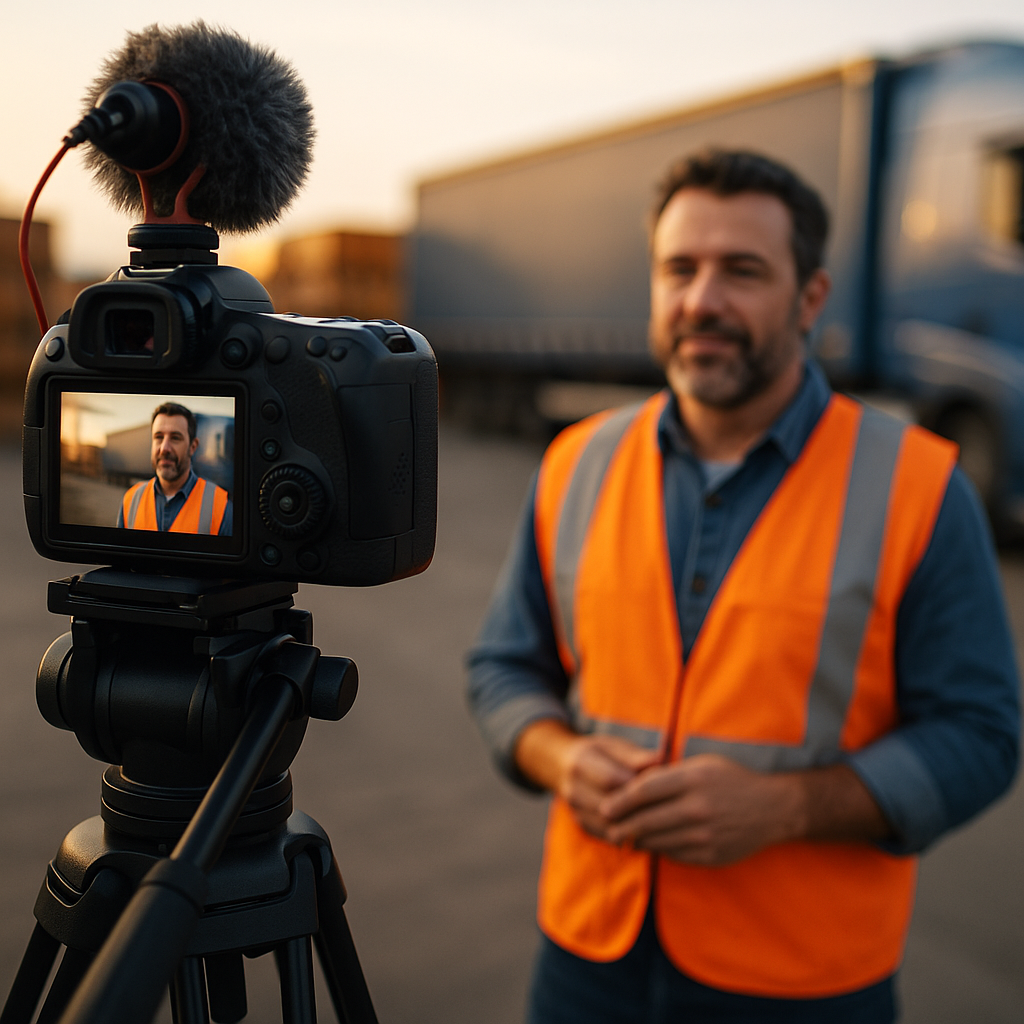
In 2025, brand trust is built as much on transparency as on service. This case study shows how a legacy logistics firm used video to humanize brands without diluting operational credibility or regulatory discipline. You’ll see the strategy, the governance, and the measurable outcomes—plus the mistakes they avoided. Ready to meet the people behind the parcels?
Video marketing for logistics: the challenge a legacy carrier faced
The company in this case study is a multi-decade logistics provider with national coverage, unionized hubs, and a reputation built on on-time performance. Its marketing, however, looked like many operational businesses: polished brochures, stock imagery, and feature-led messaging focused on fleet size, warehouse footprint, and service-level agreements.
In 2025, the firm’s leadership noticed a pattern that sales teams could feel but couldn’t easily quantify: prospects trusted the capabilities, yet hesitated to commit. Feedback from lost deals clustered around three issues:
- Low emotional resonance: Buyers couldn’t “see” the people who would handle their freight.
- Perceived sameness: Competitors claimed similar transit times, safety programs, and technology.
- Risk anxiety: Procurement teams wanted proof of accountability when shipments go wrong.
The firm also faced internal constraints. Compliance required strict controls around customer data, facility security, and driver privacy. Operations leaders worried video would disrupt throughput. HR wanted recruitment support without exposing employees to harassment or misrepresentation. Marketing needed content that could work across the funnel: recruiting, brand, sales enablement, and customer retention.
Rather than pushing more product detail, the firm chose a different approach: show the humans, the process discipline, and the decision-making behind each promise. Video became the vehicle—not for hype, but for clarity.
Brand storytelling in B2B: a strategy built around real people and real proof
The team designed a “humanize without romanticizing” framework. The guiding principle was simple: every video must teach the viewer something useful while revealing the people and standards behind it. That protected credibility while still creating connection.
They mapped content to three audiences who influence logistics buying:
- Procurement and finance: wants predictable costs, vendor stability, and risk controls.
- Operations and supply chain leaders: wants reliability, escalation paths, and measurable performance.
- HR and facility leadership at customer organizations: wants safe practices and respectful on-site behavior.
From those needs, the firm built a video portfolio with clear roles:
- The “People of Logistics” series: short profiles of dispatchers, dock leads, safety managers, and drivers. Each story anchored on a specific responsibility (e.g., “How we prevent mis-sorts at peak”).
- Process walkthroughs: calm, step-by-step explanations of cross-docking, chain-of-custody checks, temperature-controlled handoffs, and damage prevention.
- Customer collaboration spotlights: co-created clips showing shared KPIs and continuous improvement routines, with customer approvals baked into production.
- Leadership Q&A: unscripted, moderated conversations about incident response, service recovery, and how decisions get made during disruptions.
To keep the storytelling authentic, they replaced heavy scripts with structured prompts. On-camera employees were coached to speak plainly and avoid jargon. Importantly, the firm treated every claim as a compliance item: if they said “same-day escalation,” they showed the escalation path; if they said “safety-first,” they showed the checklist and the training cadence.
This balanced emotional connection with operational credibility. It also aligned with Google’s helpful content expectations in 2025: demonstrate experience and expertise, provide verifiable details, and answer the viewer’s practical questions without fluff.
Humanizing a legacy brand: production decisions that kept authenticity high
Many B2B video efforts fail because they look staged or feel like ads. This firm avoided that by making production choices that respected the realities of logistics work.
1) Film where work actually happens
They recorded on docks, in control rooms, in yards, and in safety briefings—during planned windows that minimized disruption. Viewers could see workflows, signage, and equipment in context. That environmental truth made the message believable.
2) Use “day-in-the-life” structure to reveal competence
Instead of “We’re reliable,” a dispatcher walked through a real morning: forecast review, exception alerts, route adjustments, and customer communication. The narrative implicitly answered common buyer questions: Who notices issues? How fast? With what authority?
3) Design for trust: clear permissions and privacy
The firm created a consent and privacy protocol:
- No visible customer labels, bills of lading, or shipment IDs.
- Faces only with written consent; optional role-only coverage (hands, voice, or back-of-head) for those who preferred privacy.
- Facility security review before publishing (camera angles, access points, badges).
- Union and HR review for employee protections and accurate role depiction.
4) Keep editing honest
They avoided jumpy “hype” cuts and instead used clean sequences with time-stamped overlays like “Inbound scan” and “Exception flagged.” That made the content useful for buyers evaluating process maturity.
5) Make every video skimmable and accessible
The team shipped each video with captions, concise on-screen chaptering, and a short written summary that sales reps could paste into emails. That improved accessibility and ensured the content worked even when played muted on mobile.
The result was a library that felt human because it was grounded in real work—and credible because it showed controls, not slogans.
Recruitment and retention video: turning operations culture into an advantage
The firm initially pursued video to improve brand perception and sales velocity. A second benefit quickly became clear: recruitment and retention.
In 2025, logistics employers compete on more than pay. Candidates evaluate schedule stability, safety culture, leadership responsiveness, and whether they will be treated with respect. The company used video to answer those questions directly, with employees doing the explaining.
The recruitment video set included:
- Role previews: realistic depictions of what a dock associate or driver actually does during a shift, including physical demands and safety steps.
- Safety culture stories: short interviews focused on near-miss reporting, coaching, and how the company responds to concerns.
- Career pathway explainers: how people move from dock to lead, or from driver to trainer, with concrete timeframes and requirements.
This helped retention because it improved expectation-setting. New hires who understood the pace, processes, and standards were more likely to stay past the early churn window. It also improved internal pride: employees saw their work presented as skilled and consequential rather than invisible labor.
The marketing team anticipated a follow-up question from leadership: “Isn’t this HR content separate from brand?” They treated it as the same trust system. A buyer’s confidence in the people moving freight overlaps with a candidate’s confidence in the employer. Video made both visible.
Video content strategy for B2B sales: distribution, enablement, and buyer journeys
Great videos fail when they live only on a homepage. This firm built distribution around how logistics decisions are actually made: multi-stakeholder, risk-sensitive, and document-heavy.
1) Sales enablement playlists
They created curated sets for common scenarios:
- RFP support: “How we manage exceptions,” “Security controls,” “Service recovery.”
- Cold outreach: 45–60 second “Meet your operations team” intros by region.
- Expansion: “What changes when you add lanes,” “Peak season playbook.”
Sales reps used these in follow-up emails with a single sentence explaining why the video mattered. This reduced back-and-forth by answering predictable questions early.
2) Website and SEO architecture
Each video lived on a dedicated page with a plain-language summary, key takeaways, and a short list of related resources. Instead of chasing broad traffic, the company targeted high-intent searches like “logistics exception management process” and “carrier service recovery procedure.” This approach supported EEAT: it demonstrated operational expertise and provided helpful specifics.
3) LinkedIn distribution with operational hooks
They avoided generic brand posts and led with practical prompts:
- “What happens after a missed scan?”
- “How do dispatch teams prioritize during weather events?”
- “What ‘chain of custody’ looks like on a busy dock.”
These posts invited professional discussion and positioned the firm as transparent and process-driven, not just promotional.
4) Customer success and renewal support
Account managers used quarterly review videos to explain improvements, show how issues were resolved, and preview upcoming changes. That proactive communication reduced surprise and made the partnership feel managed, not reactive.
Measuring video ROI in logistics: metrics, governance, and results
To earn ongoing investment, the firm treated video like an operational program with owners, controls, and measurable outcomes.
Governance model
- Executive sponsor: ensured cross-functional alignment (marketing, ops, HR, compliance).
- Content owner: maintained a backlog tied to sales and service priorities.
- Compliance reviewer: checked privacy, security, and claims substantiation.
- Regional ops liaison: coordinated filming windows and employee participation.
Measurement framework
They tracked leading and lagging indicators across the funnel:
- Attention and engagement: view-through rate, average watch time, saves/shares, and completion on short explainers.
- Sales impact: meetings booked after video-included outreach, RFP progression rate, and sales cycle time for targeted segments.
- Trust signals: increases in “process” and “people” mentions in discovery calls, and reduced frequency of basic due-diligence questions.
- Recruiting: application completion rate on pages with role videos, and early turnover trend by role.
What changed (directionally) after rollout
Because results vary by market and lane mix, the firm reported outcomes in practical terms rather than inflated promises:
- Higher quality discovery calls: prospects arrived with more specific questions, indicating better pre-education.
- Faster alignment across stakeholders: videos helped non-operations stakeholders understand risk controls without needing extra meetings.
- Stronger recruitment fit: candidates self-selected more accurately, reducing mismatched expectations.
They also learned what not to do. Highly produced “brand anthem” videos performed worse for sales enablement than simple walkthroughs. Buyers didn’t need inspiration; they needed evidence of competence and responsiveness.
FAQs
What types of video work best for a logistics company?
Process walkthroughs, day-in-the-life role videos, service recovery explanations, and customer collaboration spotlights work best because they reduce perceived risk and show accountability. Keep them practical and specific to real operational moments buyers care about.
How do you “humanize” a B2B brand without looking unprofessional?
Focus on responsibility and decision-making. Let employees explain what they do, what standards they follow, and how they respond to exceptions. Authenticity comes from real environments and clear proof, not casualness.
How long should logistics videos be in 2025?
Use 45–90 seconds for outreach and social clips, 2–4 minutes for explainers, and 5–8 minutes for deeper operational walkthroughs or leadership Q&A. The right length is the shortest time needed to answer the buyer’s question clearly.
How do we handle privacy and security when filming in warehouses and hubs?
Implement a review checklist: hide shipment identifiers, avoid filming sensitive access points, obtain employee consent, and run compliance and security sign-off before publishing. Plan filming windows to avoid operational disruption.
How do you measure ROI from video in a sales-led logistics business?
Track leading indicators (watch time, completion, shares), sales enablement usage (videos sent, meeting conversion after sends), and deal metrics (RFP progression, cycle time). Add qualitative signals from calls, such as fewer basic due-diligence questions and more process-specific discussion.
Do we need customer testimonials on video for this to work?
No. Customer participation helps, but internal process transparency can be enough to build trust. If you do include customers, use co-created scripts, clear approval steps, and focus on shared KPIs and problem-solving rather than generic praise.
This legacy logistics firm didn’t “rebrand” with flashy visuals. It built trust by showing the people, processes, and accountability behind every promise, using video as proof rather than promotion. In 2025, that approach helps prospects assess risk faster, helps employees feel seen, and helps sales teams answer hard questions early. The takeaway: make video operationally truthful, tightly governed, and relentlessly useful.