


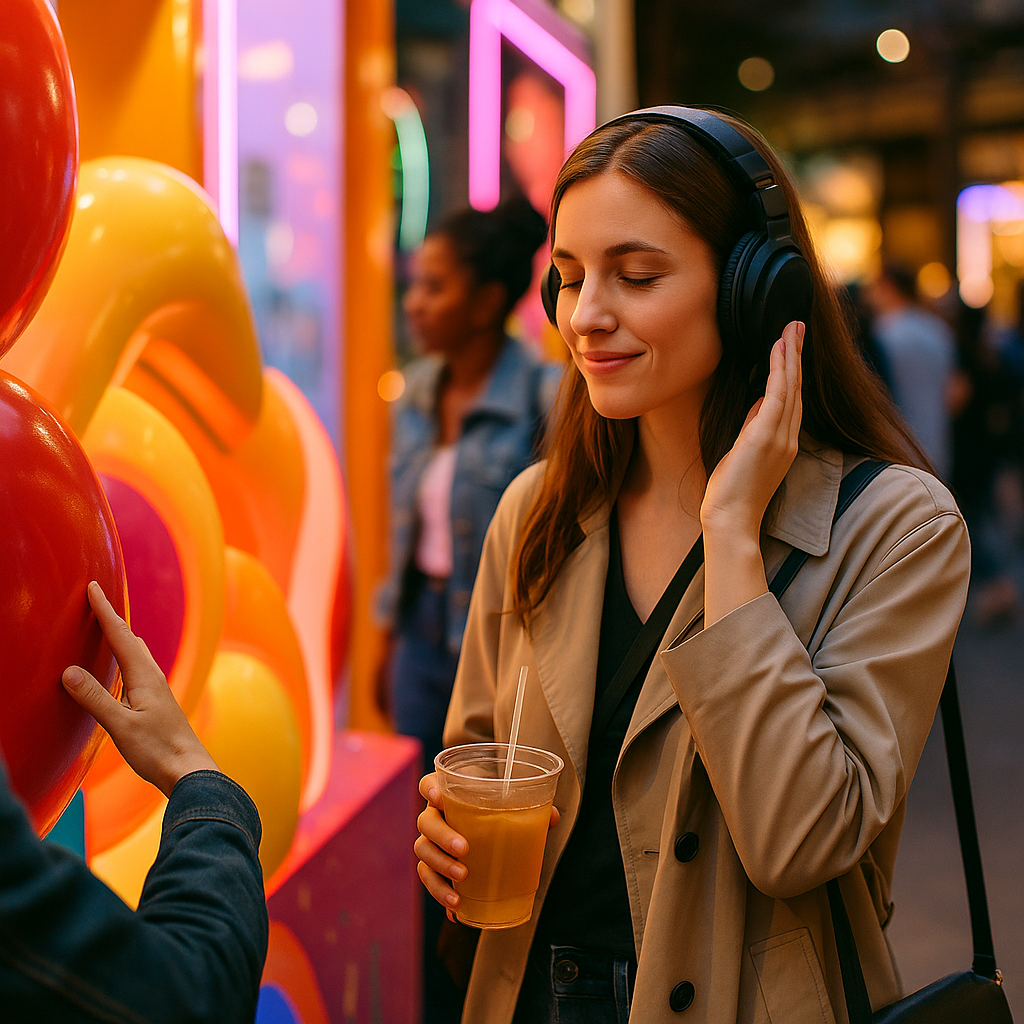
In 2025, shoppers expect more than displays and discounts; they want moments worth sharing and remembering. Designing immersive sensory experiences for live retail activations turns foot traffic into emotional connection by aligning sight, sound, scent, touch, and taste with a brand’s promise. When you orchestrate these cues with intent, you earn attention, dwell time, and trust—so how do you design it right?
Strategy for live retail activations: start with a clear outcome and audience insight
Immersion works when it serves a business goal and a shopper need. Before you pick lighting rigs or custom fragrances, define what success looks like for the activation. Common outcomes include: driving trial of a new product, capturing first-party data, increasing basket size, improving brand perception, or converting passersby into store visitors.
Build the strategy from three anchors:
- Audience intent: Are they browsing, commuting, gift-hunting, or comparing? A commuter-heavy location needs speed and clarity; a mall weekend crowd can handle longer narratives.
- Brand truth: Identify one promise the experience must communicate. If the brand stands for “calm performance,” avoid chaotic soundscapes and harsh lighting—even if they look “cool.”
- Behavioral target: Choose the one action that matters most (sample, scan, sign up, book, buy). Then design sensory cues to guide that action.
Answer likely internal stakeholder questions early: How will we measure ROI? What does the customer journey look like? What are the staffing and compliance implications? A one-page experience brief keeps production aligned and prevents late-stage “feature creep.”
Designing with multisensory marketing: coordinate sight, sound, scent, touch, and taste
Multisensory design is not “more stimuli.” It is controlled harmony. Start with a primary sense that carries the narrative, then support it with secondary cues that reinforce (not compete). For example, a premium skincare activation might lead with touch (texture bars, hydration testing), supported by soft lighting and a clean scent. A gaming product drop may lead with sound and sight, supported by haptic controllers and cool airflow.
Use these principles to make sensory choices feel intentional:
- Congruence: Every sensory cue should match the product category and brand positioning. A mismatch (e.g., sweet bakery scent in an automotive activation) can reduce trust.
- Contrast with control: Contrast can attract attention—like a quiet “sound-off” zone in a noisy mall—but keep it controlled so it doesn’t overwhelm or cause sensory fatigue.
- Progression: Design a sensory “arc” as people move through the space: attract (high clarity), engage (rich interaction), convert (simple decision environment), and exit (memorable sign-off).
Practical design moves that often lift engagement without adding complexity:
- Lighting: Use layered lighting (ambient + accent + task) to guide focus. Keep color temperature consistent with product perception: warmer for comfort, cooler for precision.
- Sound: Prefer directional speakers or near-field audio to create “personal” zones. Calibrate volume so staff can still converse; sales suffer when people can’t ask questions comfortably.
- Scent: If you diffuse fragrance, use low-intensity delivery and test for sensitivity. Provide a scent-free path when feasible.
- Touch: Offer materials people can compare side-by-side (softness, grip, weight). Include clear hygiene protocols and visible cleaning routines.
- Taste (where relevant): Pair sampling with a short story: origin, ingredient benefit, or pairing suggestion. Taste should confirm the promise, not distract from it.
Anticipate the reader’s next question—“How do I avoid overwhelming people?” Build in quiet moments: neutral walls near decision points, a short decompression zone, and simple signage that reduces cognitive load.
Building experiential retail design: map the journey and engineer the space
Immersive activations fail most often because the flow is confusing. Great experiential retail design makes the next step obvious without shouting. Start with a customer journey map that reflects real constraints: entrances, queue lines, ADA routes, staffing positions, storage, and power.
Design the activation as a sequence of zones:
- Attract zone: A visual “signature” visible from 10–20 meters away. Use one bold message and one clear cue (e.g., “Try it in 60 seconds”).
- Orientation zone: A quick explanation of what happens and how long it takes. This lowers drop-off and prevents bottlenecks.
- Engagement zone: Hands-on interaction, guided demos, or playful challenges. Design for both self-serve and assisted modes so the experience still works when staff are busy.
- Proof zone: Social proof and product validation: ingredient callouts, certifications, before/after demos, test results, or expert guidance. Keep claims precise and substantiated.
- Conversion zone: A clean, low-friction moment: purchase, QR redemption, appointment booking, or sample pickup. Remove extra signage here; decision points need simplicity.
- Share/exit zone: A purposeful photo moment and a final takeaway (digital receipt, personalized recommendation, or mini-guide).
Plan for edge cases. What happens when the space is crowded? Provide a “fast lane” for quick trials. What about stroller access and mobility aids? Ensure turning radius, clear paths, and seated options. What about noise-sensitive visitors? Offer a low-sensory window or an alternative demo format.
Operational details that protect the experience quality:
- Staff scripts: Give staff a three-line story: what it is, why it matters, what to do next. Consistency strengthens trust.
- Reset time: Design interactions that reset in seconds. Long resets create dead time and visible friction.
- Durability: Choose materials that survive constant touch, spills, and cleaning. A scuffed hero unit signals “temporary,” not “premium.”
Creating brand storytelling in retail: turn sensory cues into a narrative people repeat
A sensory activation should make it easy for visitors to explain the brand to someone else. That’s the test of storytelling: can a shopper retell it in one sentence? Build the narrative around a single transformation—what changes for the customer after using the product.
Use a simple storytelling framework that fits live environments:
- Problem: The frustration your shopper recognizes immediately.
- Insight: A surprising truth or “why” that reframes the problem.
- Proof: A demo, comparison, or measurable result they can see or feel.
- Choice: A recommendation tailored to them (not a generic pitch).
Translate story beats into sensory moments:
- Visual metaphor: Use shapes, materials, and motion to symbolize the product benefit—precision, softness, speed, or protection.
- Sound cues: Short sonic signatures at key moments (start of demo, result reveal). Keep them subtle so they feel premium.
- Tactile proof: Let people feel the difference—weight reduction, fabric softness, grip stability, temperature change, or texture smoothing.
Address credibility head-on. If you claim “reduces dryness,” show how you measured it. If you reference clinical testing, provide a brief, accurate description and a QR link to details. This approach supports EEAT: it demonstrates expertise, builds trust, and helps users verify information.
Also plan for content capture without turning the activation into a selfie trap. Provide a clear photo angle, consistent lighting, and a brand-safe background. Make sharing optional and respectful; the goal is amplification, not pressure.
Measurement and retail activation ROI: instrument the experience and optimize fast
If you can’t measure it, you can’t improve it—or defend the budget. In 2025, ROI measurement should blend quantitative performance with qualitative insight. Aim to answer: Did it attract the right people, did they engage meaningfully, and did engagement translate into business impact?
Use a measurement stack that matches your goals:
- Footfall and dwell: Count visitors and time spent per zone. Dwell time is useful only when paired with progression (are they stuck or engaged?).
- Engagement completion: Track demo starts vs. finishes, sampling rates, and interaction depth (e.g., number of stations completed).
- Conversion metrics: Purchases, QR redemptions, appointments booked, or offers claimed. Use unique codes per location and day to isolate performance.
- First-party data capture: If collecting emails or preferences, clearly state value exchange and privacy terms. Capture only what you need.
- Brand lift indicators: Short intercept surveys (two questions max) and sentiment notes from staff. Ask one recall question and one intent question.
Optimize during the activation, not after. Create a daily “experience health” checklist:
- Queue time: If it exceeds a set limit, add a fast demo or increase staff at the bottleneck.
- Drop-off point: If people enter but don’t start the interaction, improve orientation signage and simplify the first step.
- Staff consistency: If pitches vary, refresh the script and provide a quick role-play.
- Technical stability: If screens lag or sensors fail, switch to a manual fallback immediately to protect trust.
Expect the reader’s next question—“What’s a good ROI benchmark?” Benchmarks vary by category and location, so treat them as internal comparisons: compare this activation to your last campaign, your average store conversion, and your paid media cost per acquisition. The most useful benchmark is your own baseline.
Risk management for sensory branding: accessibility, safety, and trust by design
Sensory experiences can exclude people if you don’t design responsibly. Trust is part of the experience, and it starts with safety, accessibility, and honest communication.
Build these safeguards into planning and operations:
- Accessibility: Maintain clear pathways, readable signage, seated options, and reachable interaction heights. Offer alternative formats for key content (e.g., text summaries for audio experiences).
- Sensory sensitivity: Avoid strobe effects, keep audio within comfortable limits, and use scent sparingly. Provide a scent-free route or scent-free hours when feasible.
- Food safety (for tasting): Display allergen information clearly, separate utensils, and enforce hygiene protocols. Train staff on cross-contamination basics.
- Data privacy: If you use cameras, facial analysis, or device tracking, disclose it plainly and collect only what you can justify. Offer opt-out pathways without penalty.
- Claims compliance: Ensure product claims are substantiated and phrased accurately. Keep supporting details accessible via QR or printed summary.
These practices do more than reduce risk—they strengthen EEAT. When visitors see thoughtful accommodations, clear disclosures, and well-trained staff, they perceive competence and integrity, which improves conversion and long-term loyalty.
FAQs about immersive sensory experiences for live retail activations
What makes a live retail activation “immersive” rather than just interactive?
Immersion happens when multiple sensory cues and the environment itself support one cohesive story and guide a clear journey. Interactivity alone is a feature; immersion is the feeling that the brand world surrounds you and the next step is natural.
How many senses should I design for?
Start with one primary sense that best proves the benefit, then add one or two supporting senses. Overloading all five senses often reduces comfort and message clarity. The best approach is congruent and controlled.
How long should the experience take?
Design a “core loop” that takes 60–120 seconds so busy shoppers can complete it quickly. Then add optional depth for people who want more time, such as a personalization station or expert consultation.
What are the most effective ways to capture leads without hurting the experience?
Collect data after delivering value—such as after a personalized result, sample, or recommendation. Keep forms short, explain how you’ll use the data, and offer a clear benefit like a tailored routine, warranty registration, or exclusive offer.
How do I ensure the activation works when it’s crowded?
Design parallel paths: a fast demo lane, multiple identical touchpoints, and clear queue management. Use staff as “traffic conductors” and simplify orientation signage so visitors can self-start.
What should I prioritize if budget is limited?
Prioritize flow, staffing, and one strong sensory proof point tied to the product benefit. A simple, well-executed tactile demo with clear messaging often beats expensive tech that is unreliable or confusing.
How do I measure success beyond sales on the day?
Track progression (enter → engage → complete → convert), first-party data capture quality, offer redemptions over time, and brand lift via short surveys. Use unique codes and consistent baselines to compare performance across locations.
Designing immersive sensory experiences for live retail activations works when every cue serves a single promise and a single journey. Define the outcome, choose one primary sense to prove the benefit, and build a space that moves people from curiosity to confidence. Measure progression and fix friction daily. The takeaway: disciplined sensory design creates memorable experiences that convert.